Turning Passion Into Partnership
Training for an amateur MMA career can become expensive long before you earn your first dollar from fighting.
Gym memberships, private coaching, protective equipment, medical examinations, travel, competition registration, and proper nutrition all require money. If you’re balancing training with a full-time job, covering those expenses can become an additional challenge.
That’s where sponsorships come in.
Even as an amateur MMA fighter, you can attract businesses willing to help fund your training, provide equipment, cover competition expenses, or support your development in exchange for promotional opportunities.
You don’t necessarily need a professional record, thousands of followers, or a championship belt to get started. Local businesses may be interested in supporting athletes who offer community visibility, consistent content, and genuine connections with potential customers.
However, securing sponsorships requires more than sending messages asking for free equipment or financial assistance.
You need to understand what businesses want, build a recognizable personal brand, prepare a professional proposal, and demonstrate that you can deliver value.
The key is to treat your fighting career like a brand, not just a hobby.
This guide explains how amateur MMA fighters can find sponsors, create sponsorship packages, negotiate agreements, and develop relationships that support their athletic careers.
It also covers common mistakes, amateur eligibility considerations, realistic financial expectations, and ways to build opportunities beyond competition.
Why Sponsors Invest in Amateur MMA Fighters
Businesses generally sponsor athletes because they expect something valuable in return.
That value might involve brand exposure, customer engagement, promotional content, community goodwill, or access to a specific audience.
For example, a local restaurant may sponsor a fighter because the athlete’s teammates and supporters live nearby. An apparel company might provide training clothes in exchange for authentic product photography. A recovery clinic may want to introduce its services to recreational athletes.
Winning fights can increase visibility, but competitive success is not the only factor businesses consider.
Sponsors often look for fighters who:
- Train consistently and demonstrate discipline.
- Maintain a professional reputation.
- Engage with followers online.
- Have a recognizable identity and personal story.
- Communicate reliably.
- Represent the sport with integrity.
- Show genuine interest in the sponsor’s products or services.
A fighter with 800 engaged local followers may offer a neighborhood business more relevant exposure than an athlete with 10,000 followers scattered across unrelated markets.
The important question isn’t simply how many people follow you.
It’s whether your audience overlaps with the customers a sponsor wants to reach.
Understand the Different Types of Sponsorships
Not every sponsorship involves a company writing you a check.
Amateur fighters can pursue several types of partnerships.
Financial sponsorships: A business contributes money toward training, travel, equipment, or other eligible expenses.
Product sponsorships: A company provides gloves, apparel, protective equipment, or other products.
Service sponsorships: A photographer, training facility, or other business provides services at no cost or a reduced rate.
Event-specific sponsorships: A business contributes toward expenses associated with one competition in exchange for agreed promotional activities.
Long-term sponsorships: A company supports an athlete over several months or an entire competitive season.
Early partnerships may involve products, services, discounts, or modest financial contributions rather than substantial cash payments.
The goal is to establish a track record demonstrating that you can fulfill agreements and create useful promotional opportunities.
For more information about developing professional collaborations, read our guide to brand partnerships the right way .
Step 1: Build Your Personal Brand Before Seeking Sponsors
Your personal brand is the impression people develop when they encounter your name, content, and behavior.
For an amateur MMA fighter, that identity should communicate who you are, what you represent, and why people should follow your journey.
You don’t need an elaborate logo or an expensive branding agency.
Start with a clear description of yourself.
For example:
“I’m an amateur featherweight fighter from San Diego, balancing full-time work with training and documenting my journey toward my first championship.”
That statement gives potential supporters something specific to remember.
Identify What Makes You Different
Ask yourself:
- What originally motivated me to begin martial arts?
- What challenges have shaped my training?
- What values do I want associated with my name?
- What type of audience follows my journey?
- What businesses naturally fit my lifestyle?
Your identity might center on disciplined training, balancing work and competition, representing your hometown, or progressing from beginner to competitive athlete.
Avoid manufacturing a personality purely to attract sponsors.
A consistent, believable identity is easier to maintain over time.
Establish Professional Social Media Profiles
Instagram and TikTok can help you document training and connect with potential sponsors.
Your profile should make it easy for someone unfamiliar with you to understand what you do.
Include your name, fighting discipline, general location, gym affiliation when permitted, and a professional contact method.
Use a recognizable profile photograph.
Pin a few posts that introduce you, show your training, and explain your current competitive goals.
Make it easy for interested businesses to contact you without searching through dozens of posts.
Create Consistent Content Categories
Rather than posting random training clips, organize your content around recurring themes.
Training: Pad work, wrestling drills, conditioning sessions, and technical development.
Competition: Fight announcements, preparation updates, weigh-ins, and post-fight reflections.
Personal journey: Managing work, overcoming setbacks, and developing discipline.
Community: Training partners, coaches, local events, and businesses that support you.
Sponsor content: Genuine demonstrations, product experiences, and agreed promotional posts.
This approach gives your audience a reason to return while helping sponsors understand what their involvement might look like.
You can develop these ideas further through our guide to YouTube and content creation for fighters .
Step 2: Start Local and Identify Potential Sponsors
Large national brands receive sponsorship inquiries from established athletes, professional fighters, and influencers.
As an amateur, you can begin by approaching businesses in your immediate community.
Local businesses may be interested in partnerships that connect them with nearby customers, particularly when you already have relationships with their employees or customers.
Which Businesses Should You Approach?
Consider companies that naturally fit your training lifestyle or audience.
Potential sponsors include:
- Martial arts equipment and apparel stores.
- Meal preparation businesses and restaurants.
- Strength and conditioning facilities.
- Local sportswear companies.
- Physical therapy and recovery clinics.
- Chiropractors and other licensed healthcare providers.
- Barbershops and grooming businesses.
- Photography and videography companies.
- Local automotive and service businesses.
A sponsor doesn’t have to operate in the fitness industry.
A neighborhood restaurant may appreciate visibility among your teammates and supporters. A local photographer may benefit from producing content that demonstrates their sports photography skills.
Focus on the relationship between your audience and the business rather than approaching every company you can find.
Build a Targeted Sponsorship Prospect List
Create a spreadsheet containing potential sponsors and relevant details.
For each business, record its name, contact information, website, social media accounts, potential partnership opportunities, and the date you reached out.
Start with 15–20 businesses you have researched rather than sending 100 identical messages.
Look at their social media accounts and websites.
Determine whether they already support local athletes, sports teams, charity events, or community organizations.
Identify the person responsible for marketing or business partnerships whenever possible.
Make Your First Request Manageable
Instead of asking a business to fund an entire fight camp, propose a specific arrangement.
For example, a local restaurant might contribute $200 toward travel expenses. In return, you agree to create two clearly disclosed social media posts featuring the restaurant and provide an agreed promotional appearance.
This is an illustrative proposal, not a standard sponsorship rate.
The important point is that both parties understand the contribution and the expected deliverables.
Start with commitments you can realistically fulfill.
Step 3: Create a Professional Fighter Media Kit
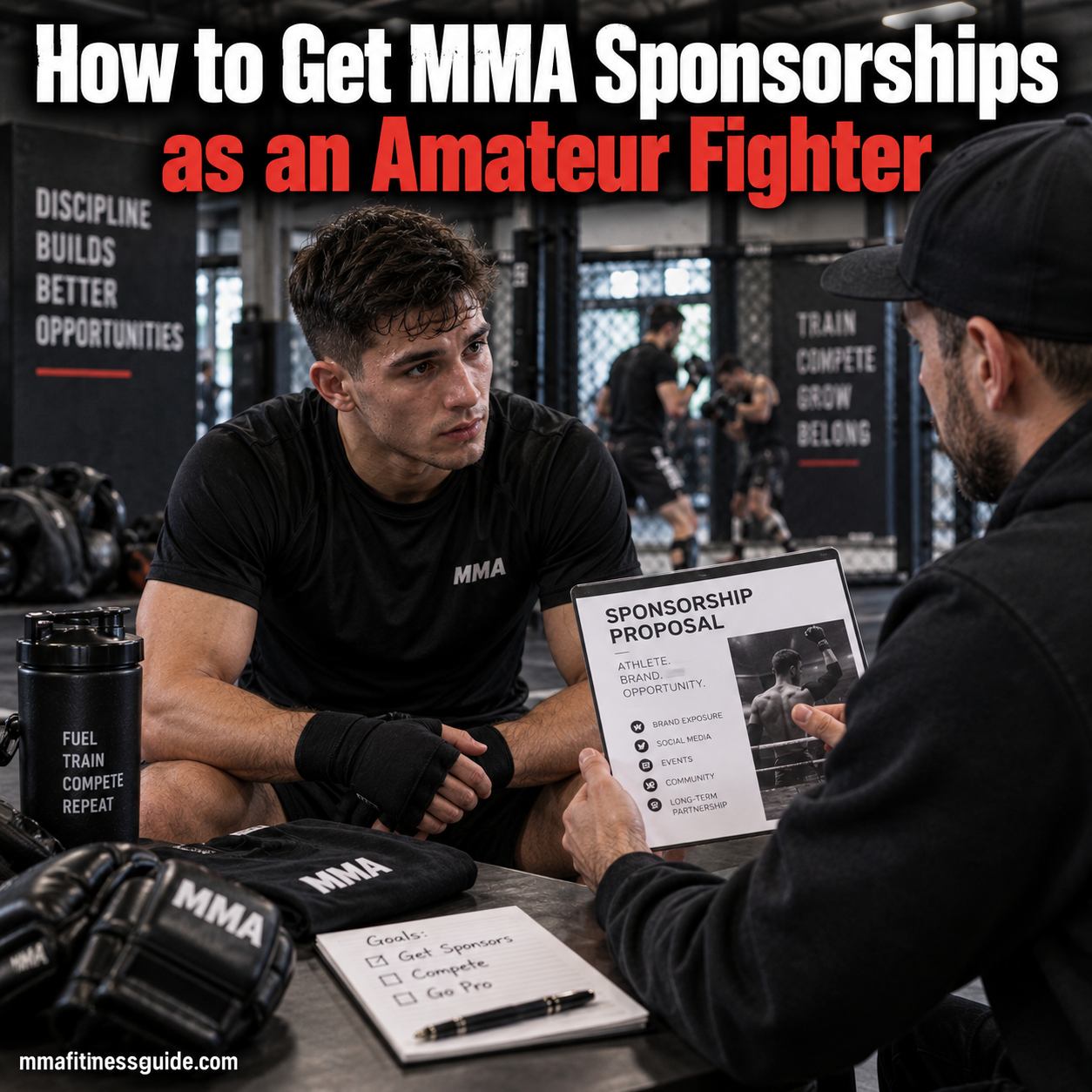
A fighter media kit is a short document that introduces you to potential sponsors and explains the promotional opportunities you offer.
Think of it as a sponsorship resume combined with a concise business proposal.
It should answer four questions:
Who are you? Who follows you? What can you offer? How can a business work with you?
You can create a media kit using Canva, Google Slides, or another design application.
A polished two- to four-page PDF is often sufficient for an amateur fighter.
What to Include in Your Media Kit
Your media kit should contain the following information.
Athlete introduction: Include your full name, weight class, gym affiliation, hometown, and a brief biography.
Fight history: Provide your verified amateur record, relevant competition results, and confirmed upcoming events.
Professional photographs: Include a recognizable portrait and at least one quality training or competition image.
Social media statistics: Show your follower counts, typical reach, engagement, and audience demographics when available.
Partnership opportunities: Explain what promotional activities you can provide.
Previous partnerships: Include examples of completed collaborations if you have them.
Contact information: Provide a professional email address and relevant social media links.
Keep the layout clean and easy to scan.
A business owner should be able to understand your background and potential value within a few minutes.
What if You Haven’t Had Your First Fight?
You can still create a media kit.
Highlight your training history, gym affiliation, athletic background, and preparation for your amateur debut.
Do not invent accomplishments or exaggerate your experience.
A first-time competitor can offer value through local connections, consistent content, and community involvement.
Include Meaningful Social Media Statistics
Follower count is useful, but it doesn’t tell the entire story.
Consider including:
- Total followers by platform.
- Average views across recent videos.
- Typical post reach.
- Average engagement.
- Audience locations.
- Audience age ranges when available.
- Examples of successful content.
Use actual analytics rather than estimates presented as verified numbers.
If your audience is primarily located near a potential sponsor, highlight that geographic connection.
Calculate Your Engagement Rate
One commonly used engagement-rate calculation is:
Engagement Rate = (Likes + Comments) ÷ Followers × 100
For example, if a post receives 80 likes and 12 comments from an account with 2,000 followers:
92 ÷ 2,000 × 100 = 4.6%
That post has a 4.6% engagement rate using this particular method.
Different platforms and marketers use different formulas, including calculations based on reach or impressions.
Explain which method you use and avoid presenting one unusually successful post as your typical performance.
Use Professional Photographs
Your media kit should include at least one sharp, recognizable photograph.
Good options include a training portrait, a properly framed action photograph, or an image taken after an official competition.
Avoid blurry screenshots and heavily filtered photographs.
If you cannot afford a professional photographer, arrange a simple photo session with a capable local photographer or teammate.
Use natural lighting, a clean background, and proper composition.
Our article on photography and video training tips for promotions explains how to create more effective visual material.
Step 4: Pitch Sponsors Professionally
Once your media kit is ready, begin contacting businesses.
A good sponsorship pitch should be personalized, concise, and focused on the potential sponsor’s interests.
Avoid opening with a lengthy description of how expensive your training has become.
Your financial needs may explain why you’re seeking support, but the business also needs a reason to participate.
Research the Business Before Writing
Spend a few minutes understanding what the company sells, who its customers are, and how it markets itself.
Look for a genuine connection.
If you regularly eat at a particular restaurant, mention that relationship.
If a local apparel company promotes community athletics, explain how your training content could fit its existing marketing.
Do not claim to use products you have never tried.
Sample MMA Sponsorship Email
Subject: Partnership Opportunity with [Your Name], Local MMA Athlete
Hi [Name],
My name is [Your Name], and I’m an amateur MMA fighter training at [Gym Name] in [City].
I’m currently preparing for [upcoming competition or athletic goal] and reaching out to a few local businesses about potential sponsorship opportunities.
I noticed that [specific observation about the business], and I think there could be an opportunity to introduce your brand to my local training community.
I’d love to discuss a partnership involving social media content, local promotion, or another arrangement that supports your business goals.
I’ve attached a short media kit with information about my background, audience, and potential partnership options.
Would you be available for a brief conversation next week?
Thank you for your time.
[Your Name]
[Instagram or website]
[Contact information]
Keep Your Pitch Specific
A business owner should be able to understand your proposal in less than a minute.
Explain who you are, why you chose their business, what you can offer, and what you would like to discuss.
Attach your media kit or provide a convenient link.
Avoid sending large attachments without warning.
Follow Up Without Becoming Persistent
Business owners are busy, and your initial message may go unnoticed.
A polite follow-up after approximately one week is reasonable.
If there is still no response, one final follow-up may be appropriate.
After that, move on unless the business invites further communication.
Keep a record of contact dates and responses.
Sponsorship decisions depend on budgets, marketing priorities, and timing. An unanswered email does not necessarily reflect your athletic potential.
Step 5: Offer Value Instead of Simply Asking for Money
One of the biggest mistakes fighters make is asking for free gear or financial support without explaining what the sponsor receives in return.
A sponsorship becomes easier to discuss when you present a concrete exchange.
Instead of saying, “Can you sponsor my next fight?” explain what the business receives.
Potential deliverables include:
- Social media posts featuring the sponsor.
- Promotional stories and short-form videos.
- Original training photography.
- Community appearances.
- Event-related exposure when permitted.
- Product demonstrations.
- Introductions to relevant local audiences.
The exact benefits depend on your audience, available resources, and the sponsor’s objectives.
Create Simple Sponsorship Packages
You can organize potential partnerships into different levels.
For example, an entry-level arrangement might involve a business contributing $100–$250 toward an event in exchange for one promotional post, one story, and a post-event acknowledgment.
A larger fight-camp partnership might involve $300–$500 in exchange for several promotional posts, training photographs, and additional agreed content.
An ongoing arrangement could involve monthly support in exchange for recurring content and periodic campaign reporting.
These amounts are hypothetical examples of package structure, not verified industry pricing.
Actual compensation should reflect your audience, deliverables, content rights, and the sponsor’s budget.
Don’t Promise Exposure You Cannot Control
Never guarantee that a promotional post will produce sales.
Similarly, do not promise television coverage, cage signage, broadcast mentions, or logo placement without authorization.
Event organizers and athletic commissions may restrict sponsor placement on shorts, walkout clothing, banners, and other equipment.
Confirm what is permitted before offering those benefits.
Negotiate Content Usage Rights
A sponsor may want to reuse your photographs or videos in advertisements.
That is different from simply reposting your content.
Clarify whether the business can use your image in paid advertising, how long that permission lasts, which platforms are covered, and whether additional compensation applies.
You should also confirm that you have the necessary rights to license the photographs or videos.
A photographer may retain copyright even when you appear in the image.
Step 6: Be Consistent and Reliable After Landing a Sponsor
Securing a sponsorship is only the beginning.
Once a business agrees to support you, your responsibility is to deliver the promised promotional activities.
Put the agreement in writing, even when working with a small local company.
What Should a Sponsorship Agreement Include?
Document the following:
- Financial contributions or products provided.
- Promotional deliverables.
- Posting deadlines.
- Payment terms.
- Partnership duration.
- Content approval requirements.
- Image and video usage rights.
- Exclusivity restrictions.
- Termination conditions.
- Procedures for canceled competitions.
For example, a sponsor might contribute toward your travel expenses in exchange for two Instagram posts and three stories over a six-week period.
If your opponent withdraws and the event is canceled, the agreement should explain whether you will provide alternative content, postpone the campaign, or return any funds.
Clear expectations prevent unnecessary disagreements.
Track Your Commitments
Maintain a simple sponsorship calendar.
Record when you need to publish partnership announcements, training content, fight-week promotions, and campaign reports.
Send the sponsor links to published content and provide updates when circumstances change.
After a campaign, share relevant results such as views, reach, engagement, and completed deliverables.
Don’t promise that every campaign will produce exceptional numbers.
Consistent communication and accurate reporting are more valuable than inflated performance claims.
Disclose Paid Partnerships
Sponsored content must be transparent.
In the United States, Federal Trade Commission endorsement guidance addresses disclosures when an endorser has a material connection with a brand that audiences might not otherwise expect.
Money, free products, discounts, and other benefits can create material connections.
Make disclosures clear and conspicuous. Use applicable platform partnership tools without assuming those tools alone always satisfy disclosure requirements.
Avoid making unsupported claims about supplements, recovery products, or medical services.
Step 7: Document Your Journey and Create Sponsor-Friendly Content
Your fighting career provides a natural source of content.
Training sessions, competition preparation, travel, recovery, and personal development can all become stories that supporters follow.
The challenge is documenting these experiences without interfering with your athletic responsibilities.
Develop a Weekly Content Routine
A manageable schedule might include:
- Monday: Training highlight.
- Wednesday: Technique or conditioning clip.
- Friday: Personal progress update.
- Weekend: Competition preparation or community content.
This is a starting framework, not a requirement to post every day.
Film several clips during one session when your coach and training partners permit it.
Edit them later rather than interrupting practice repeatedly.
Create Content That Helps Sponsors
Suppose a local apparel company provides training clothing.
You could photograph the clothing during an ordinary training session, explain how you use it, and include the company in a clearly disclosed promotional post.
A restaurant partnership might involve a short video about your usual post-training meal.
Keep the presentation authentic, but remember that genuine enthusiasm does not remove disclosure obligations.
Respect Privacy and Gym Rules
Obtain appropriate permission before filming training partners, especially minors.
Avoid revealing private coaching strategies, medical information, or competition preparation that your team wants to keep confidential.
Check event rules before posting professional fight photographs or broadcast footage.
Appearing in a video does not automatically give you permission to reuse it commercially.
For a broader perspective on how exposure influences the sport, read how media coverage shaped MMA’s growth .
Protect Your Mental Fitness
Social media can become stressful when every training session feels like an opportunity to create content.
Avoid judging your athletic progress by follower counts or video views.
Set boundaries around posting, comparison, and negative comments.
Your primary responsibility remains your training, health, and development as an athlete.
Our article on social media and mental fitness for athletes explores ways to maintain a healthier relationship with online platforms.
Step 8: Network at Events and Build Real Relationships
Not every sponsorship begins with an email.
Local competitions, martial arts seminars, community events, and industry expos create opportunities to meet business owners and marketing representatives.
Attend events with the intention of developing relationships rather than immediately requesting money.
Prepare a Short Introduction
You should be able to explain your background in approximately 20–30 seconds.
For example:
“I’m an amateur MMA fighter competing locally. I train at a gym here in town and create content about training and competition. I’m building relationships with local businesses that want to reach the martial arts community.”
From there, ask questions about the business.
Find out whether it has supported local athletes before and what types of marketing it currently uses.
Bring Useful Contact Information
A simple digital business card or printed card should include your name, social media handle, and professional email address.
You can also provide a QR code linking to your media kit.
Follow up after the event with a short message referencing your conversation.
Build Relationships Within Your Gym
Your coaches and teammates may know business owners who support combat sports.
Ask whether they would be comfortable making an introduction.
Do not pressure them or assume that their relationships automatically entitle you to sponsorship.
For more practical approaches, see our guide to networking and training tips for MMA professionals .
Step 9: Stay Authentic and Choose Sponsors Carefully
Not every sponsorship opportunity is worth accepting.
A business might offer money while expecting you to promote products you do not understand, make exaggerated claims, or participate in activities that conflict with your values.
Before agreeing to a partnership, research the company.
Ask yourself whether you understand its products, whether its marketing claims are credible, and whether you would feel comfortable recommending it to your training partners.
Be Especially Careful With Supplements
Combat sports athletes should exercise particular caution when considering supplement sponsorships.
A product marketed as natural or safe is not automatically free from contamination or prohibited substances.
If you compete under anti-doping rules, you remain responsible for understanding the requirements that apply to you.
Do not make claims about a product’s effectiveness, medical benefits, or anti-doping status without adequate evidence.
Avoid Unreasonable Exclusivity Agreements
A sponsor may ask you not to promote competing businesses.
Exclusivity can be reasonable in some circumstances, but it should have a clear scope and duration.
An agreement preventing you from working with every fitness-related business for several years could severely limit future opportunities.
Review restrictions carefully and obtain professional advice before signing substantial or long-term agreements.
Step 10: Understand Amateur Eligibility, Taxes, and Sponsorship Rules
Before accepting sponsorship money, confirm the rules governing your amateur status.
Regulations can differ between jurisdictions, sanctioning organizations, and competition formats.
Some rules distinguish reimbursement of legitimate expenses from compensation for competing. Others may impose additional conditions.
Do not assume that an arrangement permitted in one state or organization will be acceptable everywhere.
Contact the relevant athletic commission or sanctioning body and obtain clarification before accepting compensation that could affect your eligibility.
Keep Accurate Financial Records
Sponsorship contributions may have tax consequences.
Cash payments, free products, and services can be treated differently depending on the circumstances.
Maintain records of contributions received, agreements, business-related expenses, and payments.
Consult a qualified tax professional about reporting requirements and deductible expenses.
Sponsorship income should not be treated as automatically tax-free simply because you are an amateur athlete.
Step 11: Set Realistic Sponsorship Goals
There is no universal number of sponsors an amateur MMA fighter needs.
The answer depends on your actual expenses, the size of each partnership, and the amount of promotional work you can reasonably manage.
Start by calculating your expected competition costs.
For example, a hypothetical fight camp might involve:
- Gym and coaching: $300.
- Travel: $250.
- Equipment: $150.
- Medical and registration expenses: $200.
- Nutrition-related expenses: $200.
The total is $1,100.
If you secure $400 in sponsorship support, you still need to cover $700.
You might seek one additional financial sponsor, several smaller contributions, or product partnerships that reduce eligible expenses.
These figures are illustrative. Your actual costs will depend on your location, training arrangements, competition requirements, and personal circumstances.
Avoid accepting more promotional commitments than you can fulfill.
Five poorly managed sponsors may create more problems than two well-structured partnerships.
Measure the Value of Your Partnerships
After completing a sponsorship campaign, evaluate the results.
Did you deliver everything promised? Did the sponsor receive useful content? Did the relationship create opportunities for future collaboration?
Ask the sponsor for feedback.
If the company wants more local visibility, you might adjust future content to highlight community activities.
If it values original photography, you could propose a content-focused arrangement.
Use actual results to improve your next proposal rather than assuming every sponsor wants the same benefits.
Step 12: Avoid Common MMA Sponsorship Mistakes
Several mistakes can undermine an otherwise promising partnership.
Sending Generic Messages
A mass-produced request makes it difficult for businesses to understand why you chose them.
Personalize your outreach and explain the connection between your audience and the company.
Exaggerating Your Audience
Inflated statistics damage credibility when a sponsor reviews your actual results.
Use accurate numbers and explain how they were calculated.
Promising Unauthorized Logo Placement
Competition organizers may restrict promotional material.
Confirm permissions before including logo placement in a sponsorship package.
Ignoring Written Agreements
Verbal promises leave important questions unanswered.
Document contributions, deliverables, deadlines, and cancellation arrangements.
Failing to Disclose Sponsorships
Promotional transparency is a legal and ethical responsibility.
Clearly disclose relevant material relationships with brands.
Accepting Every Offer
Some agreements create conflicts, excessive obligations, or reputational risks.
Evaluate whether each partnership fits your career and existing commitments.
Neglecting Existing Sponsors
Finding a new partner should not distract you from fulfilling commitments to businesses already supporting you.
Maintain communication and deliver the work you promised.
The solution is to approach sponsorship as an organized business activity rather than an occasional request for assistance.
Step 13: Build Sponsorships Into a Long-Term Fighting Career
Sponsorships can reduce expenses, but they are not guaranteed income.
An injury, canceled competition, changing business budget, or loss of audience engagement can affect a partnership.
Avoid depending on sponsorship money to cover essential living expenses unless the income is sufficiently reliable and you have appropriate financial reserves.
As your experience develops, you may explore other opportunities, such as coaching where qualified and permitted, creating educational content, or offering services related to your expertise.
Our article on how fighters can make money outside the cage explores additional income opportunities.
If your long-term goal includes coaching, operating a gym, or developing a sports-related company, read turning your passion for MMA into a business .
Treat each sponsorship as an opportunity to learn communication, negotiation, marketing, and relationship management.
Those skills can remain valuable long after your competitive career ends.
Frequently Asked Questions About Amateur MMA Sponsorships
Can You Get Sponsored Without an Amateur Fight Record?
Yes. A fighter preparing for their debut can approach businesses with a credible training background, an engaged audience, and a clear promotional proposal.
Be transparent about your experience and avoid presenting future competition plans as confirmed achievements.
How Many Instagram Followers Do You Need to Get Sponsored?
There is no universal minimum.
Businesses may consider audience location, engagement, content quality, and the relevance of your followers.
A small but engaged local audience can be useful for a neighborhood business.
Should You Ask Sponsors for Cash or Free Products?
Both are possible.
Ask for support that addresses your actual needs and creates a reasonable exchange for the business.
A product partnership can reduce expenses, while financial support may provide greater flexibility.
Can Amateur Fighters Put Sponsor Logos on Their Shorts?
It depends on the event organizer, applicable regulations, and any equipment or apparel rules.
Confirm permission before promising logo placement in a sponsorship agreement.
How Do You Keep Sponsors After Losing a Fight?
Continue fulfilling your agreed obligations.
Provide honest updates, publish appropriate content, and communicate professionally.
Competition results matter to some sponsors, but relationships may also depend on audience engagement, reliability, and brand alignment.
How Long Should a Sponsorship Agreement Last?
An event-specific arrangement may cover one competition, while an ongoing partnership might last several months.
The appropriate duration depends on the contribution, deliverables, and expectations of both parties.
Final Thoughts
Getting sponsored as an amateur MMA fighter is possible without a professional record or a massive online following.
Start by building a recognizable personal brand and documenting your training consistently. Research businesses that align with your audience, create a concise media kit, and approach potential partners with specific proposals.
Once you secure a sponsorship, put the agreement in writing and fulfill your commitments.
Track your results, communicate regularly, and be transparent about promotional relationships.
Most importantly, choose partnerships that make sense for your athletic career and the people who support it.
A sponsorship should help you train and compete while providing genuine value to the business involved.
Building those relationships takes time, but the communication and business skills you develop can benefit you well beyond your amateur fighting career.
Continue Building Your MMA Career Beyond the Cage
Getting your first sponsor is just one step toward building a sustainable MMA career. Whether you’re looking to attract more brands, grow your audience, or explore other income opportunities, these related guides can help you take the next step:
- Brand Partnerships the Right Way — Learn how to approach brands, establish expectations, and build professional relationships.
- Turning Your Passion for MMA Into a Business — Explore ways to turn your experience in MMA into a business beyond competition.
- How Fighters Can Make Money Outside the Cage — Discover additional income opportunities that can support your fighting career.
- Networking and Training Tips for MMA Professionals — Build connections with coaches, athletes, promoters, and other people in the industry.
- Photography and Video Training Tips for Promotions — Create better visual content to showcase your training and promote your personal brand.
- Social Media and Mental Fitness for Athletes — Learn how to manage your online presence without letting social media interfere with your training.
- YouTube and Content Creation for Fighters — Find ways to document your journey, connect with fans, and create content that attracts potential sponsors.
- How Media Coverage Shaped MMA’s Growth — Understand how media exposure helped MMA reach wider audiences and why visibility matters in the sport.