Introduction
Your rash guard takes a beating every week. Between sweat, friction, mat contact, constant stretching, and repeated washing, few pieces of MMA equipment experience as much wear.
A typical training session exposes your rash guard to sweat, skin oils, and whatever it picks up from shared mats and training partners. After class, it often ends up stuffed inside a gym bag alongside damp shorts, hand wraps, and other equipment.
Leave it there overnight, and you may discover an unpleasant smell that becomes increasingly difficult to remove.
The good news is that maintaining rash guards doesn’t require expensive cleaning products or a complicated routine. Most problems can be prevented with prompt washing, appropriate detergent, careful drying, and proper storage.
Whether you train MMA, Brazilian jiu-jitsu (BJJ), wrestling, or no-gi grappling, this guide explains how to wash and care for rash guards, remove stubborn odors, prevent fabric damage, and recognize when it’s time for a replacement.
Why Proper Rash Guard Care Matters
Rash guards are designed to withstand demanding athletic activities while remaining lightweight and flexible.
Most use synthetic materials such as polyester, nylon, and elastane (also called spandex). These fabrics provide different performance characteristics depending on their proportions and construction.
Common features include:
- Moisture management: Helps move perspiration away from the skin.
- Compression: Provides a close fit that moves with the body.
- Stretch and flexibility: Allows unrestricted movement during grappling and striking.
- Durability: Helps the garment withstand repeated friction and stretching.
- Antimicrobial treatments: Some products contain treatments intended to reduce odor-causing microbial growth.
- UV resistance: Certain rash guards provide ultraviolet protection, particularly those designed for outdoor activities.
Not every rash guard includes all these features, and antimicrobial treatments don’t make clothing self-cleaning.
Regular washing remains necessary.
What Happens When You Neglect Your Rash Guard?
Poor maintenance can lead to several problems.
Persistent odors: Sweat, skin oils, and other residues can accumulate in synthetic fabrics, creating unpleasant smells that return shortly after washing.
Peeling graphics: Heat, abrasion, and repeated stretching can damage heat-transferred logos and printed designs.
Fabric thinning: Excessive friction and aggressive washing can weaken material over time.
Loss of elasticity: High heat, age, and repeated mechanical stress can contribute to stretched collars, sleeves, and waistbands.
Color fading: Harsh cleaning products, prolonged sunlight, and unsuitable washing conditions may cause colors to lose their original appearance.
Hygiene concerns: Dirty training clothing can retain microorganisms and organic material from contact sports environments.
Washing rash guards after each training session helps remove contamination and reduces the chance of transferring grime back onto your skin or shared training surfaces.
Clean clothing alone cannot prevent skin infections, however. Mat hygiene, showering, covering wounds appropriately, and avoiding training when you have a suspected contagious skin infection are also important.
For a broader approach to equipment maintenance, read our guide on gear care as a life discipline .
1. Rinse or Wash Immediately After Training
The most important rash guard care habit begins as soon as training ends.
A damp rash guard left inside a closed gym bag creates conditions where odor-causing microorganisms can multiply.
Synthetic fabrics can also retain body oils and odor-producing compounds, making delayed washing particularly frustrating.
What to Do Immediately After Class
Ideally, remove your rash guard and place it in a separate washable laundry bag.
Once you get home, wash it according to the garment’s care label.
If you cannot wash it immediately:
- Remove it from your gym bag as soon as possible.
- Rinse it with cool water if practical.
- Gently squeeze out excess moisture without twisting aggressively.
- Hang it in a ventilated location until laundry time.
- Wash it before wearing it again.
Rinsing helps remove some sweat and loose residue, but it is not a substitute for laundering with detergent.
Should You Leave a Rash Guard in Your Car?
Avoid leaving damp training clothing inside a hot vehicle.
Heat and trapped moisture can worsen odors, and prolonged exposure to high temperatures may damage elastic fibers and printed graphics.
If you train before work or have a long commute, carry a separate laundry bag and remove damp clothing promptly when you reach your destination.
A ventilated compartment can help during transportation, but it should not become permanent storage.
Never Rewear an Unwashed Rash Guard
Even if your rash guard dries completely after training, it still contains residues from the previous session.
Drying does not remove sweat, skin oils, or all microorganisms.
Wash it after every training session, particularly when participating in close-contact grappling.
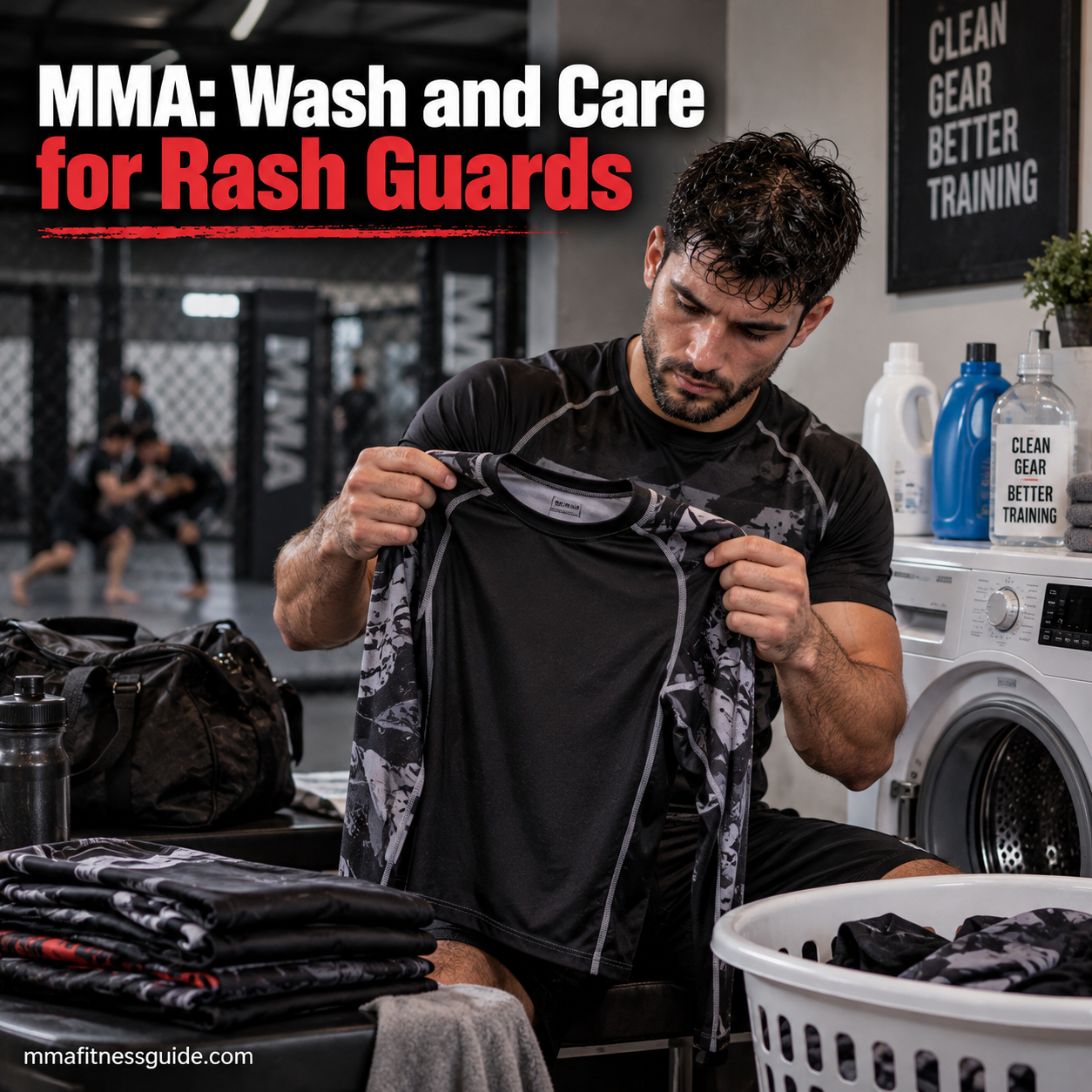
2. Turn Your Rash Guard Inside Out Before Washing
Turning your rash guard inside out takes only a few seconds and can help protect its appearance.
Most rash guards feature printed graphics, sublimated designs, or heat-transferred logos.
These decorative elements may experience unnecessary abrasion when they rub against other garments inside a washing machine.
Inside-out washing reduces direct contact between the exterior surface and surrounding clothing.
Benefits of Washing Inside Out
This practice can help:
- Reduce abrasion on exterior graphics.
- Limit surface pilling.
- Protect decorative logos.
- Reduce unnecessary wear on the outer fabric.
- Expose the inner surface to washing action.
The inside of your rash guard sits directly against your skin, collecting sweat, body oils, and other residues.
Turning it inside out can help expose these areas during cleaning.
However, it does not replace proper detergent, adequate rinsing, or a suitable wash cycle.
Use a Mesh Laundry Bag for Extra Protection
If your rash guard has delicate graphics or frequently gets caught on other clothing, consider placing it inside a mesh laundry bag.
A mesh bag can reduce tangling and friction while allowing water and detergent to circulate.
This is particularly useful for lightweight compression garments.
Choose a bag large enough that the rash guard isn’t tightly compressed inside it.
3. Wash in Cold Water
Cold water is generally a good starting point for washing rash guards, especially those containing elastane or heat-sensitive graphics.
However, always check the manufacturer’s care label first.
Some garments permit warm washing, and the appropriate temperature may depend on the fabric, construction, and cleaning requirements.
Why Excessive Heat Can Be a Problem
Repeated exposure to temperatures above the garment’s recommended limit may contribute to:
- Elastic fiber deterioration.
- Loss of shape.
- Damage to heat-transferred graphics.
- Color fading.
- Changes in fabric texture.
Elastane is particularly sensitive to excessive heat.
Once elastic fibers lose their ability to recover, the rash guard may develop loose sleeves, a stretched collar, or a baggy waist.
Is Cold Water Enough to Clean Sweaty Rash Guards?
For routine laundering, cold water combined with an appropriate detergent and effective wash cycle can remove sweat and ordinary soil.
Modern detergents are often formulated to work at lower temperatures.
However, cold water is not inherently equivalent to hot water for every cleaning or disinfection task.
If a garment has been contaminated in a way that requires special laundering, follow appropriate hygiene guidance and the manufacturer’s instructions.
Do not assume that a cold wash sterilizes clothing.
Choose the Right Washing Cycle
A gentle or normal cycle is usually appropriate, depending on the garment’s care label and level of soiling.
Use a gentle cycle for lightweight rash guards with delicate graphics.
A normal cycle may be appropriate for more durable garments when permitted by the manufacturer.
Avoid overloading the washing machine.
Clothing needs enough room to move so detergent and water can circulate effectively.
4. Use Mild Detergent and Avoid Harsh Chemicals
Choosing the right detergent is more important than buying an expensive product marketed specifically for athletes.
A suitable laundry detergent should remove sweat, body oils, and ordinary dirt without damaging the fabric.
What Type of Detergent Works Best?
Good options include:
- Mild liquid laundry detergent.
- Fragrance-free detergent.
- Detergent formulated for synthetic athletic clothing.
- Products recommended by the garment manufacturer.
Fragrance-free detergents can be particularly useful for athletes with sensitive skin or fragrance sensitivities.
Sports-specific detergents may help with persistent odors, but they aren’t necessary for every wash.
Avoid Using Too Much Detergent
More detergent doesn’t automatically produce cleaner clothing.
Excessive detergent can be difficult to rinse completely, especially in high-efficiency washing machines.
Residue may remain in the fabric and contribute to stiffness or lingering odors.
Follow the detergent manufacturer’s dosing instructions, adjusting for load size, water hardness, and soil level.
If your rash guard feels slippery or heavily scented after washing, consider whether you’re using too much detergent or overloading the machine.
Why Fabric Softener Is Usually a Poor Choice
Fabric softeners can deposit conditioning ingredients on textile fibers.
These deposits may interfere with moisture-management performance in some athletic fabrics and can contribute to residue buildup.
For most synthetic rash guards, skipping fabric softener is a sensible choice.
The garment should remain comfortable without it.
What About Bleach?
Avoid chlorine bleach unless the care label explicitly permits it.
Chlorine bleach can damage certain synthetic fibers, affect colors, and degrade elastic components.
Oxygen-based laundry products may be compatible with some garments, but suitability depends on the product and fabric.
Always follow both the garment label and cleaning product instructions.
Never mix different cleaning chemicals.
5. Use White Vinegar for Odor Control — With Caution
White vinegar is a popular household remedy for smelly athletic clothing.
Some athletes use diluted vinegar during laundering to help address certain odors.
However, vinegar is not a reliable disinfectant for sports clothing, and it should not be presented as a substitute for detergent or appropriate hygiene procedures.
Its effectiveness varies depending on the odor source, fabric, and washing conditions.
Is Vinegar Safe for Rash Guards?
That depends on the garment and washing machine.
Some manufacturers advise against using vinegar because acidic solutions may affect certain materials, finishes, or machine components with repeated exposure.
Check the care instructions before using it.
If both the garment and washing machine manufacturers permit vinegar, follow their recommended method and quantity rather than assuming that half a cup is universally safe.
Never Mix Vinegar With Bleach
Combining vinegar with chlorine bleach can release dangerous chlorine gas.
Do not mix vinegar with bleach or other cleaning chemicals.
Better First Steps for Persistent Odors
Before experimenting with vinegar, try:
- Washing the rash guard promptly after training.
- Using an appropriate amount of quality detergent.
- Selecting a detergent designed for synthetic athletic clothing.
- Avoiding fabric softener.
- Ensuring the garment rinses thoroughly.
- Drying it completely before storage.
If odors persist, consider a laundry pretreatment specifically labeled as safe for the garment’s fabric.
Follow the product’s instructions carefully.
6. Avoid the Dryer and Air Dry Whenever Possible
How you dry a rash guard matters just as much as how you wash it.
Excessive heat can damage elastane fibers, affect garment shape, and weaken certain printed graphics.
Air drying is generally the gentlest approach.
How to Air Dry a Rash Guard
After washing:
- Remove the rash guard promptly from the washing machine.
- Gently squeeze out excess water if necessary.
- Reshape the garment.
- Hang it over a drying rack or lay it flat.
- Allow air to circulate around the fabric.
- Make sure it is completely dry before storing it.
Avoid tightly folding a damp rash guard over a narrow surface where moisture can remain trapped.
Should You Dry Rash Guards in Direct Sunlight?
Occasional outdoor drying may be acceptable, but prolonged exposure to intense sunlight can fade certain dyes and degrade some textile materials.
A shaded, well-ventilated location is a good option.
Indoor drying works well when airflow is sufficient.
A fan or dehumidifier can help in humid environments.
Can You Ever Use a Tumble Dryer?
Follow the garment’s care label.
Some rash guards permit tumble drying on a low setting, while others specify air drying only.
If machine drying is allowed, use the recommended temperature and avoid overdrying.
Air drying remains a practical choice when you want to minimize heat exposure.
7. Avoid Rough Surfaces and Hook-and-Loop Fasteners
Rash guards are designed to stretch and move with the body, but their fabric can snag on rough materials.
Hook-and-loop fasteners, commonly known by the Velcro brand name, are particularly troublesome.
The hook side can catch individual fibers and pull them away from the fabric surface.
This can create fuzziness, pilling, and visible damage.
Common Sources of Snags
Watch for:
- Glove closures.
- Shin guard straps.
- Rough gym bag interiors.
- Exposed zippers.
- Damaged laundry baskets.
- Rough equipment surfaces.
- Loose hooks or fasteners.
Some contact with training equipment is unavoidable, but unnecessary friction during washing and storage can be reduced.
Protect Your Rash Guard in the Gym Bag
Keep rash guards away from exposed hook-and-loop straps.
Close glove and shin guard fasteners before packing them.
A separate clothing compartment or lightweight laundry pouch can provide additional protection.
For practical packing strategies, read MMA: Organize Your Gym Bag Efficiently .
What About Mat Friction?
Mat friction is part of grappling.
A properly fitted rash guard made for combat sports should tolerate normal training contact, but no fabric is completely resistant to abrasion.
Avoid dragging the garment across rough concrete, unfinished flooring, or other surfaces outside its intended use.
8. Never Iron or Heat-Press Your Rash Guard Unless Specifically Permitted
Most MMA rash guards are designed to be worn without ironing.
Their synthetic materials and printed graphics may be sensitive to direct heat.
Placing a hot iron against the fabric can cause permanent damage.
Potential problems include:
- Melted or distorted synthetic fibers.
- Damaged graphics.
- Shiny heat marks.
- Loss of elasticity.
- Fabric deformation.
What About Steam?
Steam also introduces heat and moisture.
Unless the manufacturer specifically permits steaming, avoid using it.
How to Remove Wrinkles Without Heat
Rash guards rarely require wrinkle removal because their stretch fabric naturally smooths when worn.
If wrinkles appear after washing, gently reshape the garment and allow it to dry flat or on a suitable rack.
Avoid aggressive stretching.
If a rash guard has developed permanent creases or deformation from heat, additional ironing is unlikely to restore it.
9. Don’t Mix Rash Guards With Heavy or Abrasive Items
Washing rash guards with jeans, heavy jackets, or clothing containing exposed hardware can increase abrasion.
During the wash cycle, rough materials repeatedly rub against lightweight synthetic fabric.
Over time, this may contribute to pilling, snags, and damaged graphics.
What Should You Wash Rash Guards With?
Suitable laundry companions include:
- Other rash guards.
- MMA training shorts without exposed fasteners.
- Lightweight athletic shirts.
- Compression shorts.
- Similar synthetic workout clothing.
Separate garments by color when necessary, particularly during their first few washes.
Dark or brightly colored items may release excess dye.
Should You Wash Rash Guards With Towels?
It’s generally better to separate them.
Towels can be heavy and abrasive, and they may release lint that clings to synthetic fabrics.
Washing lightweight athletic clothing together reduces unnecessary friction.
Avoid Overloading the Machine
Even when washing similar garments, leave enough space for proper movement.
An overloaded machine may rinse poorly and leave detergent or sweat residues behind.
Smaller, appropriately sized loads can be more effective than stuffing everything into one cycle.
10. Rotate Your Rash Guards
If you train regularly, owning more than one rash guard makes maintenance easier.
A single rash guard worn five days per week will experience frequent washing, stretching, and abrasion.
Rotation spreads that wear across multiple garments and gives each one time to dry completely.
How Many Rash Guards Do You Need?
Your ideal number depends on training frequency and laundry habits.
| Training frequency | Practical starting quantity |
|---|---|
| 1–2 sessions per week | 2 rash guards |
| 3–4 sessions per week | 3–4 rash guards |
| 5–6 sessions per week | 4–6 rash guards |
| Multiple sessions per day | 5–7 or more |
These are practical estimates rather than strict requirements.
If you wash clothing daily, you may need fewer.
If you do laundry twice per week, additional garments can be convenient.
Always Use a Clean Rash Guard
Rotation should never mean reusing dirty clothing.
Each garment should be washed after training and completely dried before being worn again.
For beginners building their first equipment collection, rash guards are only one part of the overall kit.
Our guide to essential gear for beginner MMA fighters explains how to prioritize initial purchases.
Athletes looking for fit-specific clothing and equipment can also explore our women’s gear guide for MMA and BJJ .
Troubleshooting Common Rash Guard Problems
Even with careful maintenance, problems can develop.
Understanding their causes helps you determine whether the garment can be restored or should be replaced.
Persistent Odor That Returns After Washing
A rash guard may smell clean immediately after laundering but develop an unpleasant odor as soon as you begin sweating.
This can happen when odor-producing residues remain embedded in the fabric.
Try the following:
- Wash the garment promptly after use.
- Pretreat according to the detergent manufacturer’s instructions.
- Use a detergent suitable for synthetic athletic fabrics.
- Avoid fabric softener.
- Use the correct detergent quantity.
- Ensure thorough rinsing.
- Dry completely.
If the odor persists despite repeated appropriate cleaning, replacement may be reasonable.
Fabric Pilling
Pilling occurs when loose fibers form small balls on the fabric surface.
It commonly develops in areas exposed to friction, such as the torso, shoulders, and underarms.
To reduce further pilling:
- Wash inside out.
- Use a mesh laundry bag.
- Separate abrasive clothing.
- Avoid excessive mechanical agitation.
Minor pilling is usually cosmetic.
However, extensive pilling accompanied by thinning or holes may indicate significant wear.
Peeling Logos
Heat-transferred logos can deteriorate through repeated stretching, abrasion, and unsuitable laundering.
To slow the damage:
- Turn the garment inside out.
- Avoid excessive heat.
- Follow the care label.
- Keep it away from rough fasteners.
Once a logo begins peeling, washing cannot reliably restore its original bond.
Avoid attempting repairs with an iron unless the manufacturer provides specific instructions.
Stretched Sleeves or Collar
Elastic deterioration may cause the garment to lose its original compression.
Possible contributing factors include excessive heat, repeated stretching, aging, and improper storage.
Prevent unnecessary strain by avoiding aggressive wringing and drying methods that place excessive weight on narrow sections of fabric.
Lay the garment flat or drape it over a rack when appropriate.
Once elastane has permanently deteriorated, washing generally cannot restore the original fit.
Color Fading
To minimize fading:
- Wash according to the care label.
- Separate colors appropriately.
- Avoid chlorine bleach unless permitted.
- Reduce prolonged exposure to intense sunlight.
- Avoid unnecessary heat.
Sublimated graphics may resist certain types of surface cracking because the design is incorporated into the fabric, but they can still fade or deteriorate.
How to Wash a Rash Guard After a Particularly Dirty Training Session
Some sessions leave your gear dirtier than others.
Long grappling classes, competition days, and multi-session training camps may expose clothing to additional sweat and grime.
After these sessions, prioritize prompt laundering.
Remove the garment carefully, keep it separate from clean clothing, and wash it using the appropriate detergent and care-label settings.
If the rash guard has visible blood or other potentially infectious material on it, handle it carefully and follow applicable gym or public-health hygiene procedures. Use suitable laundry products and settings compatible with the garment.
Do not rely on vinegar, fragrance, or ordinary air drying to disinfect contaminated clothing.
If you have a suspected contagious skin infection, seek appropriate medical advice and avoid contact training until it is safe to return.
How to Store Rash Guards Between Training Sessions
Storage matters almost as much as washing.
A clean rash guard placed into a damp gym bag may develop odors before its next use.
Store Only When Completely Dry
Check the collar, underarms, seams, and thicker fabric sections.
These areas may retain moisture longer than the rest of the garment.
Do not fold or pack the rash guard until it is dry.
Choose a Cool, Dry Location
A clean drawer, closet shelf, or breathable storage compartment is usually sufficient.
Avoid leaving rash guards permanently inside a gym bag, especially if the bag regularly contains damp equipment.
Keep Clean and Dirty Gear Separate
Use a dedicated compartment or laundry pouch for used clothing.
Keep clean rash guards away from sweaty gloves, shin guards, and hand wraps.
For a complete packing system, see our MMA Gym Bag Essentials Checklist .
How Long Should a Rash Guard Last?
There is no universal lifespan for MMA rash guards.
Durability depends on several factors:
- Fabric composition and construction.
- Training frequency.
- Grappling intensity.
- Fit.
- Washing methods.
- Drying conditions.
- Contact with abrasive surfaces.
- Overall manufacturing quality.
For budgeting purposes, some frequently used rash guards may last approximately 9–18 months before noticeable wear prompts replacement.
Heavily used or poorly maintained garments may deteriorate in just a few months.
Others can remain functional for considerably longer.
These ranges are estimates, not established replacement schedules.
Signs You Need a New Rash Guard
Consider replacing the garment when you notice:
- Significant fabric thinning.
- Holes or torn seams.
- Persistent odors that remain after proper cleaning.
- Excessive loss of elasticity.
- A collar or sleeves that no longer fit securely.
- Damage that interferes with training.
A faded graphic alone doesn’t necessarily mean the garment is unusable.
However, a rash guard that no longer fits correctly or has extensive fabric damage may need replacement.
For a broader breakdown of equipment lifespans, read How Often to Replace Training Equipment .
Is It Worth Buying More Expensive Rash Guards?
Premium rash guards sometimes offer better stitching, more refined fabric construction, and improved fit.
However, a higher price doesn’t guarantee a longer lifespan.
A well-made budget rash guard may perform adequately for years, while an expensive garment can deteriorate quickly if exposed to excessive heat or abrasive conditions.
Before purchasing, evaluate:
- Fabric composition.
- Seam construction.
- Fit and sizing.
- Washing instructions.
- Graphic application.
- Customer feedback about durability.
- Manufacturer warranty or return policy.
Athletes who train frequently may benefit from investing in durable clothing, but proper maintenance remains essential regardless of price.
If you’re planning to expand your training wardrobe, our seasonal gear buying guide and deals can help you approach equipment purchases more strategically.
Frequently Asked Questions About Washing MMA Rash Guards
Should You Wash a Rash Guard After Every Training Session?
Yes. Wash rash guards after every session, especially when participating in MMA, BJJ, or other close-contact sports.
Sweat, body oils, and contact with training surfaces make regular laundering important.
Can You Wash Rash Guards in a Washing Machine?
Most rash guards are machine washable, but always check the care label.
Use the recommended water temperature and cycle, turn the garment inside out, and consider a mesh laundry bag.
Can You Put a Rash Guard in the Dryer?
Follow the manufacturer’s instructions.
Some garments allow low-temperature tumble drying, while others require air drying.
Air drying generally reduces unnecessary heat exposure.
Can You Use Fabric Softener on Rash Guards?
It’s usually better to avoid it.
Fabric softener can leave deposits on certain synthetic fibers and may interfere with moisture-management performance.
Does Vinegar Disinfect Rash Guards?
No. Household vinegar should not be relied upon as a laundry disinfectant.
Use appropriate detergent and follow relevant laundering guidance when additional hygiene measures are necessary.
Why Does My Rash Guard Smell Even After Washing?
Persistent odors may result from retained body oils, inadequate washing, detergent residue, or leaving clothing damp for too long.
Prompt laundering, appropriate detergent, thorough rinsing, and complete drying can help.
Should You Wash Rash Guards Separately?
You don’t necessarily need a separate load for every rash guard.
Wash them with similar lightweight athletic garments and avoid rough clothing, exposed fasteners, and heavy items.
How Many Rash Guards Should You Own?
Two or three may be sufficient for occasional training.
Athletes training five or six times per week may benefit from four to six or more, depending on laundry frequency.
Can You Wear a Rash Guard Twice Without Washing It?
Avoid doing so.
Even if the garment looks clean or has dried after training, it may retain sweat, oils, and microorganisms.
Use a freshly washed rash guard for each session.
Final Thoughts
Taking care of your MMA rash guards doesn’t require a complicated cleaning routine.
The most important habits are straightforward: remove sweaty clothing from your gym bag promptly, wash it after every session, follow the care label, avoid unnecessary heat and abrasion, and allow it to dry completely before storage.
Using the right detergent, separating lightweight athletic clothing from rough garments, and rotating between several rash guards can further reduce unnecessary wear.
Remember that expensive rash guards aren’t immune to damage. Even premium compression fabrics can lose elasticity, develop odors, or deteriorate when neglected.
Train hard, wash promptly, dry carefully, and replace your rash guard when its condition no longer supports comfortable, hygienic training.
Related MMA Gear Care Guides
Continue improving your equipment maintenance routine with these related articles from MMA Fitness Guide:
- Gear Care as a Life Discipline — Build consistent cleaning and maintenance habits for your training equipment.
- How Often to Replace Training Equipment — Learn how to identify wear and determine when equipment needs replacement.
- MMA: Organize Your Gym Bag Efficiently — Keep clean clothing separate from sweaty equipment and improve your packing routine.
- MMA Gym Bag Essentials Checklist — Make sure you have everything you need for training, hygiene, and post-workout care.
- Shin Guards: Fit, Protection, and Durability — Understand how to select and maintain another essential piece of MMA training equipment.