Which Martial Art Is Best for Street Fighting? A Realistic Comparison

Two men demonstrating realistic street fighting techniques representing different martial arts in an urban setting.
A realistic comparison of martial arts effectiveness in street fighting scenarios.

The question of which martial art is “best” for street fighting comes up often—but it’s usually framed the wrong way. Real-world altercations are chaotic, unpredictable, and dangerous. There are no rules, no referees, and often multiple variables such as environment, weapons, surprise, and stress.

This article takes a realistic, safety-focused look at how different martial arts translate to real-world self-defense, what actually matters in street situations, and why mindset and awareness often matter more than style.

This is not about encouraging violence. The goal is understanding practical self-defense, avoidance, and survival.

Continue reading “Which Martial Art Is Best for Street Fighting? A Realistic Comparison”
Common Technique Mistakes and Fixes

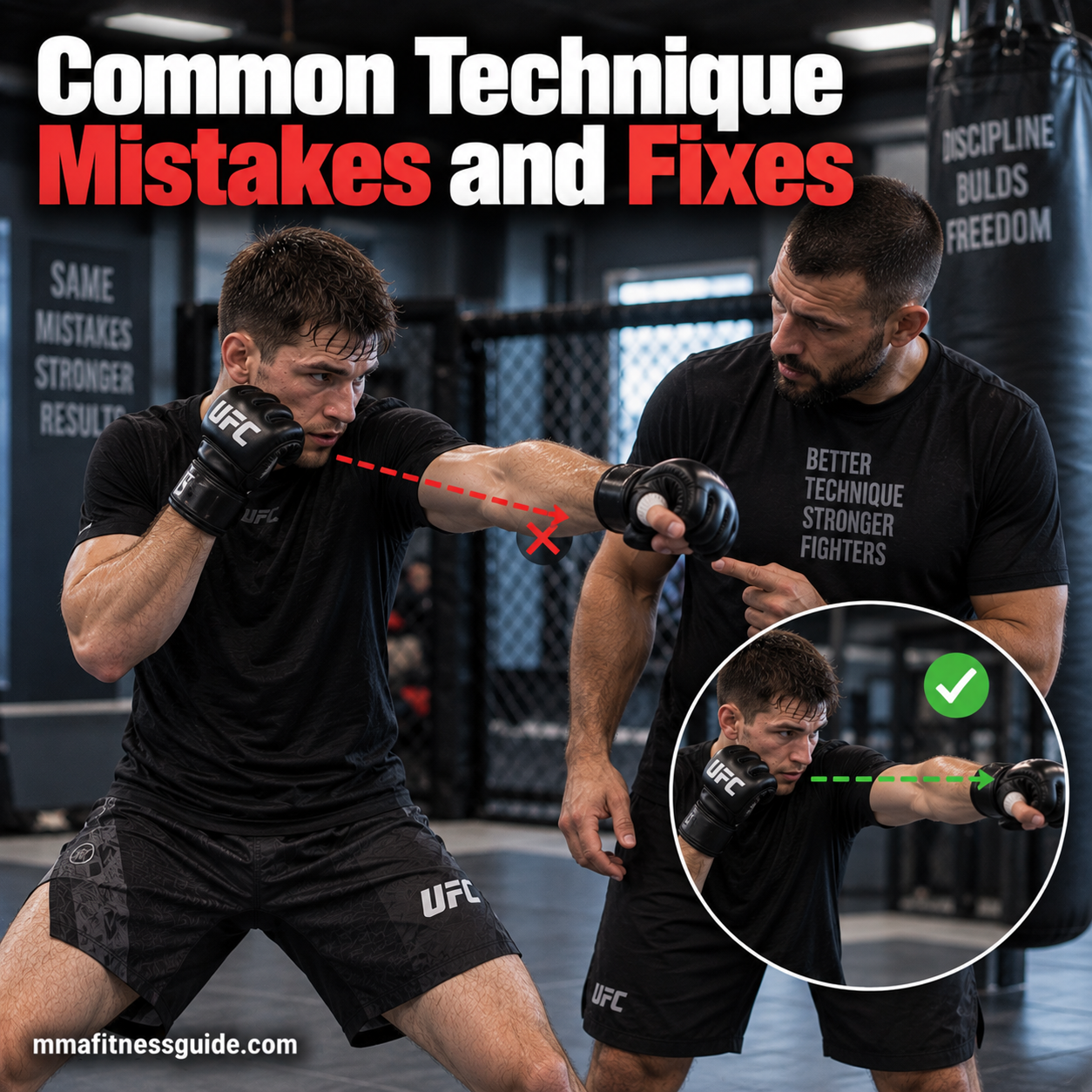
MMA coach correcting a fighter's punching technique with visual examples of incorrect and proper arm alignment.
Identifying technical errors and practicing controlled corrections can help MMA fighters improve their striking mechanics, balance, and consistency.

A punch that leaves your hand too low, a takedown attempted with your hips too far away, or a submission chased before securing position may seem like small mistakes during drilling. Repeat them hundreds of times, however, and they can become the movements you automatically fall back on during sparring.

Technical problems often aren’t caused by a lack of effort. They develop when speed, power, or repetition gets added before the underlying mechanics are consistent. Fatigue and pressure can make those weaknesses even easier to see.

The solution is usually specific rather than complicated: identify where the movement breaks down, isolate that part of the technique, slow it down, and rebuild it with better positioning. From striking and footwork to grappling and training habits, small corrections can change how efficiently a technique works.

Continue reading “Common Technique Mistakes and Fixes”

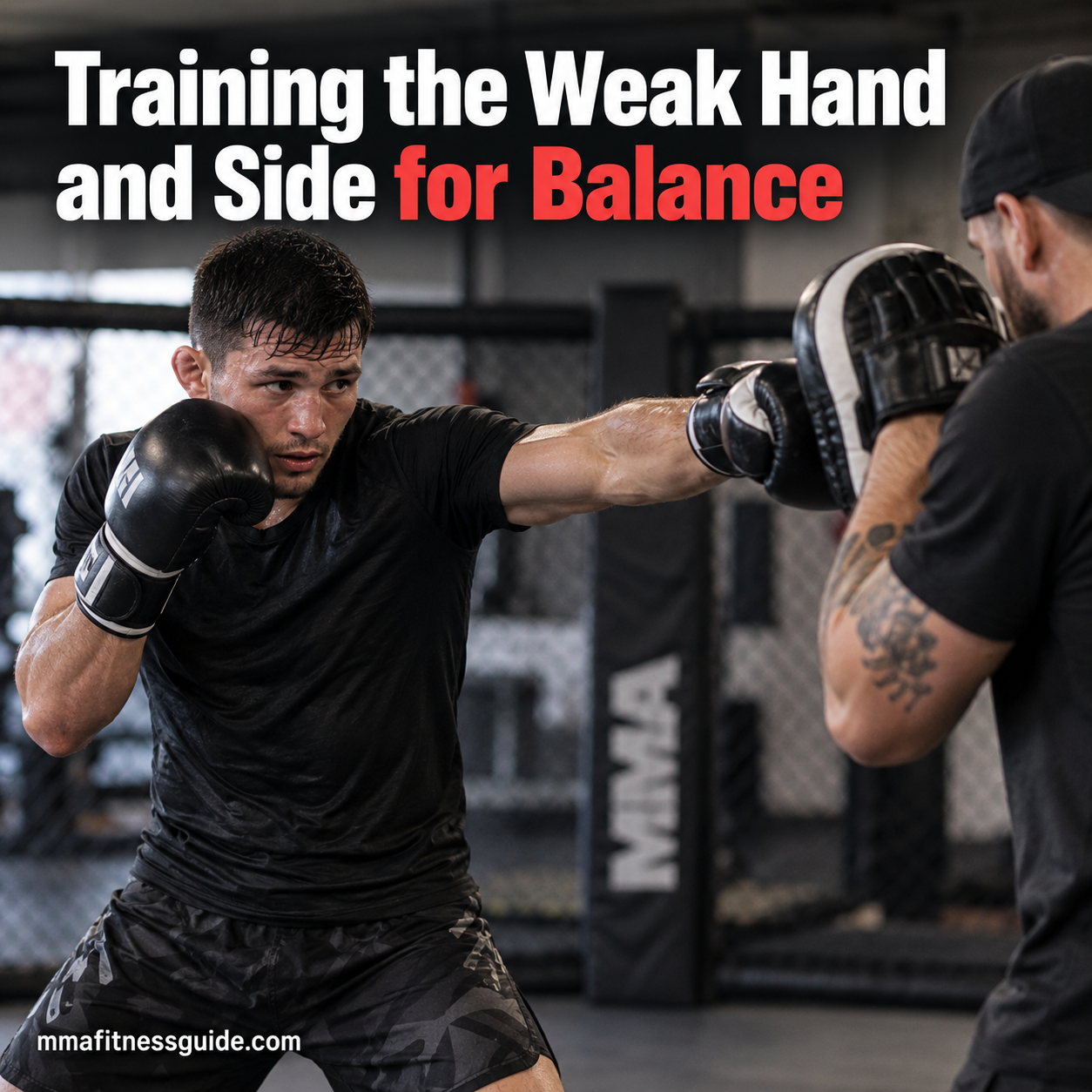
Training the Weak Hand and Side for Balance

MMA fighter training his weak hand with a coach to improve balance and striking coordination
Training the weaker hand and side helps MMA fighters develop better balance, coordination, defense, and adaptability.

Every fighter has a side they trust when things get difficult. It’s the hand that fires first, the direction they naturally pivot, and the side they instinctively use to defend or escape. That preference can become a problem when an opponent recognizes it.

In MMA, relying too heavily on your dominant side can make your attacks easier to anticipate and leave you uncomfortable when exchanges, scrambles, or positioning force you the other way. Developing your weaker side gives you more options without taking away the weapons you already do well.

The goal isn’t to become perfectly ambidextrous. It’s to make your weaker hand, footwork, defense, and grappling movements reliable enough that you can use them when the fight demands it.

Continue reading “Training the Weak Hand and Side for Balance”

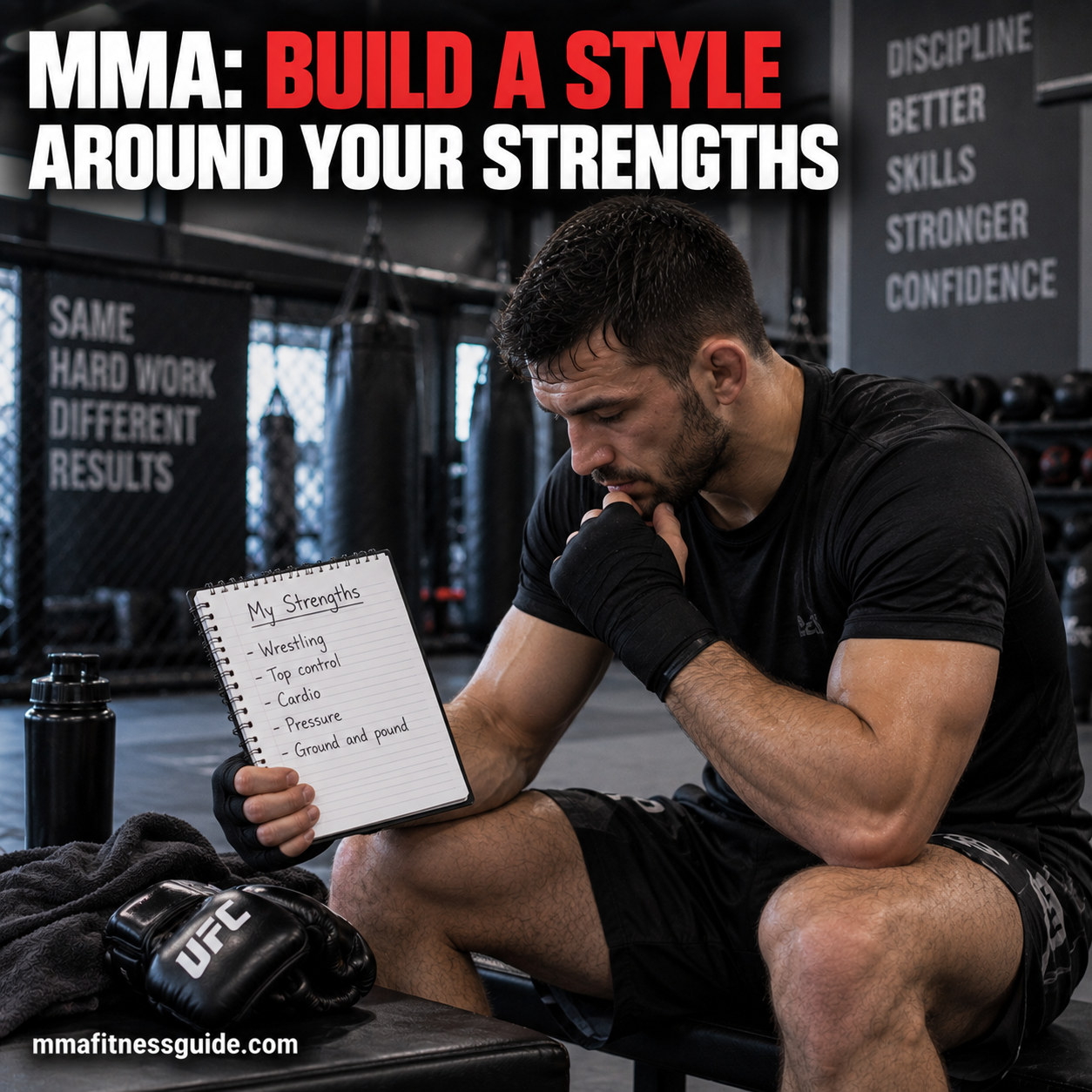
MMA: Build a Style Around Your Strengths

MMA fighter reviewing his wrestling, cardio, pressure, and ground control strengths while developing his fighting style.
Identifying the techniques, attributes, and positions that consistently work for you can help shape a more focused MMA training style.

A long-limbed fighter who controls opponents with a jab has different tools than a stocky wrestler who can repeatedly drive opponents into the cage. Give both fighters the same game plan, and you may be asking one of them to work against the attributes that already give them an advantage.

Building an MMA style starts with recognizing what consistently works for you—your best techniques, preferred range, physical attributes, athletic background, and reactions under pressure. Those strengths can then shape which combinations you drill, how you enter exchanges, where you try to take the fight, and how you spend your training time.

The goal isn’t to ignore weaknesses or become a one-dimensional fighter. It’s to develop enough skill everywhere while creating a clear path toward the positions and techniques where you perform best.

Continue reading “MMA: Build a Style Around Your Strengths”

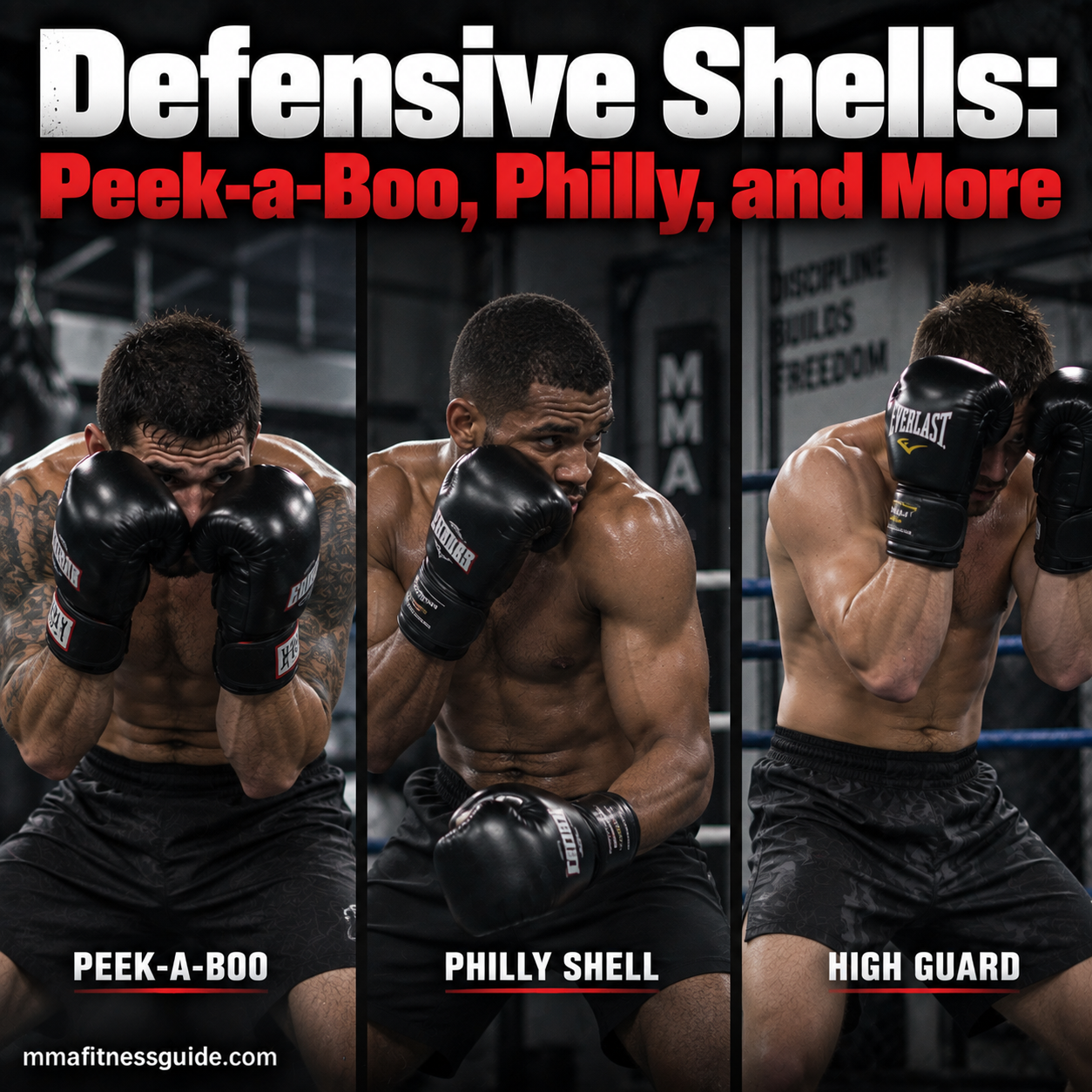
Defensive Shells: Peek-a-Boo, Philly, and More

Fighters demonstrating Peek-a-Boo, Philly Shell, and high guard defensive positions in a combat sports gym
Peek-a-Boo, Philly Shell, and high guard positions use different combinations of hand placement, head movement, shoulder positioning, and footwork.

A boxer with both gloves tight to the temples is solving a different defensive problem from a fighter standing sideways with the lead shoulder protecting the chin. Both positions can defend punches, but they create different openings for counters—and expose different targets.

These positions are commonly described as defensive shells. The high guard emphasizes coverage, the Peek-a-Boo combines a compact guard with active head movement, the Philly Shell uses shoulder positioning and deflections, and the long guard creates distance with frames and extended hand positioning.

The ruleset changes how each approach can be used. A defensive position developed for boxing may need significant adjustment in MMA, where kicks, knees, clinches, takedowns, smaller gloves, and cage pressure introduce threats that aren’t present in a boxing match.

Rather than treating one shell as the answer to every exchange, it helps to understand what each guard protects, where it creates openings, and how footwork and positioning complete the defense.

Continue reading “Defensive Shells: Peek-a-Boo, Philly, and More”

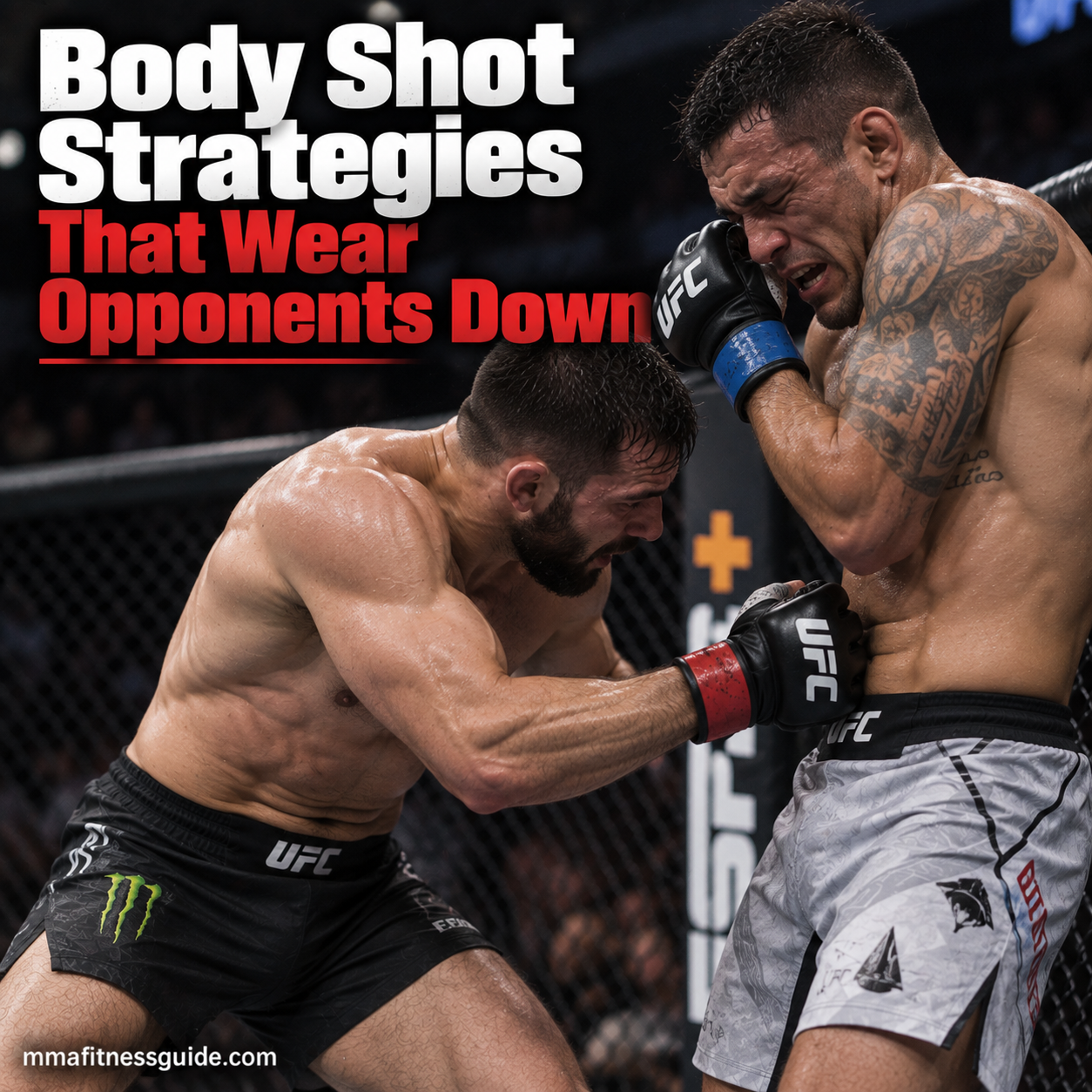
Body Shot Strategies That Wear Opponents Down

MMA fighter landing a body punch during a close-range striking exchange
Body attacks can disrupt an opponent’s rhythm, divide defensive attention, and create openings for follow-up strikes.

A clean hook to the ribs can change an exchange without producing a knockdown. The opponent may tighten their elbows, hesitate before stepping forward, or become more protective of the midsection—creating openings elsewhere.

That’s what makes sustained body work useful in MMA, boxing, Muay Thai, and kickboxing. Punches, kicks, knees, and teeps to legal body targets can disrupt breathing, punish predictable defensive positions, and force an opponent to divide their attention between protecting the head and torso.

Body attacks also create tactical opportunities beyond immediate damage. A fighter who repeatedly threatens the body can use level changes and feints to disguise head strikes, interrupt forward pressure, or create openings during combinations.

The sections below cover how to build body attacks into combinations, choose appropriate targets, transition between head and body strikes, and practice these strategies safely during pads, bag work, and controlled sparring.

Continue reading “Body Shot Strategies That Wear Opponents Down”

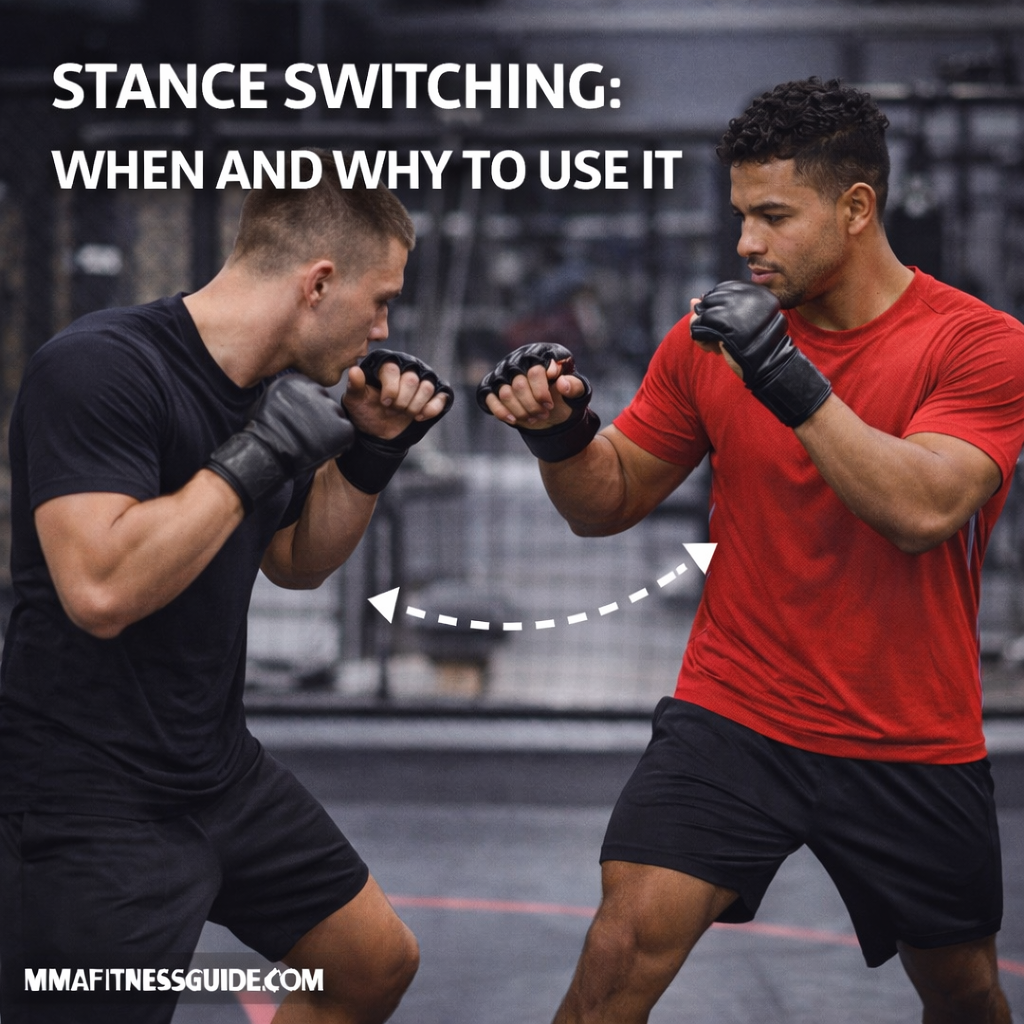
Stance Switching: When and Why to Use It

MMA fighters demonstrating stance switching during training, showing footwork changes and positioning used to create angles and tactical advantages.
MMA fighters practicing stance switching to create angles, disrupt timing, and expand striking options during training.

Introduction

Stance switching has become increasingly common in modern MMA and striking-based martial arts. Once considered an advanced or risky tactic, switching stances is now a fundamental skill used by elite fighters to create angles, confuse opponents, and open up attacks.

Understanding when and why to switch stances—and when not to—is essential for using this tool effectively rather than turning it into a liability.

Continue reading “Stance Switching: When and Why to Use It”

Grip Fighting for Gi and No-Gi

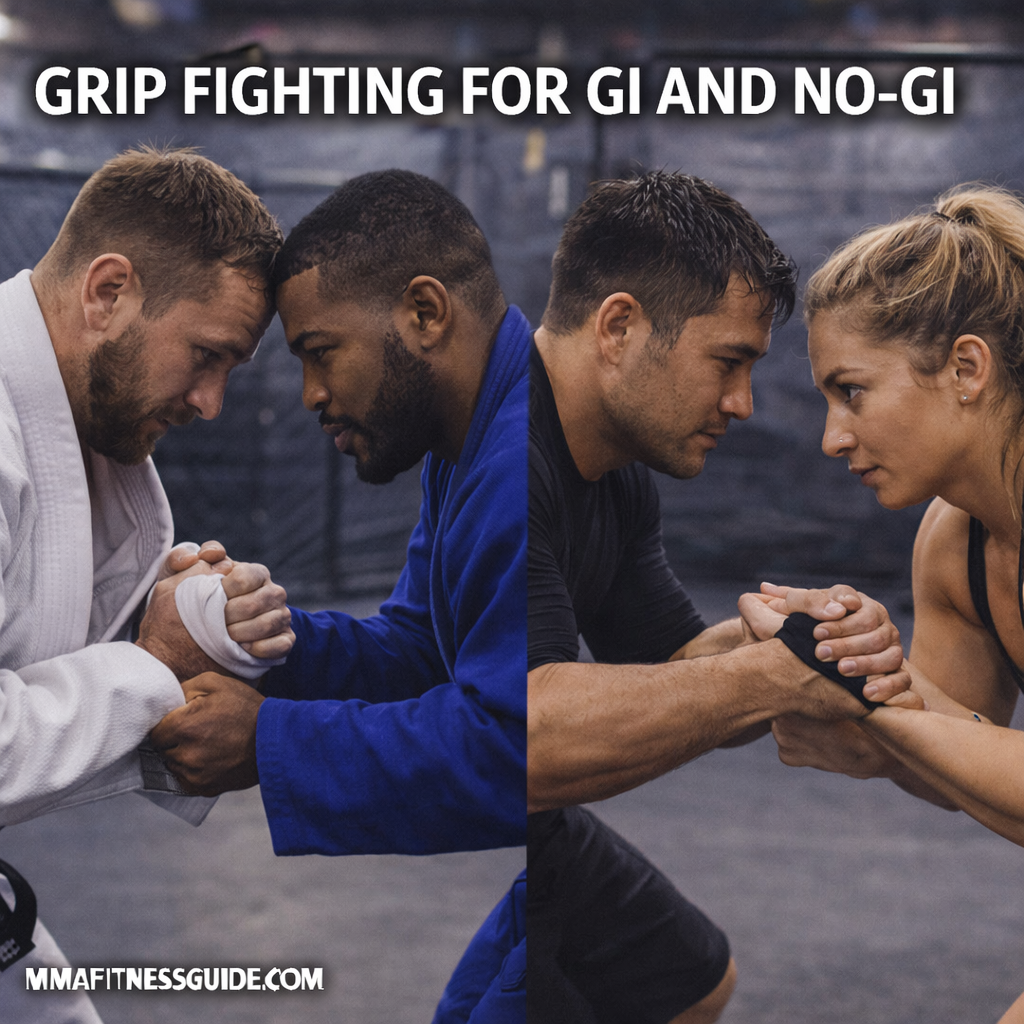
Grapplers practicing grip fighting in gi and no-gi training, showing hand control, posture, and connection in a gym setting.
Athletes demonstrating grip fighting techniques for gi and no-gi grappling, highlighting hand control and positional dominance.

Introduction

Grip fighting is one of the most decisive—and often underestimated—skills in grappling. Whether you train in gi or no-gi, the ability to establish, break, and transition grips determines who controls distance, tempo, and positioning. Many exchanges are effectively won or lost before a takedown, pass, or submission even begins.

Understanding the differences between gi and no-gi grip fighting helps fighters adapt their strategy, conserve energy, and impose their game more consistently.

Continue reading “Grip Fighting for Gi and No-Gi”

Breaking Down Famous Finishes: Technical Lessons

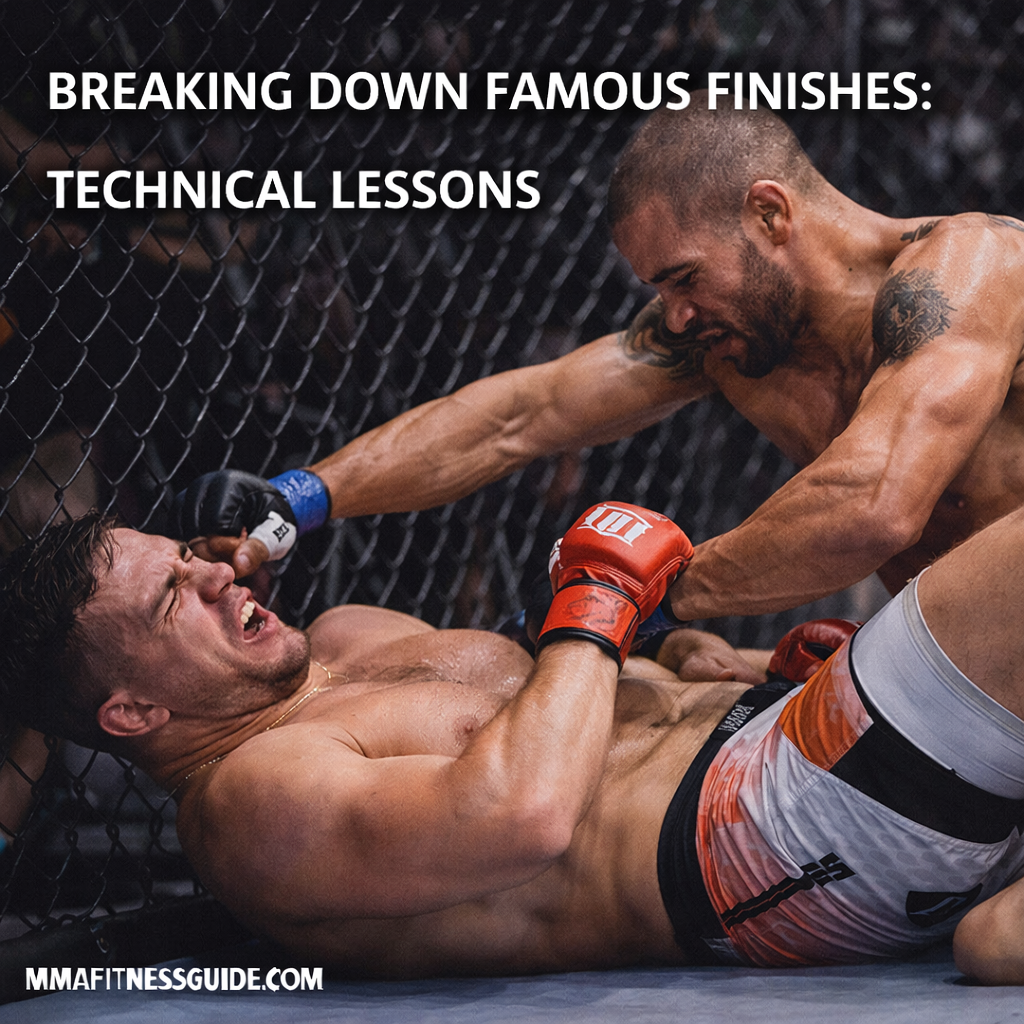
MMA fighters in a finishing sequence during a fight, highlighting technical execution, positioning, and timing in a decisive moment.
MMA athletes demonstrating a decisive fight finish, emphasizing the technical details and setups behind famous MMA moments.

Introduction

Some finishes in MMA become legendary—not just because they end fights, but because they showcase perfect timing, positioning, and technique under pressure. Famous finishes offer more than highlight reels; they provide valuable technical lessons that fighters at every level can study and apply.

By breaking down why these finishes worked, fighters can sharpen their own execution, improve decision-making, and avoid common mistakes that lead to being caught.

Continue reading “Breaking Down Famous Finishes: Technical Lessons”

Reading Opponent Patterns and Triggers

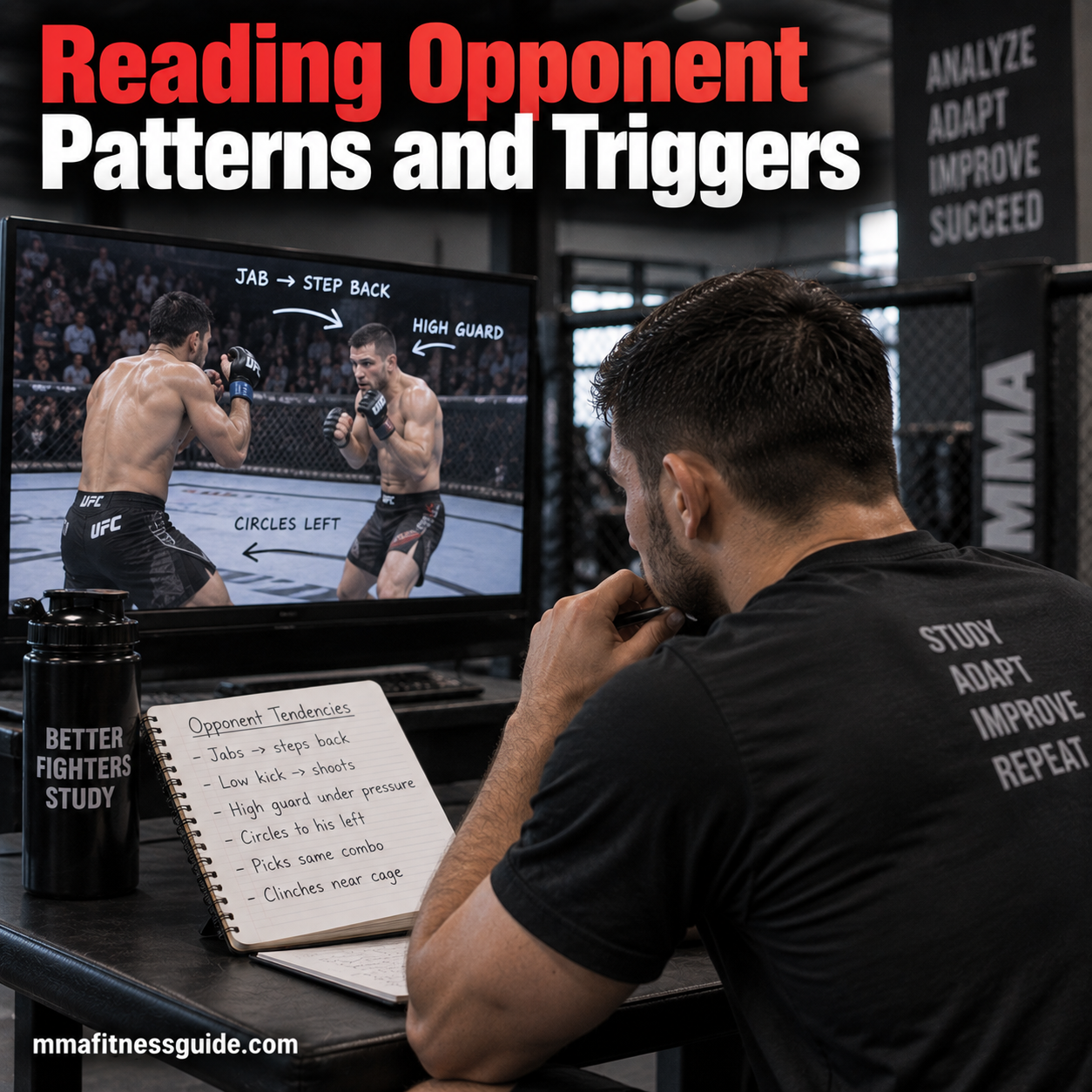
MMA fighter studying fight footage and taking notes on an opponent’s striking, movement, and defensive patterns.
Studying repeated movements and reactions can help fighters recognize opponent tendencies and prepare more deliberate responses.

An opponent jabs, takes a half-step backward, and circles to their left. A few exchanges later, they do it again. Instead of simply following them, you anticipate the exit and place your next attack where they are about to move.

That is pattern recognition in a fight.

Fighters constantly reveal information through their footwork, combinations, defensive reactions, takedown attempts, and responses to pressure. Some habits appear repeatedly, while others are triggered by a specific action—such as reaching for a parry whenever they see a jab or immediately changing levels after being hit.

Learning to notice these behaviors gives you a clearer idea of what may happen next and helps you choose attacks based on observed reactions rather than guesswork.

Continue reading “Reading Opponent Patterns and Triggers”