The Business Side of Fighting
A conversation after a local fight card can lead to an invitation to another training camp. A coach you meet at a seminar might recommend you when a promoter needs a replacement fighter. A relationship with a local business could eventually develop into sponsorship support.
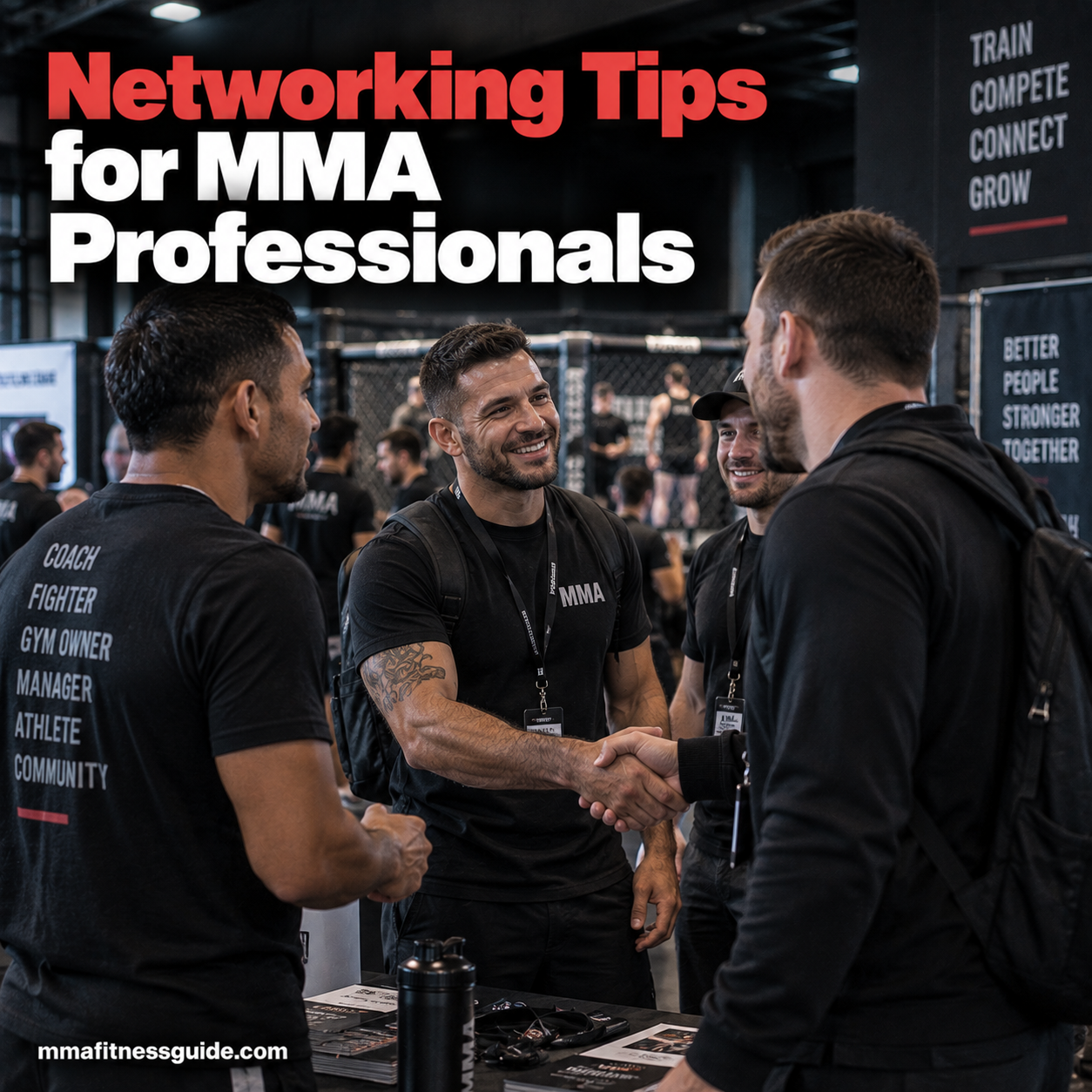
MMA careers are built through more than fights and training sessions. Fighters, coaches, managers, promoters, gym owners, event organizers, media members, and sponsors operate within a relatively connected community.
The goal isn’t to meet as many people as possible. It’s to become someone people know, respect, and are comfortable working with.
Why Professional Relationships Matter in MMA
Connections don’t guarantee opportunities, but they can put you in conversations you otherwise wouldn’t be part of.
A strong professional network can help with:
- Training opportunities: Coaches and teammates can introduce you to new gyms, specialists, and training partners.
- Fight opportunities: Promoters and managers are more likely to know how to reach you when opportunities become available.
- Sponsorships: Relationships with businesses can develop into promotional or financial partnerships.
- Career knowledge: Experienced fighters and coaches can share lessons about contracts, camps, travel, competition, and career decisions.
- Collaboration: Coaches, athletes, photographers, content creators, and gym owners can work together on events and projects.
Treat networking as maintaining professional relationships rather than collecting contacts.
Step 1: Build Relationships Before You Need Something
Don’t make your first conversation with someone a request for a favor.
If you meet another coach, fighter, promoter, or gym owner, learn about what they’re doing. Stay in contact when there’s a genuine reason to do so.
That could mean:
- Congratulating a fighter after a win
- Sharing an event announcement
- Recommending someone’s seminar
- Introducing two people who could benefit from knowing each other
- Supporting another gym’s event
- Sharing useful training information
Small interactions over time are more likely to create familiarity than repeatedly asking people for opportunities.
If you eventually need an introduction, training connection, or professional recommendation, you’re contacting someone who already knows you.
Step 2: Use Social Media to Stay Connected
Social media makes it possible to maintain relationships with people you rarely see in person.
For fighters and coaches, useful posts might include:
- Training clips
- Fight announcements
- Competition results
- Coaching insights
- Seminar information
- Behind-the-scenes camp updates
- Technical breakdowns
Interaction matters too.
If a coach posts a useful technique, leave a thoughtful comment. If another fighter wins, congratulate them. If a gym announces an event relevant to your audience, consider sharing it.
Keep your public communication professional enough that you’d be comfortable with a promoter, gym owner, potential sponsor, or future employer reading it.
Different platforms can serve different purposes. Instagram and similar visual platforms fit training and fight content particularly well, while LinkedIn may be useful when connecting with business owners, fitness professionals, media contacts, or potential commercial partners.
Step 3: Attend Events Outside Your Own Fights
Competition nights aren’t the only places to make connections.
Consider attending:
- Local MMA events
- Amateur fight cards
- Grappling tournaments
- Muay Thai events
- Coaching seminars
- Open mats
- Martial arts expos
- Strength and conditioning workshops
You don’t have to introduce yourself to everyone in the building.
A few useful conversations are enough.
Ask someone about their gym, athletes, event, or work. Listen to the answer instead of immediately explaining what you need from them.
If you meet someone worth staying connected with, exchange contact information or follow each other afterward.
Step 4: Cross-Train Professionally
Visiting another gym can introduce you to different coaches, athletes, and training methods while expanding your professional circle.
Before visiting, understand the gym’s rules and expectations.
When you’re there:
- Arrive on time
- Introduce yourself
- Follow the coach’s instructions
- Train at the appropriate intensity
- Respect existing gym relationships
- Avoid criticizing how another academy trains
- Represent your home gym professionally
Don’t treat every cross-training session as an audition.
Repeated positive experiences are what create relationships.
Over time, those connections may lead to additional training partners, invitations to camps, coaching collaborations, or introductions to other people in the sport.
Step 5: Develop Relationships With Experienced People
You don’t necessarily need one official “mentor.”
Instead, build relationships with experienced people whose judgment you respect.
Depending on your career, that might include:
- A veteran coach
- An experienced professional fighter
- A gym owner
- A strength and conditioning coach
- A manager
- A promoter
- A retired competitor
Different people can help with different questions.
A veteran fighter may have useful insight about managing fight camps. A gym owner may understand the business side of coaching. A manager may know more about promotion relationships and negotiations.
Ask specific questions rather than expecting someone to map out your entire career.
Step 6: Build a Reputation for Reliability
People remember how you behave when something inconvenient happens.
If you agree to attend a seminar, show up. If you’re scheduled to help with an event, arrive when expected. If you promise to send information, send it.
Professional habits include:
- Responding to important messages
- Arriving on time
- Honoring commitments
- Communicating schedule changes
- Treating staff respectfully
- Handling disagreements without unnecessary drama
Combat sports communities can be closely connected. Coaches, promoters, managers, and fighters often know many of the same people.
Your behavior in one gym or event can influence how people view you elsewhere.
Step 7: Stay in Touch Without Constantly Asking for Favors
Meeting someone once isn’t much of a professional relationship.
Find natural reasons to stay connected.
For example, after attending a seminar, send the coach a short message thanking them and mentioning something useful you learned.
If someone you know is fighting, wish them luck.
If a promoter runs an event you enjoyed, tell them.
You don’t need to message people every week. Occasional genuine contact is usually more meaningful than forced networking.
Step 8: Give Back to the MMA Community
As you gain experience, look for reasonable ways to help others.
You might:
- Help newer athletes during training
- Support amateur events
- Share another fighter’s event
- Recommend a useful coach
- Assist with a seminar
- Introduce people who should know each other
- Share lessons from your own experience
Don’t help people solely because you expect something in return.
Being useful, reliable, and respectful gives other people a reason to maintain the relationship.
Step 9: Keep Your Contacts Organized
As your network grows, relying entirely on memory becomes difficult.
Keep basic records of professional contacts when appropriate.
You might note:
- Name
- Gym or organization
- Role
- Contact information
- Where you met
- Relevant professional interests
After a large event, this makes it easier to remember whether someone was the promoter you met backstage, the strength coach from another gym, or the photographer who offered to send you fight photos.
The system can be as simple as your phone’s contacts and a few notes.
Key Takeaways
Professional relationships develop through repeated interactions rather than a single introduction.
For MMA fighters and coaches, that means showing up at events, visiting other gyms respectfully, communicating professionally online, keeping commitments, and staying connected to people you’ve worked with.
Don’t measure your network by how many fighters, promoters, or coaches follow you.
A smaller group of people who know your character and would willingly train with you, recommend you, hire you, or introduce you to someone else is considerably more useful than hundreds of superficial contacts.