
Fighter Conditioning Mistakes to Stop Making

Exhausted MMA fighter sitting on a plyometric box after a demanding conditioning workout in a combat sports gym.
Avoid common MMA conditioning mistakes by balancing aerobic training, high-intensity workouts, structured progression, and recovery.

Conditioning is one of the most misunderstood aspects of MMA training. Fighters spend countless hours running, sprinting, hitting pads, wrestling, and completing exhausting circuits, yet many still struggle to maintain their performance during later rounds.

A fighter might feel powerful during the first round but lose striking accuracy in the second. Another might dominate early grappling exchanges before struggling to maintain pressure. Some athletes train so hard between sessions that they arrive at sparring already fatigued.

These problems do not always indicate a lack of effort. They can result from poorly structured conditioning, insufficient recovery, inappropriate intensity, or training that does not address the athlete’s actual needs.

Effective conditioning is not about making every workout as difficult as possible.

It is about developing the physical capacity to repeatedly perform demanding movements while maintaining technical quality.

MMA conditioning must account for several factors: aerobic endurance, explosive energy production, muscular endurance, recovery between exchanges, and the ability to manage effort across multiple rounds.

This guide examines 13 common fighter conditioning mistakes, explains how they affect performance, and provides practical strategies for building endurance without compromising strength, technical development, or long-term health.

Continue reading “Fighter Conditioning Mistakes to Stop Making”

Training for Longevity: How to Stay Fit Past 40

Middle-aged MMA athletes training in a gym, representing longevity-focused MMA conditioning and staying fit past age 40.
MMA athletes over 40 focus on smart training and recovery to maintain long-term fitness and performance.

Training MMA past 40 isn’t about proving toughness—it’s about staying capable, healthy, and consistent for the long run. While recovery slows and injuries take longer to heal, many athletes discover that smarter training actually improves performance and enjoyment. Longevity-focused training allows you to keep sharpening skills, staying fit, and enjoying MMA without burning out or breaking down.

This guide explains how to train for longevity past 40 by adjusting intensity, recovery, mindset, and conditioning—without giving up progress or purpose.

Continue reading “Training for Longevity: How to Stay Fit Past 40”

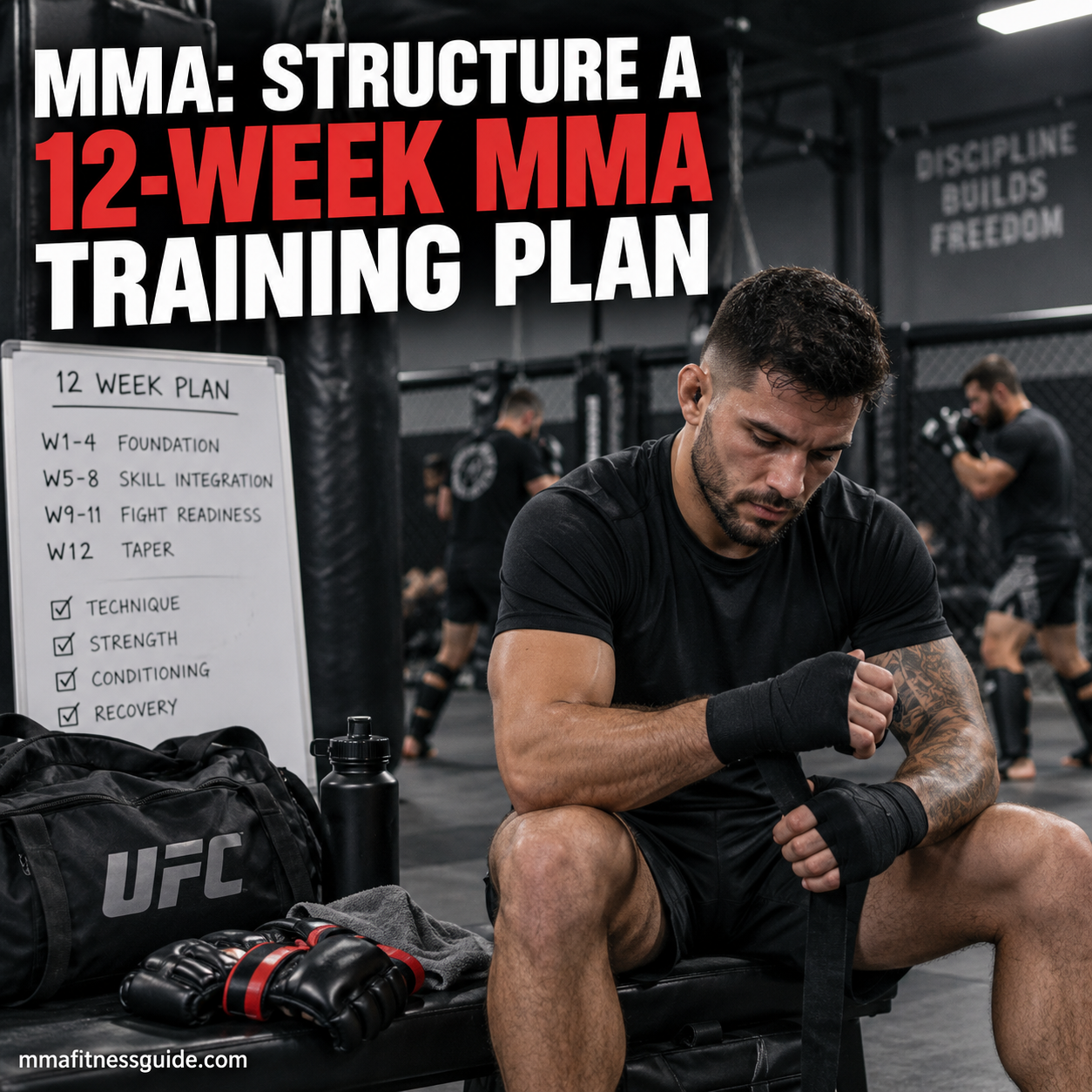
MMA: Structure a 12-Week MMA Training Plan

MMA fighter following a structured 12-week MMA training plan in a combat sports gym.
A structured 12-week MMA training plan progresses from foundation work to skill integration, fight-specific preparation, and tapering.

A 12-week MMA training plan gives you enough time to build conditioning, develop technical skills, increase fight-specific intensity, and taper before competition. Instead of pushing every training variable at once, the schedule progresses through phases so your workload becomes more specific as the weeks advance.

Whether you’re preparing for an amateur fight, improving your overall MMA game, or returning to consistent training, the goal is the same: organize striking, grappling, strength, conditioning, and recovery so they complement rather than compete with each other.

This guide breaks a 12-week MMA training cycle into practical phases and explains how training priorities should change along the way.

Continue reading “MMA: Structure a 12-Week MMA Training Plan”

Balancing Cardio and Strength for Optimal Performance

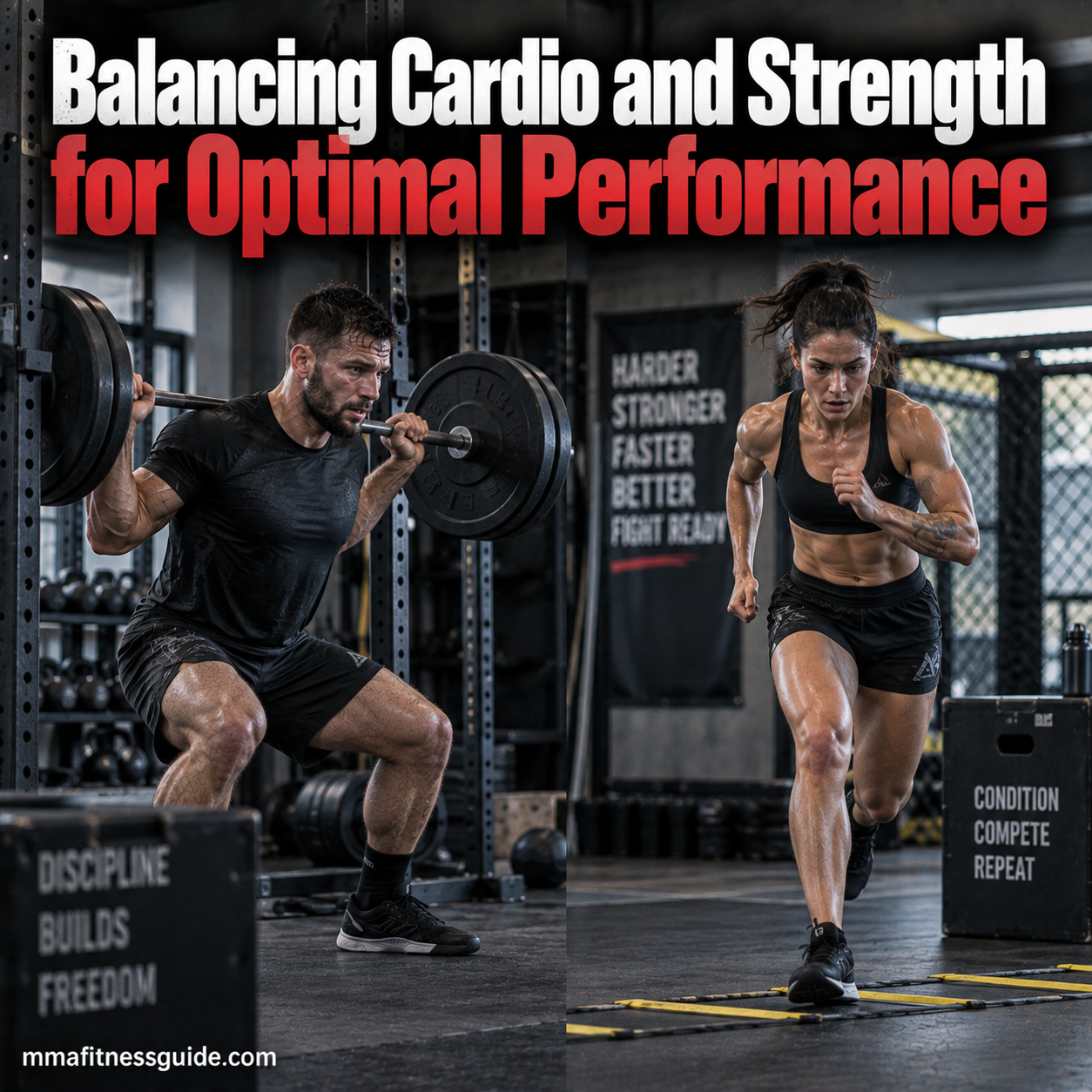
MMA athletes balancing strength and cardio training with barbell squats and conditioning drills in a combat sports gym
Combining strength training with appropriately scheduled conditioning helps MMA athletes develop power and endurance while managing fatigue.

Introduction

An MMA athlete might lift weights in the morning, drill takedowns in the afternoon, and complete several hard rounds on the pads or mats that evening. Stack too many demanding sessions together, and the quality of each workout can quickly decline.

The challenge isn’t choosing between cardio and strength. Fighters need enough endurance to maintain their pace across rounds while preserving the strength and power required for striking, wrestling, clinching, and scrambling.

Managing those qualities comes down to training volume, intensity, timing, and recovery.

Continue reading “Balancing Cardio and Strength for Optimal Performance”

Best Warm-Down Techniques After Intense Sparring

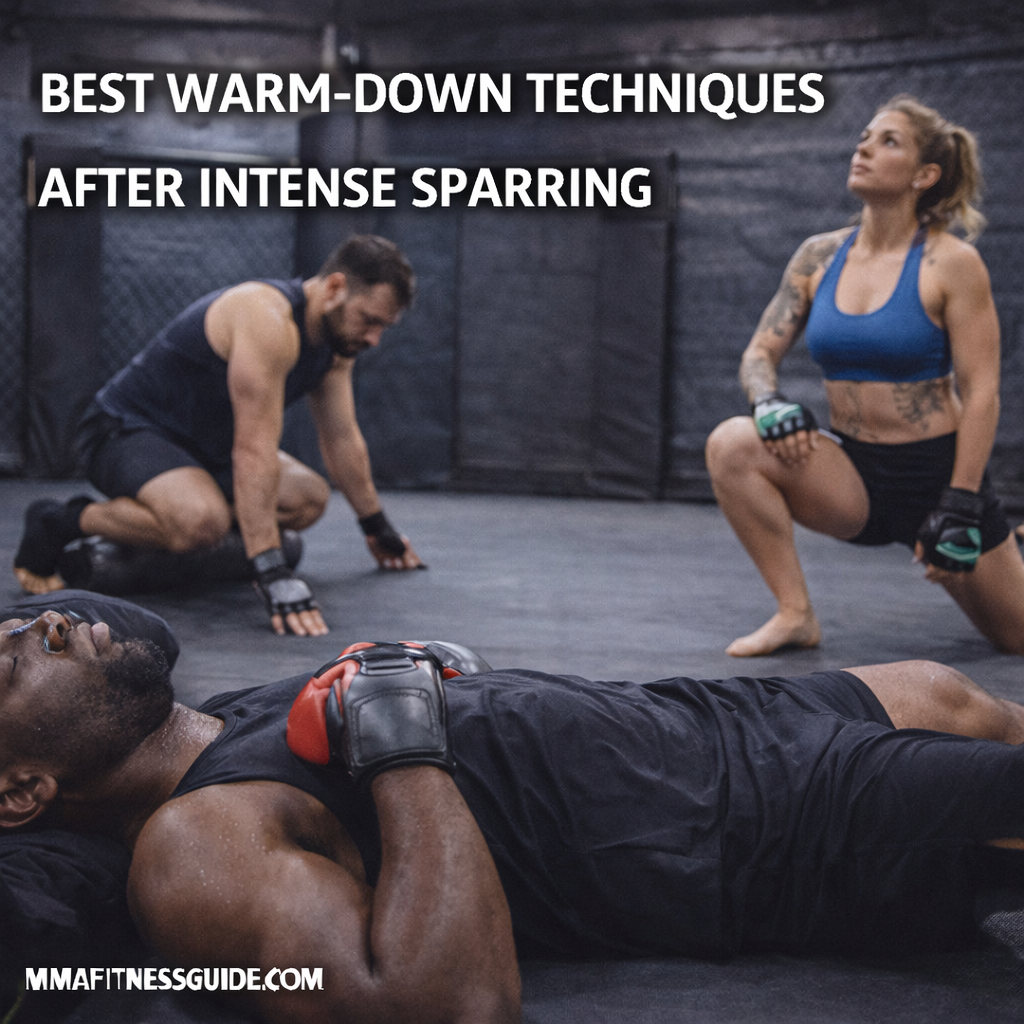
MMA fighters performing warm-down activities after intense sparring, including breathing, stretching, and light mobility work in a gym.
MMA athletes cooling down after intense sparring with breathing, mobility, and recovery-focused movement.

Introduction

After intense sparring, most fighters focus on what went wrong in the round—but far fewer focus on what happens immediately after training. Skipping a proper warm-down can slow recovery, increase soreness, and raise the risk of lingering stiffness or injury. A structured warm-down helps the body transition out of high intensity and prepares it to recover efficiently.

For MMA athletes, warm-downs are not optional extras—they are a key part of staying healthy, consistent, and sharp.

Continue reading “Best Warm-Down Techniques After Intense Sparring”

MMA Improve Agility with Ladder Drills

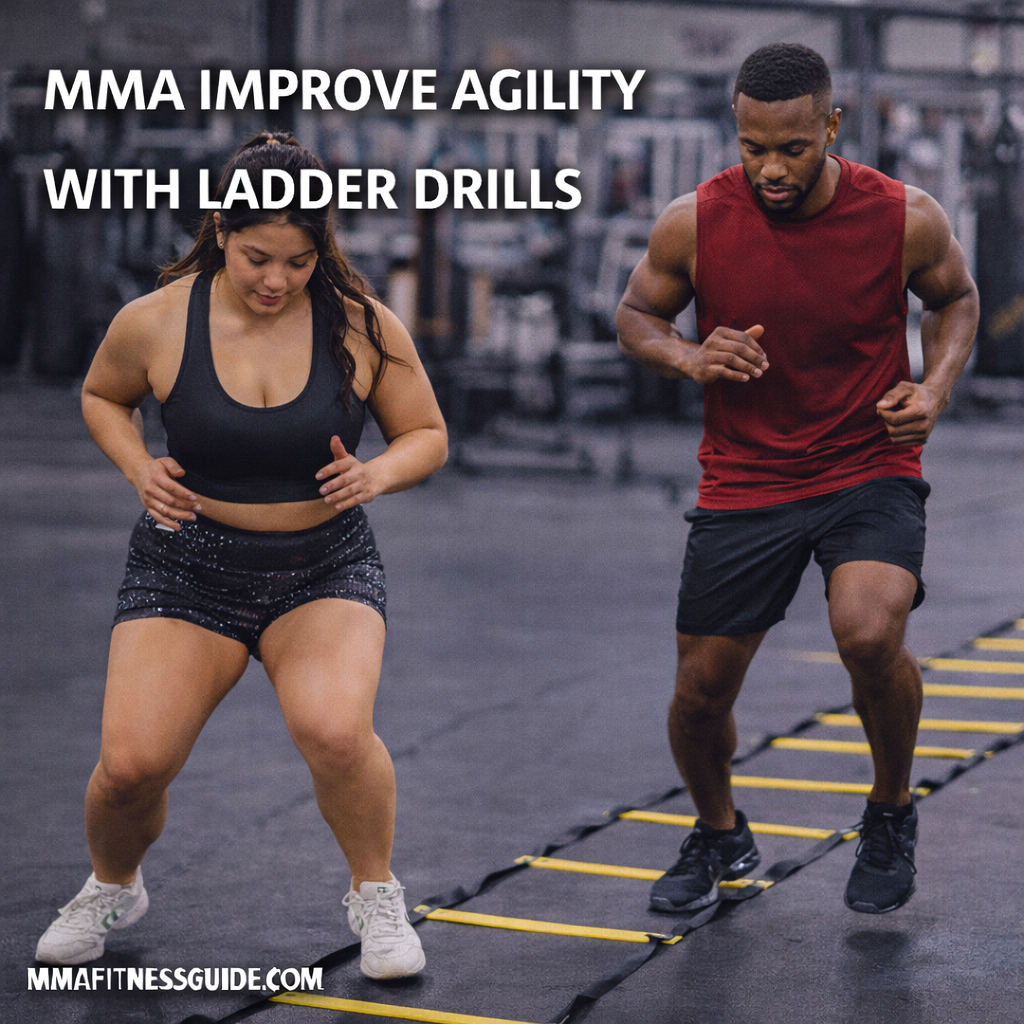
MMA athletes performing agility ladder drills in a gym to improve foot speed, coordination, and movement efficiency.
MMA athletes training with ladder drills to improve agility, balance, and footwork for better performance.

Introduction

Agility is a critical physical quality in MMA. Fighters must change direction quickly, maintain balance during exchanges, and react instantly to unpredictable movement. Ladder drills are one of the most effective and accessible tools for improving agility, foot speed, coordination, and movement efficiency.

When used correctly, ladder drills enhance how fighters move—not just how fast they move—making them a valuable addition to MMA training and conditioning programs.

Continue reading “MMA Improve Agility with Ladder Drills”

Is CrossFit Good for MMA Conditioning?

MMA fighters sparring in the cage alongside CrossFit-style strength training movements, comparing conditioning methods for fight performance.
CrossFit-style strength training contrasted with MMA sparring to evaluate conditioning benefits for fighters.

Introduction

CrossFit has become one of the most popular strength and conditioning systems in the world. Its high-intensity workouts, functional movements, and competitive atmosphere attract athletes from many sports—including MMA. But is CrossFit actually good for MMA conditioning, or does it create more problems than benefits?

The answer depends on how it’s used. Understanding where CrossFit helps—and where it falls short—can help fighters make smarter conditioning choices.

Continue reading “Is CrossFit Good for MMA Conditioning?”

Partner Workouts for Fighters and Trainers

MMA fighters training together with pad work in a gym, demonstrating partner workouts for skill and conditioning development.
MMA fighters and trainers performing partner pad drills to improve timing, technique, and conditioning.

Introduction

Partner workouts are a cornerstone of effective MMA training. From pad work and grappling drills to conditioning circuits, training with a partner improves timing, accountability, and fight realism in ways solo workouts cannot. When structured correctly, partner workouts help fighters build skill, conditioning, and mental toughness while strengthening coach–athlete relationships.

For trainers, partner-based sessions also create dynamic, engaging environments that mirror real fight demands.

Continue reading “Partner Workouts for Fighters and Trainers”

Building a Home MMA Gym on a Budget

Fighter training on a heavy bag in a budget home MMA gym with mats, dumbbells, kettlebells, and conditioning equipment
A practical home MMA gym can combine open training space, safe flooring, a heavy bag, basic weights, and conditioning equipment without requiring a large setup.

A jump rope, resistance bands, open floor space, and somewhere to shadowbox can cover a surprising amount of MMA conditioning at home. Add a pull-up bar, kettlebell, or heavy bag later, and the same space can support strength work and more specialized drills.

The key is buying equipment based on how you’ll actually train.

A small spare room, garage, or cleared section of a basement can become a useful MMA training area without filling it with machines or specialty equipment. Start with the floor and available space, add a few versatile tools, and expand only when your training creates a reason to do so.

Continue reading “Building a Home MMA Gym on a Budget”

How Altitude Training Benefits Fighters

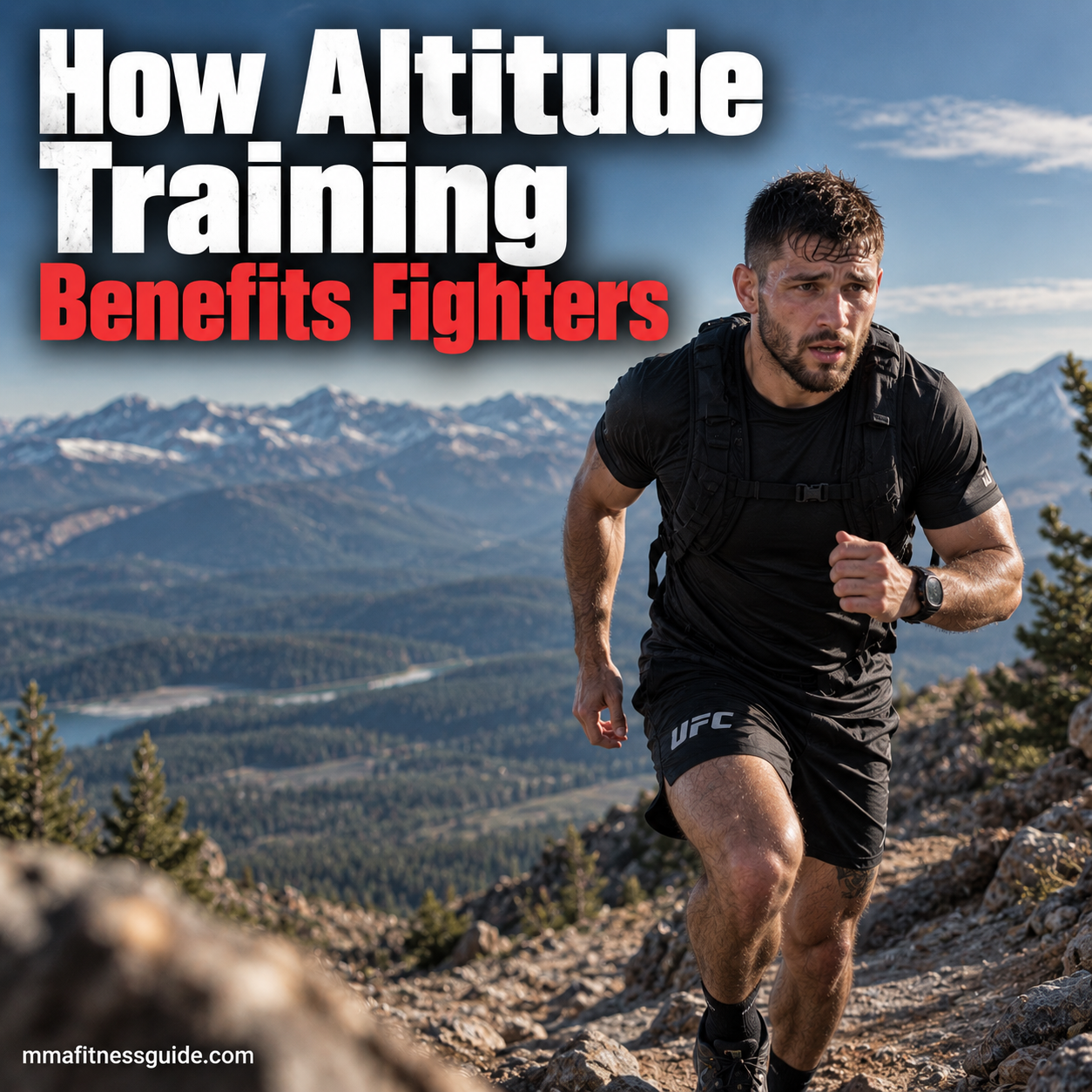
MMA fighter training at high altitude in the mountains to develop conditioning and aerobic endurance.
Altitude training exposes fighters to lower oxygen availability, creating physiological demands that can influence aerobic conditioning and endurance.

A fighter who normally handles five-minute rounds comfortably at sea level may notice the difference quickly when training several thousand feet higher. Familiar drills feel harder, breathing becomes more demanding, and maintaining the same pace can require considerably more effort.

The reason is lower oxygen availability at altitude. With less oxygen available in each breath, the body has to work differently to supply active muscles during running, pad work, wrestling, sparring, and other demanding sessions.

With sufficient exposure, the body can make adaptations that affect oxygen transport and aerobic performance. That has made altitude training an option for some MMA fighters preparing for demanding camps or competitions—particularly when they have enough time to acclimatize rather than simply arriving at elevation and immediately training at full intensity.

The potential advantage isn’t that altitude automatically creates a better-conditioned fighter. It comes from how the exposure is timed, how training intensity is adjusted, and whether the resulting adaptations complement regular fight-specific conditioning.

Used poorly, altitude can reduce training quality and increase fatigue. Used strategically, it can become another component of a fighter’s conditioning plan.

Continue reading “How Altitude Training Benefits Fighters”