Which Martial Art Is Best for Street Fighting? A Realistic Comparison

Two men demonstrating realistic street fighting techniques representing different martial arts in an urban setting.
A realistic comparison of martial arts effectiveness in street fighting scenarios.

The question of which martial art is “best” for street fighting comes up often—but it’s usually framed the wrong way. Real-world altercations are chaotic, unpredictable, and dangerous. There are no rules, no referees, and often multiple variables such as environment, weapons, surprise, and stress.

This article takes a realistic, safety-focused look at how different martial arts translate to real-world self-defense, what actually matters in street situations, and why mindset and awareness often matter more than style.

This is not about encouraging violence. The goal is understanding practical self-defense, avoidance, and survival.

Continue reading “Which Martial Art Is Best for Street Fighting? A Realistic Comparison”

Common Technique Mistakes and Fixes

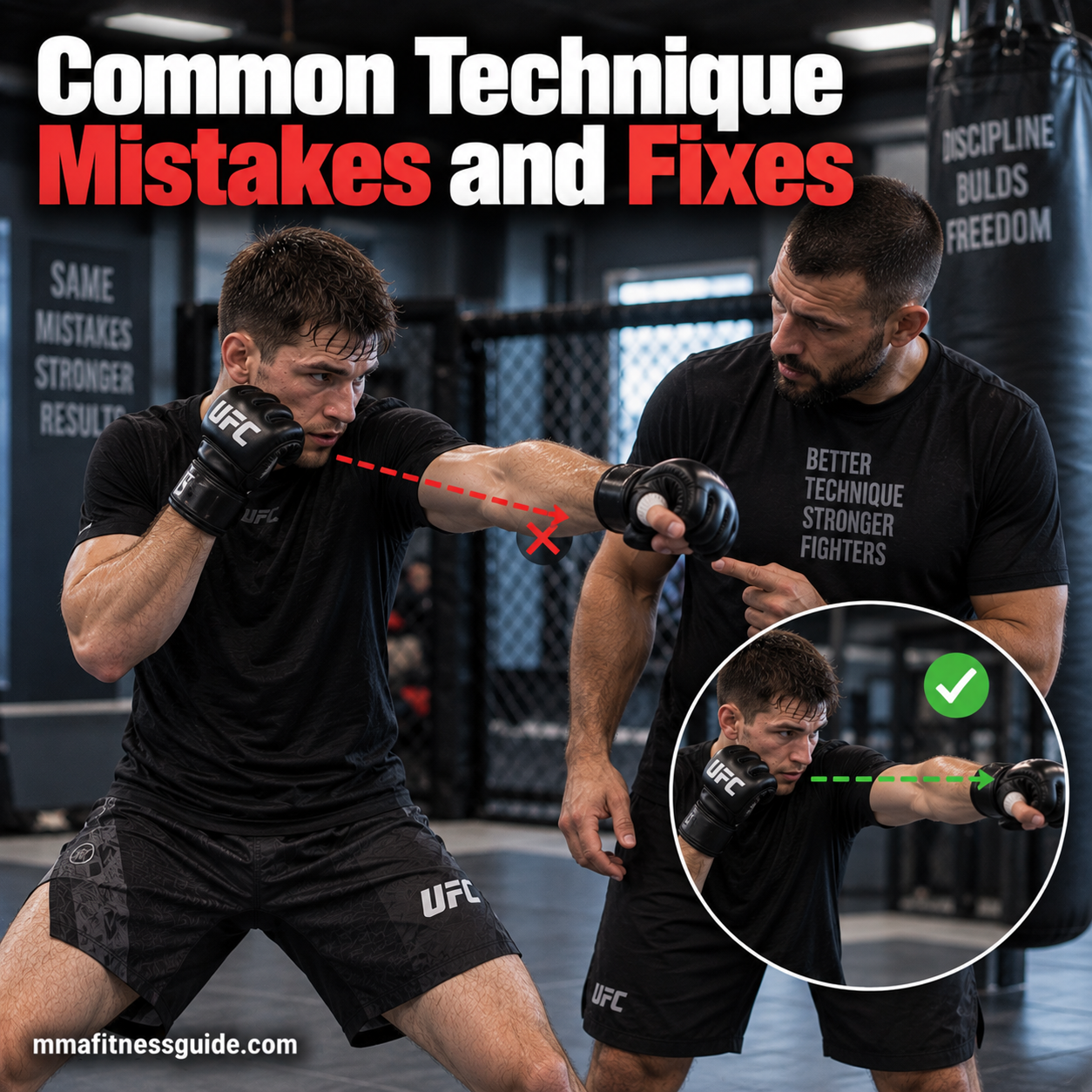
MMA coach correcting a fighter's punching technique with visual examples of incorrect and proper arm alignment.
Identifying technical errors and practicing controlled corrections can help MMA fighters improve their striking mechanics, balance, and consistency.

A punch that leaves your hand too low, a takedown attempted with your hips too far away, or a submission chased before securing position may seem like small mistakes during drilling. Repeat them hundreds of times, however, and they can become the movements you automatically fall back on during sparring.

Technical problems often aren’t caused by a lack of effort. They develop when speed, power, or repetition gets added before the underlying mechanics are consistent. Fatigue and pressure can make those weaknesses even easier to see.

The solution is usually specific rather than complicated: identify where the movement breaks down, isolate that part of the technique, slow it down, and rebuild it with better positioning. From striking and footwork to grappling and training habits, small corrections can change how efficiently a technique works.

Continue reading “Common Technique Mistakes and Fixes”

Long-Term Nutrition Habits for Longevity

MMA athlete preparing a balanced meal with lean protein, vegetables, whole grains, and healthy fats to support long-term health.
Consistent nutrition habits help athletes maintain muscle, support recovery, and promote long-term health as training demands change.

A fighter in their twenties may recover from hard sparring, late-night meals, and inconsistent sleep without noticing immediate consequences. Ten or twenty years later, maintaining muscle mass, managing body weight, and recovering between workouts may require more deliberate attention to nutrition and training.

Years of aggressive weight cuts, prolonged calorie restriction, or inadequate nutrient intake can create health problems that extend beyond athletic performance. Conversely, regularly eating enough protein, fiber-rich carbohydrates, unsaturated fats, fruits, and vegetables helps support cardiovascular health, muscle maintenance, and normal metabolic function.

Long-term nutrition is about building eating habits that remain practical as training demands, recovery needs, and daily routines change. That means meeting energy requirements during demanding training periods, adjusting portions when activity decreases, and maintaining a varied diet without relying on extreme restrictions.

For MMA athletes and active individuals, the objective is to preserve the strength, mobility, and overall health needed to remain physically active well beyond their competitive years.

Continue reading “Long-Term Nutrition Habits for Longevity”

Exit Strategies and Selling a Gym

MMA gym owner discussing a gym sale and transition plan while fighters train in the background.
Preparing financial records, membership data, lease terms, and operating systems can make an MMA gym easier to value and transition to a new owner.

What happens to your MMA gym when you no longer want to run it every day?

You might sell to another gym owner, transfer ownership to a trusted coach, let a business partner buy your share, or hire management and keep the gym as a source of income. The best option depends on what the business is worth, how dependent it is on you, and what you want your involvement to look like afterward.

Those decisions become much easier when the gym has clean financial records, documented operating systems, stable membership, reliable staff, and a lease that won’t create problems for a potential buyer.

Preparing those pieces early gives you more choices when the time comes to step away—and puts you in a stronger position to negotiate a sale rather than being forced into one.

Continue reading “Exit Strategies and Selling a Gym”

The Case for Training Outdoors

MMA athlete sprinting uphill outdoors at sunset during a conditioning workout.
Hills, trails, and changing terrain can add variety and natural resistance to outdoor conditioning sessions.

A hill can become your conditioning machine. A park bench can handle step-ups, push-ups, and split squats. An open field gives you room for sprints, footwork drills, carries, and shadowboxing without waiting for equipment.

Taking even one or two workouts outside changes what your body has to respond to. Grass, sand, hills, wind, heat, and uneven terrain introduce challenges that a flat gym floor and climate-controlled room can’t completely reproduce.

For fighters and everyday athletes, outdoor sessions can add variety to conditioning while providing a welcome change from weight rooms, treadmills, and crowded training spaces.

You don’t have to replace the gym. Use the outdoors for what it does well: open-space conditioning, bodyweight work, movement, and training sessions that feel noticeably different from the rest of your week.

Continue reading “The Case for Training Outdoors”

Staying Active While Working at a Desk

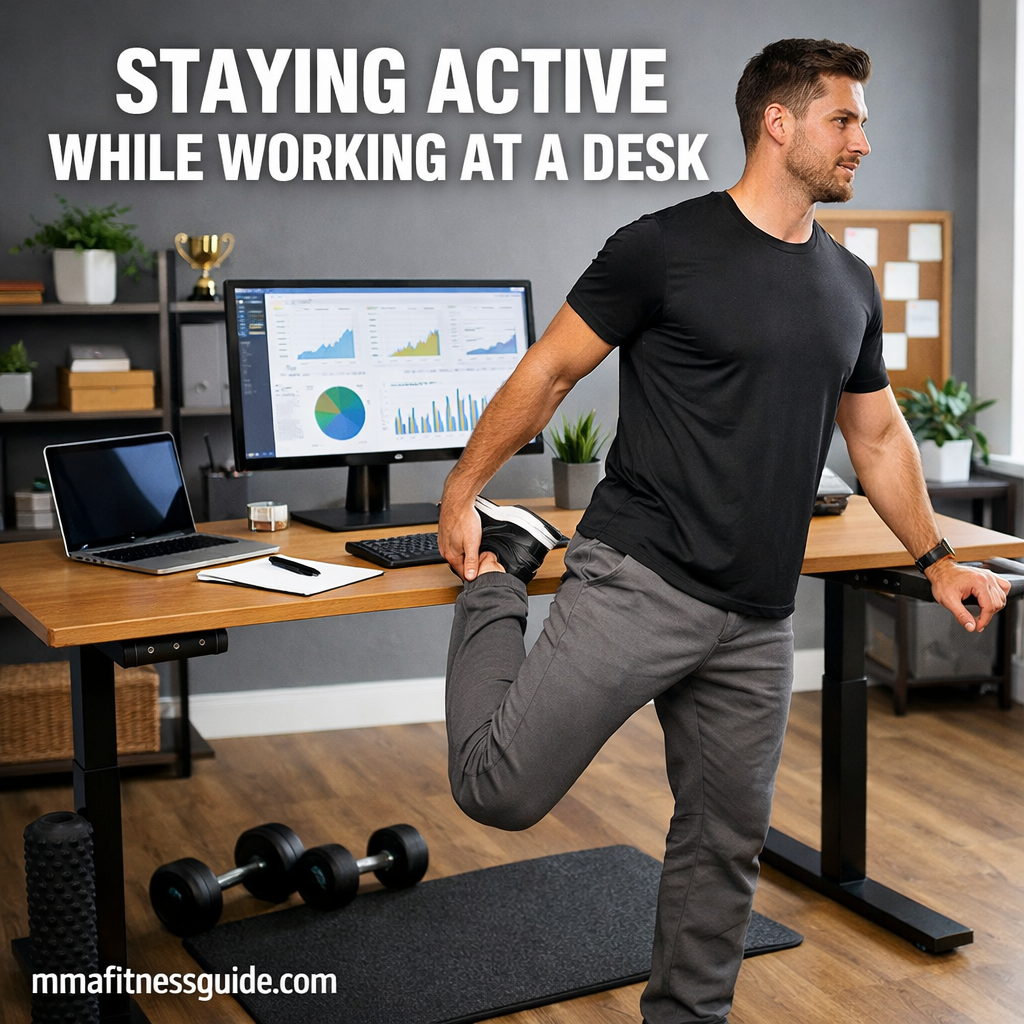
MMA trainee stretching beside his desk during a break from computer work.
Short movement breaks, walking, and simple mobility exercises can help desk workers add more activity throughout the workday.

After three or four hours at a computer, you may notice the effects before you even stand up. Your hips feel stiff, your shoulders have crept toward your ears, and the first few steps away from the desk feel noticeably different from how you moved that morning.

For someone also training MMA or working on their fitness, those hours of sitting are worth paying attention to. You don’t have to turn the office into a gym, though. Standing while you take a call, walking for five minutes at lunch, or doing a few shoulder and hip movements between tasks can break up long periods in the same position.

The goal is simple: give your body more opportunities to move during a workday that otherwise requires very little movement.

Continue reading “Staying Active While Working at a Desk”

Hall of Fame Moments and Inductees

MMA Hall of Fame moments and inductees represented by an MMA arena, fighting gloves, and Hall of Fame display
MMA Hall of Fame moments and inductees preserve the fighters, historic battles, and achievements that helped shape the evolution of mixed martial arts.

Royce Gracie introducing a wider audience to Brazilian Jiu-Jitsu, Chuck Liddell helping push MMA into the mainstream, and legendary battles that changed how fans viewed the sport—MMA history is filled with fighters and moments whose influence lasted far beyond a single night of competition.

Hall of Fame recognition preserves those turning points. It honors the champions, pioneers, contributors, rivalries, and unforgettable performances that helped MMA evolve from a controversial combat spectacle into a major global sport. Their legacies reveal not only who achieved greatness, but how each generation helped build the MMA we know today.

Continue reading “Hall of Fame Moments and Inductees”

Celebrating Small Wins to Stay Motivated

Female MMA fighter smiling after training beside a checklist showing completed rounds, improved footwork, and daily progress.
Recognizing improvements in technique, conditioning, and consistency helps fighters appreciate their progress between major milestones.

Last month, you struggled to finish three rounds of sparring without losing your technique. Today, you complete all three, maintain your guard, and recover more comfortably between rounds. You didn’t win a championship or master a new submission, but something has clearly improved. If you’re only measuring progress through victories, belt promotions, or dramatic physical changes, that achievement might go unnoticed.

In MMA, progress often appears in small, measurable changes: defending a takedown that used to work against you, staying composed after getting hit, or consistently showing up for training despite a demanding schedule. Recognizing these improvements gives you concrete evidence that your work is producing results. By tracking technical progress, acknowledging smart recovery decisions, and setting achievable milestones, you can maintain motivation without depending entirely on major breakthroughs or competition outcomes.

Continue reading “Celebrating Small Wins to Stay Motivated”

Prehab Routines to Build Resilience

MMA fighter performing a resistance band prehab exercise to improve hip and knee stability in a combat sports gym.
Prehab exercises can strengthen vulnerable areas and improve joint control before weaknesses begin interfering with MMA training.

A shoulder repeatedly absorbing pressure during grappling, a knee rotating through takedowns, or an ankle constantly changing direction during footwork can accumulate stress long before an athlete notices pain. MMA exposes joints and connective tissues to striking, wrestling, scrambling, impact, and awkward positions week after week.

Prehab targets the areas that have to tolerate that workload. Exercises for shoulder stability, hip and knee control, core strength, neck conditioning, and ankle stability can be worked into regular training before minor weaknesses begin interfering with performance.

The aim is practical: strengthen vulnerable areas, maintain useful movement, and build a body that can handle repeated MMA training with fewer interruptions.

Continue reading “Prehab Routines to Build Resilience”

Seasonal Gear Buying Guide and Deals

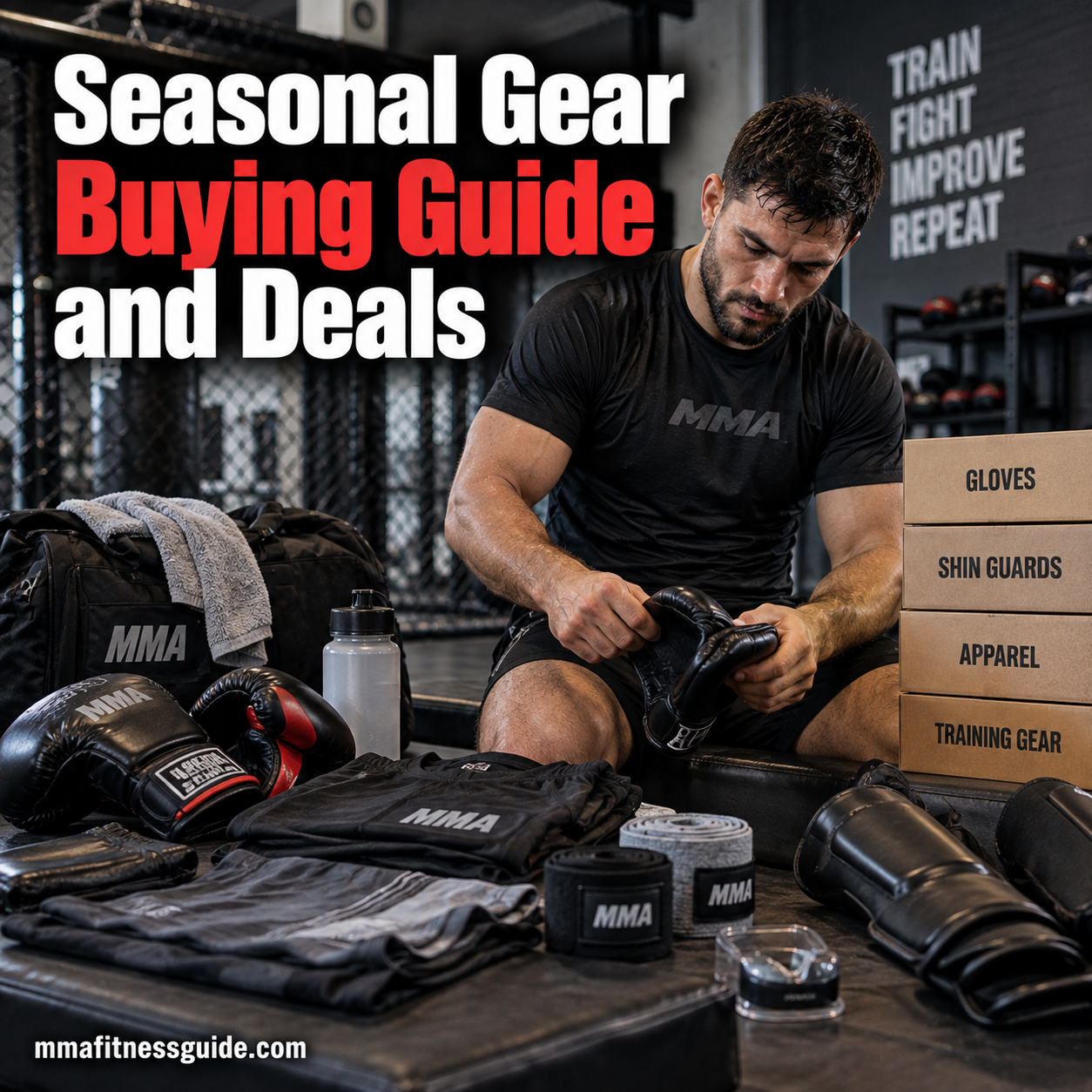
MMA fighter organizing gloves, shin guards, wraps, and training apparel for seasonal gear purchases
Planning MMA gear purchases around equipment wear and seasonal sales can help fighters avoid rushed replacements and manage training costs.

A pair of sparring gloves that needs replacing in October can cost noticeably more if you wait until the week you need them. The same applies to rash guards, shin guards, training apparel, and other MMA essentials—when you buy can matter almost as much as what you buy.

Training conditions also change throughout the year. Hot summer sessions call for lightweight, quick-drying gear and enough spares to handle frequent washing, while colder months make warm-up layers and compression clothing more useful. At the same time, holiday promotions, clearance periods, and new product releases can create opportunities to replace worn equipment for less.

Planning purchases around actual wear, training needs, and seasonal sales helps you avoid emergency replacements and spend your gear budget where it matters most.

Continue reading “Seasonal Gear Buying Guide and Deals”