The Case for Training Outdoors

MMA athlete sprinting uphill outdoors at sunset during a conditioning workout.
Hills, trails, and changing terrain can add variety and natural resistance to outdoor conditioning sessions.

A hill can become your conditioning machine. A park bench can handle step-ups, push-ups, and split squats. An open field gives you room for sprints, footwork drills, carries, and shadowboxing without waiting for equipment.

Taking even one or two workouts outside changes what your body has to respond to. Grass, sand, hills, wind, heat, and uneven terrain introduce challenges that a flat gym floor and climate-controlled room can’t completely reproduce.

For fighters and everyday athletes, outdoor sessions can add variety to conditioning while providing a welcome change from weight rooms, treadmills, and crowded training spaces.

You don’t have to replace the gym. Use the outdoors for what it does well: open-space conditioning, bodyweight work, movement, and training sessions that feel noticeably different from the rest of your week.

Continue reading “The Case for Training Outdoors”

Why Fitness Is a Lifelong Practice

Adults of different ages exercising in a gym to maintain lifelong fitness and healthy movement.
Lifelong fitness means adapting your training as you age while maintaining consistent movement, strength, and healthy habits.

The workout that fits your life at 25 may not be the workout you need at 45, 65, or 80. Your strength, recovery, schedule, responsibilities, and goals will change—but the value of staying active doesn’t disappear with them.

That’s why lasting fitness isn’t built around completing a 30-day challenge or following the hardest routine you can tolerate. It comes from learning how to keep moving through busy seasons, setbacks, injuries, aging, and changes in motivation.

The goal is not to train perfectly for a few months. It’s to build a relationship with movement that can adapt with you for decades.

Continue reading “Why Fitness Is a Lifelong Practice”

MMA: Keep Going When Life Gets Busy

Tired MMA athlete resting in a gym while others train, representing staying consistent with MMA training when life gets busy.
An MMA athlete pushes through fatigue, symbolizing staying committed to training even when life gets busy.

Life doesn’t slow down just because you train MMA. Work deadlines, family responsibilities, injuries, travel, and mental fatigue all compete for time and energy. Many athletes don’t quit MMA because they lose passion—they stop because life gets busy and training feels impossible to maintain.

Here’s how to keep training when life gets busy — realistic strategies to stay consistent and motivated without burning out or feeling guilty.

Continue reading “MMA: Keep Going When Life Gets Busy”

Simple Meal Rituals That Reduce Stress

MMA athlete eating a balanced post-training meal as part of a calm and healthy meal routine.
Simple habits such as slowing down, removing distractions, and eating balanced meals can make mealtimes feel calmer and more intentional.

Think about the difference between eating lunch while scrolling through your phone and answering messages versus sitting down, taking one slow breath, and actually paying attention to the first few bites. The food may be exactly the same, but the experience can feel completely different.

Meals create several natural pauses in the day, making them useful opportunities to step away from constant stimulation and settle into a calmer routine. Small habits—putting the phone aside, sitting down to eat, slowing the first few bites, or taking a moment before starting—can make those pauses more intentional.

These rituals don’t require a special diet or complicated routine. They simply turn something you already do every day into a more relaxed, mindful part of your schedule.

Continue reading “Simple Meal Rituals That Reduce Stress”

MMA: Rebound After Burnout

MMA athletes resting after intense training, representing recovery, mental reset, and rebounding after burnout in mixed martial arts.
MMA athletes taking a recovery moment after training, symbolizing the process of rebounding from burnout and restoring motivation.

Introduction

Burnout is common in MMA. The physical grind, constant pressure to improve, weight management, and mental intensity can drain even the most passionate athletes. When burnout hits, motivation fades, performance drops, and training feels heavy rather than rewarding.

Rebounding after burnout isn’t about pushing harder—it’s about resetting intelligently and rebuilding your relationship with training.

Continue reading “MMA: Rebound After Burnout”

Lessons From Legendary Coaches

MMA fighter receiving guidance from experienced coaches inside a training gym, illustrating mentorship, leadership, and coaching wisdom.
An MMA athlete receiving instruction from experienced coaches, highlighting the impact of mentorship and leadership in combat sports.

Introduction

Behind every great fighter stands a great coach. While athletes often receive the spotlight, legendary coaches shape careers, cultures, and entire eras of combat sports. Their influence extends beyond techniques and tactics—great coaches teach mindset, discipline, and resilience.

Studying lessons from legendary coaches offers valuable insight not only for fighters, but for anyone seeking long-term growth, leadership, and consistency.

Continue reading “Lessons From Legendary Coaches”

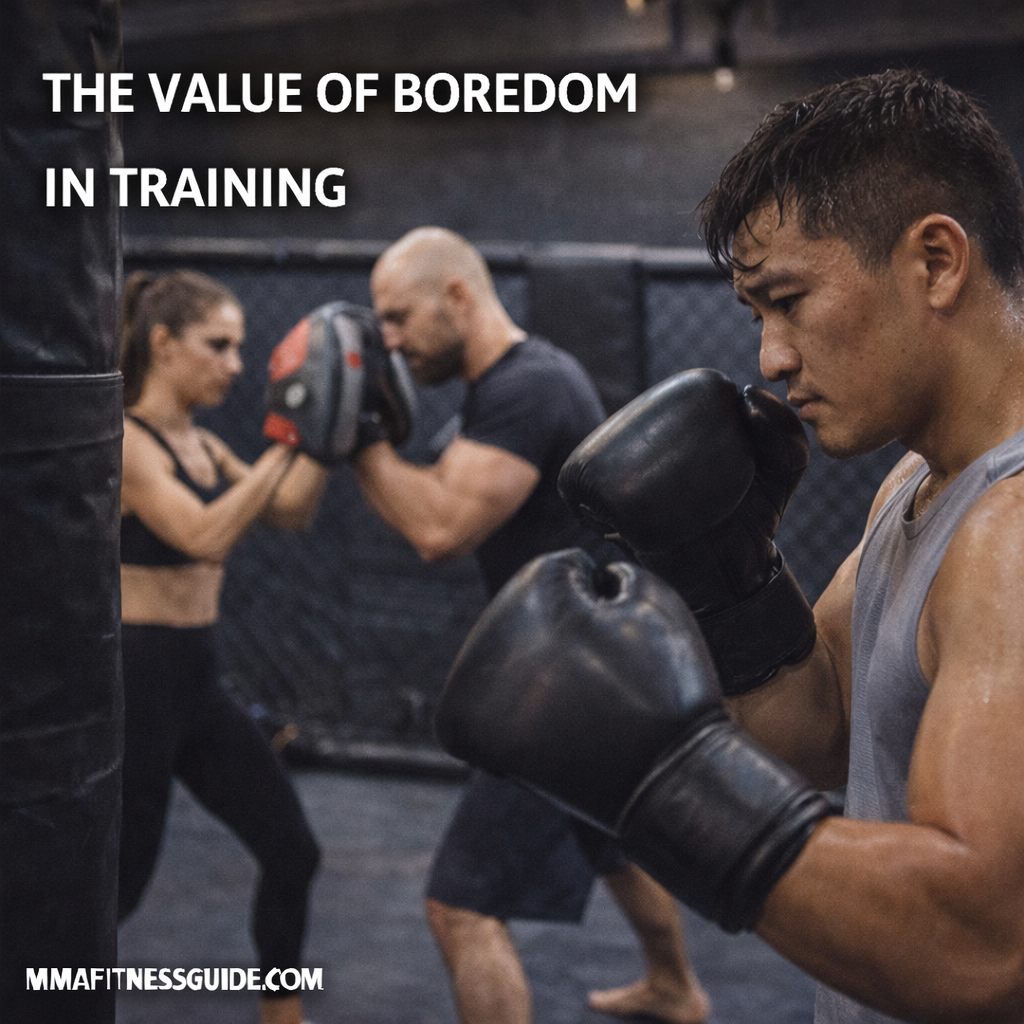
The Value of Boredom in Training

MMA athletes repeating fundamental training drills in a gym, illustrating how consistency and routine build discipline and long-term skill.
MMA athletes training fundamentals through repetition, showing how boredom in training builds discipline, focus, and long-term performance.

Introduction

In a world obsessed with constant stimulation, boredom is often seen as something to avoid. In training, however—especially in MMA, fitness, and skill development—boredom is not a flaw. It’s a feature. Some of the most meaningful progress happens during repetitive, unglamorous work that feels anything but exciting.

Understanding the value of boredom in training can change how you approach consistency, discipline, and long-term improvement.

Continue reading “The Value of Boredom in Training”

MMA: Build Confidence Through Competence

MMA athletes sparring with focus and control in a gym, illustrating how skill development and repetition build real confidence.
MMA athletes sparring with composure and precision, showing how confidence is built through competence and consistent training.

Introduction

Confidence in MMA doesn’t come from hype, trash talk, or pretending to be fearless. Real confidence is built through competence—the quiet assurance that comes from knowing you’ve put in the work and developed real skill. Fighters who rely on external validation often crumble under pressure, while those grounded in preparation remain steady.

Building confidence through competence creates durable belief that holds up in training, sparring, and competition.

Continue reading “MMA: Build Confidence Through Competence”

Your First Fitness Challenge: 30-Day Plan

Beginner athletes performing forward lunges in a gym as part of a 30-day fitness challenge program.
Beginner athletes performing lunges during a 30-day fitness challenge focused on consistency and strength.

Introduction

Starting a fitness journey can feel overwhelming, especially if you’re unsure where to begin. A 30-day fitness challenge provides structure, motivation, and a clear starting point without requiring perfection. The goal is not extreme transformation—it’s building momentum, consistency, and confidence.

This beginner-friendly 30-day plan focuses on simple habits, manageable workouts, and gradual progress to help you establish a sustainable fitness routine.

Continue reading “Your First Fitness Challenge: 30-Day Plan”

Saying No: Protecting Your Training Time

MMA athlete checking his phone while protecting scheduled training time from work, family, and social distractions.
Setting clear boundaries around scheduled workouts can prevent everyday commitments from repeatedly pushing training aside.

Your training session is scheduled for 6:00 p.m. Then a coworker asks you to stay late. A friend suggests grabbing drinks. Someone needs a last-minute favor. By the time you get home, training has disappeared from the evening.

Missing one session isn’t a problem. But when other people’s requests repeatedly take priority, a three-day training week can quickly become one rushed workout whenever you happen to have time.

For fighters and fitness-focused individuals, protecting training time means deciding in advance which hours belong to training—and becoming comfortable declining requests that interfere with them.

Continue reading “Saying No: Protecting Your Training Time”