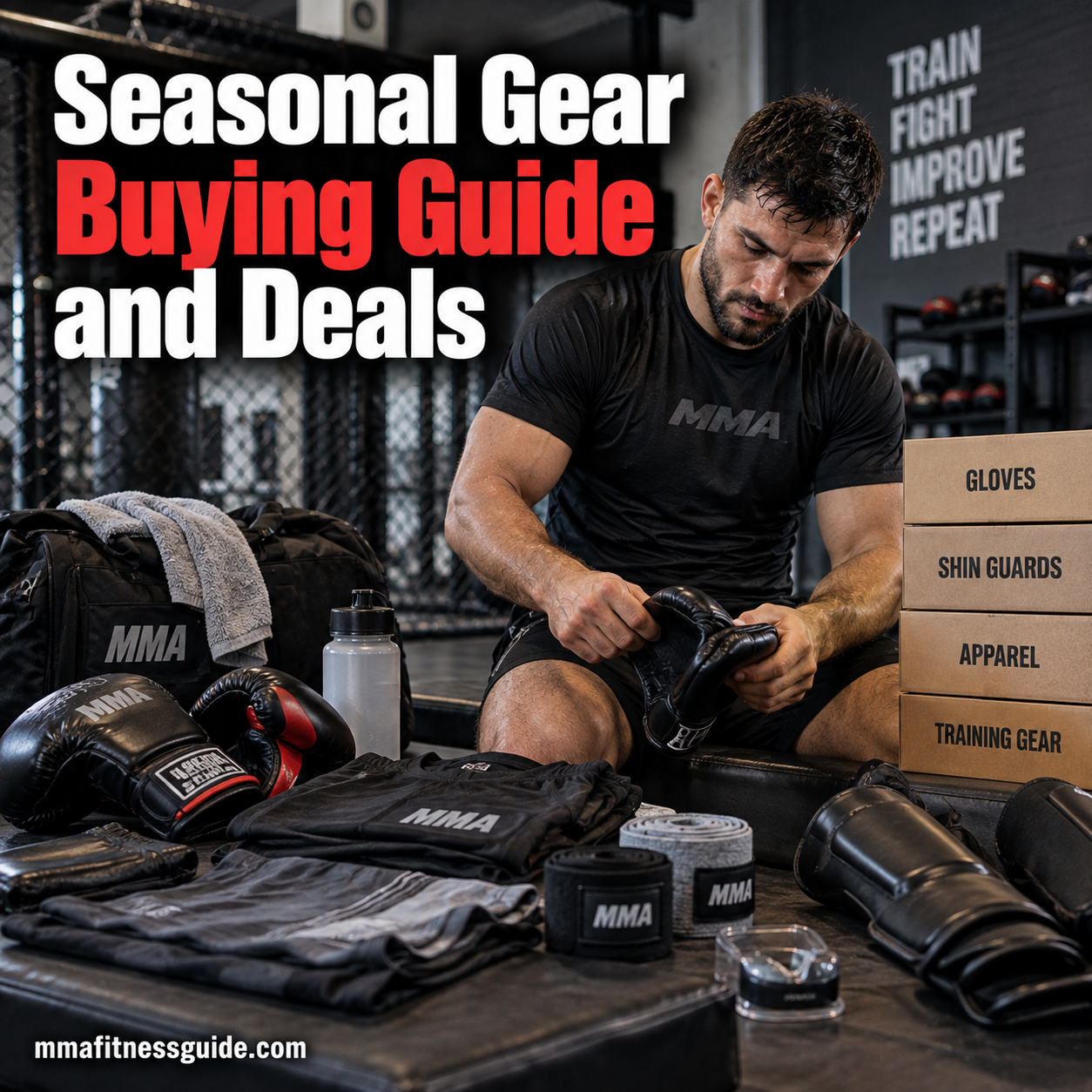
Seasonal Gear Buying Guide and Deals

MMA fighter organizing gloves, shin guards, wraps, and training apparel for seasonal gear purchases
Planning MMA gear purchases around equipment wear and seasonal sales can help fighters avoid rushed replacements and manage training costs.

A pair of sparring gloves that needs replacing in October can cost noticeably more if you wait until the week you need them. The same applies to rash guards, shin guards, training apparel, and other MMA essentials—when you buy can matter almost as much as what you buy.

Training conditions also change throughout the year. Hot summer sessions call for lightweight, quick-drying gear and enough spares to handle frequent washing, while colder months make warm-up layers and compression clothing more useful. At the same time, holiday promotions, clearance periods, and new product releases can create opportunities to replace worn equipment for less.

Planning purchases around actual wear, training needs, and seasonal sales helps you avoid emergency replacements and spend your gear budget where it matters most.

Continue reading “Seasonal Gear Buying Guide and Deals”

Kid-Friendly Gear Picks for Young Martial Artists

Young martial artists wearing kid-friendly MMA and martial arts protective gear, showing safe and comfortable training equipment for children.
Young martial artists train confidently using kid-friendly protective gear designed for safety, comfort, and enjoyment.

Introducing kids to martial arts can build confidence, discipline, coordination, and healthy habits—but safety and comfort must come first. Choosing kid-friendly gear ensures young martial artists can train safely, enjoy the experience, and develop skills without unnecessary risk or frustration.

This guide covers kid-friendly gear picks for young martial artists, explaining what equipment matters most, how to choose the right fit, and what parents and coaches should prioritize.

Continue reading “Kid-Friendly Gear Picks for Young Martial Artists”

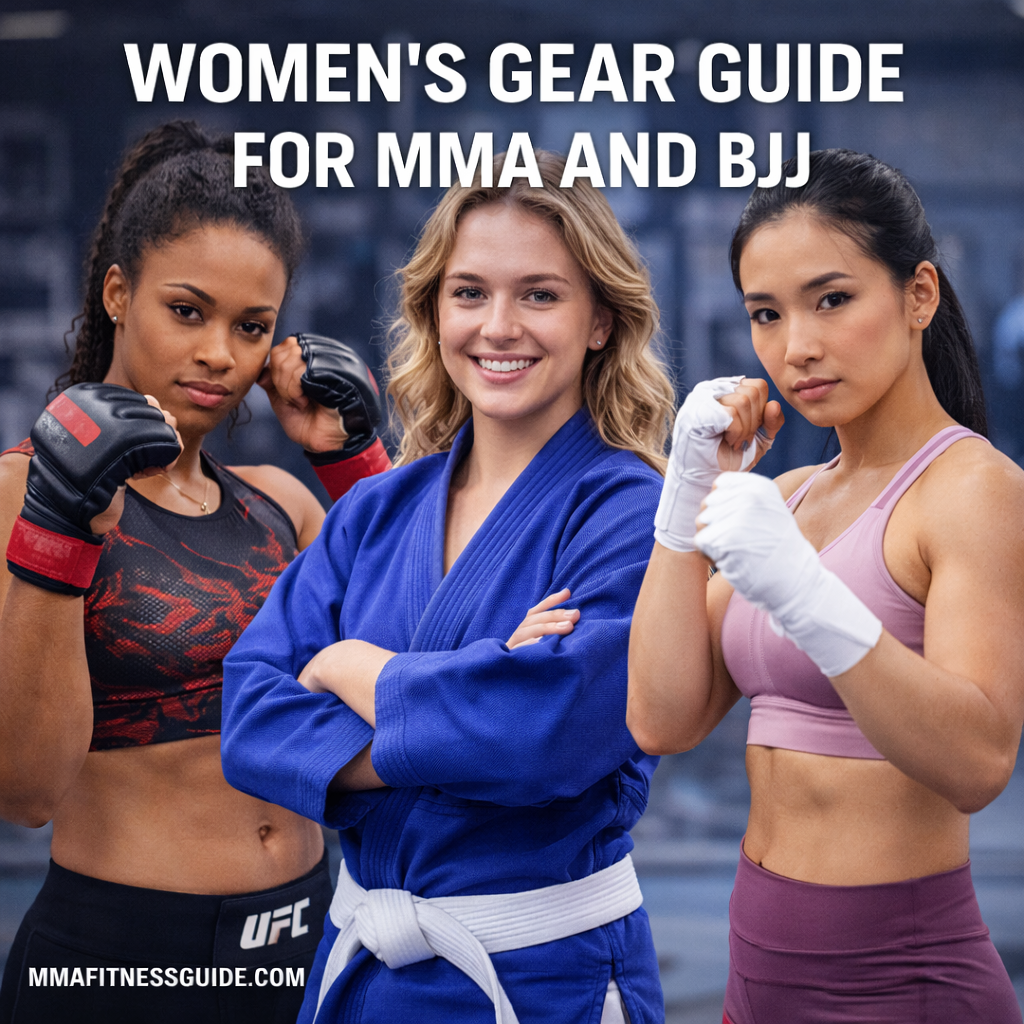
Women’s Gear Guide for MMA and BJJ

Diverse women wearing MMA and BJJ training gear in a gym, showcasing women’s gear for mixed martial arts and Brazilian jiu-jitsu.
Diverse female athletes display essential MMA and BJJ training gear designed for comfort, performance, and protection.

Women’s participation in MMA and Brazilian Jiu-Jitsu has grown rapidly, and having the right gear makes a major difference in comfort, safety, and performance. Equipment designed specifically for women fits better, lasts longer, and allows athletes to focus on training instead of constant adjustments or discomfort.

This women’s gear guide for MMA and BJJ breaks down essential equipment, explains what to look for when choosing gear, and highlights practical considerations for training and competition.

Continue reading “Women’s Gear Guide for MMA and BJJ”

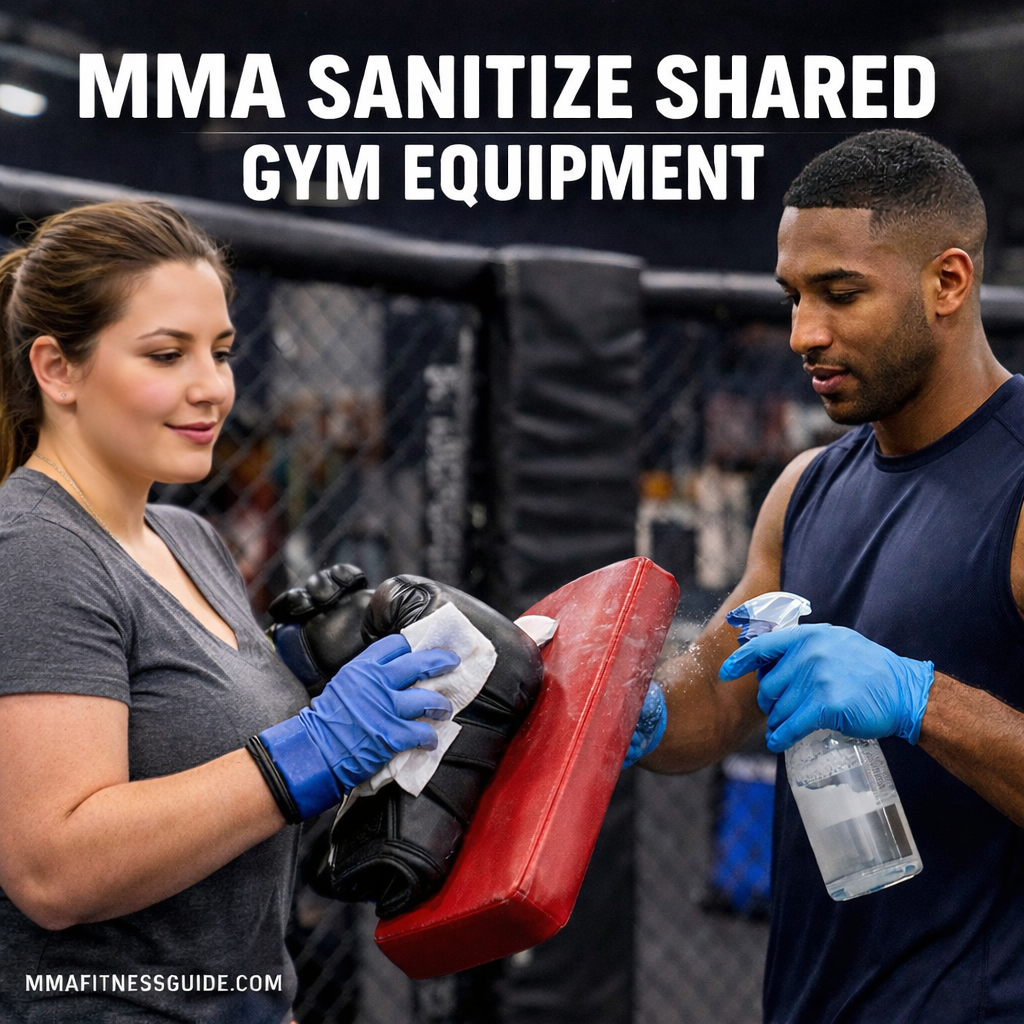
MMA Sanitize Shared Gym Equipment

MMA gym members sanitizing shared training equipment, showing proper cleaning practices to prevent bacteria and infections in combat sports gyms.
MMA athletes clean and disinfect shared gym equipment to reduce infection risk and maintain a safe training environment.

Shared gym equipment is part of everyday life for MMA athletes. Gloves, mats, pads, cages, and strength equipment are used by dozens of fighters daily, creating the perfect environment for bacteria, fungi, and viruses to spread. Learning how to properly sanitize shared MMA gym equipment isn’t just about cleanliness—it’s essential for injury prevention, skin health, and long-term training consistency.

This guide explains why sanitation matters, what risks exist in MMA gyms, and how fighters and gym owners can effectively sanitize shared equipment without damaging gear.

Continue reading “MMA Sanitize Shared Gym Equipment”

Gifts for MMA Fighters and Coaches

MMA fighters reviewing training gear and accessories in a gym, highlighting practical gift ideas for fighters and coaches.
MMA fighters exploring practical training and recovery gear, showcasing thoughtful gift ideas for fighters and coaches.

Introduction

Finding the right gift for an MMA fighter or coach can be challenging—especially if you don’t train yourself. Fighters value practicality, durability, and tools that support training and recovery. Coaches, on the other hand, appreciate items that improve organization, efficiency, and longevity in the gym.

The best gifts aren’t flashy—they’re useful, thoughtful, and aligned with the realities of combat sports.

Continue reading “Gifts for MMA Fighters and Coaches”

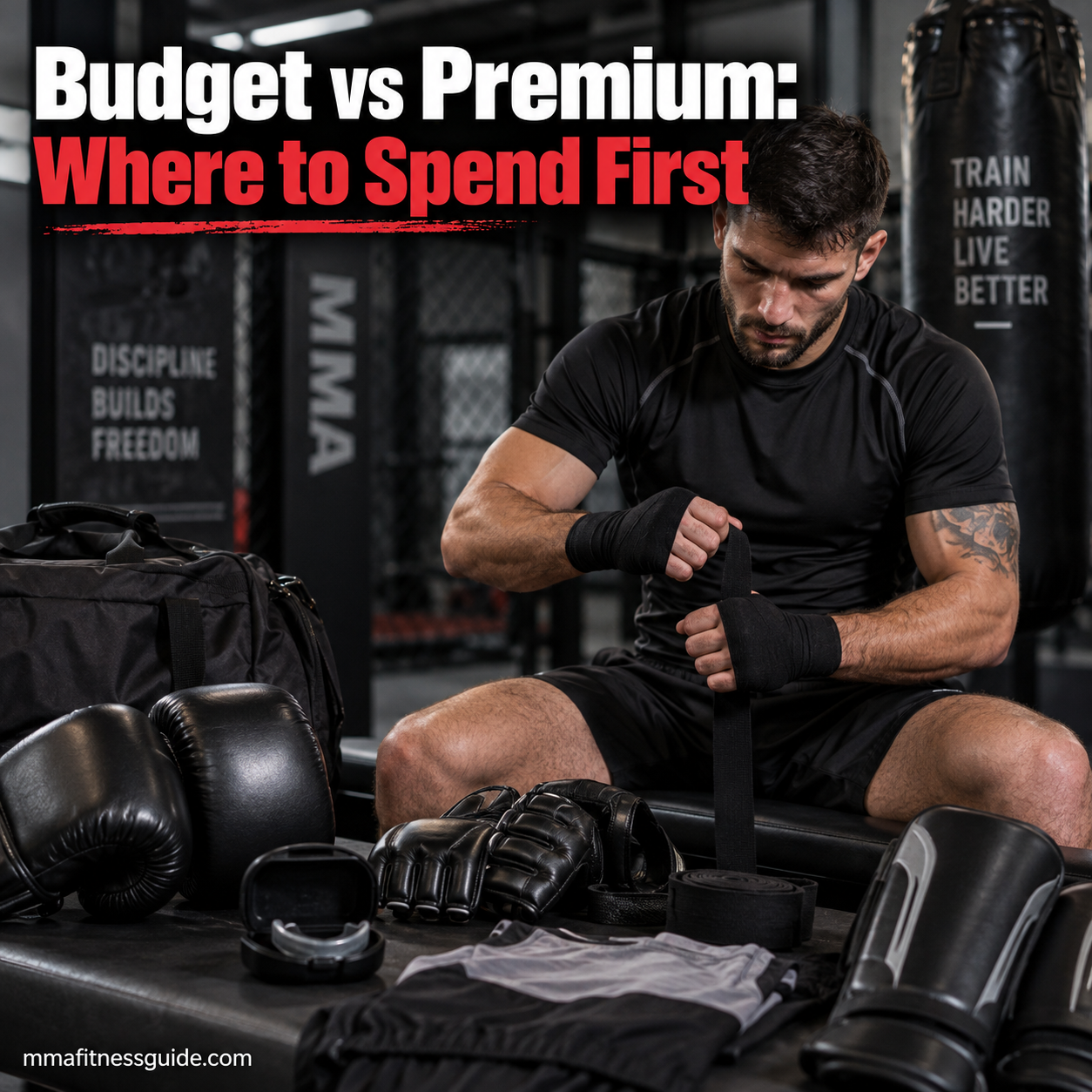
Budget vs Premium: Where to Spend First

MMA fighter wrapping his hands in a gym with boxing gloves, shin guards, a mouthguard, and training equipment, illustrating budget versus premium MMA gear.
Budget vs premium MMA gear: Learn where to invest in quality equipment, where to save money, and how to build a reliable training kit.

Building an MMA training kit can get expensive quickly. Between boxing gloves, MMA gloves, shin guards, mouthguards, rash guards, and training accessories, even a beginner can spend several hundred dollars before stepping onto the mats.

The challenge isn’t simply finding the cheapest equipment. It’s understanding which purchases deserve more of your budget and which can be kept affordable without sacrificing comfort, protection, or training quality.

A $150 pair of gloves might last significantly longer than a poorly constructed $40 pair. On the other hand, a $100 training shirt might offer little practical advantage over a comfortable $25 alternative.

The goal is to spend more where quality makes a meaningful difference and save where it doesn’t.

Here’s how budget and premium MMA equipment actually compare, what to look for in each category, and how to build a purchasing strategy around your experience, training frequency, and budget.

Whether you’re preparing for your first MMA class or replacing equipment after years of training, understanding the difference between price and value will help you make better decisions.

Continue reading “Budget vs Premium: Where to Spend First”

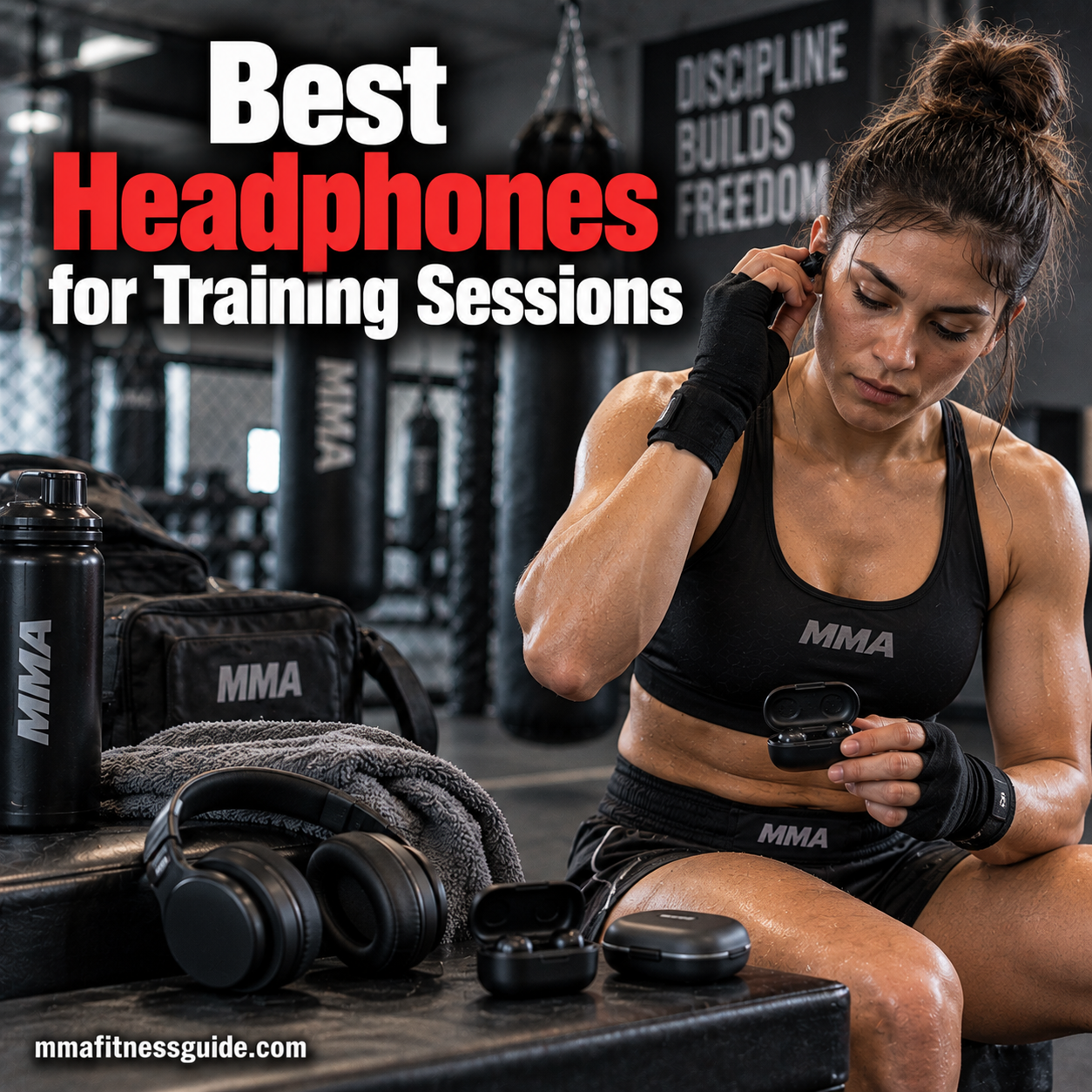
Best Headphones for Training Sessions

Female MMA athlete putting in wireless earbuds before a solo training session at the gym
Secure, sweat-resistant headphones can work well for solo MMA conditioning, lifting, running, warm-ups, and recovery sessions.

Introduction

Burpees, jump rope, heavy-bag rounds, sprints, and strength work expose headphone problems quickly. Loose earbuds fall out, over-ear headphones trap heat, touch controls misfire when your hands are sweaty, and poorly protected electronics can struggle after repeated exposure to moisture.

For MMA athletes, headphones make the most sense during solo conditioning, lifting, roadwork, warm-ups, and recovery—not during sparring or drills where communication and awareness are required.

Secure fit, sweat resistance, battery life, straightforward controls, and awareness of your surroundings should drive the buying decision. Sound quality still matters, but headphones that stay put through a conditioning circuit are generally more useful in the gym than a feature-heavy pair designed primarily for stationary listening.

Continue reading “Best Headphones for Training Sessions”

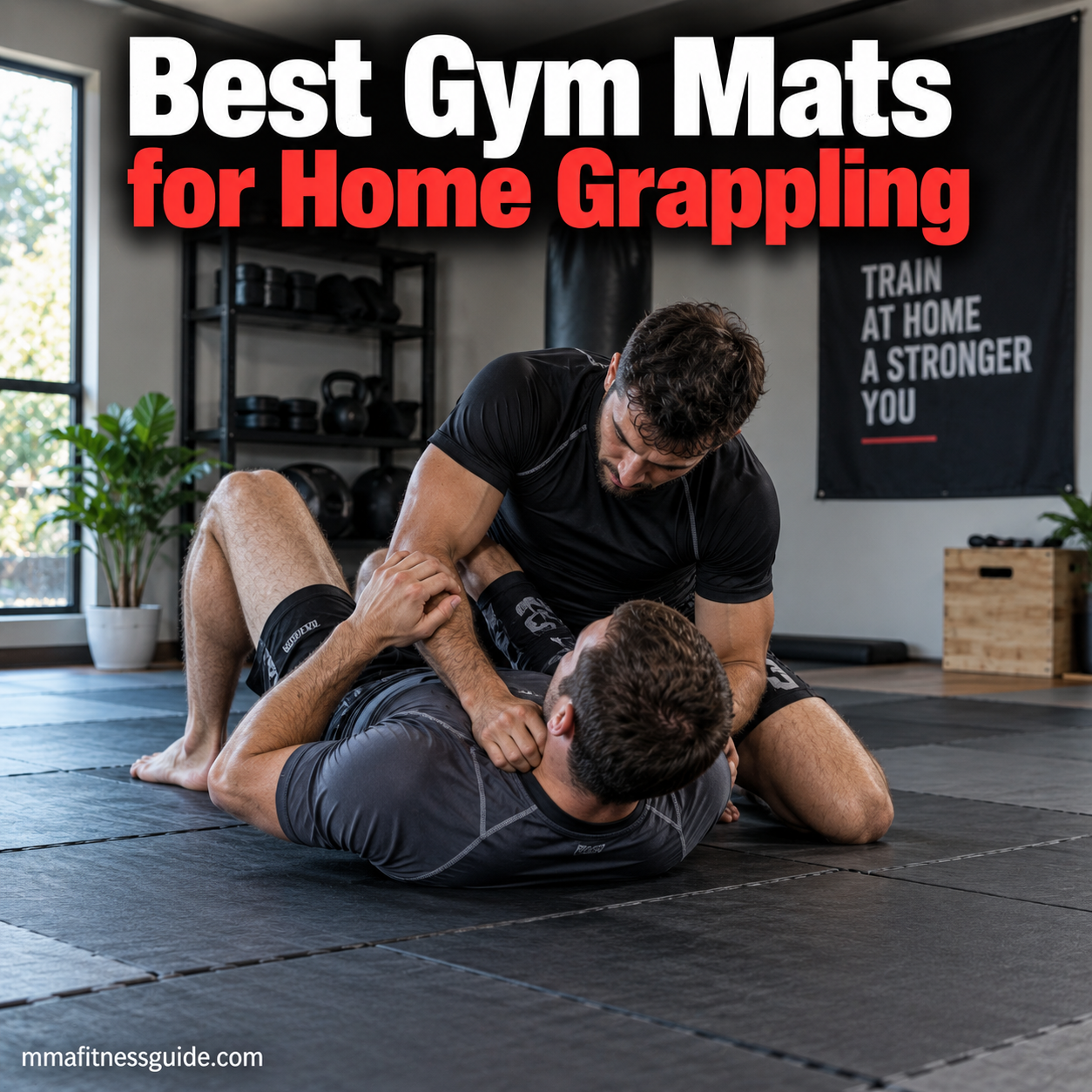
Best Gym Mats for Home Grappling

Two MMA athletes practicing grappling on interlocking gym mats in a dedicated home training space.
Choosing the right home grappling mats for BJJ, MMA, and wrestling training.

Training grappling at home is an effective way to sharpen techniques, improve conditioning, and supplement regular gym sessions. Whether you practice Brazilian Jiu-Jitsu (BJJ), wrestling, judo, or MMA, having a dedicated training surface makes it easier to drill movements and maintain consistency between classes.

However, grappling places unique demands on flooring. Knees repeatedly contact the ground, athletes shift their weight during scrambles, and takedowns can generate substantial impact. Training directly on hardwood, tile, or concrete increases the risk of painful contact and injury.

Choosing the best gym mats for home grappling requires more than finding the thickest foam available. Mat density, surface texture, available space, stability, and the type of training you perform all influence which flooring is appropriate.

A compact setup for solo movement drills has different requirements from a dedicated room used for partner rolling.

This guide explains how to compare home grappling mats, choose suitable thickness and density, evaluate puzzle mats against roll-out systems, and build a practical training area. It also covers cleaning, floor protection, storage, budgeting, and the limitations of home training.

The goal is to help you create a durable training surface that supports your practice without overlooking important safety considerations.

Continue reading “Best Gym Mats for Home Grappling”

MMA: Organize Your Gym Bag Efficiently

MMA athlete organizing a gym bag with gloves, wraps, towel, and training essentials neatly arranged.
An MMA gym bag organized with essential training gear for efficient and hygienic preparation.

Introduction

An organized gym bag may not seem like a priority, but for MMA fighters it can make a real difference in training quality, hygiene, and mental readiness. Scrambling to find wraps, forgetting essentials, or mixing clean and dirty gear creates unnecessary stress before and after sessions.

Learning how to organize your MMA gym bag efficiently saves time, protects your equipment, and helps you stay focused on training—not logistics.

Continue reading “MMA: Organize Your Gym Bag Efficiently”

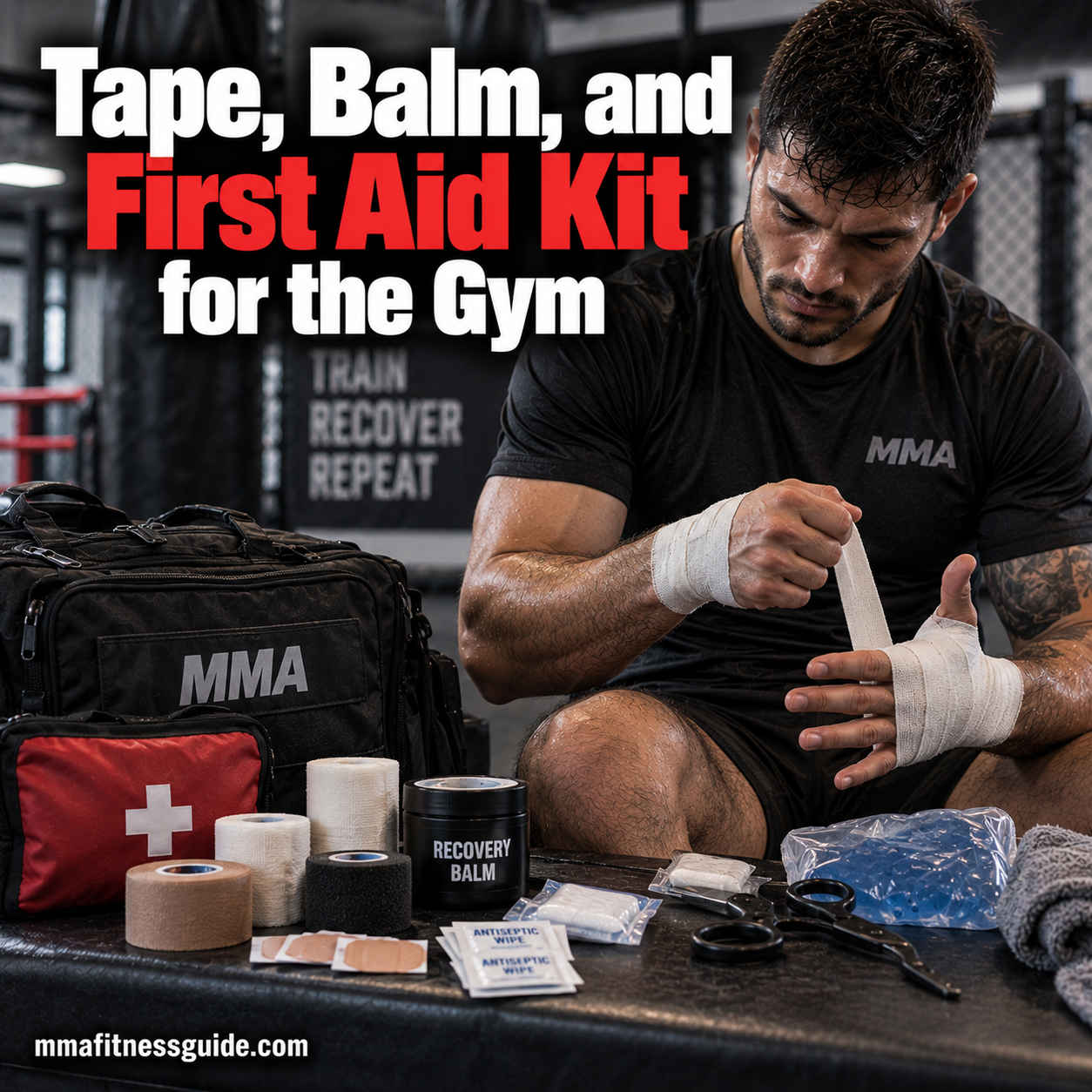
Tape, Balm, and First Aid Kit for the Gym

MMA fighter using athletic tape beside a gym first aid kit with gauze, bandages, balm, antiseptic wipes, and cold pack
Athletic tape and basic first aid supplies can help MMA athletes handle minor cuts, abrasions, and common training issues until further care is needed.

A split knuckle during bag work, a scraped knee from the mat, or a finger bent awkwardly during grappling can bring a training session to an early stop. These aren’t dramatic fight-night injuries—they’re the smaller problems that regularly show up after hours of striking, wrestling, and rolling.

Keeping athletic tape, wound-care supplies, disposable gloves, gauze, and a few basic recovery products in your gym bag means you can deal with minor issues promptly instead of searching the gym for supplies. Tape can provide temporary support or protect vulnerable skin, while a properly stocked first aid pouch gives you clean supplies for handling small cuts and abrasions.

The goal isn’t to patch up an injury so you can ignore it. It’s to have the right supplies for minor problems, recognize when something requires more than basic first aid, and keep cuts and shared training surfaces as hygienic as possible.

Continue reading “Tape, Balm, and First Aid Kit for the Gym”