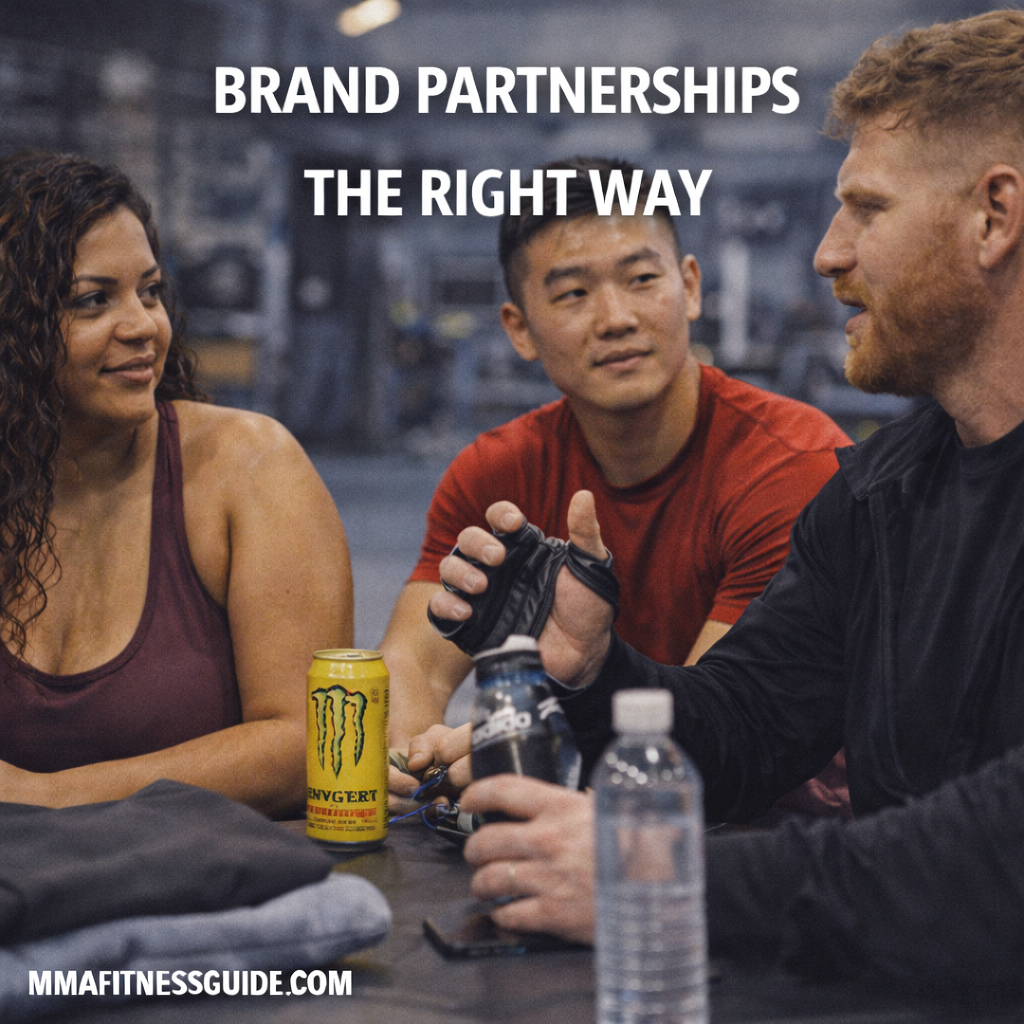
Brand partnerships can be a powerful income stream and career accelerator for MMA fighters, but only when approached correctly. The wrong partnerships can damage credibility, alienate fans, and limit future opportunities. The right partnerships can help cover training expenses, strengthen a fighter’s public image, and create income that continues long after their competitive career ends.
For fighters balancing gym fees, coaching expenses, travel, recovery, and everyday living costs, sponsorships can provide valuable financial support. However, building successful partnerships requires more than posting a company’s logo on Instagram or wearing branded clothing during training.
Fighters need to understand what businesses expect, how to communicate their value, how to negotiate agreements, and how to protect their reputation.
Whether you’re an amateur looking for your first local sponsor or a professional developing relationships with established brands, this guide explains how to build authentic, financially worthwhile, and sustainable brand partnerships.
Why Brand Partnerships Matter in MMA
Unlike athletes in some major professional sports, many MMA fighters cannot rely exclusively on competition earnings.
Fight purses may be inconsistent, and athletes often face substantial expenses before receiving payment for their next bout.
Common expenses include:
- Gym memberships and training fees
- Private coaching and specialized instruction
- Strength and conditioning programs
- Nutrition and recovery services
- Travel and accommodation for competitions
- Medical examinations and licensing requirements
- Equipment and training apparel
Even a fighter with a promising professional record may experience months without competition income.
Brand partnerships can help reduce this financial uncertainty.
Sponsorships Can Support Training Expenses
A local meal preparation company might provide discounted meals throughout a fight camp. An equipment manufacturer might supply gloves, shin guards, and training apparel.
These arrangements do not necessarily generate cash, but they can reduce recurring expenses.
A fighter who receives $200 worth of genuinely useful training products each month may be able to redirect that money toward coaching or travel.
However, fighters should distinguish between cash compensation and the retail value of products they receive. Free merchandise does not pay rent, and products that would not otherwise be purchased may have limited financial value.
Partnerships Create Income Beyond Competition
A well-structured sponsorship can provide compensation throughout the year rather than exclusively around fight night.
For example, a fighter might negotiate a three-month agreement involving monthly social media content, appearances, and training-related promotions.
This creates a more predictable arrangement than depending entirely on fight bonuses or occasional sponsorship payments.
Fighters interested in diversifying their earnings should also explore our guide on how fighters can make money outside the cage .
Brand partnerships are one potential income source within a broader financial strategy.
Understand What Brands Are Really Looking For
A common misconception is that companies only sponsor undefeated fighters, championship contenders, or athletes with enormous social media followings.
In reality, sponsorship decisions depend on the company’s objectives.
A local martial arts equipment retailer may prefer a regional fighter with 3,000 engaged followers over an athlete with 50,000 followers scattered across unrelated audiences.
The smaller account may reach more potential customers in the retailer’s immediate market.
Audience Relevance Matters
Brands want access to people who might realistically purchase their products or services.
A fighter whose followers consist primarily of martial arts practitioners could be valuable to a company selling:
- Boxing gloves and protective equipment
- Training apparel
- Gym memberships
- Fitness coaching services
- Recovery equipment
Audience location also matters.
A San Diego-based fitness business may benefit more from an athlete with a concentrated local following than from someone whose audience is primarily overseas.
Engagement Is More Than Follower Count
Companies may examine how audiences respond to a fighter’s content.
Relevant indicators include comments, shares, video views, website clicks, and inquiries generated through promotions.
A fighter who consistently answers training questions and maintains conversations with followers may offer a brand meaningful access to an interested community.
Follower numbers alone do not demonstrate purchasing interest.
Professionalism Makes a Difference
Brands also want athletes who fulfill commitments.
Responding to messages, meeting deadlines, following promotional guidelines, and behaving professionally during appearances all contribute to a productive relationship.
An athlete who delivers agreed content on schedule is easier for a company to work with than someone who repeatedly misses deadlines, regardless of competitive achievements.
Build Your Personal Brand First
Before approaching sponsors, fighters should understand what distinguishes them from other athletes.
Your personal brand is the identity people associate with your name, behavior, training philosophy, and public presence.
It develops through your actions, not simply through a logo or nickname.
Define Your Identity
Consider what you want people to recognize you for.
You might be known for:
- Technical striking and detailed training breakdowns
- Disciplined strength and conditioning
- Balancing professional fighting with family responsibilities
- Helping beginners enter martial arts
- Supporting your local combat sports community
- Documenting the challenges of progressing through amateur competition
These characteristics provide direction for sponsorship opportunities.
A fighter who regularly teaches beginners might naturally collaborate with an equipment company offering affordable introductory gear.
An athlete focused on conditioning might be more relevant to a fitness equipment manufacturer.
Develop a Consistent Online Presence
Your social media profiles should make it easy for potential partners to understand who you are.
Use a recognizable profile photograph, a concise biography, and a clear description of your athletic background.
Include a professional contact method.
You do not need to publish every training session. Instead, maintain a consistent mix of competition updates, educational content, training footage, and personal experiences that genuinely reflect your life.
For fighters interested in building an audience through longer-form content, our guide to YouTube and content creation for fighters explains how content can become part of a broader career strategy.
Choose Brands You Actually Use and Believe In
Authenticity is essential to maintaining audience trust.
If you regularly train with a particular brand of gloves, explaining your experience with those gloves can be useful to followers.
Promoting equipment you have never used creates a different situation.
You may be unable to answer basic questions about durability, fit, or performance.
Evaluate Product Relevance
Before accepting an offer, ask yourself:
- Have I personally used this product?
- Does it serve a genuine purpose in my training or lifestyle?
- Can I accurately explain its features and limitations?
- Is the company reputable?
- Would I feel comfortable discussing the product with teammates?
A sponsorship should not require you to invent experiences or make claims you cannot substantiate.
Be Especially Careful With Health and Performance Products
Supplements, recovery products, and performance-related services deserve additional scrutiny.
A fighter should never guarantee that a product prevents injuries, accelerates recovery, or improves athletic performance without appropriate evidence.
Athletes subject to anti-doping rules also need to consider contamination risks and applicable prohibited-substance requirements.
A brand’s assurance that a product is safe does not eliminate those risks.
When evaluating supplements, consider the manufacturer’s quality controls, relevant third-party testing, and the rules governing your competition.
No certification completely eliminates the possibility of contamination.
Quality Partnerships Beat Quantity
Signing multiple sponsorship agreements might appear financially attractive, but more sponsors do not automatically produce better results.
An athlete promoting five competing apparel companies may create confusion about which products they actually use.
Frequent unrelated advertisements can also overwhelm followers.
Build a Balanced Partnership Portfolio
Consider selecting partners that serve different needs.
For example:
| Partnership category | Potential contribution |
|---|---|
| Training equipment | Gloves, pads, apparel, or financial support |
| Nutrition | Meals or suitable food products |
| Local business | Cash sponsorship or community exposure |
| Fitness technology | Equipment or promotional compensation |
| Recovery services | Relevant services or financial support |
These categories are illustrative rather than a checklist of sponsors every fighter needs.
Each relationship should have a clear purpose.
Avoid Conflicting Agreements
A fighter might sign an exclusive apparel agreement and later discover that a fight promotion requires athletes to wear specific clothing during official events.
Another sponsor might request exclusivity across an entire product category.
Before accepting multiple partnerships, determine whether the agreements conflict with each other or with your promotion’s rules.
How to Find and Approach Potential Sponsors
Finding sponsors requires research and professional outreach.
Sending identical messages to hundreds of companies is rarely an effective strategy.
Instead, identify businesses with a genuine connection to your audience, training activities, or community.
Start With Your Existing Network
Potential contacts include local fitness businesses, equipment retailers, martial arts academies, and companies already involved in combat sports events.
Your coaches, teammates, and event organizers may also know business owners interested in supporting athletes.
Building professional relationships can create opportunities that are not publicly advertised.
Our article on networking and training tips for MMA professionals explores ways to develop relationships within the industry.
Research Each Company
Before contacting a business, examine its products, customers, marketing activity, and existing athlete partnerships.
Determine whether your audience aligns with the company’s target market.
A personalized proposal should explain why the relationship makes sense for both sides.
Prepare a Sponsorship Media Kit
A media kit is a short document introducing you to potential partners.
It should contain:
- Your name, location, and athletic background
- Competition history and relevant achievements
- Social media audience statistics
- Audience demographics, when available
- Examples of previous content
- Upcoming events and promotional opportunities
- Contact information
Keep statistics accurate and current.
If you have previously worked with sponsors, include measurable results you have permission to share.
For example, you might report the number of tracked website visits generated during a campaign.
Do not invent conversion figures or imply that every video viewer became a customer.
Write a Personalized Sponsorship Pitch
A useful pitch identifies the company, explains the connection, and proposes a specific collaboration.
Here is a simple example:
Subject: Potential MMA Athlete Partnership
Hello [Brand Name],
My name is [Your Name], and I’m an MMA fighter based in [City].
I’ve been following your company and believe your products could be relevant to my audience of martial arts practitioners and fitness enthusiasts.
I’m currently preparing for [upcoming competition or training goal] and would like to explore a potential partnership involving authentic training content and product demonstrations.
I’d be happy to share my media kit and discuss a collaboration that supports your marketing objectives.
Thank you for your consideration.
[Your Name]
[Social Media Profile]
[Contact Information]
Amateur fighters seeking their first sponsorship can find additional guidance in our article on how to get sponsorships as an amateur MMA fighter .
Set Clear Expectations From the Start
Professional partnerships require clearly defined responsibilities.
A verbal promise to promote a company in exchange for payment leaves considerable room for disagreement.
Both parties should understand exactly what is being exchanged.
Define Deliverables
A sponsorship agreement might require:
- Two Instagram posts per month
- Four short-form training videos
- One appearance at a local event
- Permission to display a sponsor’s logo on approved training apparel
- A monthly performance report
Specify the platforms, formats, deadlines, and approval procedures.
Also determine whether the company can request revisions and how many revisions are included.
Establish Compensation Terms
Compensation may involve cash, products, services, or a combination.
Clarify the payment amount, due dates, invoicing requirements, and any conditions attached to compensation.
If a brand offers commission-based payments, determine how sales are tracked and when commissions become payable.
Avoid agreements in which compensation depends on undefined performance expectations.
Understand Image Usage Rights
A company may want to use your photographs or videos in advertisements.
That permission can have substantial value beyond an ordinary social media post.
Determine whether the company can use your likeness on its website, in paid advertisements, on product packaging, or through other marketing channels.
Specify the permitted duration, territory, platforms, and whether further approval is required.
Athletes should also understand the difference between allowing a brand to repost content and granting broader commercial usage rights.
Create Value Beyond Promotion Posts
A successful partnership should offer more than repeated product photographs and discount codes.
Brands may benefit from content that demonstrates how their products fit into real training environments.
Produce Educational Content
An equipment sponsor might collaborate with a fighter on a video explaining how to select appropriately sized boxing gloves.
A training apparel company might feature an athlete discussing comfort and durability during a demanding training session.
Educational content gives followers a reason to watch beyond the advertisement itself.
Document Genuine Experiences
Long-term partnerships allow athletes to share experiences over time.
A fighter might introduce a new piece of equipment, demonstrate its use during training, and later discuss how it has performed.
These updates should remain truthful, including any meaningful limitations.
Participate in Community Events
Local partnerships can include gym seminars, product demonstrations, meet-and-greet sessions, or community fitness events.
Such activities provide opportunities for businesses to interact directly with potential customers.
However, appearances require time and preparation. They should be included in the agreement and compensated appropriately.
Protect Your Audience’s Trust
An athlete’s audience represents a relationship built through consistent behavior and communication.
Followers may value your training advice because they believe it reflects genuine experience.
Commercial relationships introduce additional responsibilities.
Clearly Disclose Sponsorships
In the United States, the Federal Trade Commission requires disclosure of material connections that could affect how consumers evaluate an endorsement.
If you receive payment, free products, or other benefits in exchange for promoting a brand, an appropriate disclosure may be necessary.
Use clear language such as “Ad,” “Sponsored,” or an unambiguous explanation of the relationship.
Place disclosures where audiences are likely to notice them. A disclosure hidden among hashtags or buried at the end of a lengthy caption may be inadequate.
Platform-specific paid partnership tools can be useful, but they do not automatically satisfy every disclosure requirement.
Review applicable FTC guidance and the rules of each platform.
Never Manufacture Testimonials
Do not claim that a product improved your conditioning, reduced pain, or increased strength unless that statement accurately reflects your experience and any required substantiation exists.
Likewise, avoid presenting paid promotional content as an independent review.
Audience trust depends on followers understanding when a commercial relationship exists.
Learn to Say No Strategically
Not every sponsorship opportunity deserves acceptance.
An agreement can provide immediate compensation while restricting future opportunities or creating unnecessary obligations.
Recognize Warning Signs
Exercise caution when a company:
- Refuses to provide written terms
- Requests misleading testimonials
- Demands unlimited image usage for minimal compensation
- Requires extensive work without guaranteed payment
- Offers vague promises of future exposure
- Requests exclusivity without clearly defining its scope
A partnership that consumes significant training time may also be unsuitable, even if the brand itself is reputable.
Decline Professionally
You do not need to criticize a company to reject its offer.
A concise response explaining that the opportunity does not align with your current commitments is sufficient.
Maintaining professional communication leaves room for a different arrangement in the future.
Understand the Business Side of Partnerships
Even relatively small sponsorships should be managed as business arrangements.
Athletes need to understand their obligations, financial records, and potential liabilities.
Review Contract Terms Carefully
Important provisions include:
- Agreement duration
- Compensation and payment deadlines
- Required promotional activities
- Exclusivity restrictions
- Image and content licensing
- Termination conditions
- Cancellation procedures
- Dispute resolution
Pay particular attention to provisions that remain effective after the partnership ends.
For example, a company might request continued use of your photographs after the sponsorship expires.
Consider having a qualified attorney review agreements involving substantial compensation, extensive exclusivity, or long-term image rights.
Understand Promotion and Event Restrictions
Fight organizations may control sponsor visibility during official events.
Restrictions can apply to fight-week clothing, walkout apparel, competition equipment, broadcast appearances, and other promotional activities.
Review your existing agreements before promising a sponsor visibility during an event.
A sponsorship contract should not require something your promotional agreement prohibits.
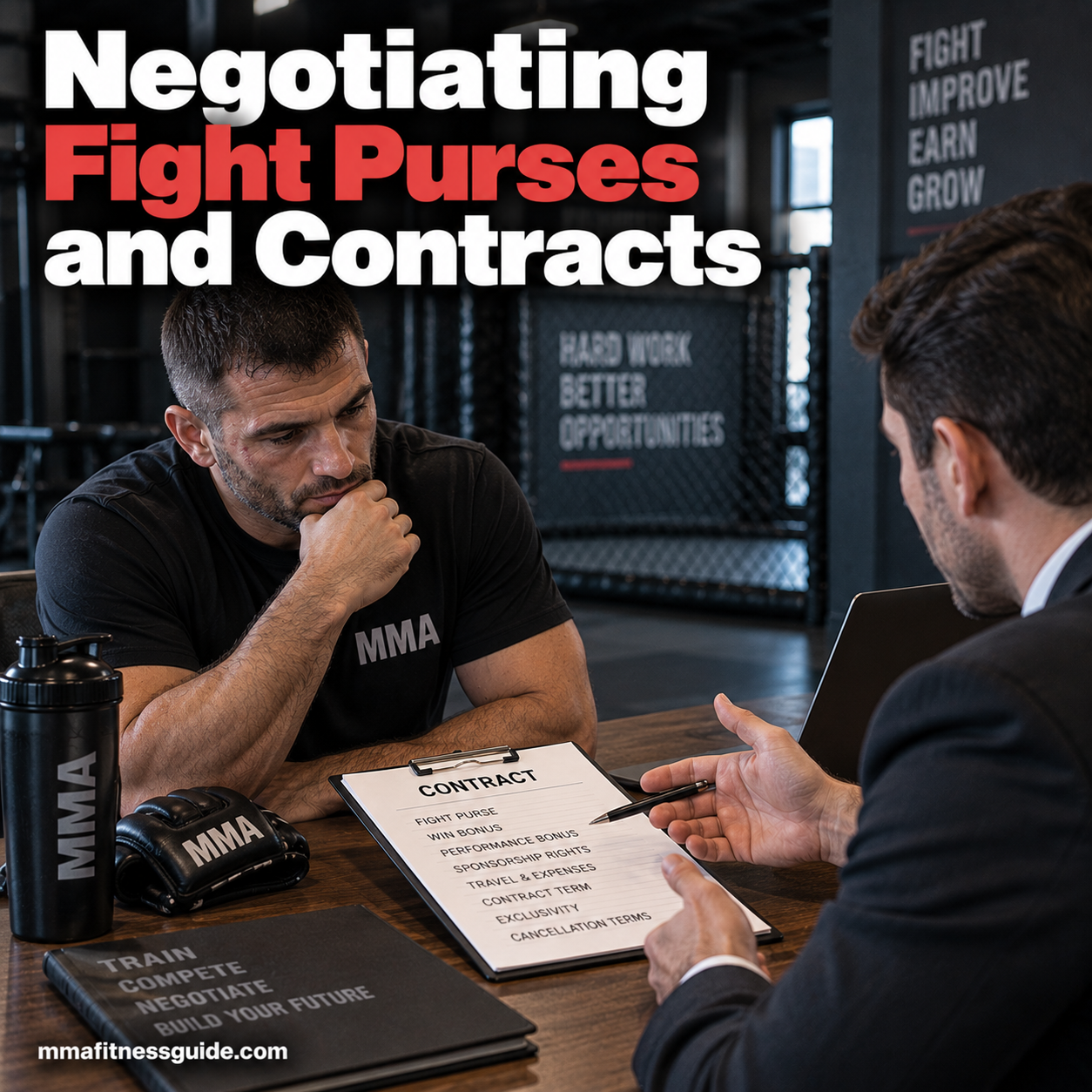
For a broader discussion of athlete agreements, read our guide to negotiating fight purses and contracts .
Keep Accurate Financial Records
Track payments, invoices, business expenses, and the value of products or services received.
In the United States, sponsorship compensation may create taxable income, including certain noncash benefits.
The treatment depends on the arrangement and applicable tax rules.
A qualified tax professional can help determine reporting requirements, deductible expenses, and whether estimated tax payments are appropriate.
Managers and Agents in Brand Deals
Managers and agents can help fighters identify opportunities, communicate with businesses, and negotiate agreements.
Their involvement may become increasingly valuable as the number and complexity of partnerships grow.
What a Manager Can Contribute
A manager may assist with sponsor outreach, negotiations, contract administration, and coordination with fight schedules.
An experienced representative may also have established relationships with companies seeking athlete partnerships.
However, fighters should understand what services are actually included.
Understand Representation Fees
Before hiring a representative, clarify:
- Commission percentages
- Which deals generate commissions
- Whether existing sponsorships are included
- Agreement duration
- Termination procedures
- Who has authority to approve deals
A fighter should not assume that a manager’s interests automatically align with their own.
Read the representation agreement and seek independent advice when necessary.
How Much Should MMA Fighters Charge for Sponsorships?
There is no universal sponsorship rate.
Compensation depends on audience characteristics, promotional responsibilities, commercial usage rights, competition exposure, and the value a fighter can demonstrate.
A local athlete with a concentrated audience may offer meaningful value to a regional business, while a nationally recognized fighter may negotiate broader campaigns.
Evaluate the Entire Workload
Consider the time required for content production, travel, appearances, editing, communication, and reporting.
For example, an agreement paying $300 for three posts may appear attractive until the brand also requests several hours of filming, extensive revisions, and unlimited advertising rights.
Calculate the workload before accepting the fee.
Separate Different Services
A practical proposal can distinguish between social media posts, video production, appearances, and commercial licensing.
This allows a company to select services that match its budget without automatically receiving every possible promotional benefit.
Negotiate Based on Demonstrable Value
Use actual audience data, previous campaign results, and the proposed scope of work to support your pricing.
Avoid guaranteeing sales or return on investment unless the agreement defines a realistic, measurable commitment that you can control.
Measure Whether a Partnership Is Working
A sponsorship should benefit both the fighter and the business.
Regular evaluation helps determine whether to renew, expand, or revise an agreement.
Track Relevant Performance Indicators
Depending on the campaign, useful metrics may include:
- Content reach and video views
- Audience engagement
- Link clicks
- Discount code usage
- Customer inquiries
- Event attendance
These measurements should reflect the campaign’s original objectives.
A brand-awareness campaign may prioritize reach, while a direct-sales campaign may focus on tracked purchases.
Review Results With Your Sponsor
Provide concise reports showing what was delivered and how audiences responded.
Explain which content performed well and identify opportunities for improvement.
For example, an instructional video might generate more meaningful engagement than a static product photograph.
These findings can guide future campaigns.
Do not confuse correlation with proof that a sponsorship caused every observed sale or increase in engagement.
Think Long-Term, Not Fight-to-Fight
A fighter’s competitive career may include injuries, canceled bouts, periods of inactivity, and eventual retirement.
Brand partnerships should be structured with these possibilities in mind.
Build Relationships Beyond Competition Results
A sponsor that values only fight-night exposure may lose interest when an athlete is inactive.
A company that also values educational content, community involvement, and professional credibility has additional reasons to maintain the relationship.
Fighters can develop these opportunities by contributing consistently outside competition.
Prepare for Career Transitions
An athlete might eventually move into coaching, gym ownership, commentary, or content production.
Relevant sponsorship relationships can continue supporting these activities.
For example, a retired fighter who becomes a coach may remain valuable to an equipment company through instructional videos and gym demonstrations.
Sponsorships can also serve as an introduction to entrepreneurship. Fighters who develop experience negotiating agreements, managing promotional campaigns, and building professional relationships may apply those skills to coaching, merchandise, or gym ownership.
Our guide to turning your passion for MMA into a business explores how to develop these opportunities beyond competition.
Fighters considering coaching should also explore our article on becoming a certified MMA trainer to understand the professional development involved in transitioning from athlete to instructor.
Athletes planning to build a larger training business may eventually consider additional facilities. Our second-location expansion checklist covers important considerations for gym owners preparing for that stage.
The objective is to develop professional relationships that are not entirely dependent on the next fight.
Common Brand Partnership Mistakes Fighters Make
Several recurring mistakes can undermine otherwise promising sponsorship opportunities.
Accepting Every Offer
Promoting unrelated products without evaluating their relevance can weaken your public identity.
Choose partnerships based on fit, obligations, and compensation rather than simply accumulating sponsor logos.
Overpromising Deliverables
Agreeing to excessive content requirements can interfere with training and recovery.
Build a realistic schedule around your athletic responsibilities.
Ignoring Contract Details
Unclear exclusivity, payment, and image licensing provisions can create expensive disputes.
Review agreements before signing.
Copying Other Influencers
Promotional techniques that work for lifestyle influencers may not suit combat sports audiences.
Develop content that reflects your own experience and the needs of your followers.
Chasing Short-Term Money
A lucrative agreement may be unsuitable if it creates significant reputational risks or prevents more appropriate future partnerships.
Evaluate the full terms rather than the initial payment alone.
A Practical Brand Partnership Checklist
Before committing to a sponsorship, review the following:
- Have you researched the company and its products?
- Does the partnership fit your identity and audience?
- Are compensation and payment schedules clearly defined?
- Are all deliverables and deadlines documented?
- Have you reviewed exclusivity and promotional restrictions?
- Are image usage and content licensing rights clear?
- Can you comply with advertising disclosure requirements?
- Will the agreement interfere with training obligations?
- Do you understand termination and cancellation conditions?
- Do you have a method for measuring and reporting results?
A few minutes spent reviewing these questions can help identify problems before they become contractual or reputational issues.
This checklist is a practical review tool, not a substitute for legal or financial advice.
Frequently Asked Questions About MMA Brand Partnerships
Do amateur MMA fighters need a large following to get sponsors?
No. Local businesses may value community connections, audience relevance, and promotional opportunities even when an athlete has a relatively small following.
A clear proposal and professional communication can help demonstrate that value.
Can MMA fighters have multiple sponsors?
Yes, provided their agreements allow it.
Fighters should review exclusivity provisions, conflicting product categories, and any restrictions imposed by their fight promotion.
Should fighters accept free products instead of payment?
Product-only arrangements can be worthwhile when the items are genuinely useful and the promotional obligations are reasonable.
However, fighters should evaluate the actual value of the products and avoid exchanging substantial work or broad image rights for merchandise alone.
What should a fighter include in a sponsorship proposal?
A proposal should introduce the athlete, describe the audience, explain why the company is a suitable partner, outline potential deliverables, and provide contact information.
A media kit can supply supporting statistics and examples.
How long should a sponsorship agreement last?
The appropriate duration depends on the campaign.
Short-term arrangements can help both parties test a relationship, while longer agreements may support ongoing content and predictable compensation.
Renewal, termination, and usage-rights provisions should be clearly documented.
Can sponsorships continue after an MMA fighter retires?
Yes. Retired athletes may continue working with brands through coaching, educational content, appearances, gym ownership, and other professional activities.
The viability of these partnerships depends on the athlete’s ongoing audience, activities, and value to the sponsor.
Final Thoughts
Brand partnerships can help MMA fighters reduce financial pressure, develop business relationships, and create opportunities beyond competition.
However, successful sponsorships require more than accepting offers and publishing promotional content.
Fighters need to understand their audience, identify suitable businesses, negotiate clearly defined agreements, and fulfill their responsibilities.
Authenticity matters, but professionalism and sound business practices are equally important.
The goal is not to monetize every available opportunity. It is to establish relationships that provide genuine value to both parties while protecting the trust of the people who support your career.
Approached thoughtfully, brand partnerships can become a sustainable component of a fighter’s financial and professional development.
Continue Building Your MMA Brand and Career
A successful brand partnership can open doors beyond sponsorship money. Whether you’re looking to secure your first deal, grow your audience, negotiate better contracts, or build a business after fighting, these related guides can help you explore your next opportunities.
- How to Get Sponsorships as an Amateur MMA Fighter — Learn how to find potential sponsors, create a media kit, and approach businesses with a professional proposal.
- Turning Your Passion for MMA Into a Business — Explore ways to turn your martial arts experience into a business that extends beyond competition.
- YouTube and Content Creation for Fighters — Discover how to document your training, build an audience, and create content that attracts potential brand partners.
- Negotiating Fight Purses and Contracts — Understand important contract terms, compensation arrangements, and considerations when negotiating fight agreements.
- How Fighters Can Make Money Outside the Cage — Explore additional income opportunities that can help support your career between fights and after retirement.
- Becoming a Certified MMA Trainer — Learn about the qualifications and professional development involved in transitioning from fighter to coach.
- Networking and Training Tips for MMA Professionals — Build meaningful connections with coaches, promoters, business owners, and other professionals in the MMA industry.
- Expanding to a Second Location: Checklist — Understand the financial and operational considerations involved in growing your martial arts gym beyond its first location.