Introduction
An MMA fighter can spend months improving striking, wrestling, conditioning, and strength, only to discover that competition introduces a completely different challenge: managing the mind under pressure.
Your heart races before walking into the cage. You replay mistakes after a difficult sparring session. You struggle to fall asleep after evening training because your body is exhausted but your thoughts are still moving at full speed.
These experiences are common in combat sports. Physical preparation matters, but fighters also need practical ways to manage attention, stress, and emotional recovery.
Meditation apps and mental training tools offer an accessible starting point.
From guided mindfulness sessions and breathing timers to visualization exercises and wearable recovery trackers, these tools can help fighters develop greater awareness of their thoughts, recognize unnecessary tension, and establish consistent recovery routines.
However, meditation is not a shortcut to better performance. An app cannot replace technical training, adequate sleep, appropriate nutrition, or professional psychological support when needed.
The value comes from using the right practices consistently and understanding what each tool can realistically accomplish.
Here’s a look at meditation techniques for MMA, how the popular apps compare, where breathing and biofeedback tools fit into training, and practical routines for different stages of fight prep.
Why Meditation Matters for Fighters
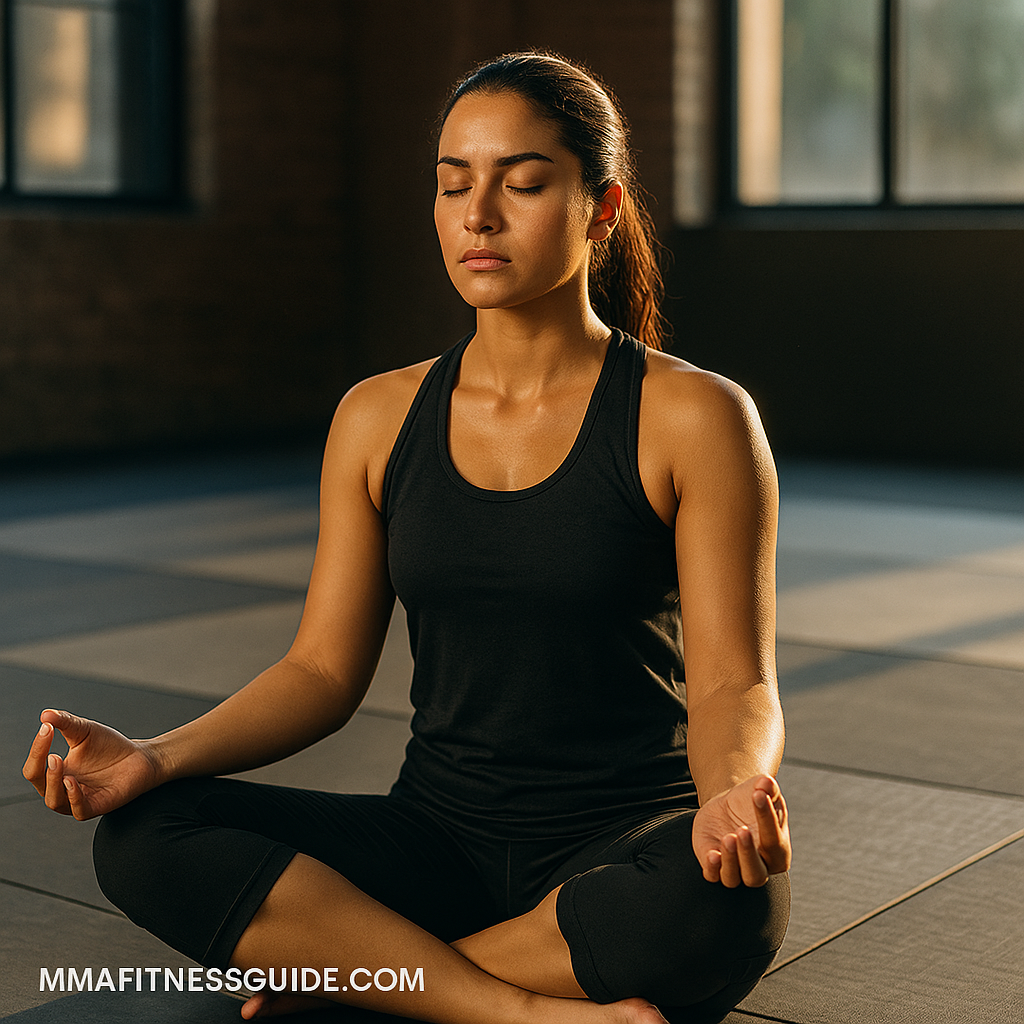
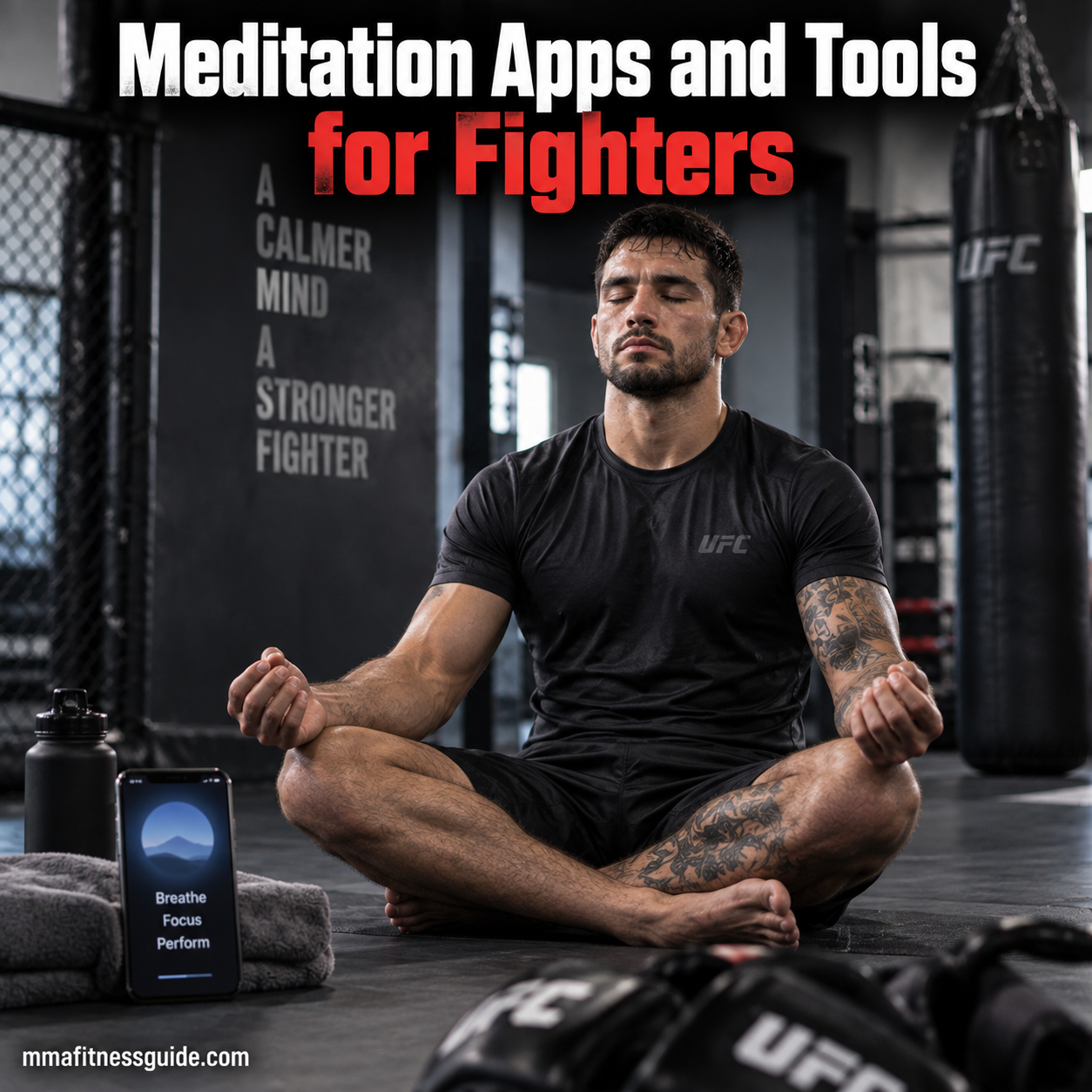
Meditation involves training attention and awareness through practices such as observing the breath, noticing physical sensations, or recognizing thoughts without immediately reacting to them.
For MMA fighters, these skills have practical applications.
Imagine getting caught with a clean punch during sparring.
An inexperienced fighter might become frustrated, rush forward, and abandon the game plan. A more experienced fighter may recognize the mistake, regain position, and continue making deliberate decisions.
Meditation does not automatically produce that response. However, practicing awareness can help a fighter recognize emotional reactions before acting on them.
Improving Focus Under Pressure
MMA requires continuous attention.
A fighter must monitor distance, recognize combinations, anticipate takedowns, manage cage positioning, and listen to corner instructions.
Attention can drift when fatigue increases or an opponent creates unexpected problems.
Mindfulness practice involves noticing when attention wanders and deliberately returning it to a chosen target.
During meditation, that target might be the sensation of breathing.
During sparring, it might be the opponent’s positioning or the coach’s instructions.
The practice is not about eliminating distractions. It is about recognizing them and returning attention to the task.
For additional strategies outside meditation, explore our guide to fighter habits that improve mental focus .
Managing Pre-Fight Anxiety
Competition anxiety can appear as racing thoughts, muscle tension, stomach discomfort, or difficulty sleeping.
Some activation is normal and can help an athlete prepare for demanding activity.
The goal is not to eliminate every nervous sensation.
Instead, meditation can help fighters recognize anxiety without interpreting it as proof that something will go wrong.
A fighter might notice:
“My heart is beating quickly, and I’m thinking about the result.”
Rather than fighting those sensations, the athlete can acknowledge them and return attention to the immediate task.
This approach may reduce the additional stress created by worrying about being nervous.
Supporting Emotional Regulation
Combat sports involve frequent emotional challenges.
A fighter may experience frustration after losing a round, disappointment following a competition, or irritation when training progress slows.
Meditation creates an opportunity to observe these reactions without immediately responding.
Over time, this may support more deliberate behavior during training and competition.
For a broader discussion of emotional development through combat sports, read How Martial Arts Improve Emotional Fitness .
Improving Sleep and Mental Recovery
Late training sessions can leave fighters physically tired but mentally alert.
A difficult sparring session may also lead to repetitive thinking about mistakes.
Relaxation-focused meditation can provide a transition between training and sleep.
A short guided session, body scan, or gentle breathing exercise may help reduce mental stimulation.
However, meditation cannot compensate for consistently insufficient sleep, excessive training loads, or inadequate recovery.
It should complement those fundamentals.
How Meditation Supports MMA Performance
Meditation does not teach striking combinations or improve wrestling technique directly.
Its potential contribution is developing mental skills that support the execution of techniques already learned through physical training.
The effects vary between individuals, and improvements in meditation do not automatically translate into better competition results.
Staying Composed During Chaotic Exchanges
An MMA exchange can change rapidly.
A fighter may begin throwing punches, encounter a takedown attempt, defend against the cage, and transition into a grappling exchange within seconds.
Emotional reactions can interfere with decision-making.
Mindfulness practice encourages fighters to recognize what is happening in the present rather than becoming absorbed in frustration or fear.
The objective is to maintain enough awareness to respond to the actual situation.
Resetting After Mistakes
Mistakes are inevitable in combat sports.
Even experienced fighters miss punches, lose positions, and make incorrect reads.
The important question is what happens afterward.
A fighter who mentally replays a mistake during the next exchange may miss new information.
Meditation can support a simple reset process:
- Recognize that attention has shifted toward the mistake.
- Acknowledge the thought without arguing with it.
- Return attention to the opponent and immediate tactical priorities.
This process can also be practiced during training.
After making a mistake in drilling, briefly recognize it, listen to the correction, and focus on the next repetition.
Managing Adrenaline and Arousal
Pre-fight adrenaline can increase heart rate, muscle tension, and the urge to move quickly.
Meditation and controlled breathing may help fighters manage their response to these sensations.
They do not eliminate adrenaline or guarantee that an athlete will avoid an early energy expenditure problem.
Physical conditioning, pacing, technical efficiency, and competition experience remain essential.
Mental training is one component of preparation.
Reducing Mental Fatigue During Fight Camp
Fight camp can involve demanding training, nutritional restrictions, travel, media obligations, and concerns about competition.
Mental fatigue may accumulate when fighters have little opportunity to disengage from performance-related thoughts.
Short meditation sessions can create a deliberate break.
A fighter might spend ten minutes after training observing breathing rather than checking messages, watching fight footage, or planning the next workout.
This is not a substitute for reducing an excessive workload.
It is a way to introduce periods of mental recovery into an otherwise demanding schedule.
Types of Meditation Useful for Fighters
Not every meditation technique serves the same purpose.
A fighter preparing for an intense sparring session may need a different practice from someone trying to relax before bed.
Understanding the differences makes it easier to select the right exercise.
Breath-Focused Meditation
Breath-focused meditation involves directing attention toward the natural rhythm of breathing.
You might notice the air entering your nose, the movement of your chest, or the sensation of your abdomen expanding.
When your attention wanders, gently return it to breathing.
For fighters, this provides a simple way to practice attention control without requiring special equipment.
A five-minute breathing meditation:
- Sit comfortably with your feet supported.
- Relax your shoulders and jaw.
- Breathe naturally without forcing a particular rhythm.
- Focus on the sensation of each breath.
- When thoughts arise, acknowledge them and return to breathing.
The objective is not to complete five minutes without thinking.
Noticing distraction and returning attention is part of the exercise.
Breath awareness can also be useful during training breaks. However, meditation should not be confused with physiological recovery between rounds, which depends heavily on conditioning, pacing, and the intensity of the preceding effort.
For additional techniques, see Breathwork for Calm Under Pressure .
Body Scan and Awareness Practices
A body scan involves moving attention systematically through different areas of the body.
You might begin with your feet, move through your legs and hips, and finish with your shoulders, neck, and face.
The purpose is to notice sensations without immediately trying to change them.
Fighters often carry unnecessary muscular tension after demanding sessions.
A body scan may reveal that your jaw is clenched, your shoulders are elevated, or your hands remain tightly closed.
Once you recognize the tension, you can experiment with relaxing those muscles.
A practical post-training body scan takes approximately ten minutes.
Lie down or sit comfortably, observe each body region, and allow your breathing to remain natural.
Body scans can support relaxation and awareness, but they cannot diagnose injuries or confirm that damaged tissue has recovered.
Persistent pain, unusual symptoms, or suspected injuries require appropriate medical evaluation.
Visualization and Mental Rehearsal
Visualization involves mentally rehearsing specific situations and responses.
For fighters, useful scenarios include:
- Executing a familiar combination.
- Defending a takedown against the cage.
- Recovering after losing a position.
- Listening to corner instructions between rounds.
- Remaining composed during the walkout.
Effective visualization should be specific.
Instead of imagining yourself winning a fight, rehearse a situation you have already practiced physically.
For example, picture an opponent throwing a jab. Imagine recognizing the movement, maintaining your defensive position, and responding with a rehearsed counter.
Include realistic details such as distance, timing, movement, and environmental noise.
Visualization can reinforce preparation, but it cannot replace live drilling or develop technical skills you have never learned.
During injury recovery, mental rehearsal may help maintain familiarity with established techniques, provided it does not interfere with the treatment and rehabilitation plan.
Mindfulness During Movement
Meditation does not always require sitting still.
Fighters can practice awareness during low-intensity movement.
Shadowboxing provides a useful opportunity.
Perform a relaxed round while paying attention to your breathing, foot placement, shoulder tension, and balance.
When you notice yourself rushing combinations, return attention to controlled technique.
This approach connects awareness practice with familiar athletic movements.
It should not replace technical coaching or turn every workout into a meditation session.
What Does the Research Say About Meditation for Athletes?
Research provides reasons to consider mindfulness as a mental training tool, but the evidence requires careful interpretation.
A 2023 systematic review of 32 randomized controlled trials found preliminary support for improvements in athletic performance and mindfulness-related psychological skills. However, its pooled analysis did not find a significant overall effect on athletes’ mental health, and the researchers called for stronger studies.
PubMed
+1
A 2025 umbrella review examined 15 systematic reviews involving more than 10,000 athletes. It reported generally positive trends but found that most included reviews had serious methodological limitations.
PMC
The practical conclusion is that meditation may be a useful addition to mental preparation, but it is not a proven way to guarantee better fighting performance.
Research across different sports also cannot establish that a particular app will improve an MMA fighter’s reaction time, endurance, or win rate.
Use meditation to develop a consistent mental routine and evaluate whether it helps with your own focus, stress management, and recovery.
Popular Meditation Apps for Fighters
Meditation apps make structured practice accessible without requiring fighters to attend in-person classes.
The main differences involve teaching style, session length, content selection, and whether the platform emphasizes mindfulness, relaxation, or broader mental development.
Features, subscription prices, and free access can change, so review the current offerings before purchasing.
Headspace
Headspace is designed around accessible guided meditation and structured learning.
Its approachable format can be useful for fighters who have never meditated before.
Rather than selecting random sessions, beginners can follow a progressive introduction to mindfulness.
Useful features include:
- Short guided meditation sessions.
- Beginner-oriented mindfulness instruction.
- Focus and stress-management content.
- Sleep and relaxation resources.
How fighters can use it
Start with a five-minute guided session after morning training.
Use the same routine for several days rather than constantly switching between different exercises.
Once the practice becomes familiar, gradually increase the duration.
Headspace is particularly suitable for fighters who prefer clear instructions and a structured starting point.
Calm
Calm emphasizes meditation, relaxation, and sleep-related content.
It can fit naturally into an evening recovery routine, particularly for athletes who struggle to disengage mentally after late training.
Useful features include:
- Guided relaxation sessions.
- Sleep stories and calming audio.
- Breathing exercises.
- Meditation content focused on stress.
How fighters can use it
After an evening training session, complete your normal recovery activities and prepare for bed.
Select a short relaxation session and keep the volume comfortable.
Avoid turning the experience into another demanding task.
The purpose is to create a predictable transition away from training-related stimulation.
Calm may appeal to fighters whose primary goal is relaxation rather than detailed meditation instruction.
Waking Up
Waking Up emphasizes mindfulness, attention, and deeper exploration of awareness.
Its teaching approach may appeal to fighters interested in understanding how thoughts, emotions, and attention interact.
Useful features include:
- Guided mindfulness instruction.
- Structured meditation courses.
- Lessons exploring attention and awareness.
- Options for developing a longer-term practice.
How fighters can use it
Choose a consistent daily session and focus on observing thoughts without becoming absorbed in them.
For example, a fighter might notice repeated thoughts about an upcoming opponent.
Instead of mentally rehearsing every possible outcome, the athlete practices recognizing the thought and returning attention to the present.
Waking Up may suit fighters interested in developing meditation as an ongoing discipline rather than using it only before competition.
Insight Timer
Insight Timer provides a broad selection of meditation content and customizable practice options.
It can appeal to fighters who already know which techniques they prefer.
Useful features include:
- A substantial selection of free meditation content.
- Customizable meditation timers.
- Guided sessions from different instructors.
- Options for independent practice.
How fighters can use it
Create a simple ten-minute daily routine using a meditation timer.
Begin with a brief period of settling into the practice, continue with natural breathing, and finish by returning attention to your surroundings.
The flexibility is useful, but the large selection can also become distracting.
Choose a small number of reliable sessions rather than spending more time browsing than meditating.
Comparing Meditation Apps for MMA
| App | Primary emphasis | Practical use for fighters |
|---|---|---|
| Headspace | Structured meditation | Building a beginner routine |
| Calm | Relaxation and sleep | Evening recovery |
| Waking Up | Mindfulness education | Developing awareness and attention |
| Insight Timer | Variety and customization | Independent meditation practice |
These are differences in emphasis, not evidence that one app produces superior athletic results.
A free timer and a consistent routine may be sufficient for many fighters.
Breathwork Tools and Apps
Breathing exercises are among the simplest mental training tools available.
They require little equipment and can be incorporated into a fighter’s existing schedule.
However, breathing exercises and meditation are not identical.
Meditation typically emphasizes attention and awareness, while structured breathwork deliberately changes breathing patterns.
Both can be useful when applied appropriately.
Box Breathing Timers
Box breathing follows a pattern of inhaling, pausing, exhaling, and pausing again.
A common example uses four seconds for each phase.
However, breath holds are not necessary for everyone, and forcing them can cause discomfort.
Fighters who find breath holds unpleasant can use gentle, uninterrupted breathing instead.
A breathing timer helps maintain consistency without constantly counting.
Use this type of exercise while seated in a safe environment, not while sparring, driving, swimming, or performing demanding physical activity.
Slow Breathing for Relaxation
A simple relaxation practice involves breathing gently at a comfortable pace and allowing the exhale to become slightly longer if that feels natural.
Avoid taking excessively deep breaths or trying to force your heart rate down.
Stop if you experience dizziness, tingling, chest discomfort, or unusual breathlessness.
During actual competition breaks, breathing should prioritize comfortable recovery and the ability to listen to corner instructions.
A rigid breathing pattern may be inappropriate immediately after intense exertion.
When to Avoid Aggressive Breathwork
Some breathwork programs promote prolonged breath holding or rapid, forceful breathing.
These methods are not necessary for basic meditation and can cause dizziness or fainting.
Fighters should avoid experimenting with aggressive breathing techniques during weight cuts, immediately after head impacts, or while dehydrated.
Breathing exercises should never be used to suppress warning signs of heat illness, concussion, or other medical problems.
Wearables and Biofeedback Tools
Wearables can provide additional information about sleep, heart rate, and training patterns.
Some devices also estimate heart rate variability (HRV), which reflects variation in the time between heartbeats.
HRV can offer information about autonomic nervous system activity, but individual readings are affected by sleep, illness, hydration, measurement conditions, and other factors.
A low HRV reading does not automatically mean a fighter is overtrained, and a high reading does not guarantee readiness for sparring.
Look at longer-term trends alongside fatigue, soreness, mood, and training performance.
Biofeedback tools can also help fighters observe physiological responses during relaxation exercises.
For example, a heart rate monitor may show changes during a quiet breathing session.
These measurements can support awareness, but they should not become another source of performance anxiety.
For a broader overview of training technology, see Digital Tools: Timers, Trackers, and Apps .
How Fighters Can Integrate Meditation Into Training
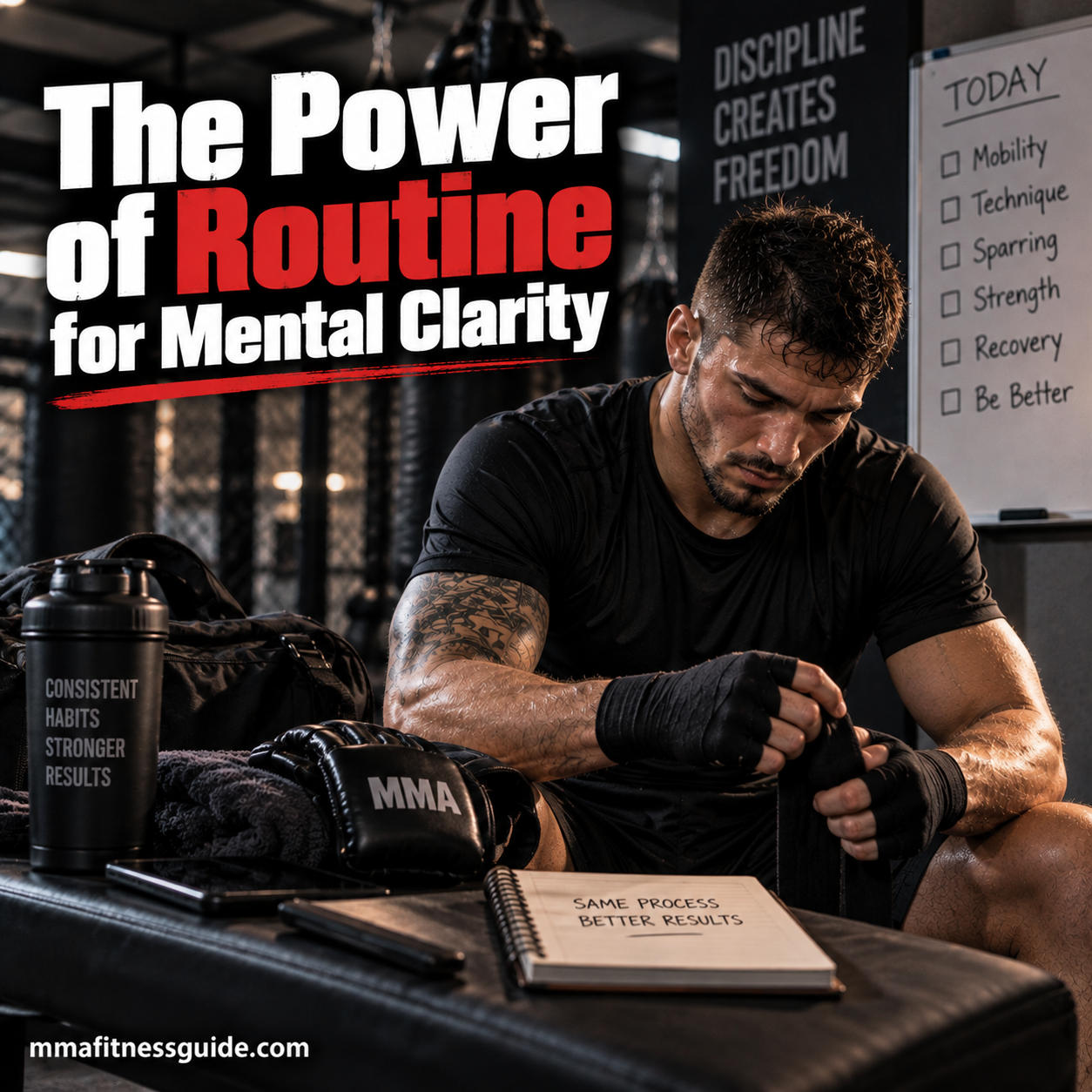
Consistency matters more than completing unusually long sessions.
A fighter who practices for five minutes most days may find the routine easier to maintain than someone attempting a 45-minute session once a week.
The following schedule provides a practical starting point.
Morning: Five Minutes of Attention Training
Begin with a short guided meditation or simple breathing-awareness exercise.
Sit comfortably and focus on natural breathing.
When your attention wanders, return to the breath.
Use the session to establish a consistent habit rather than trying to force a particular emotional state.
Before Sparring: Two Minutes of Preparation
Find a quiet location before beginning your warm-up.
Notice your breathing and identify one or two technical priorities.
For example:
- Maintain defensive positioning.
- Control distance with the jab.
- Listen to the coach between rounds.
Finish by returning attention to the upcoming training session.
The goal is to prepare mentally without becoming excessively relaxed or distracted.
After Training: Ten Minutes of Recovery
Once your immediate recovery needs are addressed, use a body scan or guided relaxation session.
Pay attention to unnecessary muscular tension.
Allow yourself to disengage from training-related thoughts.
If you need to review mistakes, make brief notes first and complete the detailed analysis later.
Before Bed: Five to Fifteen Minutes
Choose a relaxing guided meditation or body scan.
Keep the room comfortable and reduce unnecessary screen exposure.
Avoid selecting stimulating content that encourages you to continue browsing.
For additional recovery strategies, read Balancing Intensity With Recovery Mentally .
Common Misconceptions About Meditation in MMA
Meditation Makes Fighters Soft
Meditation does not require fighters to abandon aggression, competitiveness, or intensity.
The objective is to develop greater awareness of emotional reactions.
A fighter can remain assertive while making deliberate tactical decisions.
Meditation Requires Long Sessions
Beginners can start with three to five minutes.
Longer sessions are optional.
A short, consistent practice is a reasonable starting point for athletes with demanding schedules.
Meditation Means Clearing Your Mind
Thoughts will arise during meditation.
The practice involves recognizing them and returning attention to the chosen focus.
A session is not unsuccessful simply because your mind wandered.
Meditation Guarantees Better Performance
Meditation may support mental skills, but improvements are not guaranteed.
A fighter still needs technical preparation, conditioning, coaching, and competition experience.
Meditation Can Replace Mental Health Treatment
Meditation apps are not substitutes for qualified mental health care.
Persistent anxiety, depression, panic symptoms, trauma-related distress, or other significant difficulties deserve professional assessment.
When Meditation Is Most Useful for Fighters
Different stages of training create different mental demands.
Adjust your meditation practice to the situation rather than using the same routine for every problem.
During Fight Camp
Fight camp often combines demanding physical preparation with increasing psychological pressure.
Short mindfulness sessions may help fighters create boundaries between training and personal time.
For example, use a ten-minute relaxation session after the final workout before returning to family responsibilities or other activities.
This can support the broader habits discussed in How Fighters Maintain Balance During Camp .
During Weight Cuts
Weight cutting can increase discomfort, irritability, and mental strain.
Gentle meditation may help an athlete acknowledge uncomfortable feelings, but it cannot make dangerous dehydration or rapid weight loss safe.
Do not use meditation to ignore dizziness, confusion, weakness, or other warning signs.
Weight management should follow an appropriate plan developed with qualified professionals.
During Injury Recovery
Injury can disrupt a fighter’s identity, routine, and competition goals.
Meditation may provide a structured way to manage frustration and uncertainty.
Visualization can also help maintain familiarity with established techniques.
However, neither practice accelerates tissue healing on its own.
Follow medical and rehabilitation guidance, and avoid mentally rehearsing movements in ways that encourage premature physical activity.
For complementary relaxation strategies, explore Breathing and Relaxation for Faster Healing .
After Competition
A fight can produce intense emotions regardless of the result.
Some fighters feel excitement and relief. Others experience disappointment, frustration, or difficulty returning to their usual routine.
Meditation may help create space to process these experiences without immediately judging them.
Avoid forcing yourself to analyze every mistake immediately after competition.
Allow time for physical recovery and discuss technical improvements with your coaching team when appropriate.
During Burnout
Persistent exhaustion, declining motivation, irritability, and reduced enjoyment may indicate that a fighter needs more than a short relaxation session.
Meditation can be part of a recovery routine, but it should not be used to justify continuing an unsustainable training schedule.
Consider training load, sleep, nutrition, and psychological stress.
If symptoms persist or interfere with daily functioning, seek professional guidance.
Our article on When to Seek a Sports Psychologist explains when specialized support may be appropriate.
Choosing the Right Meditation Tool for You
The most useful meditation tool is one that matches your needs and fits your existing routine.
A beginner who prefers clear instructions may benefit from structured guided sessions.
A fighter primarily concerned with evening relaxation may prefer sleep-oriented content.
Someone with meditation experience may only need a simple timer.
Before subscribing to an app, consider four questions.
What problem are you trying to address?
Choose a specific objective, such as developing an attention routine, managing pre-competition nerves, or relaxing after training.
How much time can you consistently dedicate?
Start with a duration you can maintain on demanding training days.
Do you prefer guidance or independent practice?
Guided meditation provides instructions throughout the session.
Unguided meditation offers greater flexibility but requires more independence.
Does the tool create unnecessary complexity?
An app with extensive tracking, reminders, and subscription features may become distracting.
You do not need expensive technology to develop a useful meditation habit.
A quiet space and a basic timer may be enough.
Frequently Asked Questions About Meditation for MMA Fighters
How long should MMA fighters meditate?
Beginners can start with five minutes per day.
Increase the duration gradually if the practice feels useful.
There is no universally established session length that guarantees improved MMA performance.
Should fighters meditate before or after training?
Both can serve different purposes.
Before training, a short session may help establish attention and identify technical priorities.
After training, relaxation-focused meditation may help the athlete disengage from demanding activity.
Can meditation help with pre-fight nerves?
Mindfulness may help some athletes manage competitive anxiety.
A 2026 meta-analysis found reductions in competitive anxiety across controlled trials, although benefits were much smaller when mindfulness was compared with other active interventions rather than waiting-list controls.
PMC
+1
It is therefore reasonable to consider meditation as one option within a broader mental preparation routine, rather than a guaranteed solution.
Do professional fighters need meditation apps?
No.
Apps provide structure and convenience, but fighters can practice meditation without digital tools.
A qualified sports psychologist or mental performance consultant can also help develop individualized mental skills.
Can meditation improve reaction time?
Meditation may support aspects of attention, but evidence does not establish that using a meditation app will reliably improve an MMA fighter’s reaction time.
Reaction training, technical drilling, and sport-specific practice remain essential.
Final Thoughts
Meditation apps and mental training tools provide fighters with practical ways to develop attention, recognize emotional reactions, and establish consistent relaxation routines.
Headspace, Calm, Waking Up, and Insight Timer offer different approaches, while breathing timers and wearables can provide additional structure.
The most important factor is not the sophistication of the technology.
It is whether the practice fits your needs and can be maintained alongside training, recovery, and everyday responsibilities.
Start with a short daily session, choose a clear purpose, and evaluate the experience over time.
Mental training works best as part of a complete preparation system that includes technical development, physical conditioning, adequate recovery, and professional support when necessary.
Continue Building Your Mental Training Routine
Developing focus and emotional control involves more than meditation alone. Explore these related guides to build a broader mental preparation and recovery routine.
- Fighter Habits That Improve Mental Focus — Develop daily routines that support attention and concentration.
- Breathwork for Calm Under Pressure — Learn practical breathing techniques for stressful situations.
- Balancing Intensity With Recovery Mentally — Understand how to manage psychological demands alongside physical training.
- When to Seek a Sports Psychologist — Recognize when individualized professional support may be beneficial.