MMA gym owners reviewing an expansion checklist while planning a second training location and long-term business growth.
Opening a second MMA gym location is one of the biggest milestones in a coach or gym owner’s career. It can dramatically increase revenue, brand reach, and long-term stability—but only if done strategically. Expanding too early or without structure can stretch resources thin and damage both locations.
This checklist walks through the critical steps MMA gym owners should evaluate before expanding to a second location, helping ensure growth is sustainable rather than risky.
Reading about sports psychology, habits, resilience, and philosophy can give fighters ideas to apply during training and competition.
A fighter can spend two hours drilling combinations and still have twenty-two hours left in the day to influence how they think, recover, and approach the next session. Reading is one way to use some of that time deliberately.
A sports psychology book might provide a better way to handle competition nerves. A fighter’s biography can show how another athlete responded to injury or defeat. A book about habits can help turn training from something dependent on motivation into something built into the week.
The value is not in collecting books or motivational quotes. It comes from finding ideas that change how you approach training, pressure, setbacks, and life outside the gym.
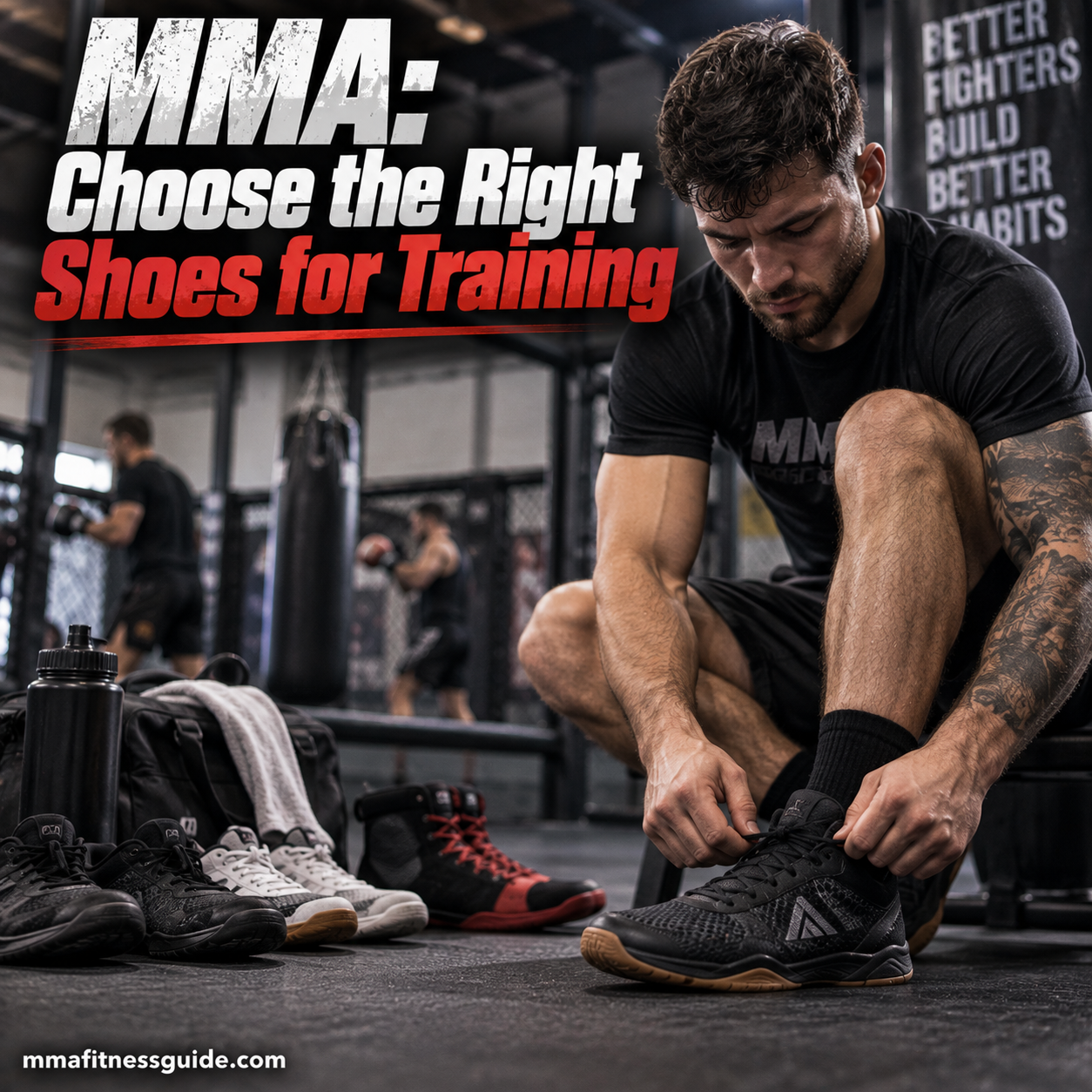
The right MMA training shoes provide a stable, low-profile base for conditioning, strength work, bag drills, and other off-mat training.
Walk into an MMA gym and you might spend one part of the session barefoot on the mats, another hitting the heavy bag, and the final 30 minutes lifting weights or pushing a sled across turf. One pair of shoes isn’t appropriate for every part of that workout—and in some parts, shoes shouldn’t be worn at all.
For most beginners, the goal isn’t to buy specialized footwear for every drill. It’s to find a stable, low-profile training shoe that handles conditioning, strength work, and movement comfortably while understanding when barefoot training or wrestling-specific footwear makes more sense. Getting that choice right can improve balance and footwork while avoiding unnecessary stress on the feet, ankles, and knees.
Iconic MMA brothers and fighting families showcasing the legacy, loyalty, and shared history that shape mixed martial arts.
Nick and Nate Diaz brought the same relentless pressure and unmistakable Stockton identity into the cage. Maurício “Shogun” Rua and Murilo “Ninja” Rua emerged from the same Brazilian fighting culture. Long before either pair became famous, the Gracie family had already demonstrated how martial arts knowledge could pass from one generation to the next and ultimately influence an entire sport.
MMA may appear to be an individual pursuit once the cage door closes, but some of its most important stories begin within families. Brothers become training partners, younger generations inherit decades of knowledge, and relatives often provide the support and competitive environment that shape a fighter long before a professional debut.
From the Diaz and Rua brothers to sprawling martial arts dynasties such as the Gracies, family connections have left a distinctive mark on MMA’s techniques, personalities, rivalries, and history.
Consistent, quality sleep supports emotional regulation, mental focus, and recovery between MMA training sessions.
Introduction
You arrive at the gym after five hours of sleep. Your body feels sluggish, your patience is running thin, and a routine sparring exchange leaves you unusually frustrated. Techniques you executed comfortably last week suddenly require more concentration, and even your warm-up feels like a chore.
The problem might not be your conditioning or preparation. It could be the previous night’s sleep.
Sleep influences how fighters regulate emotions, process information, tolerate stress, and maintain motivation. When sleep is consistently cut short, irritability can increase, concentration can suffer, and training may feel harder than usual. Understanding this connection helps MMA athletes recognize when fatigue is affecting their mindset and make recovery decisions before it interferes with performance.
Replacing fluids during demanding MMA sessions helps maintain normal physical and mental performance as training progresses.
A fighter can lose a significant amount of fluid during a hard session of pad work, wrestling, sparring, or conditioning—especially in a hot gym or during two-a-day training. As those losses accumulate, fatigue rises, concentration can slip, and muscles may not perform as consistently during explosive movements.
That matters for injury prevention. A tired fighter who reacts a fraction slower, loses coordination during a scramble, or struggles to maintain technique late in a session may be more likely to land awkwardly, overextend a joint, or strain a fatigued muscle.
Consistent hydration helps maintain normal muscle and nervous-system function, regulate body temperature, and replace fluids lost through sweat. For MMA athletes, managing those losses before, during, and after training is part of staying prepared for the next round—not just avoiding thirst.
Counterfeit MMA equipment displayed next to authentic-style gear, highlighting key warning signs fighters should look for.
Counterfeit MMA equipment is a growing problem in combat sports. From fake gloves and shin guards to imitation apparel and protective gear, knockoff products are increasingly common online and in secondary marketplaces. While counterfeit gear may look similar to the real thing, it often lacks the safety, durability, and performance fighters rely on.
Using fake equipment doesn’t just waste money—it can increase injury risk and negatively impact training. This guide explains how to spot counterfeit MMA gear, why it’s dangerous, and how fighters can protect themselves when buying equipment.
The armbar, triangle choke, and omoplata form a connected submission system built around guard control, leverage, and transitions.
Submission grappling is a fundamental part of mixed martial arts, and few techniques demonstrate the relationship between positioning, control, and finishing ability as clearly as the armbar, triangle choke, and omoplata.
These three submissions are commonly taught together in Brazilian Jiu-Jitsu because they create a connected attacking system. When an opponent defends one technique, their reaction may expose another.
An armbar attempt can create an opening for a triangle. A defended triangle may expose the shoulder for an omoplata. An opponent escaping an omoplata may surrender a sweep or create another submission opportunity.
For MMA fighters, understanding these connections is especially valuable.
Unlike submission-only grappling, MMA introduces punches, elbows, cage positioning, and the possibility of an opponent standing up or disengaging. A submission attempt that works during controlled grappling practice may become dangerous when strikes are involved.
Successful submission grappling therefore requires more than knowing how to finish a technique. Fighters must understand posture control, positioning, timing, defensive awareness, and when to transition or disengage.
This guide explains the mechanics of the armbar, triangle, and omoplata, explores how they work together, and provides practical training methods for developing an effective submission game.
Poor fueling habits, inadequate hydration, and over-reliance on supplements can undermine a fighter’s training and recovery.
You show up to training, push through exhausting rounds, and put in the work—but halfway through sparring, your energy crashes. Your punches feel slower, your grip weakens, and recovery takes longer than it should. The problem might not be your conditioning. It could be what you’re eating, how much you’re eating, or when you’re fueling your body.
Combat sports demand a careful balance of energy, strength, endurance, and weight management. Skipping meals to stay lean, avoiding carbohydrates, neglecting hydration, or relying too heavily on supplements can undermine even the most disciplined training routine. These habits may seem harmless individually, but over time, they can contribute to fatigue, poor recovery, and declining performance.
Better nutrition doesn’t require a complicated diet or extreme restrictions. It starts with recognizing the everyday mistakes that leave fighters under-fueled and replacing them with consistent habits that support training, recovery, and long-term health.
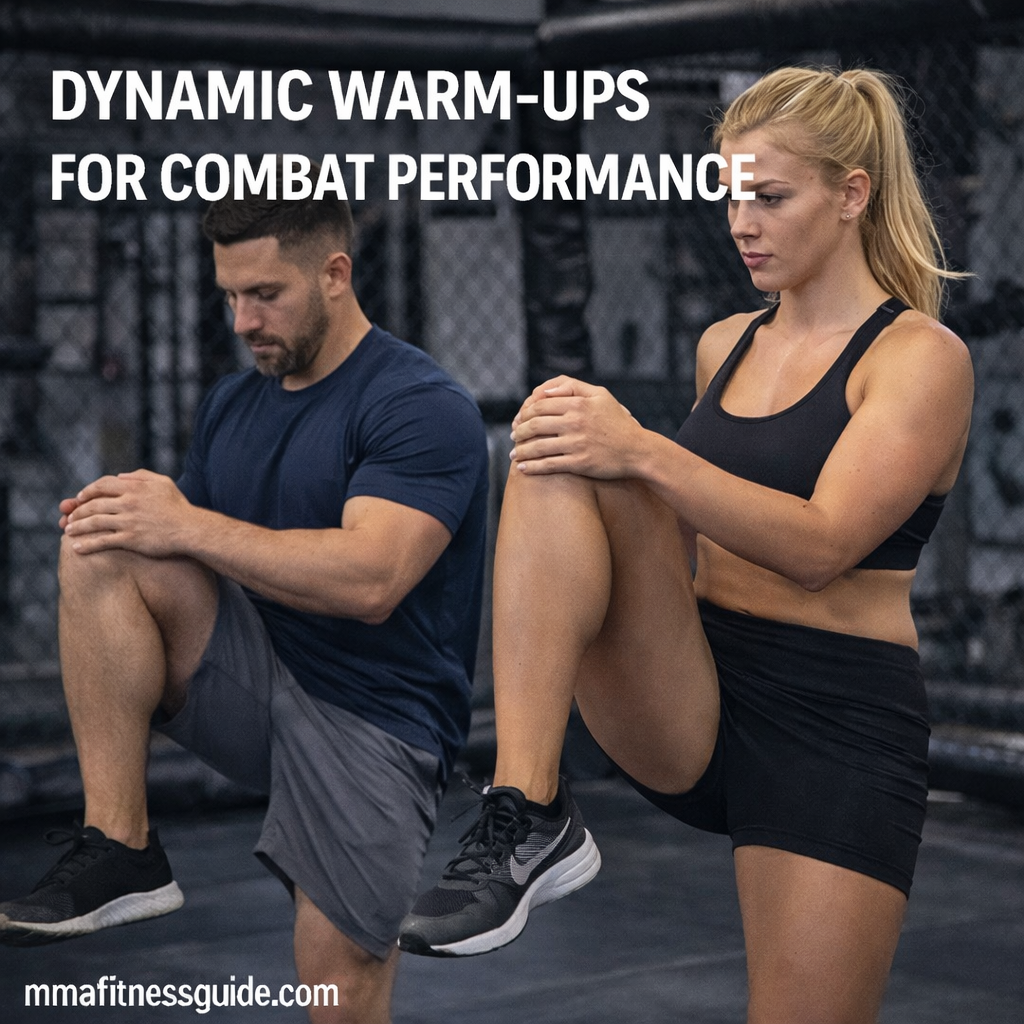
Prepare for MMA training with dynamic warm-up exercises that improve mobility, coordination, and readiness for striking and grappling.
A proper warm-up can make a noticeable difference in how an MMA fighter moves, reacts, and performs during training. Whether preparing for striking drills, wrestling exchanges, grappling, or sparring, the body needs time to transition from a resting state into demanding athletic activity.
Starting an intense session without preparation can leave fighters feeling stiff, poorly coordinated, and unprepared for sudden changes in movement.
Dynamic warm-ups address this problem by gradually increasing body temperature, activating important muscle groups, improving usable joint mobility, and introducing movement patterns that resemble the upcoming training session.
Unlike a conditioning workout, a warm-up should not leave you exhausted. Its purpose is to prepare your body for the work ahead.
For MMA athletes, this preparation is particularly important because training involves multiple physical demands. A fighter might move from rapid footwork to explosive punches, defend a takedown, scramble across the mat, and immediately return to standing.
Each transition requires coordination, strength, mobility, and control.
This comprehensive guide explains how dynamic warm-ups work, which exercises are most useful for combat sports, and how to build an effective routine for striking, grappling, conditioning, and competition.