Introduction
You arrive at the gym after five hours of sleep. Your body feels sluggish, your patience is running thin, and a routine sparring exchange leaves you unusually frustrated. Techniques you executed comfortably last week suddenly require more concentration, and even your warm-up feels like a chore.
The problem might not be your conditioning or preparation. It could be the previous night’s sleep.
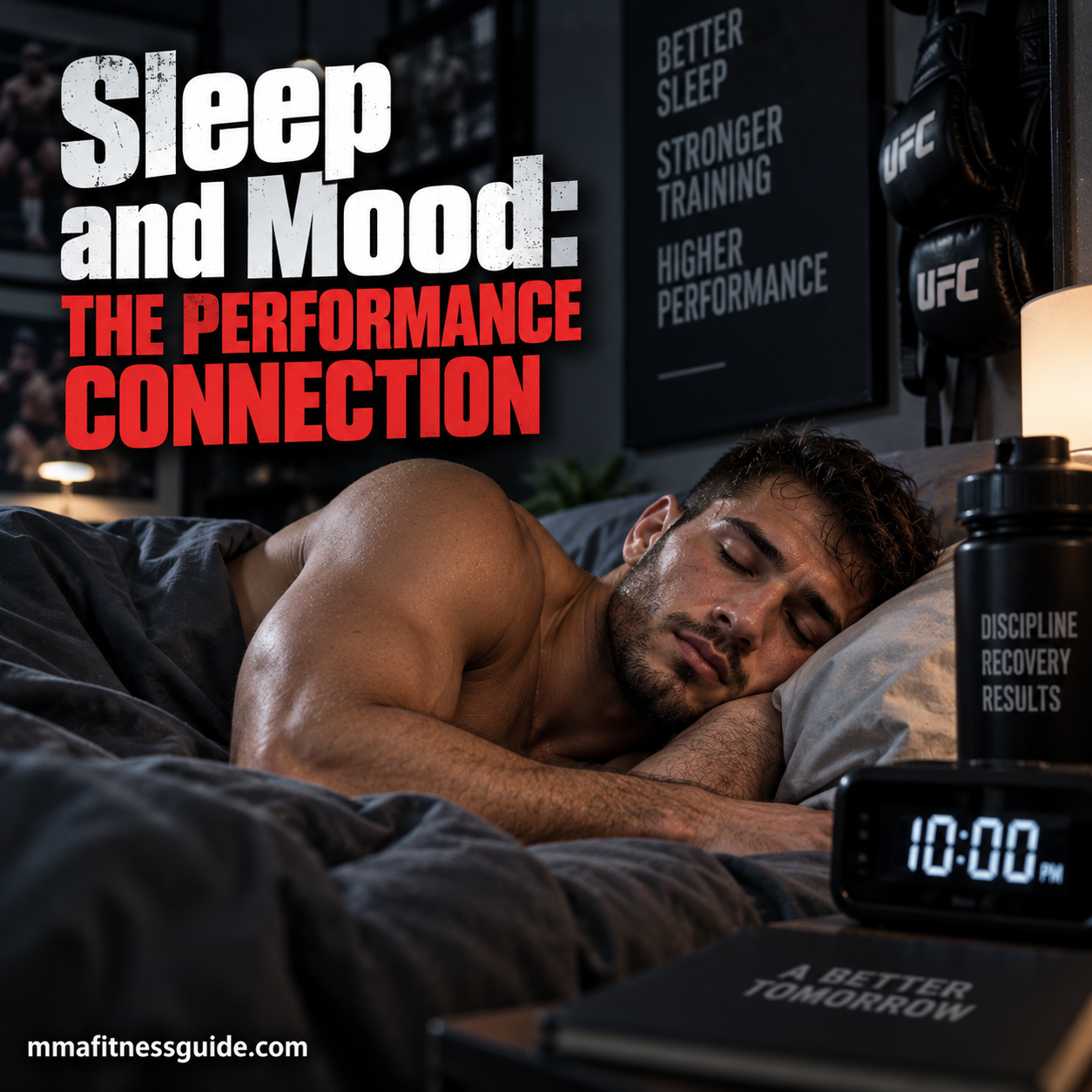
Sleep influences how fighters regulate emotions, process information, tolerate stress, and maintain motivation. When sleep is consistently cut short, irritability can increase, concentration can suffer, and training may feel harder than usual. Understanding this connection helps MMA athletes recognize when fatigue is affecting their mindset and make recovery decisions before it interferes with performance.
Why Mood Matters in MMA Performance
Imagine entering a sparring round already frustrated from a difficult day. Your partner lands a clean jab, and instead of calmly adjusting your defense, you rush forward with an aggressive combination.
Your emotional state has changed how you approach the exchange.
Mood can influence several aspects of training:
- Concentration: Staying attentive to your opponent’s movements and your coach’s instructions.
- Emotional control: Responding to mistakes without becoming frustrated.
- Motivation: Maintaining consistent effort throughout a training session.
- Decision-making: Choosing appropriate techniques rather than reacting impulsively.
A positive mood doesn’t guarantee a strong performance, and frustration doesn’t automatically produce a poor one. However, persistent irritability, fatigue, or difficulty concentrating can make demanding training sessions harder to manage.
The Link Between Sleep and Emotional Regulation
After a difficult training session, your brain continues processing the day’s experiences while you sleep.
Sleep contributes to emotional processing, memory consolidation, and the regulation of systems involved in responding to stress.
When sleep is restricted, these processes can be disrupted.
You might notice that:
- Minor inconveniences feel unusually frustrating.
- Criticism from a coach becomes harder to accept.
- You dwell on mistakes longer than usual.
- Everyday training demands feel overwhelming.
A fighter who normally responds calmly to losing a grappling exchange may become visibly frustrated after several nights of insufficient sleep.
Recognizing this pattern can help distinguish a temporary response to fatigue from a technical or motivational problem.
How Sleep Deprivation Affects Mood
A late training session, an early work shift, and a few hours of scrolling on your phone can leave little time for sleep.
Even a single night of restricted sleep may affect your emotional state the following day.
Common effects include:
- Increased irritability.
- Greater sensitivity to stress.
- Reduced motivation.
- Difficulty concentrating.
- Lower frustration tolerance.
These effects vary between individuals and depend on the severity and duration of sleep loss.
For MMA athletes, the consequences may become noticeable during technical drills, sparring, or conditioning sessions that require sustained attention.
Sleep and the Brain’s Emotional Centers
Sleep restriction affects brain systems involved in emotional processing and cognitive control.
Two areas help explain why a tired fighter may react differently to stressful situations.
The Amygdala and Emotional Reactivity
The amygdala helps detect emotionally significant information, including potential threats.
Research suggests that insufficient sleep can alter amygdala activity and its communication with other brain regions involved in emotional regulation.
As a result, some people experience stronger emotional reactions after sleep loss.
During MMA training, this might appear as excessive frustration after being taken down or heightened nervousness before a difficult sparring session.
The goal isn’t to eliminate these emotions. It’s to recognize when fatigue may be making them harder to manage.
The Prefrontal Cortex and Decision-Making
The prefrontal cortex supports attention, planning, impulse control, and decision-making.
Sleep deprivation can impair these functions.
Consider a fighter who repeatedly throws the same combination despite being countered. Under normal conditions, they might recognize the pattern and change tactics.
When sleep-deprived, maintaining attention and adjusting a strategy can become more difficult.
Adequate sleep supports the cognitive functions needed to evaluate situations and respond appropriately.
Mood, Motivation, and Training Consistency
Why Training Feels Harder After Poor Sleep
Some mornings, getting to the gym requires more effort than completing the workout itself.
Sleep restriction can increase perceived effort, reduce alertness, and negatively affect mood. These changes can make demanding physical activity feel less appealing.
A fighter may interpret this as a lack of discipline when accumulated fatigue is contributing to the problem.
Before adding more motivational strategies, examine recent sleep duration, training load, and recovery.
Breaking the Poor-Sleep Cycle
A common pattern develops when insufficient sleep begins affecting training:
- A fighter sleeps poorly and wakes up fatigued.
- Training feels harder, and concentration declines.
- Frustration builds after an unproductive session.
- Stress or late-night habits interfere with the following night’s sleep.
Over time, this pattern can contribute to inconsistent training and inadequate recovery.
Breaking the cycle may involve adjusting training intensity, establishing a consistent bedtime, or addressing the factors disrupting sleep.
Sleep and Stress Tolerance
A difficult MMA session can involve intense physical exertion, repeated technical failures, and pressure from an opponent.
These demands become harder to manage when an athlete is already exhausted.
Insufficient sleep can affect stress responses and emotional regulation, making routine challenges feel more demanding.
For example, a fighter who normally enjoys challenging grappling rounds might become unusually discouraged after repeatedly losing position.
Before interpreting this reaction as a lack of mental toughness, consider whether the athlete has recovered adequately.
A lighter session or additional rest may be more productive than forcing another exhausting workout.
How Poor Mood Affects MMA Performance
During Technical Training
Technical development requires attention, repetition, and the ability to respond to feedback.
When a fighter is irritable or mentally fatigued, they may struggle to concentrate on small details.
Common difficulties include:
- Missing coaching instructions.
- Rushing through combinations.
- Becoming frustrated after repeated mistakes.
- Losing concentration during drills.
These problems don’t necessarily mean the athlete has lost technical ability. Fatigue may be interfering with their ability to demonstrate it consistently.
During Sparring and Competition
Sparring demands continuous decision-making.
A fighter must manage distance, recognize attacks, defend positions, and adjust tactics while under physical pressure.
Sleep loss can impair attention and reaction time, potentially making these tasks more difficult.
Mood may also influence how a fighter responds after being caught with a clean strike or losing a dominant position.
Rather than trying to compensate for fatigue with aggression, athletes should communicate with their coaches and adjust training when alertness is impaired.
Sleep, Mood, and Injury Risk
Fatigue and Situational Awareness
During sparring, a brief lapse in concentration can leave a fighter exposed to a strike or poorly positioned during a takedown.
Sleep deprivation can impair vigilance, attention, and reaction time.
Although injury risk depends on many factors, including training intensity and supervision, inadequate sleep can introduce additional safety concerns.
If you are struggling to stay alert, consider replacing hard sparring with lower-risk technical work or taking a recovery day.
Sleep and Pain Sensitivity
Have you noticed that soreness sometimes feels worse after a restless night?
Experimental research has linked sleep loss with increased pain sensitivity.
For fighters, this may mean that familiar muscle soreness feels more uncomfortable after insufficient sleep.
However, increased pain should not automatically be attributed to fatigue. New, severe, or persistent pain requires appropriate assessment.
Chronic Sleep Deprivation and Mental Health
Occasional poor sleep is common. Repeatedly sleeping too little over weeks or months presents a different concern.
Persistent sleep problems are associated with difficulties involving mood, concentration, and mental health.
They can contribute to or worsen:
- Anxiety symptoms.
- Depressive symptoms.
- Irritability.
- Emotional exhaustion.
- Difficulty managing everyday stress.
The relationship works in both directions. Stress and mental health conditions can also disrupt sleep.
If sleep difficulties or mood changes persist, consult a qualified healthcare professional rather than attempting to resolve everything through training adjustments alone.
Why Fighters Often Sacrifice Sleep
Consider an amateur fighter balancing a full-time job with evening MMA classes.
Training ends at 9 p.m. By the time they drive home, eat, shower, and prepare for the next day, it’s nearly midnight.
An alarm set for 5:30 a.m. leaves little opportunity for adequate sleep.
Other common obstacles include:
- Early conditioning sessions after late-night training.
- Caffeine consumed too close to bedtime.
- Screen use that delays sleep.
- Stress about upcoming competition.
- Aggressive weight-cutting practices.
These scheduling problems can accumulate across an entire training camp.
Improving sleep may require changing the training schedule rather than simply trying to fall asleep faster.
How Much Sleep Do MMA Fighters Need?
Most adults should regularly obtain at least seven hours of sleep, with seven to nine hours commonly recommended.
Athletes with demanding training schedules may benefit from additional sleep, depending on individual needs and recovery demands.
Rather than assuming one number works for everyone, monitor how you feel and function.
Useful indicators include:
- Waking up feeling reasonably refreshed.
- Maintaining alertness throughout the day.
- Recovering adequately between sessions.
- Remaining focused during technical work.
- Avoiding persistent daytime sleepiness.
If you’re regularly sleeping seven hours but still feel exhausted, examine your sleep quality, training load, and overall health.
Improving Sleep to Stabilize Mood
Keep a Consistent Sleep Schedule
Going to bed at 10 p.m. on weekdays and 2 a.m. on weekends can disrupt your sleep schedule.
Aim for reasonably consistent sleep and wake times, including rest days.
A predictable schedule supports circadian rhythms and makes it easier to obtain sufficient sleep.
Start by choosing a realistic wake-up time and working backward to allow enough time for rest.
Reduce Evening Stimulation
Late-night caffeine, demanding workouts, and prolonged screen use can interfere with sleep for some people.
Experiment with the following adjustments:
- Avoid caffeine for several hours before bedtime, accounting for your sensitivity.
- Schedule intense training earlier when practical.
- Dim bright lights during the evening.
- Put your phone away if scrolling delays bedtime.
The objective is to create enough time for sleep without turning your evening routine into another stressful obligation.
Develop a Wind-Down Routine
After an intense training session, you may still feel physically alert even when you’re exhausted.
A short wind-down routine can help create a transition between training and bedtime.
Try spending 20–30 minutes on quiet activities such as reading, gentle stretching, or relaxed breathing.
Choose activities that help you settle without extending your bedtime.
Sleep Quality vs. Sleep Quantity
Spending nine hours in bed doesn’t necessarily mean you’ve slept for nine hours.
Frequent awakenings, difficulty falling asleep, and untreated sleep disorders can reduce sleep quality.
To improve your sleep environment:
- Keep your bedroom dark and quiet.
- Maintain a comfortably cool temperature.
- Use comfortable bedding.
- Minimize disruptions when possible.
If you regularly snore loudly, wake up gasping, or experience significant daytime sleepiness despite allowing enough time for sleep, seek medical evaluation.
These symptoms may indicate a sleep disorder requiring treatment.
Naps and Mood Regulation
An afternoon nap can be useful when an early training session or disrupted night leaves you tired.
Short naps of approximately 20–30 minutes may improve alertness without causing prolonged grogginess.
For example, a fighter with morning conditioning and evening technical training might benefit from a brief early-afternoon nap.
Keep naps early enough that they don’t interfere with nighttime sleep.
Napping can supplement recovery, but it shouldn’t become a routine substitute for adequate overnight sleep.
Training Smarter to Protect Sleep
Adding another conditioning session may seem productive, but it can become counterproductive when it consistently reduces sleep.
Review your weekly schedule and identify where training interferes with recovery.
Practical adjustments include:
- Moving demanding sessions earlier when possible.
- Scheduling lighter technical work after poor sleep.
- Avoiding unnecessary late-night conditioning.
- Planning recovery days around demanding training blocks.
- Discussing persistent fatigue with your coach.
Training quality depends on more than the number of hours spent in the gym.
Using Sleep as a Performance Tool
Imagine two fighters completing the same technical session.
One arrives after a full night of sleep. The other slept four hours after working late.
Both practice the same combinations, but the sleep-deprived athlete may struggle more with concentration, reaction time, and maintaining consistent effort.
Adequate sleep supports several processes relevant to MMA, including motor learning, recovery, attention, and emotional regulation.
It cannot replace technical preparation or conditioning, but it helps athletes make better use of the training they complete.
Common Sleep Mistakes Fighters Make
Several habits can undermine recovery without immediately appearing problematic.
| Mistake | Practical adjustment |
|---|---|
| Adding early workouts after late training | Protect sufficient overnight sleep. |
| Using caffeine to compensate for chronic fatigue | Address sleep duration and recovery first. |
| Changing bedtimes dramatically | Maintain a reasonably consistent schedule. |
| Training intensely despite persistent exhaustion | Discuss workload adjustments with your coach. |
| Ignoring ongoing sleep problems | Seek professional assessment when necessary. |
Start with the habit that most consistently disrupts your sleep rather than attempting to change everything at once.
Final Thoughts
After several nights of poor sleep, a fighter may notice that familiar drills feel harder, minor setbacks trigger frustration, and concentration fades during sparring.
Those changes aren’t necessarily signs of declining skill or commitment. Sleep restriction may be contributing to them.
Protecting a consistent sleep schedule, adjusting training when fatigue accumulates, and addressing persistent sleep problems can help support emotional regulation and more reliable training.
Before adding another workout to your schedule, examine whether you’re giving yourself enough time to recover from the sessions you’ve already completed.
Better performance sometimes begins with getting to bed earlier—not spending another hour in the gym.