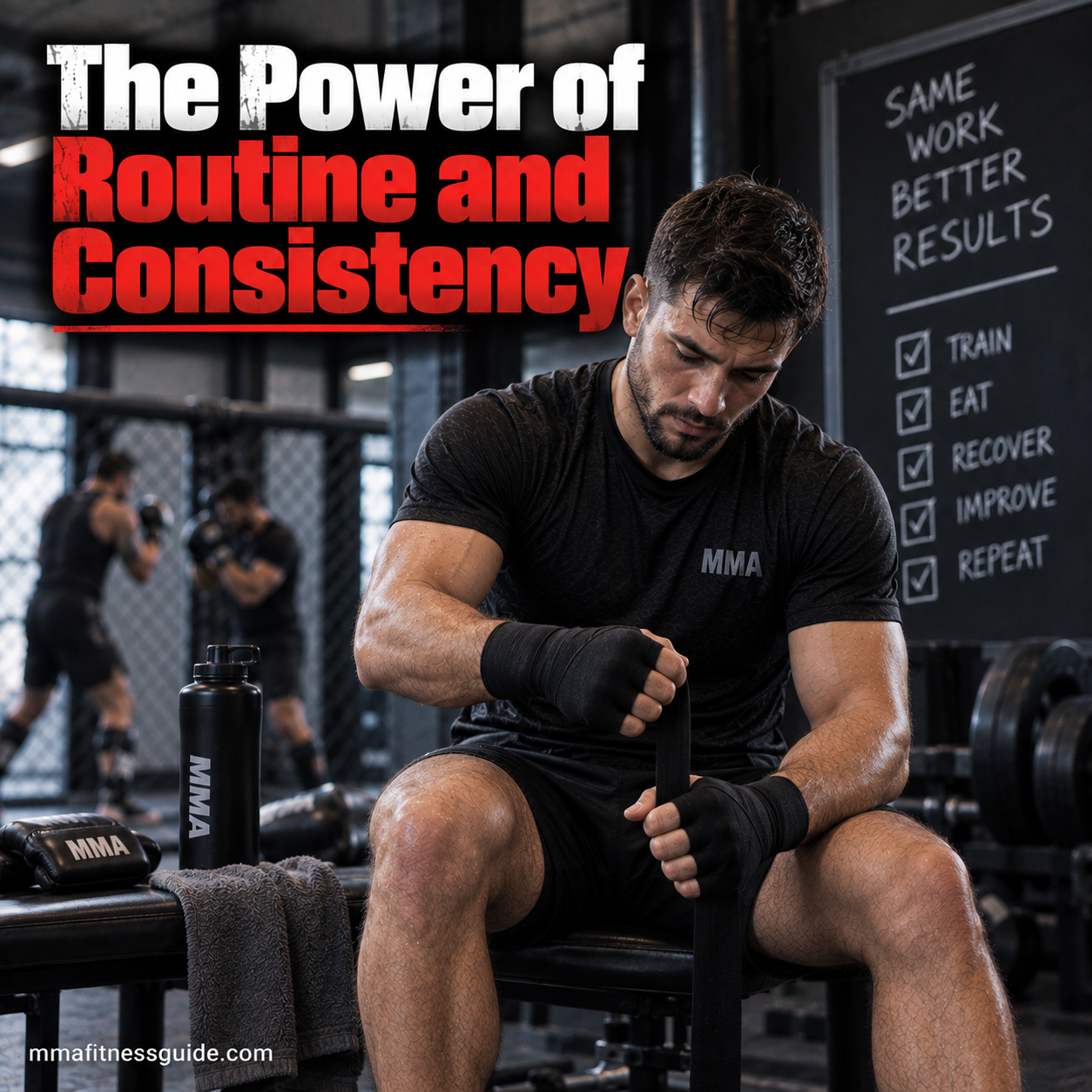

A fighter can spend two hours drilling combinations and still have twenty-two hours left in the day to influence how they think, recover, and approach the next session. Reading is one way to use some of that time deliberately.
A sports psychology book might provide a better way to handle competition nerves. A fighter’s biography can show how another athlete responded to injury or defeat. A book about habits can help turn training from something dependent on motivation into something built into the week.
The value is not in collecting books or motivational quotes. It comes from finding ideas that change how you approach training, pressure, setbacks, and life outside the gym.
What Does a Fighter Actually Need From Reading?
MMA creates mental challenges that cannot be solved by conditioning alone.
A fighter may need to remain composed after losing a round, continue training through a frustrating plateau, control nerves before competition, or accept that months of preparation do not guarantee a particular result.
Useful reading can provide frameworks for situations like these.
Depending on the book, fighters may find ideas related to:
- Discipline and habit formation
- Handling setbacks
- Focus and attention
- Competition anxiety
- Confidence
- Emotional control
- Decision-making
- Leadership
- Recovery and balance
The goal is not to develop a single “fighter mentality.” Different athletes need different mental tools.
What a Strong Fighter Mindset Looks Like
Mental toughness is sometimes portrayed as ignoring pain, suppressing emotions, and pushing through everything.
That definition is too narrow for MMA.
A useful competitive mindset can also involve:
- Staying composed after making a mistake
- Following a game plan when adrenaline rises
- Recognizing when recovery is necessary
- Training consistently without needing to feel motivated
- Accepting coaching
- Adjusting tactics when something is not working
- Separating one poor performance from your identity
- Remaining patient during long periods of skill development
Reading can expose fighters to different ways of approaching these situations without requiring them to learn every lesson through personal mistakes.
Mental Toughness and Resilience
Hard training inevitably produces difficult days.
Some sessions go badly. Injuries interrupt progress. Sparring partners expose weaknesses. Competition results may not match expectations.
Books about resilience can help fighters examine how people respond when circumstances become uncomfortable or unpredictable.
Look for books discussing:
- Persistence
- Coping with setbacks
- Emotional regulation
- Adaptability
- Performance under pressure
Be cautious with books that reduce mental toughness to simply enduring more suffering. Effective fighters also need judgment—the ability to distinguish productive discomfort from unnecessary risk.
Discipline and Habit Building
A training schedule cannot depend entirely on feeling inspired.
Habit-focused books can be useful because they examine how routines are created and maintained.
For an MMA athlete, that might mean developing systems around:
- Arriving at training consistently
- Strength and conditioning
- Meal preparation
- Mobility work
- Sleep routines
- Film study
- Recovery
- Reading itself
The most useful question after reading about habits is not, “Was that motivating?”
It is, “What can I change in my routine tomorrow?”
Sports Psychology and Performance
Sports psychology is especially relevant because it addresses situations athletes encounter directly.
Topics worth exploring include:
- Pre-competition nerves
- Attention and concentration
- Confidence
- Goal setting
- Visualization
- Self-talk
- Performance routines
- Responding to mistakes
These ideas can be tested during normal training.
For example, a fighter experimenting with a pre-performance routine does not need to wait until fight night. They can practice it before sparring, hard wrestling rounds, or demanding conditioning sessions.
Philosophy and Stoicism
Combat sports contain plenty that athletes cannot control.
You cannot completely control your opponent’s strategy, judging, injuries, matchmaking, crowd reactions, or whether every training camp goes according to plan.
Philosophical traditions such as Stoicism repeatedly examine the distinction between what a person can influence and what lies outside that control.
For fighters, that can encourage greater attention to:
- Preparation
- Effort
- Decisions
- Reactions
- Personal standards
Rather than spending unnecessary energy on outcomes that cannot be guaranteed.
Philosophy does not have to become a fighter’s entire worldview to be useful. A single idea can be valuable if it changes how an athlete handles a difficult situation.
Fighter Biographies and Athlete Stories
Biographies provide something instructional books often cannot: context.
Instead of presenting a principle in isolation, they show how someone dealt with an actual career.
That can include:
- Losing
- Winning
- Injury
- Career uncertainty
- Coaching relationships
- Financial pressure
- Training changes
- Retirement
- Personal mistakes
Do not read biographies simply to imitate successful athletes. Their circumstances, personalities, and training environments may be completely different from yours.
Read them to understand the decisions they made and the consequences that followed.
Focus, Awareness, and Presence
Fighters frequently hear instructions such as “stay present” or “don’t overthink.”
Books dealing with attention and mindfulness can give those instructions more structure.
During MMA training, attention may need to shift rapidly between an opponent’s movement, distance, defensive reactions, coaching instructions, fatigue, and tactical decisions.
Reading about attention can help athletes think more carefully about where their focus goes when pressure increases.
The practical application might be as simple as recognizing when your thoughts have drifted toward winning or losing and redirecting attention toward the immediate task.
Leadership and Personal Development
Fighters spend significant time being coached, but they also have to manage themselves.
Self-leadership becomes relevant when deciding whether to train, recover, prepare meals, study opponents, arrive on time, or follow through on commitments when nobody is watching.
Leadership books can also become more relevant as fighters gain experience and begin helping newer teammates.
Useful themes include:
- Accountability
- Communication
- Decision-making
- Responsibility
- Working within a team
- Setting standards
These skills continue to matter outside competition and can become especially valuable for athletes who eventually coach or run gyms.
How to Build a Fighter Reading List
Avoid starting with twenty books.
Choose books according to a problem or skill you currently want to address.
For example:
If consistency is the problem:
Start with a book about habits or behavior.
If competition nerves are interfering with performance:
Look for sports psychology and performance material.
If a loss or injury has disrupted your perspective:
Consider resilience, philosophy, or an athlete biography.
If you struggle to switch off from training:
Try material focused on mindfulness, attention, or subjects completely unrelated to MMA.
A reading list becomes more useful when it responds to your current circumstances rather than following whatever titles happen to be popular.
A Simple Three-Book Starting List
A fighter beginning the habit can keep the first reading cycle straightforward.
Choose:
- One sports psychology or mindset book
Focus on competition, confidence, attention, or performance. - One habits or discipline book
Look for practical ideas that can improve training consistency. - One biography or philosophy book
Use it to gain perspective beyond your immediate training environment.
There is no requirement to read all three simultaneously. Finishing one before moving to the next often makes it easier to remember and apply what you learned.
When to Read
Reading needs to fit around training rather than compete with it.
Practical opportunities include:
- During quiet time on recovery days
- While traveling
- In the evening
- During downtime between commitments
- As part of a regular morning routine
Even 10–20 minutes can be enough to maintain the habit.
The schedule matters less than finding a period when you can actually pay attention to what you are reading.
Audiobooks vs. Physical and Digital Books
The best format depends on when and how you consume information.
Audiobooks
Audiobooks work particularly well during:
- Commuting
- Walking
- Travel
- Easy household tasks
They allow fighters to use periods when sitting down with a book would be impractical.
Physical or Digital Books
Text can make it easier to:
- Slow down on difficult ideas
- Highlight passages
- Take notes
- Revisit specific sections
- Pause and reflect
There is no need to choose one format exclusively. Use whichever format fits the situation.
Turn Reading Into Something You Can Use
Finishing a book is not the same as applying it.
After a useful chapter, write down one idea worth testing.
For example:
When I become frustrated during sparring, focus on the next exchange instead of the previous mistake.
That is more actionable than recording ten pages of notes you never revisit.
A simple system is enough:
- Highlight useful ideas.
- Write down the best one or two.
- Connect each idea to a training situation.
- Test it.
- Keep what works.
Reading becomes more relevant when concepts leave the page and enter training.
Avoid Information Overload
Reading more does not automatically produce better thinking.
Jumping between several books, podcasts, videos, and motivational clips can create plenty of input without much reflection.
If you encounter a useful concept, spend some time with it.
Ask:
- Where does this show up in my training?
- Do I already behave this way?
- What would applying this actually look like?
- Does this idea hold up when training gets difficult?
One idea that changes your behavior is more useful than dozens you immediately forget.
Reading During Fight Camp
Fight camp already adds physical and mental demands, so reading does not need to become another target to hit.
Keep it manageable.
An athlete might continue reading for a few minutes in the evening or use an audiobook while traveling. Others may prefer familiar material instead of introducing complicated new ideas close to competition.
Fight week is generally not the time to completely rebuild your mental approach because a new book says you should.
Use ideas that have already been practiced and tested during training.
Reading After a Loss
A loss can create a strong temptation to immediately search for answers.
Books may provide perspective, but they should not become a way to avoid reviewing what actually happened.
Technical problems still require technical analysis.
Conditioning problems require appropriate training changes.
Strategic mistakes need to be discussed with coaches.
Reading can complement that process by helping a fighter think about failure, identity, patience, or resilience—but it cannot replace an honest assessment of performance.
Common Reading Mistakes
Choosing Books Because They’re Popular
A highly recommended book may have little relevance to what you currently need.
Choose based on the problem you are trying to solve.
Collecting Quotes Instead of Changing Behavior
A highlighted sentence has limited value if nothing changes afterward.
Connect useful ideas to specific actions.
Treating Every Author as an Authority on Fighting
A successful entrepreneur, military leader, philosopher, or endurance athlete may offer useful ideas, but their experience does not automatically translate directly to MMA.
Take principles, evaluate them, and adapt carefully.
Turning Reading Into Another Competition
There is little benefit in rushing through books simply to increase a yearly total.
Comprehension and application matter more than the number of titles completed.
Let Your Reading List Change With You
The books that help during your first year of MMA may not be the books you need five years later.
A beginner may be focused on consistency and confidence.
A competitor may become more interested in performance psychology and pressure.
An experienced fighter may begin thinking about leadership, coaching, career transitions, or life after competition.
Your reading list can change accordingly.
Keep books that continue to provide useful ideas and move on from those that no longer fit where you are.
Build a Mental Library Alongside Your Physical Skills
MMA training teaches lessons through direct experience, but experience does not have to be the only teacher.
Books give fighters access to coaches, psychologists, athletes, philosophers, researchers, and people who have already worked through challenges similar to those they may eventually face.
Read selectively. Question what you read. Test useful ideas against your own experience.
Over time, the goal is not to accumulate an impressive bookshelf. It is to develop a collection of ideas you can draw from when training gets difficult, confidence drops, competition pressure rises, or your career takes an unexpected turn.