MMA: Host Amateur Events and Smokers

Male MMA fighters competing in an amateur cage match while an athletic female official observes in the background during a local MMA event.
Amateur MMA fighters competing inside the cage as part of a local event or smoker, showcasing grassroots competition and gym-hosted fight nights.

Amateur MMA events and smokers give developing fighters a chance to compete under pressure before moving into higher-level competition. For gyms, these events can strengthen relationships with other teams, attract local attention, and give coaches a better way to evaluate fighters outside the training room.

Running an event, however, involves much more than matching fighters and setting up a cage. Regulations, medical coverage, insurance, matchmaking, staffing, venue requirements, and event-day logistics all need to be addressed before the first bout begins.

This guide covers the practical considerations behind hosting amateur MMA events and smokers, from choosing an event format to managing fighters safely on event day.

Continue reading “MMA: Host Amateur Events and Smokers”


MMA: Build a Personal Motto

MMA fighter sitting in a combat sports gym and mentally refocusing after a difficult training session.
A short personal motto can give fighters a familiar mental cue for maintaining focus during fatigue, pressure, and setbacks.

The final minute of a hard round is a bad time to search for motivation. Your breathing is heavy, your reactions are slowing, and the opponent in front of you is still applying pressure. In that moment, a short phrase you have repeated hundreds of times can give your attention somewhere specific to go.

That is the purpose of a personal motto in MMA. It might reinforce composure when a fighter starts rushing, persistence when fatigue sets in, or discipline when skipping training sounds easier than showing up.

The words themselves do not create toughness or skill. Their value comes from connecting a simple phrase to a behavior you have practiced repeatedly—something you can recall quickly during hard rounds, difficult training camps, setbacks, and the pressure surrounding competition.

Continue reading “MMA: Build a Personal Motto”

Simple Meal Prep for Busy Beginners

Beginner preparing chicken, rice, and vegetables in meal prep containers for a busy week of fitness training
Preparing proteins, carbohydrates, and vegetables in advance makes it easier to assemble quick meals around work, training, and a busy weekly schedule.

A long workday can turn a planned chicken-and-rice dinner into takeout surprisingly quickly. Add training, commuting, family responsibilities, and errands, and cooking three fresh meals every day becomes unrealistic for many people.

Meal prep gives you another option: cook several basic ingredients when you have time, portion or refrigerate them, and assemble meals in minutes during the week. A tray of roasted chicken, a pot of rice, chopped vegetables, yogurt, fruit, and a few grab-and-go snacks can cover several days without turning Sunday into an all-day cooking project.

Continue reading “Simple Meal Prep for Busy Beginners”

Gym Lineages: Teams That Built Champions

Group of elite MMA fighters standing together in a training gym, representing gym lineages and teams that built champions.
Elite MMA fighters representing powerful gym lineages and teams known for developing champions across generations.

Georges St-Pierre sharpened his game under the guidance of coaches at Jackson-Wink, Khabib Nurmagomedov rose from the wrestling-heavy culture surrounding American Kickboxing Academy, and American Top Team has produced champions across multiple divisions and generations. Different fighters and different systems—but each demonstrates how much of a champion is built long before the cage door closes.

Elite MMA gyms are more than rooms filled with mats, bags, and sparring partners. Over years of competition, successful teams develop their own coaching philosophies, technical systems, training cultures, and methods for preparing fighters under pressure. That knowledge passes from coaches to athletes and eventually to new generations of competitors.

When the same team repeatedly produces world-class fighters, the pattern is rarely accidental. Gym lineages help explain why certain camps become associated with particular fighting styles, why some teams dominate entire periods of MMA, and how championship knowledge can outlast the careers of the fighters who first put those gyms on the map.

Continue reading “Gym Lineages: Teams That Built Champions”

The Power of Routine for Mental Clarity

MMA fighter wrapping his hands beside a training checklist and workout journal, illustrating the importance of routine for mental clarity.
Consistent training habits and daily routines help MMA fighters stay organized, focused, and prepared.

You wake up late, rush through breakfast, and arrive at the gym without knowing what you’re training that day. Your hand wraps are missing, you haven’t eaten enough, and your mind is still occupied with unfinished tasks. By the time warm-ups begin, you’re already distracted. Now compare that with arriving at the gym after a predictable morning, with your equipment ready, meals planned, and training goals established.

A consistent routine can reduce unnecessary decisions and make it easier to direct your attention toward technique, recovery, and preparation. For MMA fighters balancing demanding workouts with jobs, family responsibilities, and everyday stress, simple habits provide structure without requiring every minute of the day to be planned. The goal isn’t to follow a rigid schedule—it’s to create enough consistency that you can concentrate on training while remaining flexible when circumstances change.

Continue reading “The Power of Routine for Mental Clarity”

Overuse Injuries: Spotting Early Warning Signs

MMA fighter sitting on gym mats clutching his shoulder, showing early warning signs of overuse injuries during training.
An MMA athlete experiencing shoulder discomfort, illustrating early warning signs of overuse injuries in training.

Overuse injuries are one of the most common—and most preventable—setbacks in MMA. Unlike acute injuries that happen suddenly, overuse injuries develop gradually. They often start as minor discomfort that fighters ignore, train through, or dismiss as “normal soreness” until it becomes a problem that forces time off.

Learning how to spot early warning signs of overuse injuries allows fighters to adjust training before damage becomes serious. This guide explains what overuse injuries are, why MMA athletes are especially vulnerable, and how to recognize red flags early enough to protect long-term performance.

Continue reading “Overuse Injuries: Spotting Early Warning Signs”

Travel-Friendly Training Gear and Packs

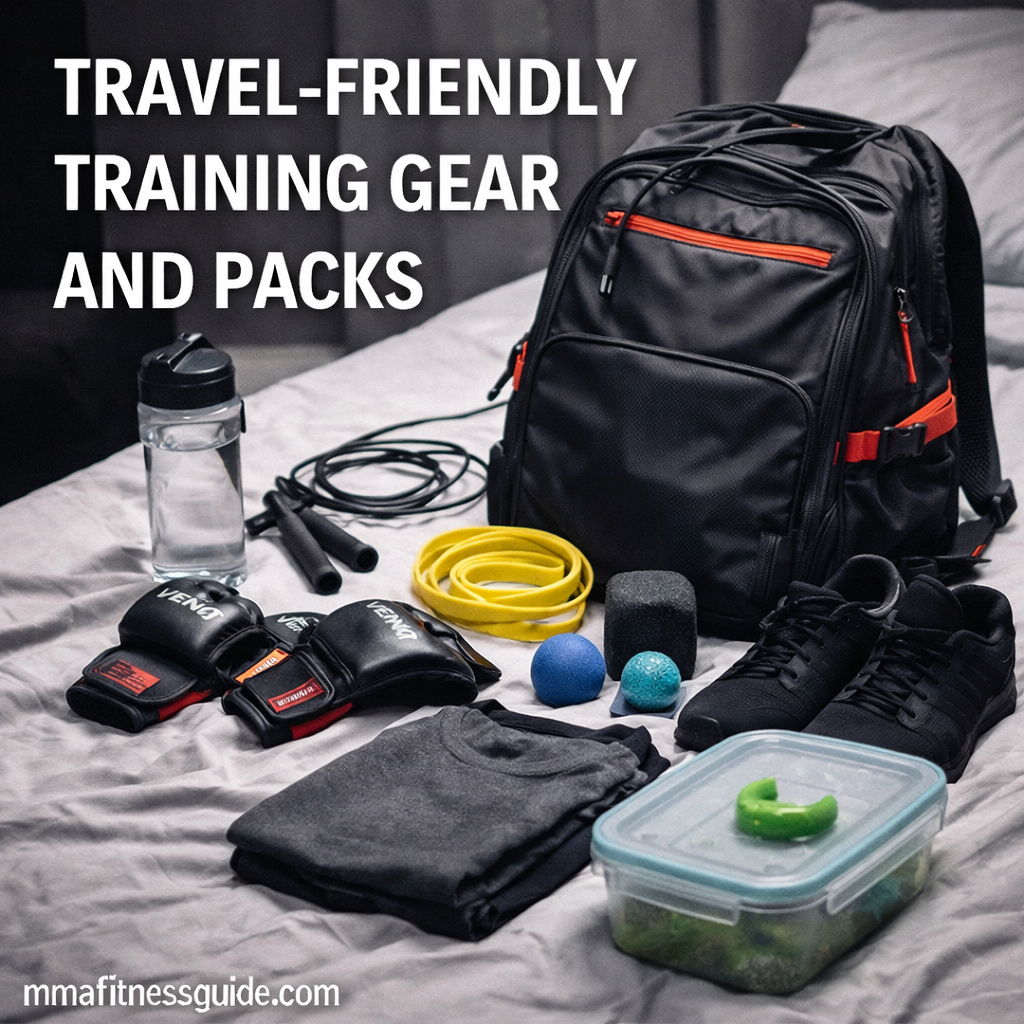
Travel-friendly MMA training gear including a backpack, jump rope, resistance bands, gloves, shoes, and recovery tools arranged for fighters on the go.
Essential travel-friendly MMA training gear and packs that help fighters stay consistent with conditioning and recovery while on the road.

A jump rope, resistance bands, hand wraps, a massage ball, and two sets of quick-dry training clothes can fit into a small section of a carry-on—and give you enough options for conditioning, mobility, strength work, and shadowboxing almost anywhere.

That matters when your normal MMA gym is hundreds of miles away.

Travel for work, competition, vacation, or family can leave you with nothing more than a hotel room, a nearby park, or an underwhelming hotel gym. Packing a few versatile pieces of equipment means you can still get useful work done without dragging a suitcase full of training gear through the airport.

The best travel setup isn’t the one with the most equipment. It’s the one that’s light enough to actually bring with you and versatile enough to use in whatever training space you find.

Continue reading “Travel-Friendly Training Gear and Packs”

Using Feints to Control the Fight Pace

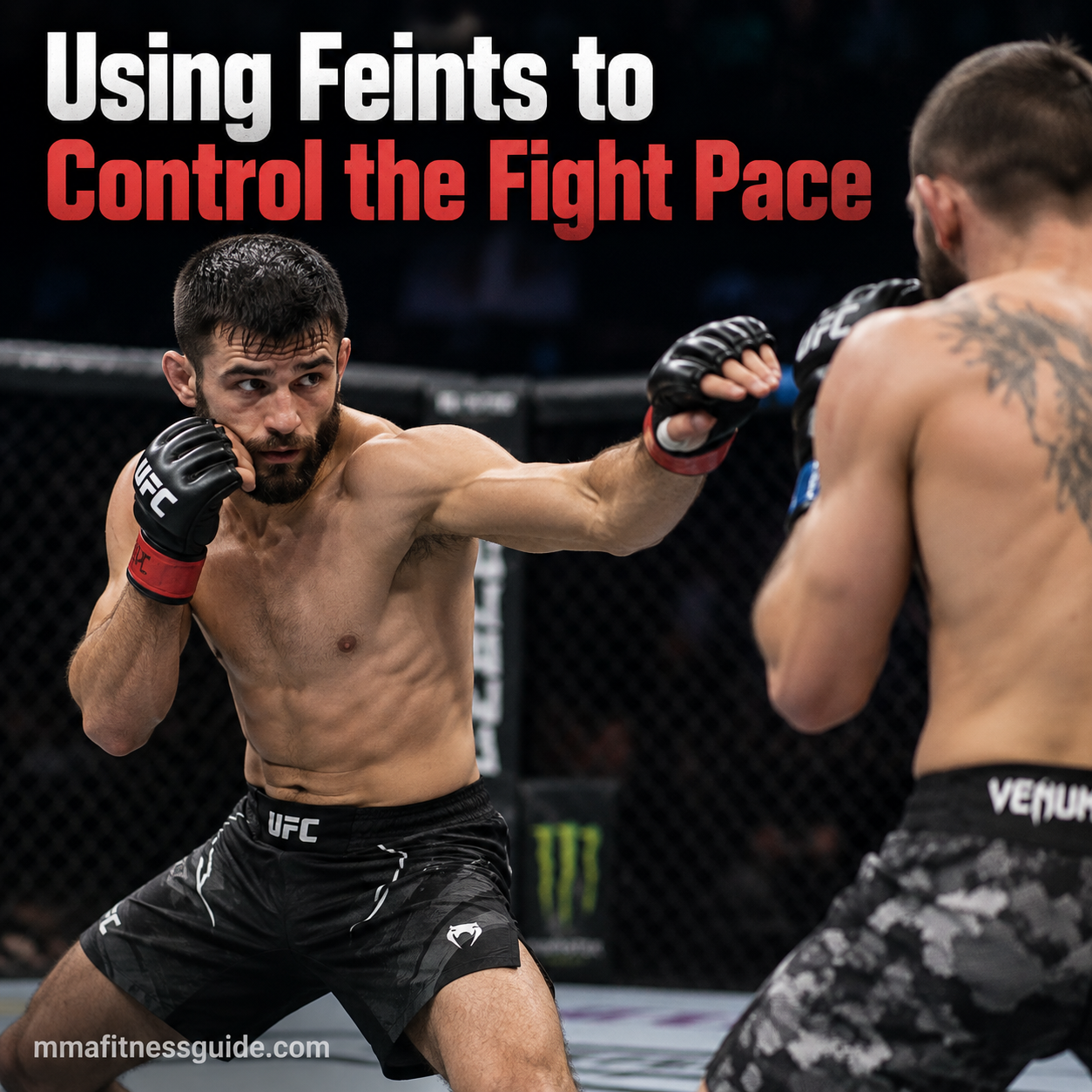
MMA fighter using a striking feint to draw a defensive reaction and control the fight pace.
Feints help MMA fighters disrupt timing, trigger reactions, and create openings without fully committing to an attack.

A slight shoulder twitch makes an opponent raise their guard. A quick level change forces their hips back. A half-step forward makes them brace for an exchange that never comes. None of these movements needs to become a real attack to change what happens next.

That is where feints become valuable in MMA. Instead of constantly committing to strikes, takedowns, or clinch entries, a fighter can use believable threats to influence an opponent’s reactions. Those reactions reveal openings, disrupt rhythm, and help determine when exchanges begin and end.

Used deliberately, feints turn pace control into a tactical process. The fighter is not simply moving faster or throwing more—they are making the opponent respond to threats and then choosing when to capitalize.

Continue reading “Using Feints to Control the Fight Pace”

MMA: Improve Digestion Naturally

MMA fighter eating a balanced meal with lean protein, vegetables, and whole foods to support digestive health.
Balanced meals, proper hydration, and smart meal timing can help MMA fighters support digestion and reduce stomach discomfort during training.

Introduction

Digestive health plays a bigger role in MMA performance than many fighters realize. You can follow a carefully planned diet, hit your protein targets, and consume enough calories, but persistent stomach discomfort can still make training miserable.

Imagine eating a large meal an hour before wrestling practice. During warm-ups, your stomach feels heavy. Once takedown drills begin, you experience bloating, nausea, or acid reflux. Instead of concentrating on technique, you’re thinking about getting through the session without feeling sick.

Digestive problems can also appear outside the gym. Irregular bowel movements, poor appetite after intense training, and discomfort during weight management can interfere with a fighter’s daily routine.

Fortunately, many everyday digestive complaints can improve through adjustments to meal timing, food selection, hydration, and eating habits.

However, not every digestive problem is caused by lifestyle. Persistent symptoms can indicate food intolerances, gastrointestinal conditions, medication effects, or other medical issues that require evaluation.

This guide explains how MMA fighters can support digestion naturally, reduce training-related stomach discomfort, and build practical nutrition habits that support consistent performance.

Continue reading “MMA: Improve Digestion Naturally”

MMA: Use Jump Rope for MMA Conditioning

MMA athletes using jump ropes for conditioning inside a gym, highlighting jump rope training for MMA endurance and footwork.
MMA athletes using jump rope training to improve conditioning, footwork, and cardiovascular endurance.

Jump rope training has been a staple in combat sports for generations—and for good reason. From boxing gyms to MMA fight camps, the jump rope remains one of the most effective, accessible tools for conditioning, coordination, and footwork. Despite its simplicity, jump rope training offers powerful benefits that translate directly to MMA performance.

This guide explains how fighters can use jump rope for MMA conditioning, why it works so well, and how to structure sessions to maximize endurance, agility, and rhythm.

Continue reading “MMA: Use Jump Rope for MMA Conditioning”