
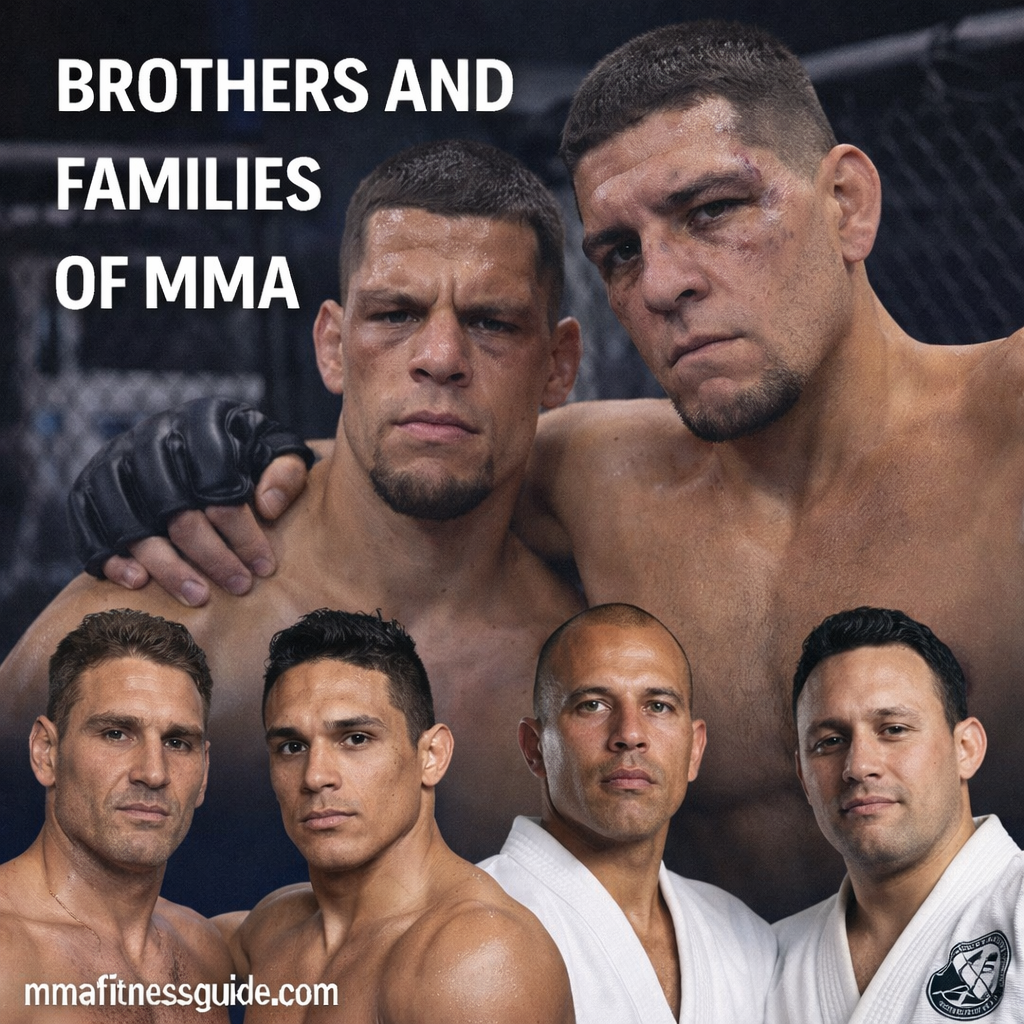
Nick and Nate Diaz brought the same relentless pressure and unmistakable Stockton identity into the cage. Maurício “Shogun” Rua and Murilo “Ninja” Rua emerged from the same Brazilian fighting culture. Long before either pair became famous, the Gracie family had already demonstrated how martial arts knowledge could pass from one generation to the next and ultimately influence an entire sport.
MMA may appear to be an individual pursuit once the cage door closes, but some of its most important stories begin within families. Brothers become training partners, younger generations inherit decades of knowledge, and relatives often provide the support and competitive environment that shape a fighter long before a professional debut.
From the Diaz and Rua brothers to sprawling martial arts dynasties such as the Gracies, family connections have left a distinctive mark on MMA’s techniques, personalities, rivalries, and history.
Why MMA Families Are So Common
Combat sports thrive in close-knit environments. Training is intense, routines are demanding, and support systems matter.
Families often provide:
- Early exposure to martial arts
- Built-in training partners
- Emotional and financial support
- Shared discipline and values
For many fighters, MMA isn’t just a career—it’s a family culture.
Brothers Who Defined MMA Eras
Sibling rivalries and partnerships have played a major role in MMA history.
The Diaz Brothers
Nick and Nate Diaz are among the most recognizable brothers in MMA.
What made them unique:
- Shared Stockton fighting style
- Emphasis on endurance and pressure
- Strong anti-establishment identity
Their bond created a unified philosophy that carried them through decades of competition.
The Fertitta Brothers (Behind the Scenes)
While not fighters, the Fertitta brothers played a massive role in MMA’s growth.
Their impact included:
- UFC ownership during a critical era
- Financial stability for the promotion
- Helping legitimize MMA worldwide
Family influence extends beyond the cage.
The Rua Brothers
Maurício “Shogun” Rua and Murilo “Ninja” Rua helped define PRIDE-era MMA.
Key traits:
- Aggressive Muay Thai style
- Brazilian fight culture roots
- Shared training environments
Their success highlighted Brazil’s family-based gym culture.
Fighting Families Across Generations
Some MMA families extend beyond siblings.
The Gracie Family
No family has influenced MMA more than the Gracies.
Their legacy includes:
- Development of Brazilian Jiu-Jitsu
- Early dominance in MMA
- Global martial arts influence
Generations of Gracies helped shape the sport’s foundation.
The Shamrock Brothers
Ken and Frank Shamrock were pioneers during MMA’s early years.
Their contributions:
- Early legitimacy for the sport
- Cross-disciplinary backgrounds
- Leadership during formative eras
They helped bridge pro wrestling, shoot fighting, and MMA.
Why Family-Based Training Works
Training within a family creates unique advantages.
Early Skill Development
Many fighters:
- Start training at a young age
- Learn fundamentals before bad habits form
- Develop comfort with physical contact
This creates a long technical runway.
Mental Toughness Through Familiar Pressure
Training with siblings often includes:
- Constant competition
- Honest feedback
- Emotional resilience
Family pressure can harden fighters early.
Built-In Accountability
Families don’t allow excuses.
Shared expectations promote:
- Discipline
- Consistency
- Long-term commitment
This structure mirrors elite training environments.
When Family Pressure Becomes a Challenge
Family ties can also create complications.
Expectations and Comparison
Fighters from famous families may face:
- Constant comparisons
- Pressure to live up to names
- Public scrutiny
Not every family member wants the spotlight.
Emotional Weight of Shared Careers
Injuries, losses, and career setbacks affect the entire family.
This can:
- Increase emotional stress
- Blur boundaries between personal and professional life
Managing these dynamics is crucial.
Gym Families vs Blood Families
Many fighters describe their gyms as family.
Gym families offer:
- Shared identity
- Long-term loyalty
- Collective growth
In MMA, family isn’t always genetic—it’s often cultural.
Cultural Traditions and Family Influence
Certain regions emphasize family-based martial arts.
Examples include:
- Brazilian fight families
- Dagestani wrestling dynasties
- Thai Muay Thai lineages
Culture and family are deeply connected in combat sports.
Brothers as Training Partners
Sibling training partners offer rare advantages.
They:
- Know each other’s tendencies
- Push intensity safely
- Share tactical development
This accelerates growth when managed properly.
When Brothers Compete Against Each Other
Some siblings eventually face competition dilemmas.
Challenges include:
- Avoiding direct competition
- Managing career overlap
- Protecting relationships
Not all family fighters follow the same path.
How Family Shapes Fighting Style
Shared upbringing often leads to:
- Similar movement patterns
- Shared strategies
- Unified mental approach
Style is often inherited, not taught.
Modern MMA and Family Legacy
Today’s MMA still reflects family influence.
New generations benefit from:
- Better resources
- Established pathways
- Early access to elite training
Family legacies continue evolving.
Why Fans Connect With MMA Families
Family stories humanize fighters.
They:
- Add emotional depth
- Create long-term narratives
- Highlight sacrifice and loyalty
Fans don’t just follow fighters—they follow families.
Lessons Fighters Can Learn From MMA Families
Even without blood ties, fighters can apply these lessons:
- Build strong support systems
- Create accountability circles
- Commit to long-term development
Family principles translate to performance.
Final Thoughts
Brothers and families have shaped MMA from its earliest days to the modern era. Whether through legendary dynasties like the Gracies or iconic sibling duos like the Diaz brothers, family influence runs deep in the sport’s history.
MMA may be fought alone in the cage, but behind many great fighters is a family that trained, sacrificed, and endured together. These shared journeys are part of what makes MMA more than just a sport—it’s a legacy passed down through generations.