An MMA professional leading a corporate self-defense workshop focused on awareness, confidence, and personal safety.
As MMA continues to gain mainstream acceptance, fighters, coaches, and gym owners are finding career opportunities far beyond competition and traditional training. One of the fastest-growing options is corporate workshops focused on self-defense, awareness, and personal safety.
Corporate self-defense workshops allow MMA professionals to monetize expertise, build credibility, and create stable income streams—while delivering real value to businesses and employees. This guide explains how MMA professionals can successfully sell, structure, and scale corporate self-defense workshops.
MMA athletes winding down with their phones, illustrating how screen habits affect recovery and sleep quality. mmafitnessguide.com.
MMA training places demands on the body and the brain. Hard sparring, strength work, conditioning, drilling, and weight management all require adequate recovery between sessions. What happens during the hours outside the gym can determine how prepared a fighter feels when the next session begins.
Screen habits are part of that equation. Phones, computers, tablets, televisions, gaming, and social media can extend mental stimulation late into the evening, encourage later bedtimes, and make it harder to establish a consistent wind-down routine.
The goal isn’t to eliminate screens. It’s to use them in ways that don’t compete with sleep, relaxation, and training readiness.
Motivation won’t always be there. Building consistent training habits helps MMA beginners keep moving forward even on difficult days.
Every beginner experiences it. You start training with excitement and energy, then a few weeks later the alarm goes off and going to the gym suddenly feels like work. You’re sore, progress feels slower than expected, and skipping one session becomes surprisingly easy to justify.
That’s the point where consistency matters most. Instead of waiting until you feel motivated again, the better approach is to make training easier to start, adjust your workload when needed, and keep the routine alive—even if that means doing a shorter or lighter session.
The goal on low-motivation days isn’t to have your best workout. It’s to avoid turning one skipped session into a week away from training.
Legendary MMA fights combine elite skill, momentum swings, resilience, and unforgettable moments that continue to define each era of the sport.
Forrest Griffin and Stephan Bonnar trading punches for three exhausting rounds. Dan Henderson and Shogun Rua surviving knockdowns and momentum swings across five. Zhang Weili and Joanna Jędrzejczyk maintaining a punishing pace for 25 minutes. MMA history is filled with fights where neither competitor seemed willing to give the other an inch.
These bouts become more than exciting matchups. They capture a particular moment in the sport, revealing the fighting styles, technical standards, championship stakes, and level of competition that defined an era.
From the unpredictable style clashes of early MMA to today’s highly technical battles between well-rounded athletes, Fight of the Year contenders provide a unique timeline of the sport’s evolution. The techniques have changed and the athletes have become more complete, but the ingredients of an unforgettable fight—skill, momentum shifts, resilience, and drama—remain remarkably consistent.
Music can influence motivation, mood, and perceived effort during MMA training, but its benefits depend on the activity and individual fighter.
You put on your headphones before a tough conditioning session, press play on your favorite track, and suddenly the first round on the heavy bag feels easier to start. The beat helps you find a rhythm, your energy picks up, and you feel ready to push through the workout. But during technical sparring, that same loud playlist might make it harder to hear your coach or concentrate on your opponent’s movements.
Music can influence motivation, mood, perceived effort, and arousal, but its effects depend on the activity, the individual, and the type of music being played. For MMA fighters, the challenge is knowing when a playlist supports the session and when silence allows for better concentration, technical precision, and awareness.
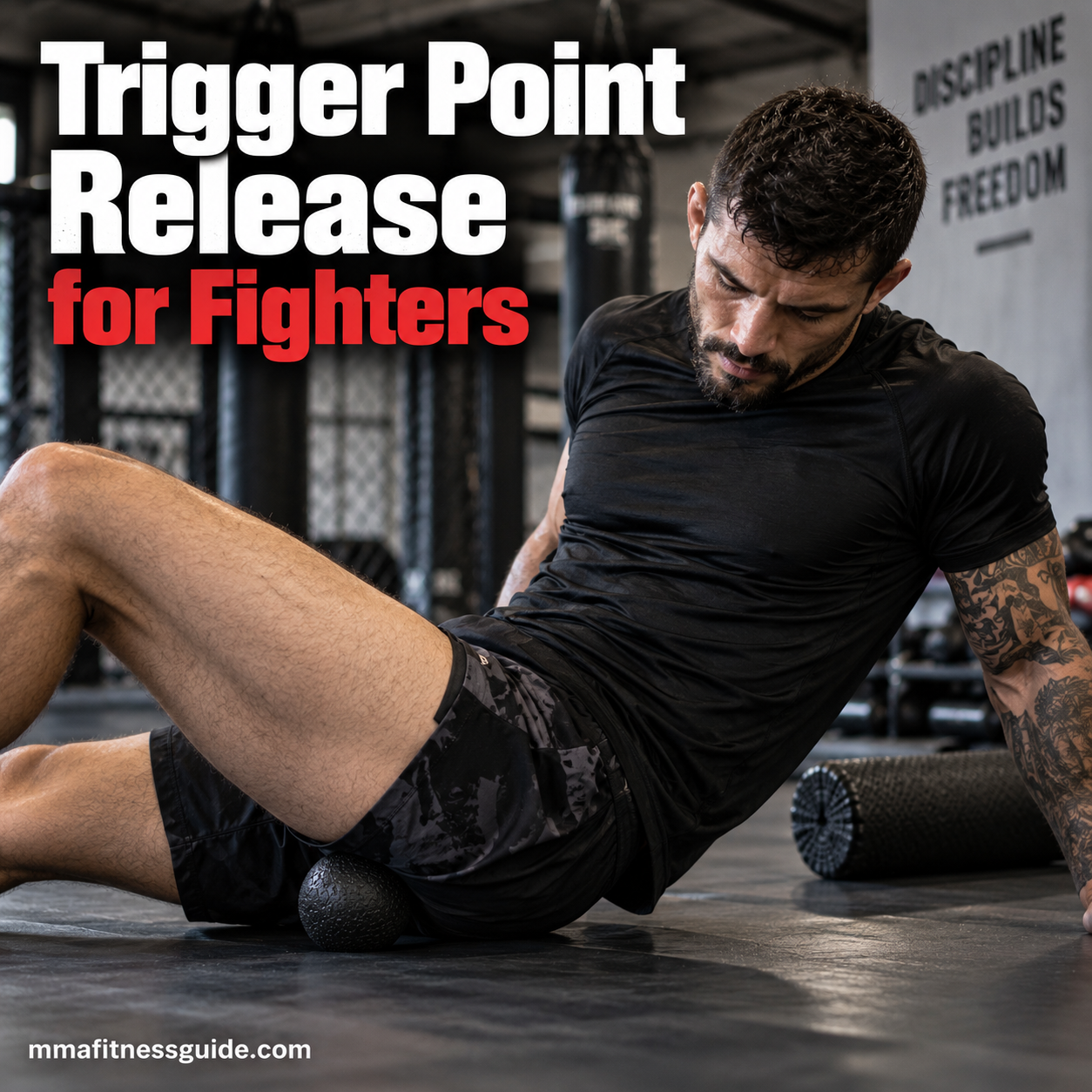
Controlled trigger point work can help fighters address muscular tightness and maintain comfortable movement between training sessions.
Hard rounds leave their mark in predictable places: tight calves after hours of footwork, stiff hips after wrestling, knotted forearms from grip fighting, and tense shoulders from striking and clinch work. When those areas stay tight between sessions, normal MMA movements can start to feel restricted or uncomfortable.
Targeted pressure with a foam roller, massage ball, or similar tool can temporarily reduce muscle tension and improve range of motion. For fighters training several times per week, a short trigger point routine can be incorporated alongside sleep, nutrition, mobility work, and appropriate rest.
Choosing durable gear, recycled materials, reusable accessories, and proper equipment care can help fighters reduce unnecessary waste.
A fighter can go through multiple pairs of gloves, rash guards, shorts, hand wraps, water bottles, and other training accessories over years of regular practice. Add cracked shin guards, worn-out gym bags, and clothing damaged by constant washing, and a surprising amount of equipment eventually ends up in the trash.
Making that gear more sustainable doesn’t require replacing everything you already own with products labeled “eco-friendly.” In fact, using existing equipment until it genuinely needs replacing is often the better place to start.
When replacement time comes, fighters can look for recycled fabrics, durable construction, repairable components, reusable accessories, and manufacturers that clearly explain where their materials come from.
The practical goal is simple: buy fewer disposable products, take better care of the gear you have, and choose replacements that can survive the demands of regular MMA training for as long as possible.
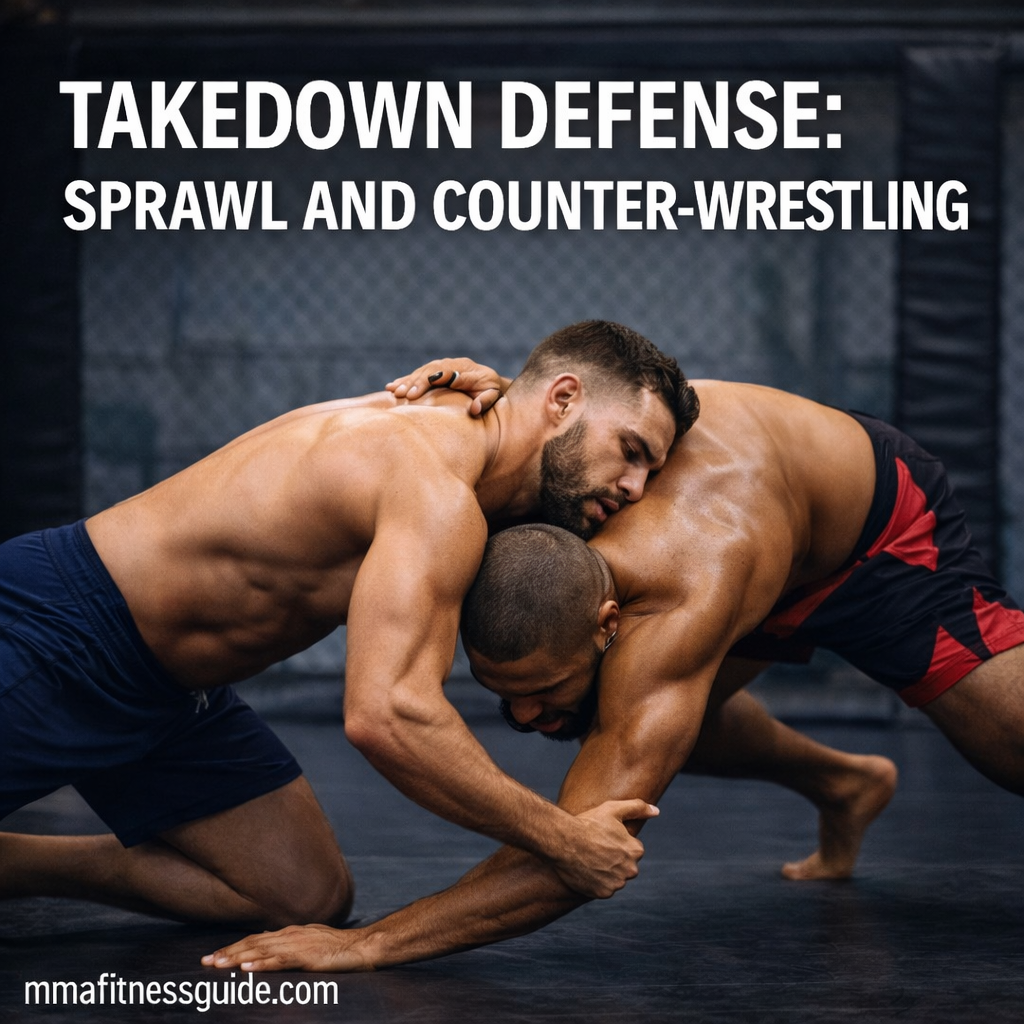
Sprawling, head control, underhooks, whizzers, and positional awareness help MMA fighters defend takedowns and transition into counter-wrestling.
A fighter changes levels underneath a jab and drives toward the hips. The defender has only a brief window to react: move the legs out of reach, get the hips heavy, control the attacker’s head or upper body, and prevent the shot from turning into a finished takedown.
That sequence is the foundation of takedown defense.
In MMA, however, stopping the initial shot is only part of the exchange. The attacker may switch from a double leg to a single, drive toward the cage, climb into a body lock, or continue wrestling through several positions. The defender needs answers for those transitions as well.
The sprawl provides one of those answers against shots at the legs, while counter-wrestling covers the positions that follow—using underhooks, head control, whizzers, frames, front headlocks, angles, and cage movement to regain position or reverse the exchange.
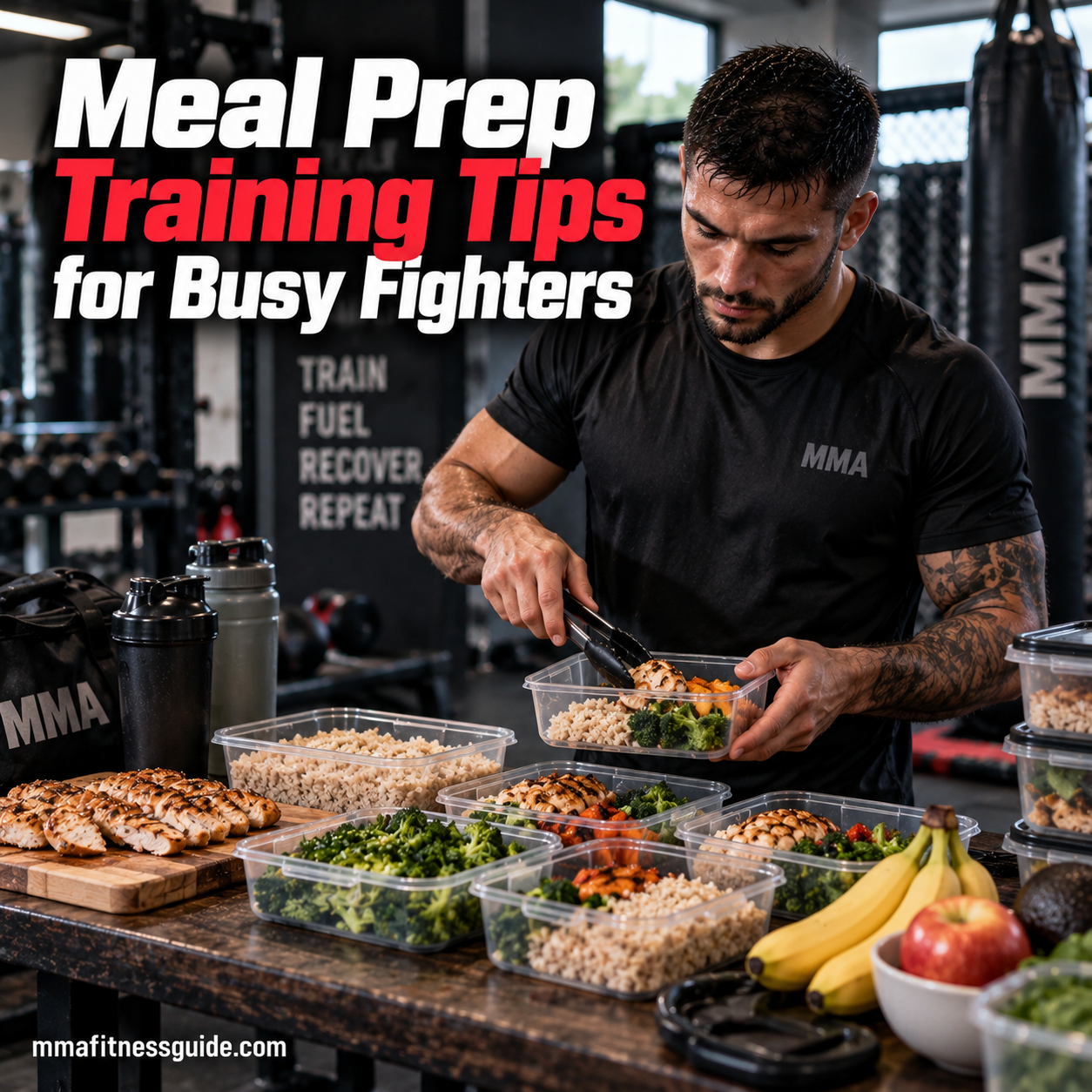
Preparing balanced meals ahead of time helps busy fighters maintain consistent nutrition and support recovery between training sessions.
You finish work at 5 p.m., rush to the gym for two hours of MMA training, and get home exhausted with nothing ready to eat. Dinner becomes whatever is quickest—a drive-through meal, a protein shake, or nothing at all. Repeat that routine several times a week, and inconsistent fueling can start affecting your energy, recovery, and training quality.
For fighters juggling jobs, family responsibilities, and demanding training schedules, preparing food ahead of time can make the difference between eating enough and regularly missing meals. A few containers of cooked chicken, rice, vegetables, and ready-to-eat snacks can eliminate the need to cook from scratch after every session.
Meal prep doesn’t mean eating identical meals seven days a week or following a rigid diet. Cooking a few staple ingredients twice a week, adjusting portions around training intensity, and keeping convenient backup meals available can help you stay fueled without spending hours in the kitchen. The goal is simple: have food ready when your schedule gets hectic, so nutrition supports your training instead of becoming another daily obstacle.
Targeted stretching and mobility work can help fighters develop the controlled range needed for striking, grappling, footwork, and defensive movement.
A roundhouse kick requires the hip to rotate freely. A deep level change depends on usable motion through the hips and ankles. Even punching mechanics rely on enough movement through the upper back and shoulders to rotate without forcing the body into awkward positions.
When those areas are restricted, fighters often compensate somewhere else. The knee may collapse inward during a squat or shot, the lower back may contribute too much during a kick, or the shoulder may take additional stress when the upper back isn’t rotating well.
Stretching for MMA should therefore have a specific purpose: developing range of motion that a fighter can actually control during training and competition.
That means prioritizing the hips, ankles, hamstrings, thoracic spine, and shoulders while using different methods before and after training. Dynamic movements can prepare those areas for a session, while targeted mobility work and static stretching can be used separately to address restrictions over time.
The goal isn’t to see how far you can stretch. It’s to give your body enough controlled range to kick, punch, shoot, scramble, and grapple without unnecessary restrictions.