
Managing Expectations from Coaches and Peers

MMA athletes listening to a coach while discussing performance pressure and expectations in a gym setting.
MMA fighters having a focused discussion with a coach about managing expectations and mental performance.

Introduction

In combat sports and high-performance training environments, expectations are everywhere. Coaches push for progress. Teammates set standards through effort and results. While expectations can motivate growth, they can also create pressure, stress, and self-doubt if not managed properly.

Learning how to manage expectations from coaches and peers is a critical mental skill. It helps you stay confident, focused, and mentally healthy while continuing to improve as an athlete.

Continue reading “Managing Expectations from Coaches and Peers”


MMA: Build Unshakeable Confidence

Female MMA fighter wrapping her hands in a gym while preparing mentally for training.
Unshakeable confidence in MMA begins with consistent preparation, mental discipline, and trust in your training.

You’re halfway through a hard round when everything starts going wrong.

A punch you didn’t see coming snaps your head back. Your takedown gets stuffed. Your opponent starts pressing forward, and suddenly the pace feels much faster than it did a minute ago. Your breathing gets heavier, your reactions slow down, and the game plan you felt confident about before the round starts slipping away.

This is where confidence in MMA actually matters.

Confidence isn’t believing you’ll dominate every opponent or convincing yourself that nothing can go wrong. Fighting is too unpredictable for that. Real confidence is knowing that when something does go wrong, you can stay composed enough to respond.

That kind of belief has to be earned.

It develops through preparation, repetition, pressure, honest assessment, and experiencing difficult situations often enough that they stop feeling unfamiliar.

Continue reading “MMA: Build Unshakeable Confidence”

Impostor Syndrome in Amateur Fighters

Amateur MMA fighters sitting in a gym showing self-doubt and reflection, representing impostor syndrome in combat sports.
Amateur MMA fighters reflecting on self-doubt and confidence challenges during training.

Impostor syndrome is far more common in combat sports than most fighters admit. Many amateur fighters train hard, compete regularly, and continue to improve — yet still feel like they don’t belong, aren’t “real” fighters, or will eventually be exposed as frauds.

These thoughts can quietly undermine confidence, enjoyment, and performance. Understanding impostor syndrome and learning how to manage it is an essential part of mental development for amateur fighters.

Continue reading “Impostor Syndrome in Amateur Fighters”

Competing After a Layoff: Mindset Training Tips

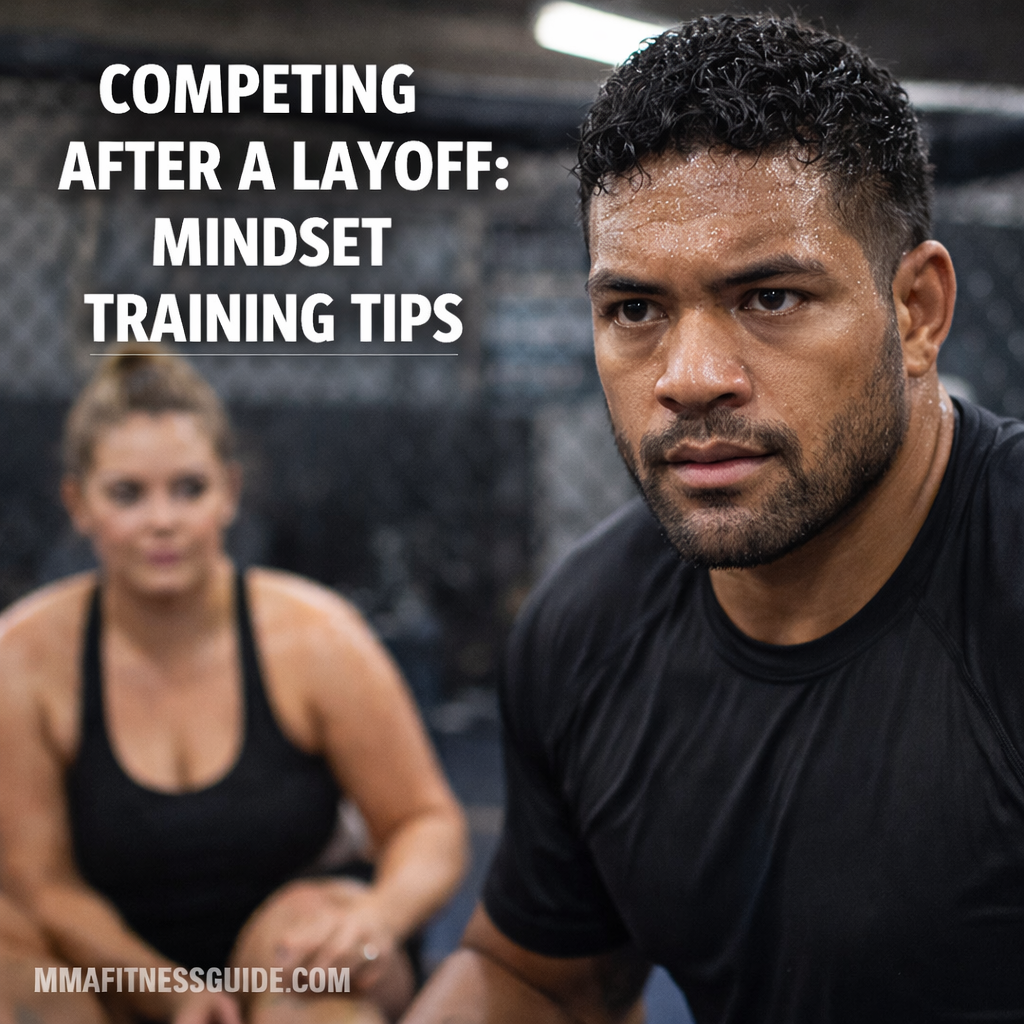
MMA fighter focused during training with a female fighter in the background, representing mindset preparation after a competition layoff.
An MMA fighter refocusing during training while preparing mentally to compete after time away.

Returning to competition after a long layoff is one of the toughest mental challenges a fighter can face. Whether the break came from injury, burnout, life responsibilities, or lost motivation, stepping back into the competitive arena often brings doubt, pressure, and fear of underperforming.

The physical side of returning gets most of the attention, but mindset determines how well you actually perform. This guide focuses on mindset training strategies to help fighters rebuild confidence, manage expectations, and compete effectively after time away.

Continue reading “Competing After a Layoff: Mindset Training Tips”

The Power of Routine for Mental Clarity

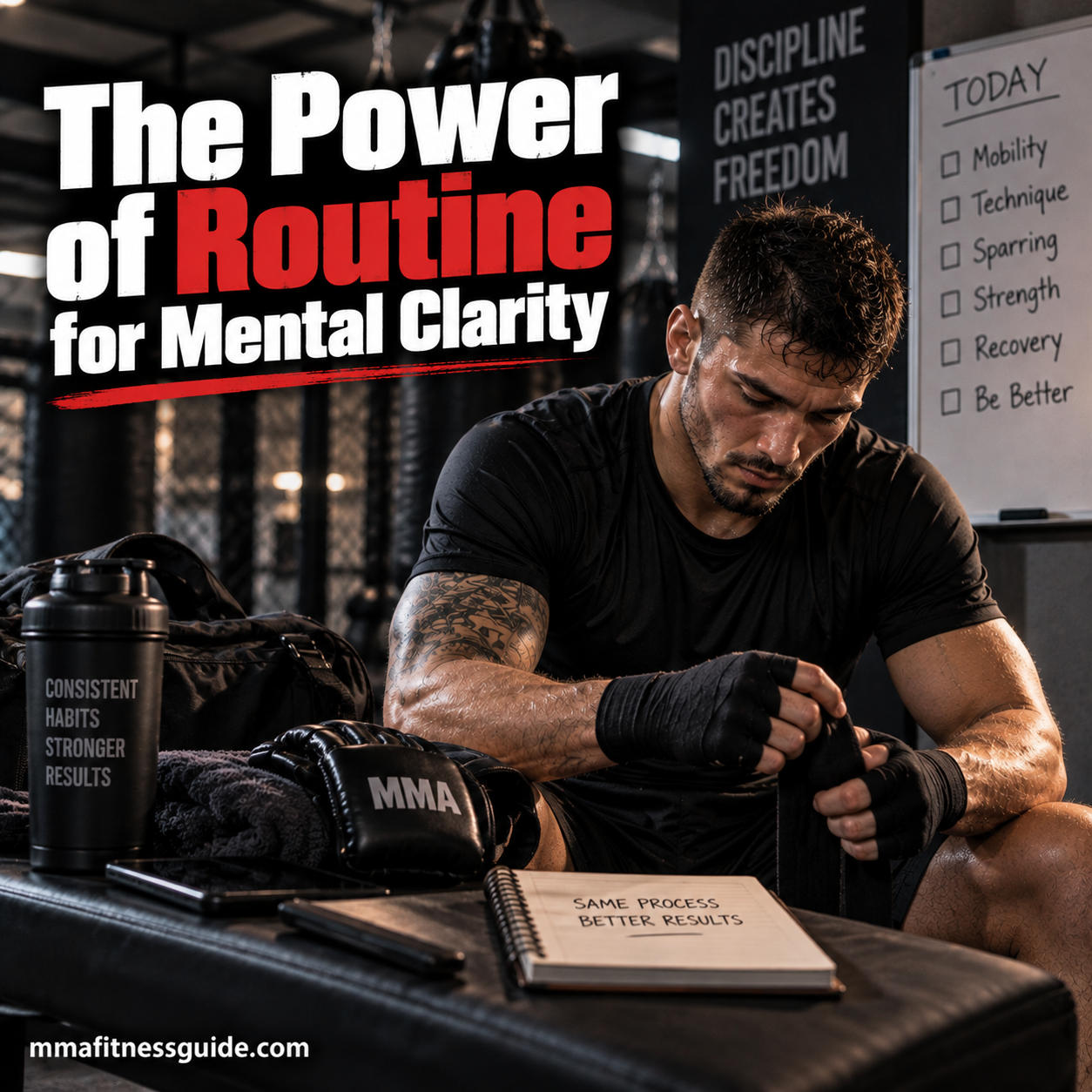
MMA fighter wrapping his hands beside a training checklist and workout journal, illustrating the importance of routine for mental clarity.
Consistent training habits and daily routines help MMA fighters stay organized, focused, and prepared.

You wake up late, rush through breakfast, and arrive at the gym without knowing what you’re training that day. Your hand wraps are missing, you haven’t eaten enough, and your mind is still occupied with unfinished tasks. By the time warm-ups begin, you’re already distracted. Now compare that with arriving at the gym after a predictable morning, with your equipment ready, meals planned, and training goals established.

A consistent routine can reduce unnecessary decisions and make it easier to direct your attention toward technique, recovery, and preparation. For MMA fighters balancing demanding workouts with jobs, family responsibilities, and everyday stress, simple habits provide structure without requiring every minute of the day to be planned. The goal isn’t to follow a rigid schedule—it’s to create enough consistency that you can concentrate on training while remaining flexible when circumstances change.

Continue reading “The Power of Routine for Mental Clarity”

Sleep and Mood: The Performance Connection

MMA fighter sleeping in a dark bedroom with training gloves nearby, illustrating the connection between sleep, mood, and athletic recovery.
Consistent, quality sleep supports emotional regulation, mental focus, and recovery between MMA training sessions.

Introduction

You arrive at the gym after five hours of sleep. Your body feels sluggish, your patience is running thin, and a routine sparring exchange leaves you unusually frustrated. Techniques you executed comfortably last week suddenly require more concentration, and even your warm-up feels like a chore.

The problem might not be your conditioning or preparation. It could be the previous night’s sleep.

Sleep influences how fighters regulate emotions, process information, tolerate stress, and maintain motivation. When sleep is consistently cut short, irritability can increase, concentration can suffer, and training may feel harder than usual. Understanding this connection helps MMA athletes recognize when fatigue is affecting their mindset and make recovery decisions before it interferes with performance.

Continue reading “Sleep and Mood: The Performance Connection”

Music and Performance: Does It Help?

MMA fighter wearing headphones and wrapping his hands before training in a combat sports gym.
Music can influence motivation, mood, and perceived effort during MMA training, but its benefits depend on the activity and individual fighter.

You put on your headphones before a tough conditioning session, press play on your favorite track, and suddenly the first round on the heavy bag feels easier to start. The beat helps you find a rhythm, your energy picks up, and you feel ready to push through the workout. But during technical sparring, that same loud playlist might make it harder to hear your coach or concentrate on your opponent’s movements.

Music can influence motivation, mood, perceived effort, and arousal, but its effects depend on the activity, the individual, and the type of music being played. For MMA fighters, the challenge is knowing when a playlist supports the session and when silence allows for better concentration, technical precision, and awareness.

Continue reading “Music and Performance: Does It Help?”

Training Alone: Staying Focused Without a Partner

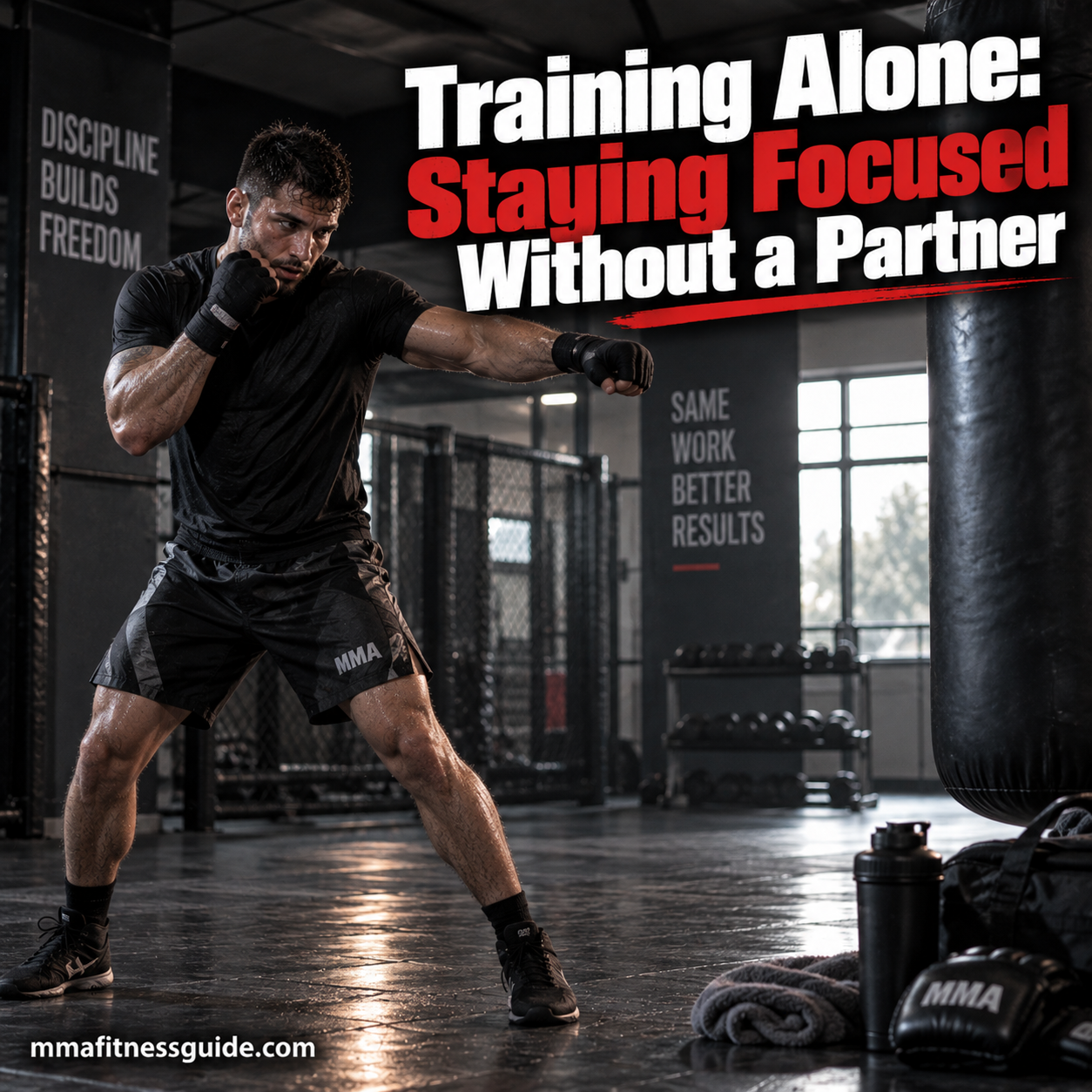
MMA fighter practicing shadowboxing alone in an empty gym with a heavy bag and training equipment nearby.
Structured solo MMA sessions can help fighters improve movement, conditioning, and training consistency when partners are unavailable.

You arrive at the gym ready to train, but your usual partner cancels at the last minute. There’s no coach calling out combinations, no teammate pushing the pace, and nobody watching when you start slowing down. Twenty minutes into shadowboxing, you catch yourself checking the clock instead of concentrating on your footwork.

Solo training presents a different challenge from working with a partner: you have to create your own structure, maintain your attention, and recognize when your technique starts to slip. With clear objectives, timed rounds, and regular self-assessment, fighters can use sessions alone to refine movement, improve conditioning, and develop consistent training habits. The goal isn’t to replace sparring or coaching, but to make productive use of the hours when neither is available.

Continue reading “Training Alone: Staying Focused Without a Partner”

Resilience Stories from Legendary Fighters

Editorial collage of MMA fighters inside an octagon, representing resilience, determination, and overcoming adversity.
Legendary MMA fighters demonstrate how preparation, adaptation, and perseverance can shape a career through victories and setbacks.

Why Fighter Resilience Matters

A single punch can change a fight. An injury can erase months of preparation. A losing streak can force an athlete to question the training methods that once brought success.

Georges St-Pierre lost his welterweight title in a stunning upset. Michael Bisping spent years pursuing a championship while dealing with a serious eye injury. Anderson Silva suffered a broken leg that threatened to end his career.

Their stories show different responses to adversity. Some fighters changed training environments, others adjusted their techniques, and some had to reconsider what competing meant to them.

For MMA athletes, these experiences offer practical lessons about recovering from defeat, recognizing when change is necessary, and maintaining perspective when progress stalls.

Continue reading “Resilience Stories from Legendary Fighters”

MMA: Coach Yourself Through Tough Sessions

A focused, tan-skinned male athlete sitting on the gym floor in an MMA training space, wearing red shorts, with the title “MMA Coach Yourself Through Tough Sessions” and the mmafitnessguide.com watermark.
A fighter sitting in an MMA gym gathering his focus, symbolizing the mental resilience needed to push through tough training sessions.

Every fighter faces training days that feel heavier than the rest — when your body is tired, your mind is overwhelmed, or motivation drops before warm-ups are even finished. Tough sessions happen to everyone, but how you respond determines whether you grow from them or spiral into frustration.

Coaching yourself isn’t about forcing your way through pain. It’s about managing your mindset, choosing smart internal cues, and staying focused on progress instead of pressure. With the right self-coaching strategies, you can turn difficult sessions into your biggest mental wins.

Continue reading “MMA: Coach Yourself Through Tough Sessions”