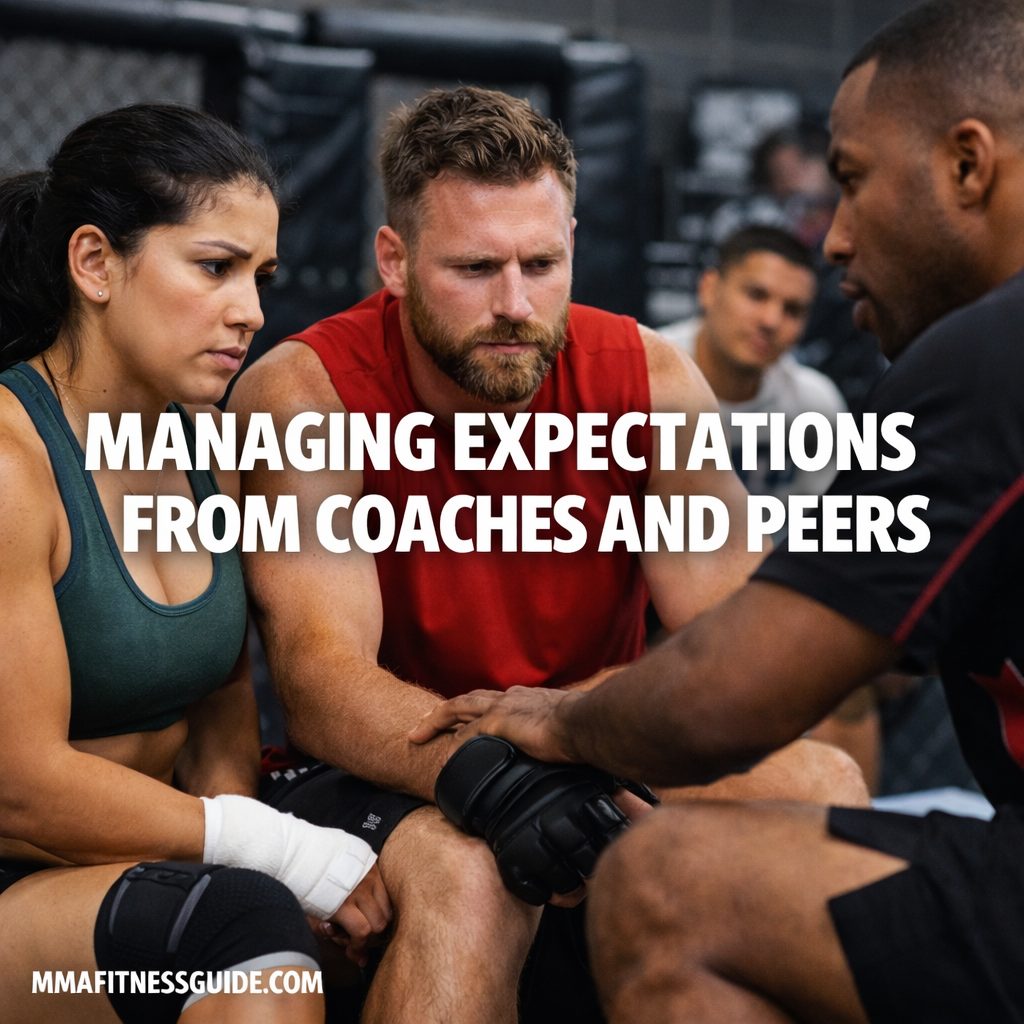
Managing Expectations from Coaches and Peers

MMA athletes listening to a coach while discussing performance pressure and expectations in a gym setting.
MMA fighters having a focused discussion with a coach about managing expectations and mental performance.

Introduction

In combat sports and high-performance training environments, expectations are everywhere. Coaches push for progress. Teammates set standards through effort and results. While expectations can motivate growth, they can also create pressure, stress, and self-doubt if not managed properly.

Learning how to manage expectations from coaches and peers is a critical mental skill. It helps you stay confident, focused, and mentally healthy while continuing to improve as an athlete.

Continue reading “Managing Expectations from Coaches and Peers”


MMA: Build Unshakeable Confidence

MMA fighters standing confidently in a gym environment, representing mental strength and unshakeable confidence in training.
MMA athletes displaying calm focus and confidence during training preparation.

Confidence in MMA isn’t something you’re born with — it’s something you build. True confidence isn’t loud, reckless, or based on hype. It’s quiet, stable, and reliable under pressure. Fighters with unshakeable confidence perform consistently, adapt during adversity, and trust themselves even when things don’t go perfectly.

This guide breaks down how MMA fighters can build real, lasting confidence through mindset, preparation, and daily habits.

Continue reading “MMA: Build Unshakeable Confidence”

Impostor Syndrome in Amateur Fighters

Amateur MMA fighters sitting in a gym showing self-doubt and reflection, representing impostor syndrome in combat sports.
Amateur MMA fighters reflecting on self-doubt and confidence challenges during training.

Impostor syndrome is far more common in combat sports than most fighters admit. Many amateur fighters train hard, compete regularly, and continue to improve — yet still feel like they don’t belong, aren’t “real” fighters, or will eventually be exposed as frauds.

These thoughts can quietly undermine confidence, enjoyment, and performance. Understanding impostor syndrome and learning how to manage it is an essential part of mental development for amateur fighters.

Continue reading “Impostor Syndrome in Amateur Fighters”

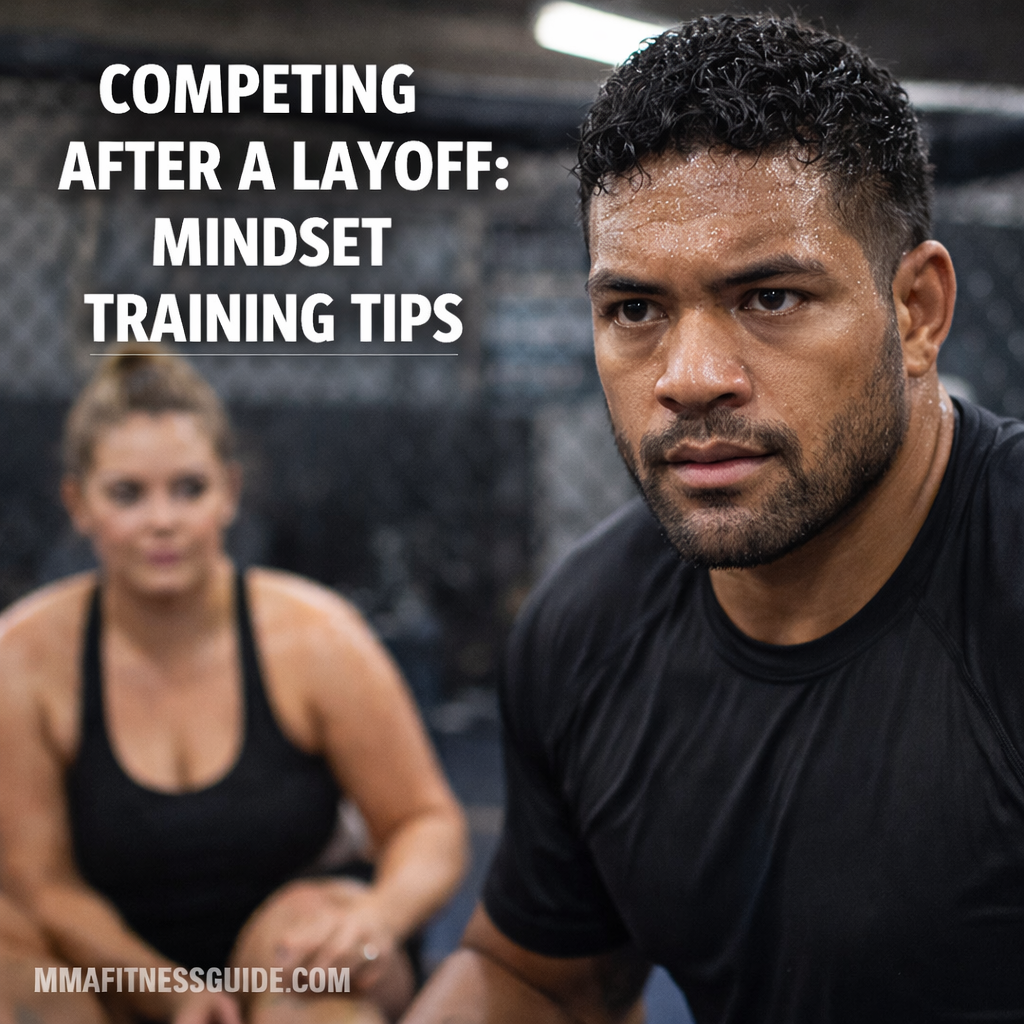
Competing After a Layoff: Mindset Training Tips

MMA fighter focused during training with a female fighter in the background, representing mindset preparation after a competition layoff.
An MMA fighter refocusing during training while preparing mentally to compete after time away.

Returning to competition after a long layoff is one of the toughest mental challenges a fighter can face. Whether the break came from injury, burnout, life responsibilities, or lost motivation, stepping back into the competitive arena often brings doubt, pressure, and fear of underperforming.

The physical side of returning gets most of the attention, but mindset determines how well you actually perform. This guide focuses on mindset training strategies to help fighters rebuild confidence, manage expectations, and compete effectively after time away.

Continue reading “Competing After a Layoff: Mindset Training Tips”

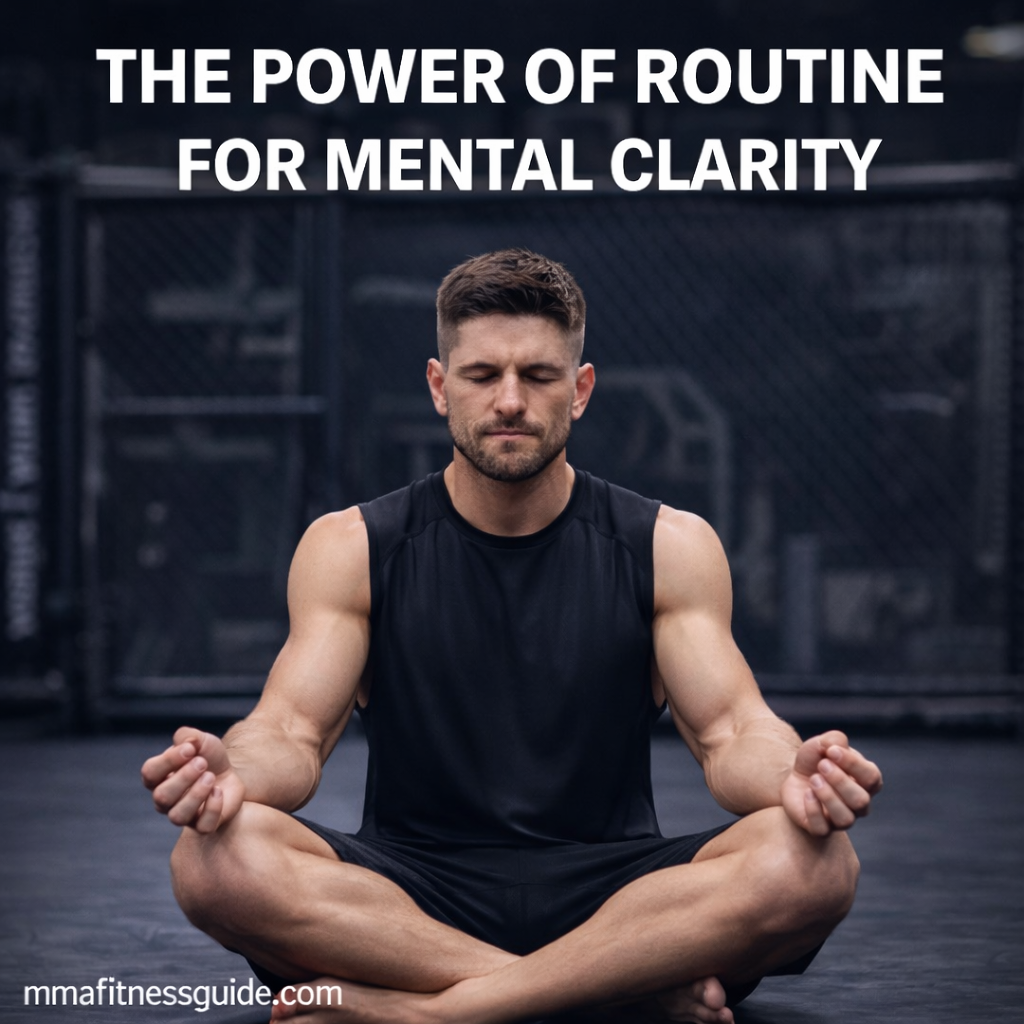
The Power of Routine for Mental Clarity

MMA fighter sitting cross-legged in a gym practicing meditation to improve mental clarity and focus through routine.
An MMA athlete practicing a calm, consistent routine to support mental clarity, focus, and emotional balance.

Mental clarity is one of the most underrated performance advantages in MMA. Fighters often focus on physical preparation while overlooking how daily structure—or lack of it—affects focus, emotional stability, and decision-making. One of the most effective tools for mental clarity isn’t complicated or expensive. It’s routine.

Routine reduces mental noise, conserves energy, and creates predictability in an otherwise chaotic sport. This article explores how routine supports mental clarity, why fighters benefit from structured habits, and how to build routines that improve both training and life.

Continue reading “The Power of Routine for Mental Clarity”

Sleep and Mood: The Performance Connection

MMA fighter sleeping after training to support recovery, mood regulation, and performance.
An MMA athlete resting after training, highlighting the connection between sleep quality, mood stability, and peak performance.

In MMA, performance is often measured in strength, speed, and skill—but mood plays an equally powerful role. Fighters who feel irritable, unmotivated, anxious, or mentally foggy rarely perform at their best. One of the biggest drivers of mood—often overlooked—is sleep.

Sleep is not just physical recovery. It directly shapes emotional regulation, motivation, stress tolerance, and decision-making. This article explores how sleep affects mood, why mood impacts MMA performance, and how fighters can improve both by prioritizing sleep quality.

Continue reading “Sleep and Mood: The Performance Connection”

Music and Performance: Does It Help?

Female MMA fighter wearing headphones and focusing before training while a male fighter practices in the background.
An MMA athlete using music to enhance focus and performance during training.

Music is everywhere in MMA gyms. From loud playlists during conditioning circuits to fighters wearing headphones before training or competition, music has become a common performance tool. But does music actually improve performance—or is it just a habit?

For fighters, performance isn’t only physical. Focus, confidence, emotional control, and motivation all play critical roles. This article explores how music affects MMA performance, when it helps, when it can hurt, and how fighters can use it intentionally rather than automatically.

Continue reading “Music and Performance: Does It Help?”

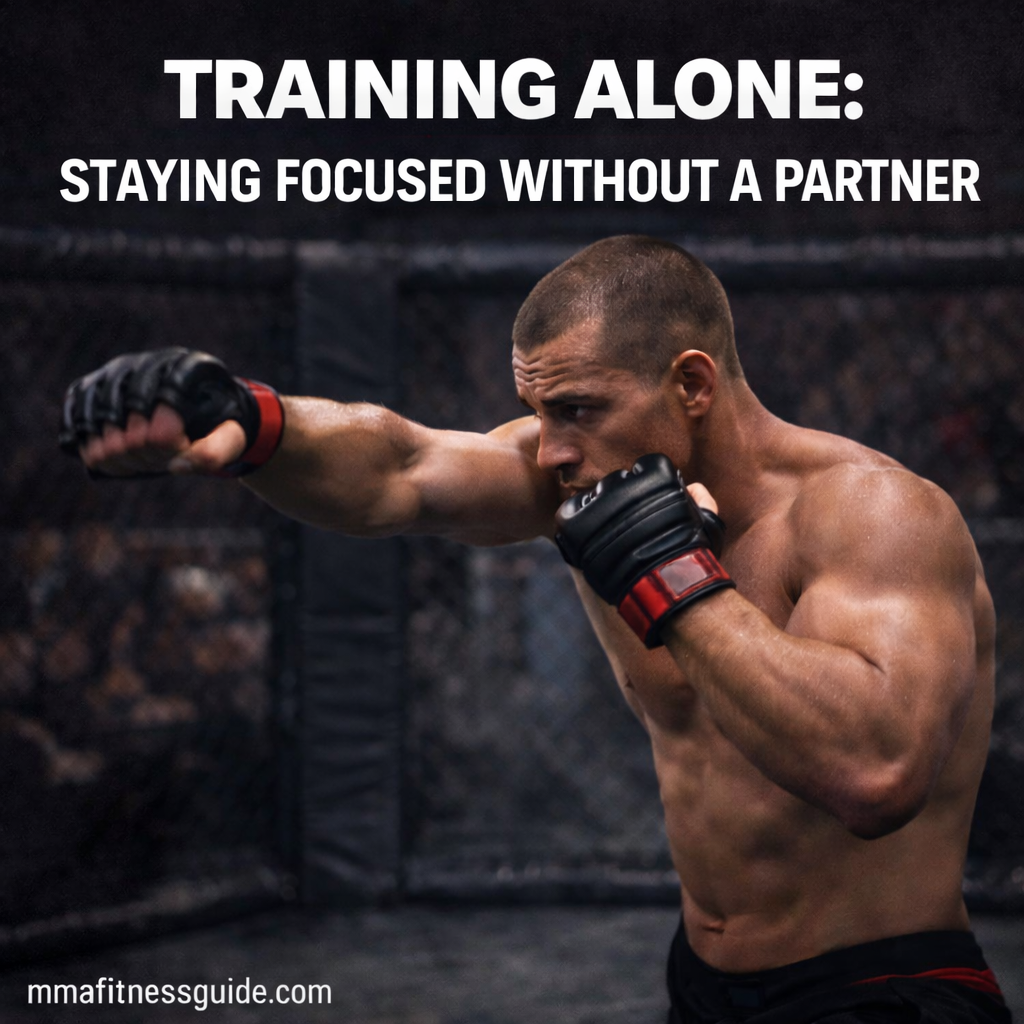
Training Alone: Staying Focused Without a Partner

MMA fighter training alone in the gym, practicing striking while staying focused without a partner.
An MMA athlete training solo, building focus, discipline, and mental resilience without a training partner.

Training with teammates sharpens timing, pressure, and reactions—but not every MMA athlete has consistent access to partners. Whether due to scheduling conflicts, travel, gym availability, or personal circumstances, solo training is a reality for many fighters.

Training alone doesn’t have to mean training poorly. With the right mindset and structure, solo sessions can build discipline, technical awareness, and mental resilience that directly transfer to competition. This guide explores how MMA athletes can stay focused, motivated, and mentally strong when training without a partner.

Continue reading “Training Alone: Staying Focused Without a Partner”

Resilience Stories from Legendary Fighters

Male MMA athlete standing in a gym with a serious, determined expression, shown beside bold text about resilience stories from legendary fighters.
Male MMA athlete demonstrating resilience and focus, shown next to bold text promoting resilience stories from legendary fighters.

Why Fighter Resilience Matters

MMA is built on toughness, but resilience is something deeper—it’s the ability to rebuild yourself when everything collapses. Legendary fighters aren’t remembered only for wins. They’re remembered for how they responded to losses, injuries, failures, and personal battles outside the cage.

These stories can reshape your mindset, motivate you through training plateaus, and remind you that resilience is a skill—not a trait you’re born with.

Below are some of the most powerful resilience stories in MMA history and the lessons they carry.

Continue reading “Resilience Stories from Legendary Fighters”

MMA: Coach Yourself Through Tough Sessions

A focused, tan-skinned male athlete sitting on the gym floor in an MMA training space, wearing red shorts, with the title “MMA Coach Yourself Through Tough Sessions” and the mmafitnessguide.com watermark.
A fighter sitting in an MMA gym gathering his focus, symbolizing the mental resilience needed to push through tough training sessions.

Every fighter faces training days that feel heavier than the rest — when your body is tired, your mind is overwhelmed, or motivation drops before warm-ups are even finished. Tough sessions happen to everyone, but how you respond determines whether you grow from them or spiral into frustration.

Coaching yourself isn’t about forcing your way through pain. It’s about managing your mindset, choosing smart internal cues, and staying focused on progress instead of pressure. With the right self-coaching strategies, you can turn difficult sessions into your biggest mental wins.

Continue reading “MMA: Coach Yourself Through Tough Sessions”