MMA: Control Posture in Guard

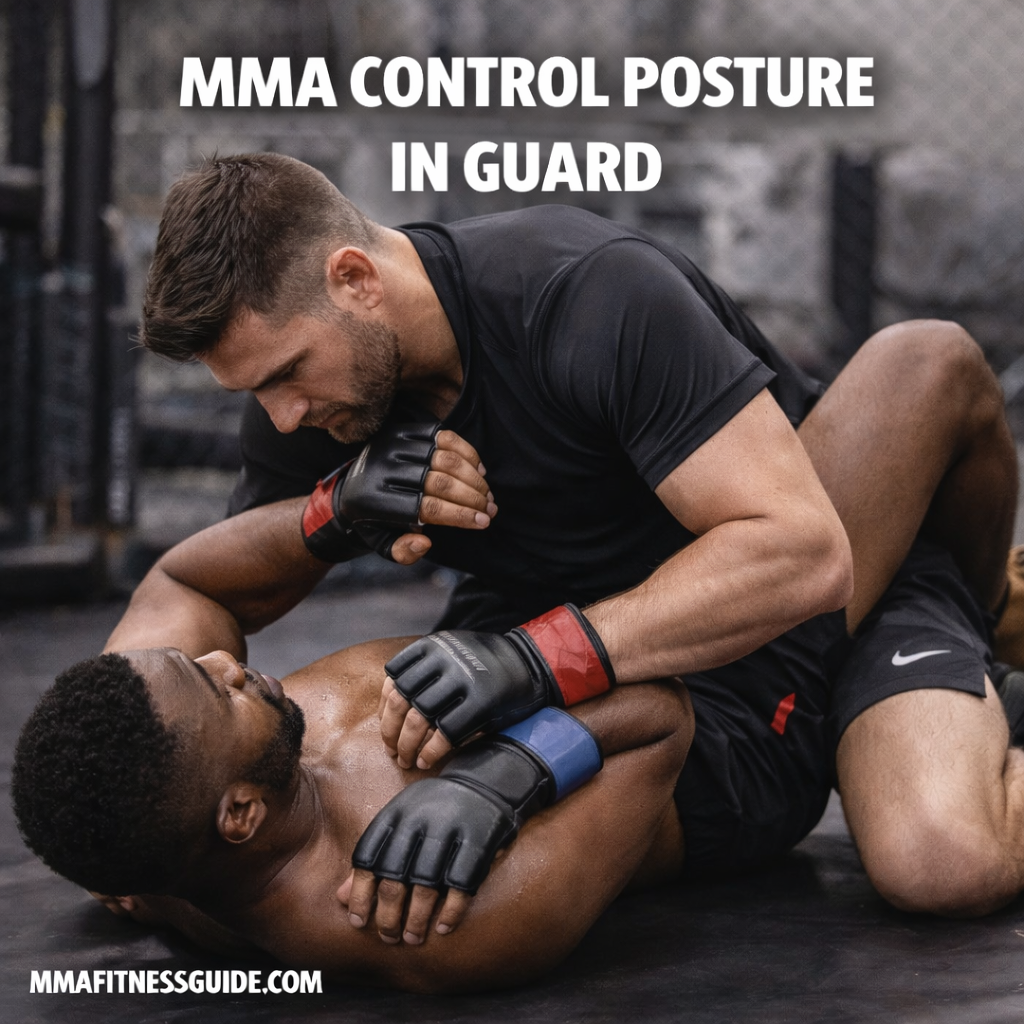
MMA fighters practicing posture control from closed guard during grappling training.
Posture control in MMA guard affects striking space, balance, submission opportunities, sweeps, and positional transitions.

When a fighter on top of closed guard gets their head pulled toward the opponent’s chest, their options change immediately. Full-power punches become harder to generate, their balance shifts forward, and attacks such as triangles, arm bars, and sweeps become easier to set up. If they regain an upright base, the bottom fighter has a different problem: strikes and guard passes become easier to initiate.

That push and pull over head, spine, hip, and arm position is the posture battle in MMA guard. The top fighter wants enough structure to strike, defend submissions, and begin passing. The bottom fighter wants to disrupt that structure before creating angles for offense or escape.

Because punches and elbows are available, neither fighter can treat posture as a static position. It changes continuously as grips, strikes, hip movement, and submission threats force adjustments.

Continue reading “MMA: Control Posture in Guard”
Back Control Fundamentals and Finishes

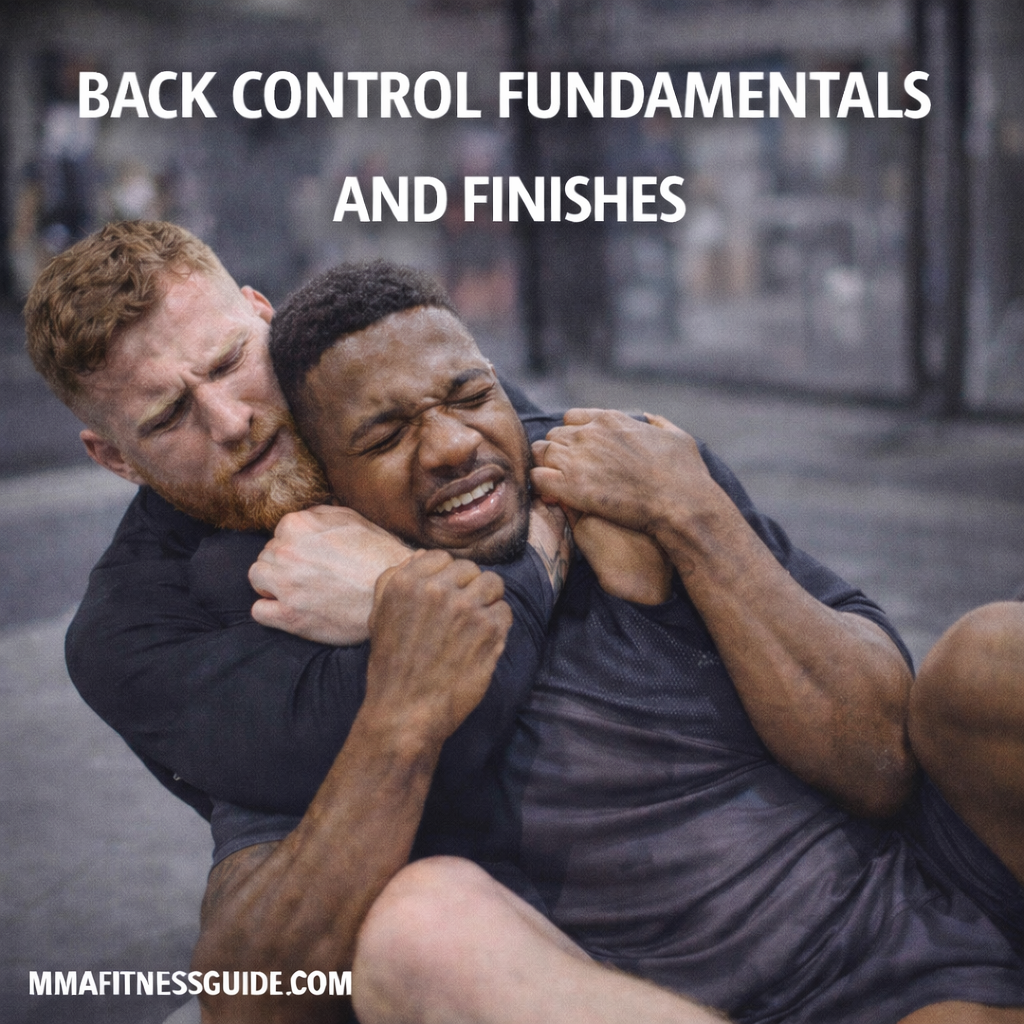
Two MMA fighters training back control techniques in a gym, demonstrating rear control positioning and submission fundamentals.
MMA fighters drilling back control fundamentals and submission finishes during grappling training.

Back control is one of the most dominant positions in MMA and grappling. When you control an opponent’s back, you limit their offense, control their movement, and open the door to high-percentage finishes. At every level of MMA, fighters who understand back control fundamentals consistently outperform those who rely only on strength or speed.

This guide covers the essential principles of back control, common mistakes, and the most effective finishes fighters should master.

Continue reading “Back Control Fundamentals and Finishes”

Chaining Takedowns: Single to Double Variations

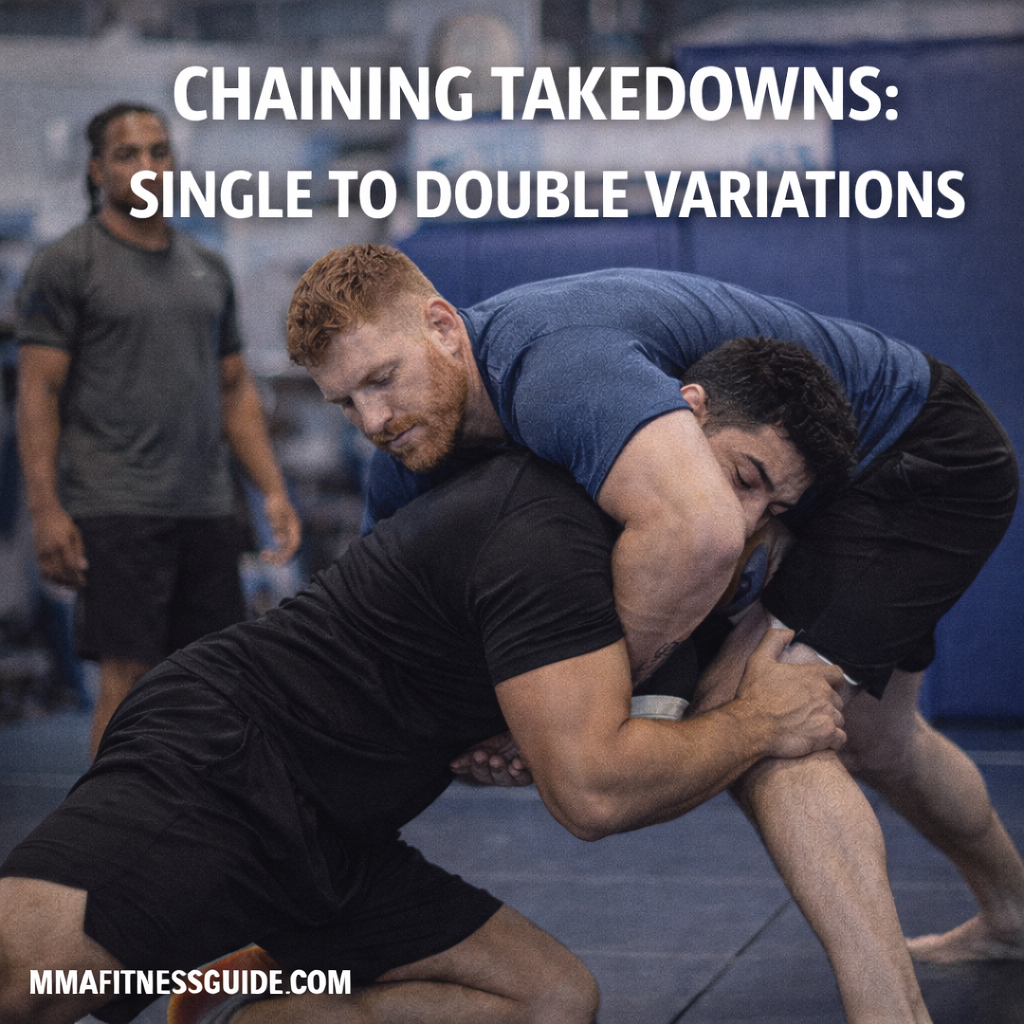
MMA fighter transitioning from a single-leg attack toward a double-leg takedown during grappling.
Chaining a single-leg into a double-leg allows an MMA fighter to adjust as an opponent defends the initial takedown.

A fighter shoots for a single-leg, but the opponent widens their base, hops away, or starts driving their hips back. Holding onto the original attack can turn a good entry into a stalled position. Switching to both legs while the opponent is adjusting can create a new finishing opportunity before their defense settles.

That is the purpose of chaining takedowns. The first attack forces a response; the next attack targets the position created by that response. A single-to-double transition is a common example because the opponent’s effort to protect one leg can change their balance, hip position, and stance.

Rather than treating a defended single as a failed shot, fighters can use it as the beginning of a sequence.

Continue reading “Chaining Takedowns: Single to Double Variations”

Winning the First Exchange: Fast Openers

MMA fighter using a fast jab during the opening exchange as his opponent raises his guard inside the cage.
A controlled opening attack can establish range and reveal how an opponent reacts before longer exchanges develop.

The referee signals the start, both fighters step toward the center, and within seconds the first useful information appears. A jab reveals how an opponent moves their head. A low kick shows how quickly they check. A level-change feint can expose whether their hands drop when they anticipate a takedown.

A good opening exchange takes advantage of those early reactions without turning the first ten seconds into a reckless sprint. The objective might be to establish range, make the opponent retreat, test a defensive habit, or introduce a threat you plan to use later.

That makes the best openers simple and purposeful. A double jab, low kick, feint, or disguised level change can give you information while putting the opponent under immediate pressure—and still leave you balanced enough to defend whatever comes back.

Continue reading “Winning the First Exchange: Fast Openers”

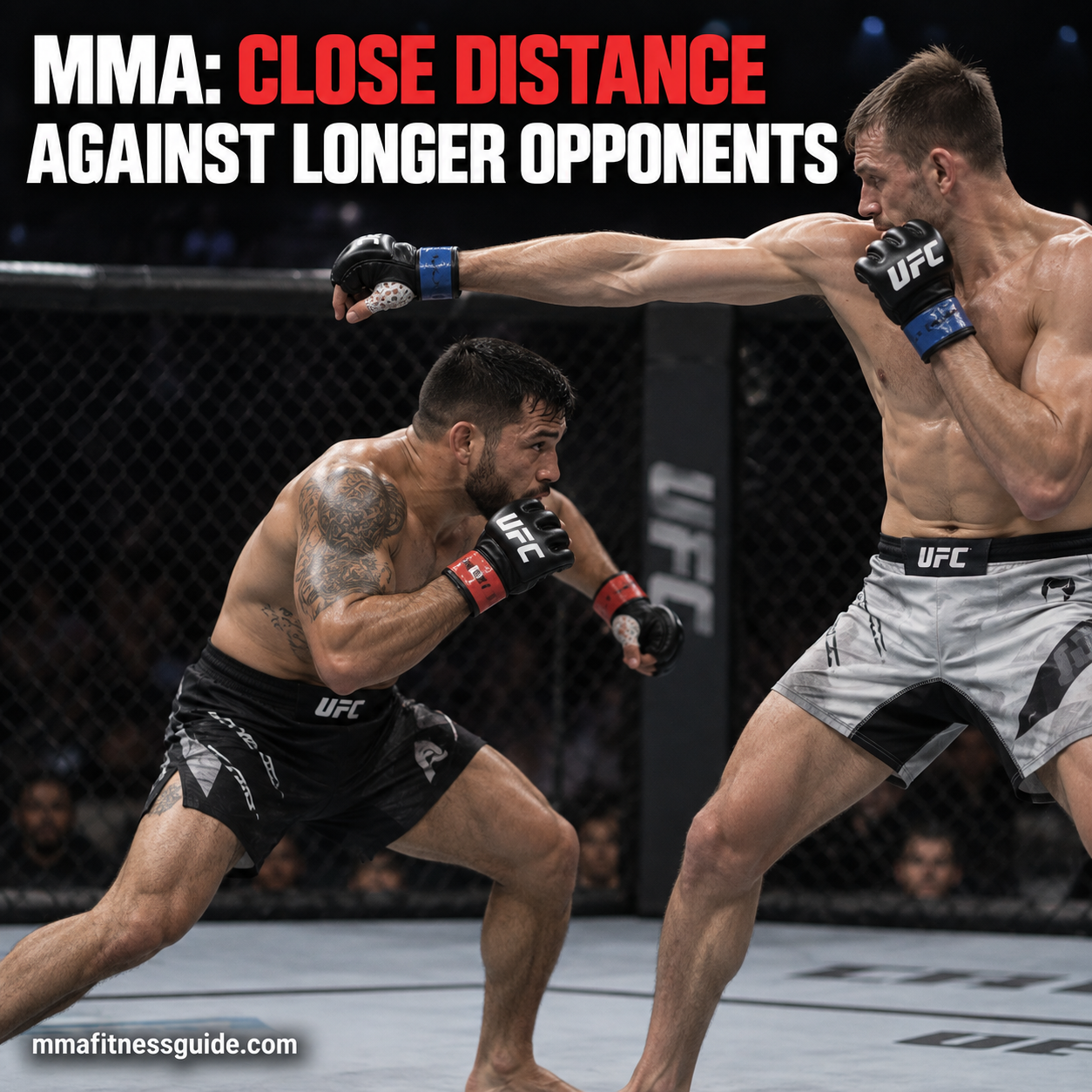
MMA: Close Distance Against Longer Opponents

Shorter MMA fighter closing distance against a taller opponent throwing a long jab inside the cage.
Closing distance with timing, angles, and defensive movement can help shorter MMA fighters get past an opponent’s reach advantage.

A longer opponent wants to keep you exactly where their jab, teep, and straight punches can reach you while yours fall short. Stay there too long, and every attempt to attack becomes an entry they can see coming.

The solution isn’t to rush forward. A shorter fighter has to take away space without giving the opponent a clean target—using feints to trigger reactions, angles to avoid the centerline, and strikes or takedown threats to cover the entry.

Once you get past the end of their punches and kicks, the matchup changes. Hooks, body shots, clinch work, wrestling, and cage pressure can force a longer fighter to operate at a range where their reach provides far less protection.

Continue reading “MMA: Close Distance Against Longer Opponents”

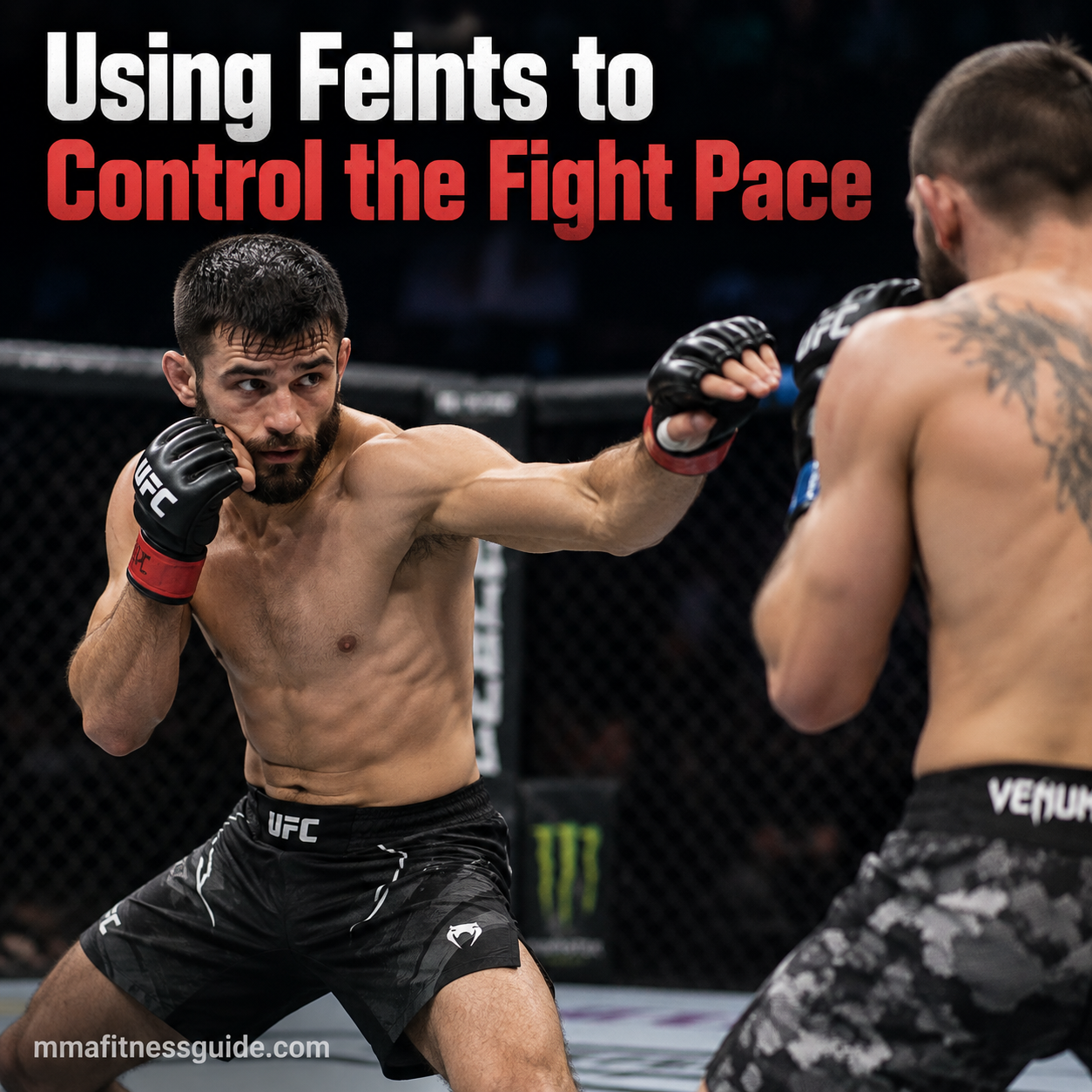
Using Feints to Control the Fight Pace

MMA fighter using a striking feint to draw a defensive reaction and control the fight pace.
Feints help MMA fighters disrupt timing, trigger reactions, and create openings without fully committing to an attack.

A slight shoulder twitch makes an opponent raise their guard. A quick level change forces their hips back. A half-step forward makes them brace for an exchange that never comes. None of these movements needs to become a real attack to change what happens next.

That is where feints become valuable in MMA. Instead of constantly committing to strikes, takedowns, or clinch entries, a fighter can use believable threats to influence an opponent’s reactions. Those reactions reveal openings, disrupt rhythm, and help determine when exchanges begin and end.

Used deliberately, feints turn pace control into a tactical process. The fighter is not simply moving faster or throwing more—they are making the opponent respond to threats and then choosing when to capitalize.

Continue reading “Using Feints to Control the Fight Pace”

Armbar, Triangle, and Omoplata: Core Submissions

Two MMA grapplers practicing an armbar submission on training mats inside a professional combat sports gym.
The armbar, triangle choke, and omoplata form a connected submission system built around guard control, leverage, and transitions.

Submission grappling is a fundamental part of mixed martial arts, and few techniques demonstrate the relationship between positioning, control, and finishing ability as clearly as the armbar, triangle choke, and omoplata.

These three submissions are commonly taught together in Brazilian Jiu-Jitsu because they create a connected attacking system. When an opponent defends one technique, their reaction may expose another.

An armbar attempt can create an opening for a triangle. A defended triangle may expose the shoulder for an omoplata. An opponent escaping an omoplata may surrender a sweep or create another submission opportunity.

For MMA fighters, understanding these connections is especially valuable.

Unlike submission-only grappling, MMA introduces punches, elbows, cage positioning, and the possibility of an opponent standing up or disengaging. A submission attempt that works during controlled grappling practice may become dangerous when strikes are involved.

Successful submission grappling therefore requires more than knowing how to finish a technique. Fighters must understand posture control, positioning, timing, defensive awareness, and when to transition or disengage.

This guide explains the mechanics of the armbar, triangle, and omoplata, explores how they work together, and provides practical training methods for developing an effective submission game.

Continue reading “Armbar, Triangle, and Omoplata: Core Submissions”

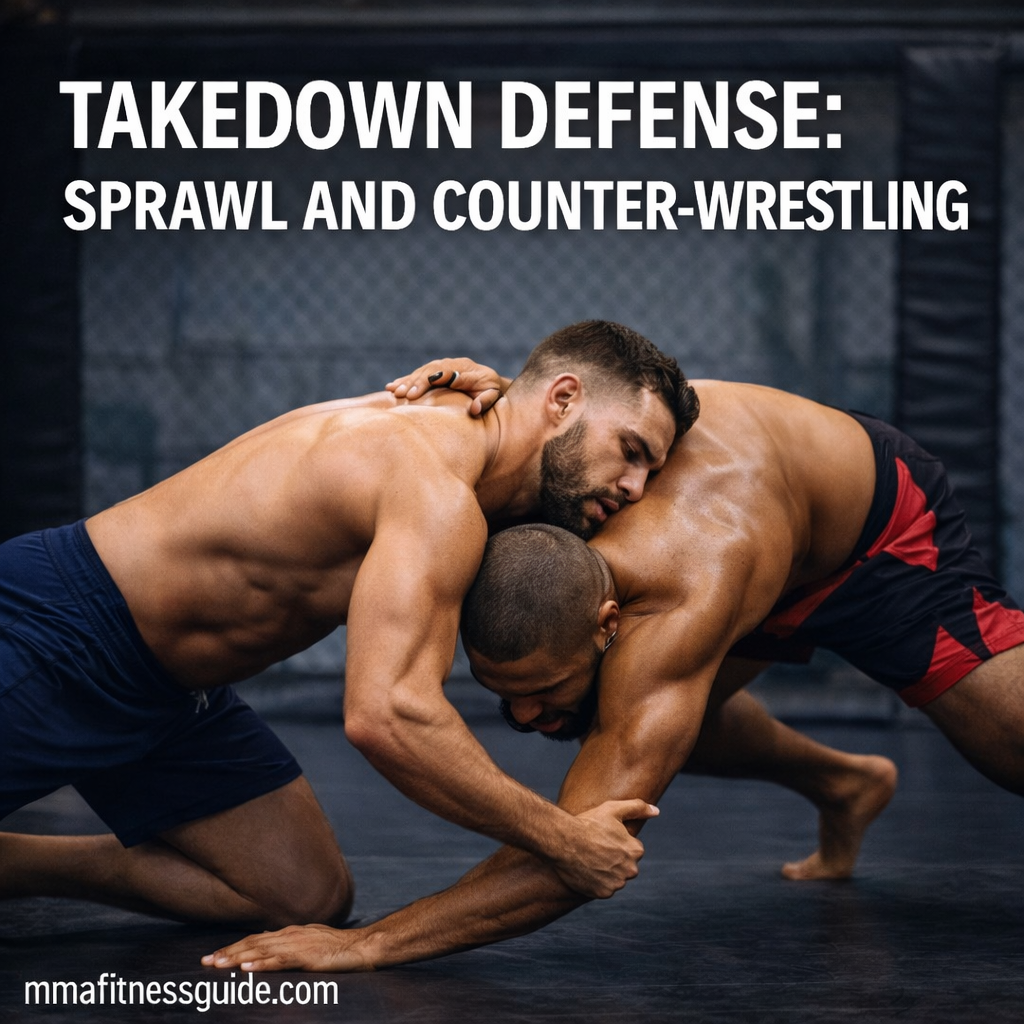
Takedown Defense: Sprawl and Counter-Wrestling

MMA fighter using a sprawl and upper-body control to defend a wrestling takedown attempt
Sprawling, head control, underhooks, whizzers, and positional awareness help MMA fighters defend takedowns and transition into counter-wrestling.

A fighter changes levels underneath a jab and drives toward the hips. The defender has only a brief window to react: move the legs out of reach, get the hips heavy, control the attacker’s head or upper body, and prevent the shot from turning into a finished takedown.

That sequence is the foundation of takedown defense.

In MMA, however, stopping the initial shot is only part of the exchange. The attacker may switch from a double leg to a single, drive toward the cage, climb into a body lock, or continue wrestling through several positions. The defender needs answers for those transitions as well.

The sprawl provides one of those answers against shots at the legs, while counter-wrestling covers the positions that follow—using underhooks, head control, whizzers, frames, front headlocks, angles, and cage movement to regain position or reverse the exchange.

Continue reading “Takedown Defense: Sprawl and Counter-Wrestling”

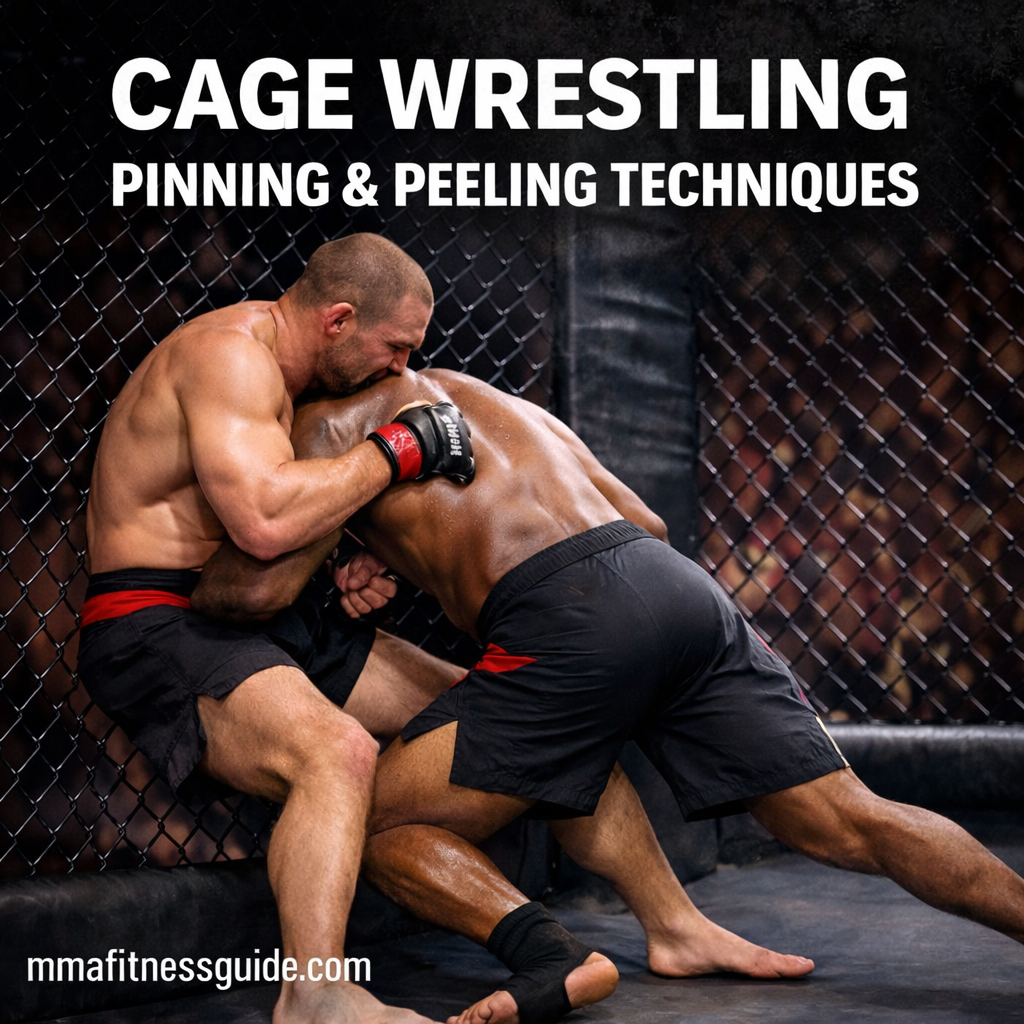
Cage Wrestling: Pinning and Peeling Techniques

MMA fighter using a body lock and head positioning to pin an opponent against the cage during a wrestling exchange.
Pinning pressure, underhook control, and frame-clearing techniques help MMA fighters maintain cage control and create takedown opportunities.

An opponent’s back hits the fence, but they immediately dig for an underhook, frame against your shoulder, and turn their hips toward open space. Simply driving harder won’t necessarily keep them there. You need to control their position, clear the frames preventing your advance, and adjust your pressure before they escape.

That’s where pinning and peeling come together in cage wrestling. Pinning limits an opponent’s movement through head position, underhooks, foot placement, and body pressure. Peeling removes the grips and frames they use to create space, opening opportunities for body locks, trips, single-leg takedowns, and short strikes.

The challenge is connecting those movements without wasting energy. Rather than holding an opponent against the fence through strength alone, effective cage wrestling uses small positional adjustments to turn defensive reactions into openings for the next attack.

Continue reading “Cage Wrestling: Pinning and Peeling Techniques”

Setting Up High Kicks Safely

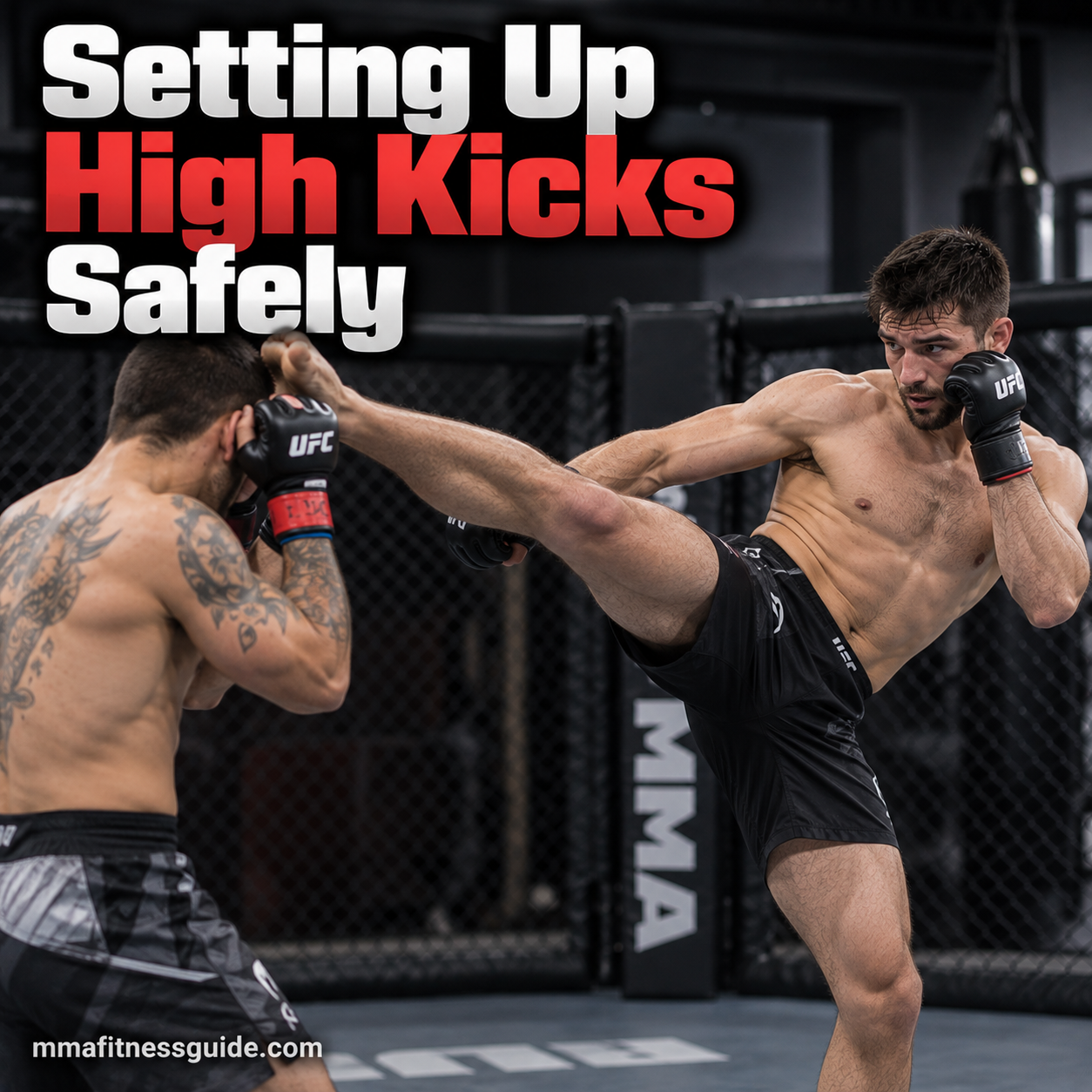
MMA fighter throwing a high kick toward an opponent’s guarded head during training.
Punches, feints, and angle changes can disguise a high kick while giving the fighter a better position to recover safely.

The moment your kicking foot leaves the floor, your opponent has opportunities they did not have a second earlier. Your weight is supported by one leg, your stance is temporarily compromised, and a poorly disguised kick can give them time to counter with punches, catch the leg, or change levels for a takedown.

That is why a high kick usually becomes safer when the work begins before the leg ever rises. A jab can occupy the guard, a body attack can pull an elbow downward, and a small angle change can move the kick around the opponent’s defense. Even showing low kicks earlier in the round can influence how they react when the same hip movement appears again.

The goal is to make the high kick the final action in a sequence rather than an isolated attack. Good positioning, believable threats, and a quick recovery give the kick a cleaner path while reducing the time available for the opponent to respond.

Continue reading “Setting Up High Kicks Safely”