Tae Kwon Do Kicks Adapted for the Cage

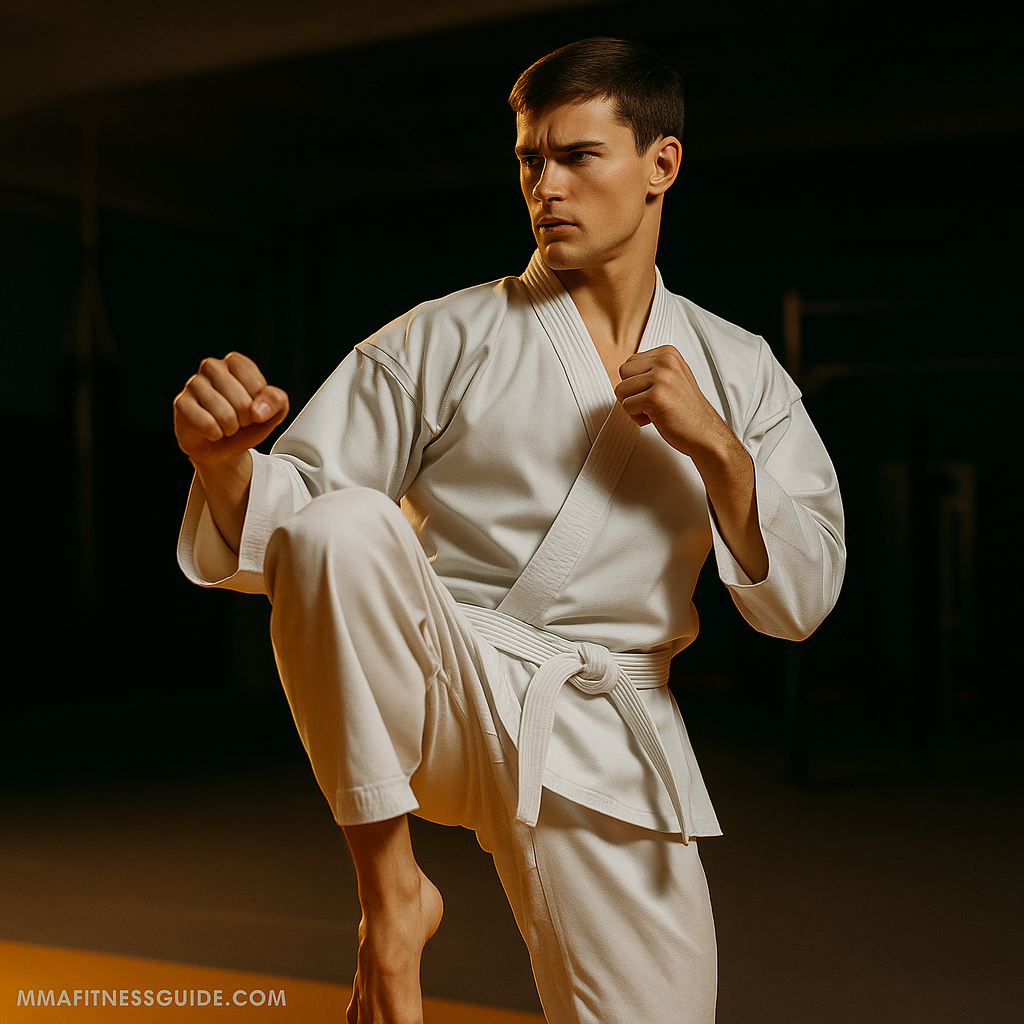
Male martial artist in white training uniform holding a balanced stance in a gym under warm lighting.
Male martial artist posing in a balanced stance symbolizing precision, control, and adaptability in modern MMA.

From Dojang to Octagon

Tae Kwon Do is known for its speed, precision, and spectacular kicking techniques — but can those flashy moves actually work in MMA?

The answer is yes — when adapted for real fight conditions.
Modern mixed martial artists like Anthony Pettis, Edson Barboza, and Yair Rodríguez have shown that Tae Kwon Do’s explosive kicks can be just as effective in the cage as they are in competition.

Let’s break down which techniques translate best, how to modify them for MMA, and what makes Tae Kwon Do a hidden weapon for creative strikers.

Continue reading “Tae Kwon Do Kicks Adapted for the Cage”
Karate Techniques That Translate to MMA

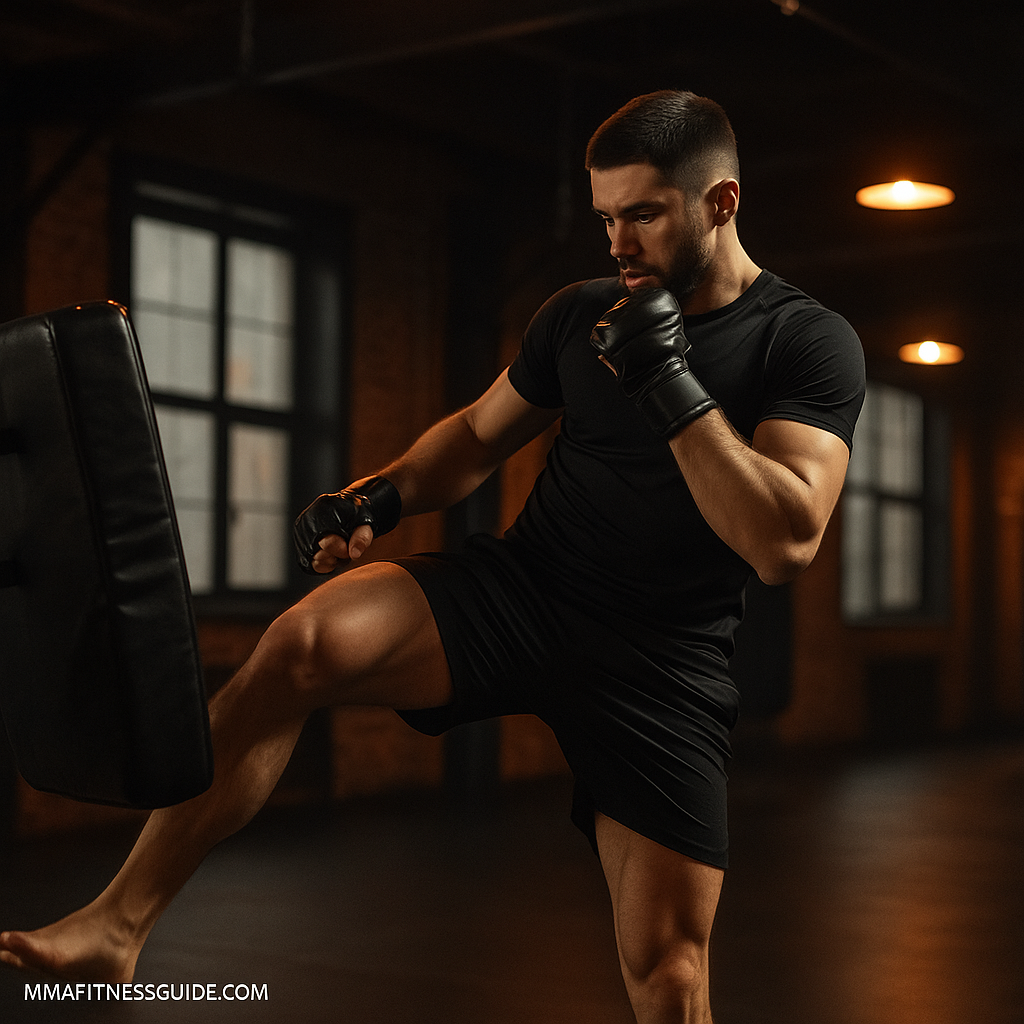
Male MMA athlete practicing balance and agility drills with light kicks on pads in gym under warm lighting.
Male MMA athlete training balance and agility through controlled kickwork, reflecting precision and control in martial arts.

The Return of Traditional Techniques

When MMA first exploded in the 1990s, many believed traditional martial arts like Karate had no place in the cage.


But time — and elite fighters like Lyoto Machida, Stephen “Wonderboy” Thompson, and Georges St-Pierre — proved everyone wrong.

Karate’s emphasis on timing, distance control, and precision has made it a secret weapon in modern MMA.
It’s not about flashy kata or point fighting — it’s about translating centuries of striking wisdom into cage efficiency.

Continue reading “Karate Techniques That Translate to MMA”

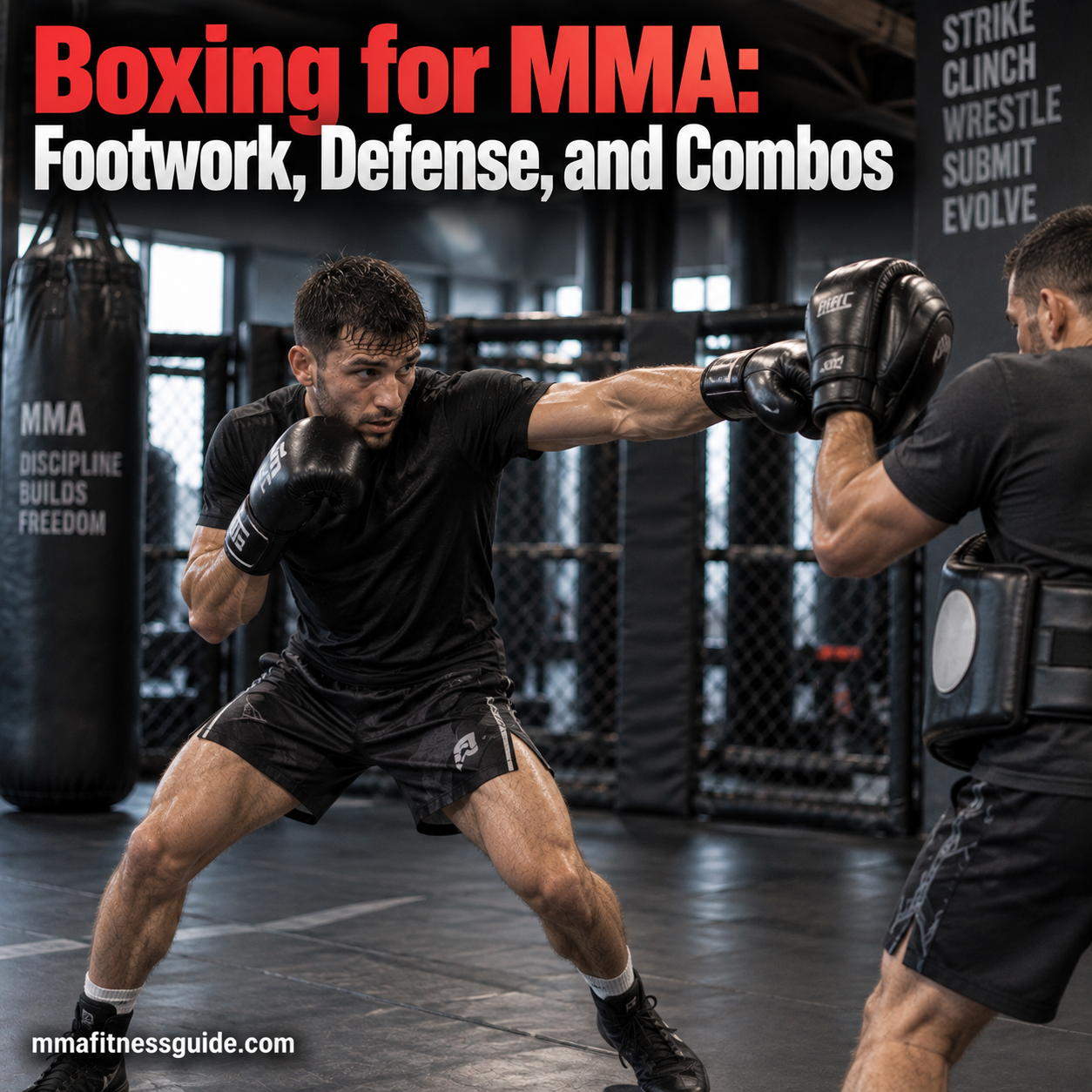
Boxing for MMA: Footwork, Defense, and Combos

MMA fighter practicing boxing footwork and punch combinations with a coach holding focus mitts in an MMA gym.
MMA boxing combines balanced footwork and punch combinations with positioning that keeps fighters ready for kicks, clinches, and takedowns.

A clean jab can interrupt an opponent’s entry. A quick pivot can move you away from the cage. A two-punch combination can bring an opponent’s guard high just before a low kick or level change.

Those are the kinds of situations where boxing carries directly into MMA.

The difference is that MMA fighters cannot box as though punches are the only threat. Every stance adjustment, defensive movement, and combination has to account for kicks, knees, clinches, and takedowns. The goal is to use boxing mechanics without putting yourself in positions that expose you to the rest of an opponent’s arsenal.

Continue reading “Boxing for MMA: Footwork, Defense, and Combos”

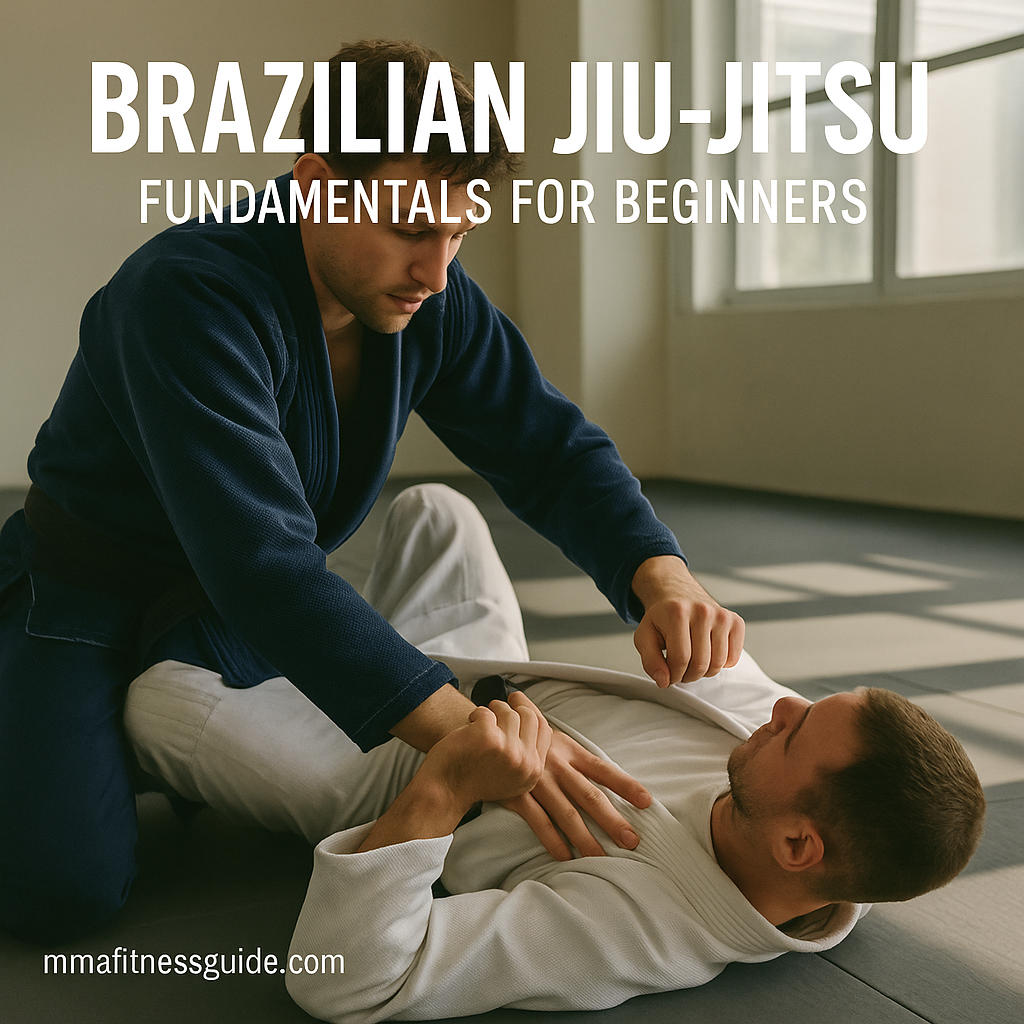
Brazilian Jiu-Jitsu Fundamentals for Beginners

Two beginners practicing Brazilian Jiu-Jitsu in a sunlit dojo, one in a blue gi and one in a white gi.
Two beginners practicing Brazilian Jiu-Jitsu fundamentals in a bright dojo, focusing on technique and control.

The Gentle Art: Where Technique Beats Strength

Brazilian Jiu-Jitsu (BJJ) is often called “the gentle art,” but don’t let the name fool you — it’s one of the most effective and technical martial arts in the world.
Rooted in leverage, control, and precision, BJJ teaches smaller or less powerful practitioners to overcome larger opponents using skill and strategy rather than brute force.

Whether you’re training for MMA, self-defense, or pure fitness, mastering the fundamentals of BJJ gives you a foundation for life — balance, patience, and awareness.

Continue reading “Brazilian Jiu-Jitsu Fundamentals for Beginners”

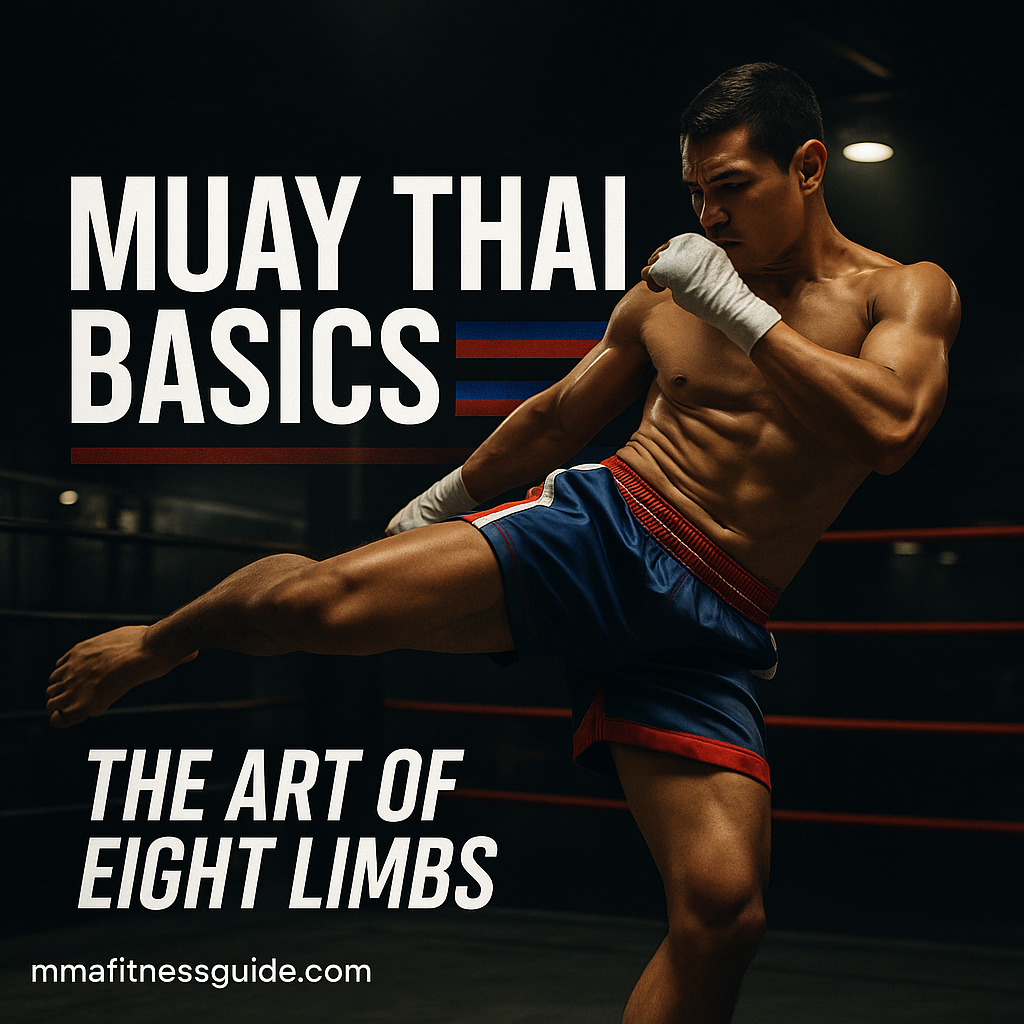
Muay Thai Basics: The Art of Eight Limbs

Muay Thai fighter performing a powerful roundhouse kick in a dimly lit gym, representing the art of eight limbs.
A Muay Thai fighter demonstrates the art of eight limbs — mastering punches, kicks, elbows, and knees for total-body power.

A Muay Thai combination can begin with punches at long range, transition into a round kick, and finish with knees or elbows after the distance closes. That ability to strike with the fists, elbows, knees, and shins gives the Thai martial art its familiar nickname: the “Art of Eight Limbs.”

For MMA athletes, Muay Thai provides techniques for several striking ranges while developing the footwork, balance, hip rotation, posture, and conditioning needed to repeatedly deliver those techniques.

Training doesn’t have to begin with hard sparring. Beginners typically spend considerable time learning stance, movement, basic punches, kicks, knees, defensive actions, and controlled combinations before adding greater speed or resistance.

Continue reading “Muay Thai Basics: The Art of Eight Limbs”