
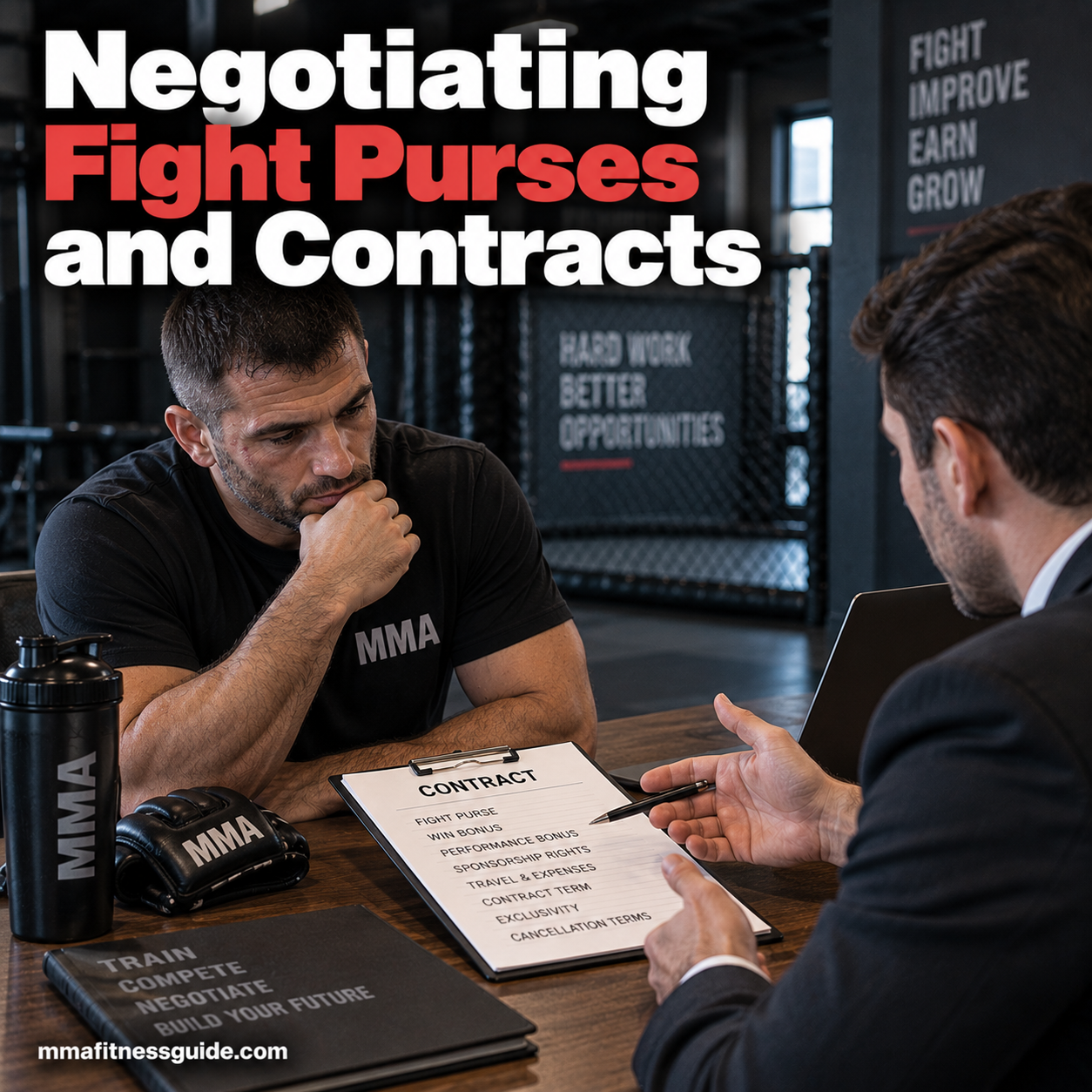
A fighter can spend months preparing for a bout and only a few minutes discussing the agreement that determines how much they’re paid, who covers travel, what happens if the fight is canceled, and whether they’re free to compete elsewhere afterward.
Those details can affect far more than the paycheck from one night.
Before accepting a bout, fighters should know the guaranteed compensation, bonus conditions, payment timing, expenses, promotional obligations, exclusivity provisions, cancellation terms, and any restrictions that continue after the event.
You don’t have to turn every offer into a confrontation. The objective is to understand what you’re agreeing to, identify terms worth negotiating, and avoid discovering important restrictions after you’ve already signed.
Understanding Fight Purses in MMA
A fight purse generally refers to compensation a fighter receives for competing, although the exact structure varies between promotions and agreements.
Compensation may include:
- Guaranteed or “show” money
- Win bonuses
- Performance or discretionary bonuses
- Sponsorship-related compensation
- Appearance fees
- Other negotiated incentives
Consider a hypothetical offer of $2,000 to show and another $2,000 to win. The fighter should evaluate the agreement knowing that only the show portion may be guaranteed for competing, subject to the actual contract terms.
Ask exactly how compensation works before signing.
Also determine when payment is due and whether expenses such as transportation, accommodation, medical testing, licensing, or corner travel are included or paid separately.
Common Types of MMA Contracts
The length and structure of an agreement can affect a fighter’s options long after the next bout.
Single-Fight Agreements
A single-fight agreement generally covers one scheduled bout.
Potential advantages include:
- Less long-term commitment
- Greater ability to consider future opportunities
- A chance to establish a relationship with a promotion
The tradeoff is that the promotion may have little obligation to offer additional fights after the bout.
Read the entire agreement carefully because a document described informally as a “one-fight deal” can still contain provisions affecting future opportunities or rights.
Multi-Fight Contracts
Promotions may offer fighters agreements covering several bouts or a defined contract period.
Terms can address:
- Compensation for each bout
- Purse increases
- Exclusivity
- Number of fights
- Contract duration
- Promotional appearances
- Renewal or extension provisions
- Termination rights
A purse increase can look attractive while other provisions restrict the fighter’s options.
Evaluate the agreement as a whole rather than focusing exclusively on the amount listed for the next fight.
Why Fighters Sometimes Accept Weak Terms
A fighter offered an opportunity they’ve been chasing may feel pressure to accept immediately.
That pressure can come from:
- Fear that the promotion will choose another opponent
- Limited professional experience
- Financial pressure
- Desire to remain active
- Excitement about appearing on a particular card
- Concern about being labeled difficult
- Lack of alternative offers
Some fights may genuinely be worth accepting for less money because they provide valuable competition, exposure, or career progression.
The important distinction is making that decision deliberately rather than overlooking unfavorable terms because you’re afraid to ask questions.
Know Your Leverage Before Negotiating
Negotiating leverage comes from what the promotion believes you contribute to the event.
Depending on the situation, that could include:
- Recent wins
- Finishing ability
- Quality of previous opponents
- Ticket-selling history
- Local popularity
- Audience or social following
- Reliability
- Short-notice availability
- An entertaining fighting style
- Interest from competing promotions
Use evidence when possible.
Instead of saying, “I deserve more money,” a fighter might point to tickets sold at previous events, recent finishes, rankings, audience growth, or another legitimate offer.
Specific evidence creates a stronger negotiating position than a general claim about personal value.
What Can Be Negotiated Besides the Purse
The dollar amount isn’t necessarily the only term worth discussing.
Depending on the promotion and agreement, possible negotiation points can include:
- Travel arrangements
- Hotel accommodations
- Transportation
- Corner expenses
- Fight frequency
- Sponsorship rights
- Promotional obligations
- Ticket-sale arrangements
- Medical expenses
- Image and likeness rights
- Exclusivity
- Contract duration
- Renewal provisions
- Release provisions
- Cancellation terms
Not every promotion will negotiate every provision.
Decide which terms matter most to you before the conversation begins. A fighter who knows their priorities can concentrate on two or three meaningful changes rather than objecting to everything in the agreement.
Get Important Terms in Writing
Suppose a promoter says, “We’ll increase your purse after this fight.”
What does that mean?
How much will it increase? Does the increase happen regardless of the result? When does it take effect?
If a promise affects your decision to sign, ask for the agreement to reflect it clearly.
Review details such as:
- Guaranteed compensation
- Bonus requirements
- Payment timing
- Number of contracted fights
- Contract duration
- Exclusivity
- Cancellation provisions
- Injury provisions
- Renewal and extension language
- Promotional obligations
- Sponsorship restrictions
- Image and likeness provisions
- Termination or release provisions
Don’t assume a conversation, text message, or handshake modifies the written contract in the way you expect. Whether outside communications have legal effect can depend on the agreement and applicable law.
Using Managers and Agents Effectively
An experienced representative can handle conversations that fighters may encounter only a handful of times during their careers.
Depending on the relationship, a manager or agent may help with:
- Negotiations
- Bout opportunities
- Promotion relationships
- Contract discussions
- Career planning
- Sponsorship opportunities
Understand the agreement with your representative as carefully as the agreement with a promotion.
Ask about:
- Commission or fees
- Contract duration
- Exclusivity
- Termination rights
- Which income is subject to commission
- What services are actually provided
Representation doesn’t eliminate the fighter’s responsibility to understand what they’re signing.
Contract Terms That Deserve Extra Attention
Certain provisions warrant careful review because they can affect future earning opportunities or career flexibility.
Pay close attention to language involving:
- Automatic extensions
- Exclusivity
- Matching rights
- Renewal options
- Image and likeness rights
- Merchandising rights
- Sponsorship restrictions
- Cancellation
- Injury
- Opponent changes
- Fight refusal
- Termination
- Payment conditions
A concerning clause isn’t automatically a reason to reject an agreement.
First determine what the language actually means, how it applies to you, and whether it can be changed.
If you don’t understand the legal consequences, that is a good reason to have a qualified attorney review it.
Choose Your Negotiating Moment Carefully
Your bargaining position can change quickly during a fighting career.
A fighter coming off an impressive performance may have more negotiating leverage than they did before the bout. Interest from another promotion can also change the conversation.
Opportunities to revisit terms may arise:
- Before signing a new agreement
- During contract renewal
- After notable wins
- After building a stronger audience
- When another legitimate promotion expresses interest
- When the promotion urgently needs an opponent
Contractual restrictions may limit when or how you can negotiate with other organizations, so understand your existing obligations first.
Keep Negotiations Professional
Asking questions about a contract doesn’t require hostility.
Prepare your priorities before speaking with the promotion or representative.
Know:
- What you’re being offered
- Which terms concern you
- What you’d like changed
- Which points are most important
- What you’re willing to accept
Keep communication clear and professional.
If the promotion can’t increase the purse, you might ask whether another meaningful term can be improved instead.
Negotiation often involves deciding where flexibility exists rather than simply demanding a higher number.
Think Beyond the Next Paycheck
The highest-paying available fight isn’t automatically the best career decision.
Consider how an agreement could affect:
- Competition level
- Fight activity
- Career progression
- Future negotiating leverage
- Health and recovery
- Exposure
- Sponsorship opportunities
- Ability to compete for other promotions
A lower-paying opportunity could occasionally provide a valuable step forward. A larger immediate purse could come with restrictions that reduce future flexibility.
There isn’t one formula that applies to every fighter.
Compare the short-term compensation with the longer-term consequences of the agreement.
When to Seek Legal Advice
Contracts can create obligations that continue for months or years, and legal effects vary by jurisdiction.
Professional legal review becomes particularly worth considering when an agreement involves:
- Multiple fights
- Significant exclusivity
- Long contract periods
- Automatic extensions
- Image or likeness rights
- Sponsorship restrictions
- International competition
- Management agreements
- Unclear termination provisions
- Substantial compensation
A lawyer experienced with sports, entertainment, or contract law can explain what particular language means and identify obligations a fighter might otherwise overlook.
That is different from advice from a teammate, coach, promoter, or online article.
Final Thoughts
Before signing a fight agreement, slow the process down enough to answer a few basic questions.
What am I guaranteed to earn? What could I earn additionally? What expenses am I responsible for? How long am I committed? What rights am I granting? What happens if the fight falls through? And how do I get out of the agreement?
Those answers give you a much clearer picture of the actual deal.
As your career develops, keep records of your purses, ticket sales, audience growth, performances, offers, and other evidence of commercial value. That information can become useful when the next negotiation arrives.
The hours spent preparing for a fight will always outweigh the hours spent negotiating it—but the terms you sign can continue affecting your career long after fight night ends.