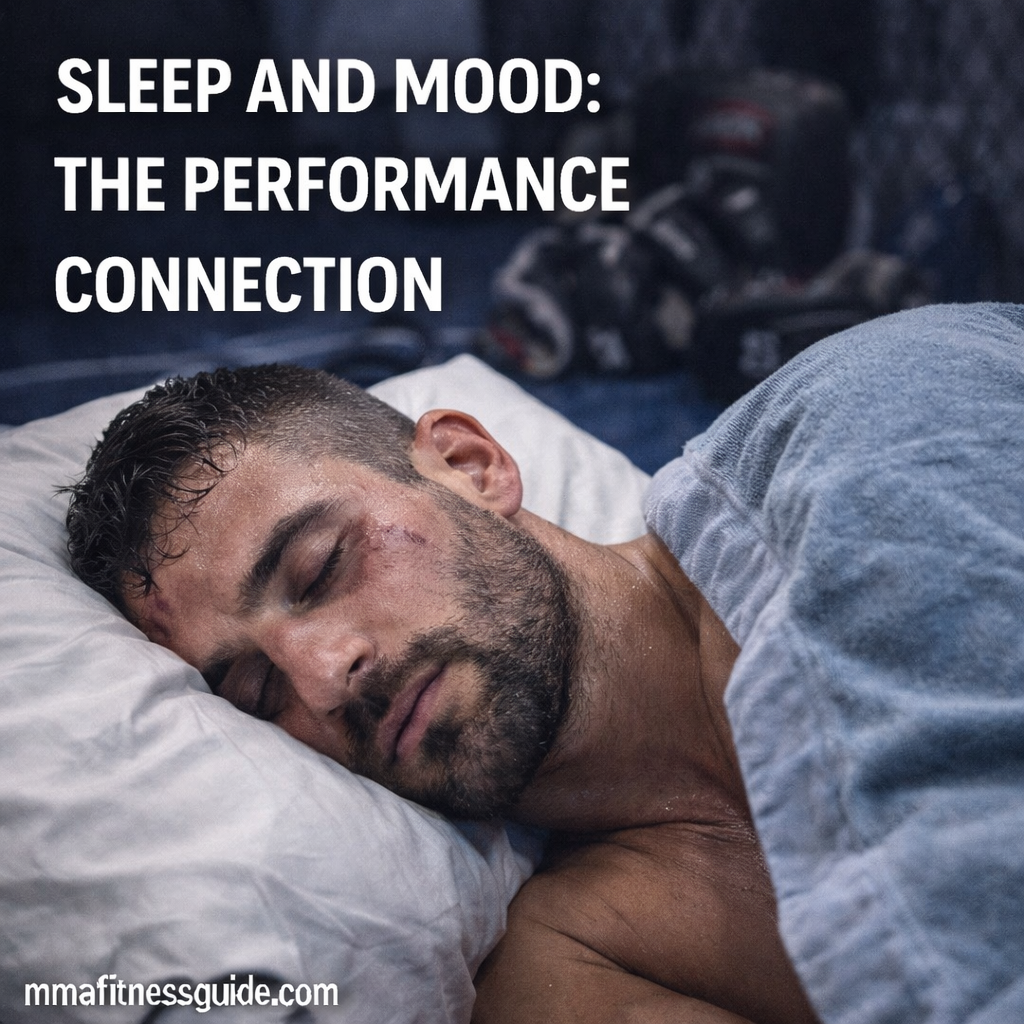
In MMA, performance is often measured in strength, speed, and skill—but mood plays an equally powerful role. Fighters who feel irritable, unmotivated, anxious, or mentally foggy rarely perform at their best. One of the biggest drivers of mood—often overlooked—is sleep.
Sleep is not just physical recovery. It directly shapes emotional regulation, motivation, stress tolerance, and decision-making. This article explores how sleep affects mood, why mood impacts MMA performance, and how fighters can improve both by prioritizing sleep quality.
Why Mood Matters in MMA Performance
Mood influences how fighters think, react, and persist under pressure.
A stable, positive mood supports:
- Focus and concentration
- Emotional control under stress
- Motivation to train consistently
- Confidence during sparring and competition
When mood drops, performance usually follows.
The Link Between Sleep and Emotional Regulation
Sleep plays a central role in how the brain processes emotions.
During quality sleep:
- Emotional memories are processed
- Stress hormones are regulated
- The nervous system resets
Poor sleep disrupts these processes, making emotional responses stronger and harder to control.
How Sleep Deprivation Affects Mood
Even short-term sleep loss can have noticeable effects.
Common mood changes from poor sleep include:
- Increased irritability
- Heightened anxiety
- Reduced motivation
- Lower frustration tolerance
- Negative thinking patterns
These changes directly affect training quality and consistency.
Sleep and the Brain’s Emotional Centers
Sleep deprivation alters brain function in key areas.
The Amygdala and Emotional Reactivity
The amygdala regulates emotional responses, especially fear and stress.
With insufficient sleep:
- The amygdala becomes overactive
- Emotional reactions intensify
- Stress feels harder to manage
This leads to overreactions during training and competition.
Prefrontal Cortex and Decision-Making
The prefrontal cortex helps regulate impulses and emotions.
Poor sleep:
- Weakens emotional control
- Reduces rational decision-making
- Increases impulsivity
In MMA, this can mean poor choices under pressure.
Mood, Motivation, and Training Consistency
Motivation is closely tied to emotional state.
Sleep’s Role in Motivation
Quality sleep supports:
- Dopamine regulation
- Reward sensitivity
- Willingness to exert effort
When sleep suffers, motivation often feels forced instead of natural.
The Motivation Drop Cycle
Poor sleep can create a cycle:
- Bad sleep → low mood
- Low mood → reduced motivation
- Reduced motivation → inconsistent training
- Inconsistent training → frustration
Breaking the cycle often starts with sleep.
Sleep and Stress Tolerance
MMA training is stressful by nature.
Sleep helps fighters:
- Cope with physical discomfort
- Handle mental pressure
- Stay composed during adversity
Without sleep, stress feels heavier and more overwhelming.
How Poor Mood Affects MMA Performance
Mood directly influences how fighters perform in real situations.
Training Sessions
Poor mood can cause:
- Lower effort
- Reduced focus
- Increased conflict with partners
- Shorter attention span
This lowers training quality even if physical ability is unchanged.
Sparring and Competition
In high-pressure moments, mood affects:
- Confidence
- Emotional control
- Adaptability
Sleep-deprived fighters are more likely to panic, hesitate, or make emotional decisions.
Sleep, Mood, and Injury Risk
Mood isn’t just mental—it affects physical safety.
Emotional Fatigue and Focus
Negative mood states can:
- Reduce situational awareness
- Increase distraction
- Delay reactions
These factors raise injury risk during training.
Pain Perception
Poor sleep increases pain sensitivity.
This can lead to:
- Lower tolerance for discomfort
- Reduced resilience
- Higher perceived soreness
Mood and pain are closely connected.
Chronic Sleep Deprivation and Mental Health
Ongoing poor sleep has deeper consequences.
Long-term sleep issues can contribute to:
- Anxiety
- Depressive symptoms
- Burnout
- Emotional instability
Mental health and sleep influence each other continuously.
Why Fighters Often Undervalue Sleep
Despite its importance, sleep is often sacrificed.
Common reasons include:
- Late-night screen use
- Early training sessions
- Work or family obligations
- Overtraining
Many fighters normalize poor sleep without realizing its cost.
How Much Sleep Do Fighters Need?
Most athletes perform best with:
- 7–9 hours of quality sleep per night
Training volume, stress, and weight cuts may increase this need.
Consistency matters more than occasional long nights.
Improving Sleep to Stabilize Mood
Small changes can create meaningful improvements.
Create a Consistent Sleep Schedule
Going to bed and waking up at the same time:
- Regulates circadian rhythm
- Improves sleep quality
- Stabilizes mood
Consistency trains the brain to expect rest.
Reduce Evening Stimulation
Before bed:
- Limit screen time
- Avoid intense training late at night
- Reduce caffeine
Lower stimulation supports emotional calm.
Create a Wind-Down Routine
Simple routines signal the brain to relax.
Examples include:
- Light stretching
- Breathing exercises
- Reading
- Journaling
Rituals reduce mental noise.
Sleep Quality vs Sleep Quantity
Time in bed isn’t everything.
Quality sleep includes:
- Falling asleep efficiently
- Minimal nighttime waking
- Deep, restorative stages
Improving sleep environment often improves mood.
Naps and Mood Regulation
Short naps can help—but timing matters.
Effective naps:
- 20–30 minutes
- Earlier in the day
- Used to supplement—not replace—night sleep
Overuse can disrupt nighttime rest.
Training Smarter to Protect Sleep
Training decisions affect sleep quality.
Helpful strategies:
- Avoid excessive late-night intensity
- Balance volume and recovery
- Schedule hard sessions earlier when possible
Recovery supports emotional balance.
Using Sleep as a Performance Tool
Sleep isn’t passive—it’s strategic.
Well-rested fighters:
- Learn faster
- React quicker
- Handle pressure better
- Maintain emotional control
Sleep is a competitive advantage.
Common Sleep Mistakes Fighters Make
Avoid these pitfalls:
- Sacrificing sleep for extra training
- Ignoring stress and overreaching
- Relying on caffeine to compensate
- Inconsistent schedules
More isn’t always better.
Final Thoughts
Sleep and mood are deeply connected, and both directly influence MMA performance. When sleep suffers, mood becomes unstable—leading to poor focus, reduced motivation, higher stress, and increased injury risk. When sleep improves, emotional control, confidence, and consistency follow.
For fighters, sleep is not optional recovery—it’s a mental performance foundation. Prioritizing sleep is one of the most effective ways to stabilize mood, train consistently, and perform at your highest level.