Your sparring partner catches you in an armbar. You tap, but they hold the submission a moment longer before releasing it. During the next round, you hesitate to engage because you’re no longer confident they’ll respect your limits. What should have been a productive training session has become a situation where you’re more concerned about protecting yourself than improving your technique.
Trust in an MMA gym develops through everyday interactions: respecting tap-outs, agreeing on sparring intensity, communicating injuries, and knowing coaches will address unsafe behavior. When teammates consistently honor these expectations, fighters can practice unfamiliar techniques, ask questions, and learn from mistakes without unnecessary intimidation. Building that environment requires accountability from coaches and athletes alike, especially when competitive ambition begins to interfere with partner safety.
Why Team Dynamics Matter in Combat Sports
Combat sports are physically intense and emotionally demanding. Athletes rely on teammates not only to push them, but also to protect them.
Healthy team dynamics help:
- Reduce unnecessary injuries
- Improve learning and skill development
- Increase consistency in training
- Support mental resilience
- Create long-term gym loyalty
A strong team environment allows fighters to train hard without constantly feeling on edge.
Trust as the Foundation of a Good Gym Culture
Trust is the backbone of effective training.
In a trusted gym environment, athletes believe:
- Training partners won’t intentionally hurt them
- Coaches have their best interests in mind
- Communication is honest and respectful
- Boundaries will be respected
Without trust, athletes train defensively—not just physically, but mentally.
How Trust Affects Performance
When trust is high, performance improves naturally.
Athletes who trust their environment:
- Relax more during sparring
- Take technical risks that lead to growth
- Recover faster from mistakes
- Maintain confidence under pressure
- Stay consistent over time
Mental safety allows physical performance to flourish.
The Role of Coaches in Building Trust
Coaches set the tone for the entire gym.
Effective trust-building behaviors include:
- Enforcing controlled sparring rules
- Addressing unsafe behavior immediately
- Communicating expectations clearly
- Treating athletes with consistency and fairness
- Encouraging questions and feedback
Athletes often mirror the behavior that coaches tolerate.
Training Partner Responsibility
Trust isn’t just a coaching issue—it’s a team responsibility.
Good training partners:
- Match intensity appropriately
- Respect tap-outs and verbal cues
- Avoid ego-driven exchanges
- Adjust power based on experience level
- Communicate injuries and limitations
A gym is only as safe as its least considerate member.
Ego and Its Impact on Team Dynamics
Unchecked ego is one of the biggest threats to gym culture.
Ego-driven behaviors include:
- Treating sparring like competition
- Refusing to dial back intensity
- Seeking dominance over learning
- Ignoring partner safety
These behaviors erode trust quickly and push teammates away.
Communication Builds Psychological Safety
Open communication prevents misunderstandings and resentment.
Healthy gyms encourage:
- Pre-round intensity discussions
- Honest feedback without ridicule
- Speaking up about injuries
- Addressing issues early instead of letting them fester
Psychological safety supports both mental health and physical safety.
Inclusion and Respect in Team Environments
Diverse gyms thrive when respect is consistent.
Strong team dynamics require:
- Respect across skill levels
- Equal treatment regardless of gender or background
- Zero tolerance for harassment or intimidation
- Support for beginners and returning athletes
Feeling welcomed and respected directly affects mental well-being.
How Trust Supports Injury Prevention and Recovery
Trust plays a major role during injury phases.
In supportive gyms:
- Injured athletes aren’t pressured to rush back
- Modifications are encouraged
- Training partners adjust accordingly
- Athletes feel safe communicating limitations
This reduces reinjury risk and speeds long-term recovery.
Conflict Resolution in the Gym
Conflict is inevitable—but how it’s handled matters.
Healthy gyms:
- Address issues directly and calmly
- Avoid public shaming
- Focus on solutions, not blame
- Reinforce shared goals
Unresolved conflict damages trust and creates lasting tension.
Signs of Unhealthy Team Dynamics
Recognizing red flags early can prevent bigger problems.
Warning signs include:
- Frequent injuries during sparring
- High member turnover
- Cliques and exclusion
- Fear of speaking up
- Coaches ignoring safety concerns
These environments often harm both performance and mental health.
How Athletes Can Contribute to Positive Dynamics
Every athlete plays a role in shaping gym culture.
Simple actions that build trust:
- Communicating clearly before rounds
- Checking in with partners afterward
- Respecting gym rules
- Supporting teammates’ progress
- Leaving ego at the door
Consistency creates culture.
Long-Term Benefits of a Trust-Based Gym
Gyms built on trust experience:
- Stronger team loyalty
- Better athlete development
- Fewer injuries
- Healthier mental states
- Sustainable success
Fighters don’t just train harder—they train smarter.
Final Thoughts
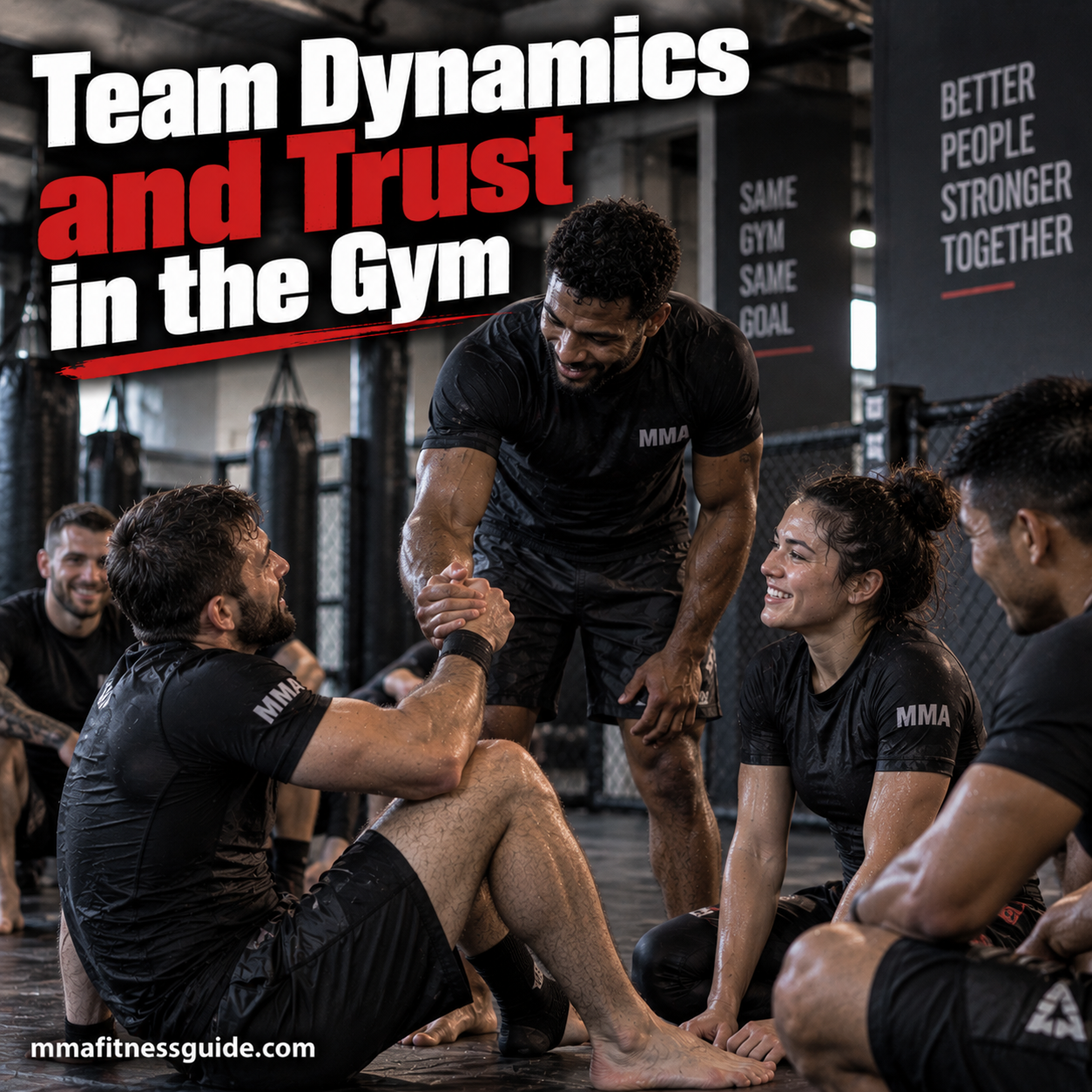
Team dynamics and trust in the gym are essential for both performance and mental health in combat sports. A supportive, respectful environment allows athletes to push limits safely, recover confidently, and grow without fear. Trust isn’t built overnight—it’s created daily through communication, accountability, and mutual respect.
Strong teams build strong fighters, both physically and mentally.