An MMA athlete navigates post-fight hunger, highlighting the importance of avoiding overeating to support recovery.
After a fight, it’s common for MMA athletes to feel an intense urge to eat everything in sight. Whether the bout ended in victory or defeat, the combination of adrenaline crash, dehydration, caloric deficit, and emotional release can trigger overeating that leaves fighters feeling bloated, sluggish, and regretful.
Here’s why post-fight overeating happens, how it affects recovery and performance, and practical ways to refuel properly without overdoing it.
MMA athletes over 40 focus on smart training and recovery to maintain long-term fitness and performance.
Training MMA past 40 isn’t about proving toughness—it’s about staying capable, healthy, and consistent for the long run. While recovery slows and injuries take longer to heal, many athletes discover that smarter training actually improves performance and enjoyment. Longevity-focused training allows you to keep sharpening skills, staying fit, and enjoying MMA without burning out or breaking down.
This guide explains how to train for longevity past 40 by adjusting intensity, recovery, mindset, and conditioning—without giving up progress or purpose.
An MMA athlete pushes through fatigue, symbolizing staying committed to training even when life gets busy.
Life doesn’t slow down just because you train MMA. Work deadlines, family responsibilities, injuries, travel, and mental fatigue all compete for time and energy. Many athletes don’t quit MMA because they lose passion—they stop because life gets busy and training feels impossible to maintain.
Here’s how to keep training when life gets busy — realistic strategies to stay consistent and motivated without burning out or feeling guilty.
Legendary MMA fighters face off against new era athletes in a cinematic comparison of evolving fighting styles.
Watch an early MMA event and then a high-level fight today, and the differences become obvious within minutes. Early specialists could enter the cage relying heavily on Brazilian jiu-jitsu, wrestling, kickboxing, or another primary discipline. Today, even fighters known as specialists are expected to defend takedowns, escape submissions, strike at multiple ranges, work against the cage, and transition smoothly between phases.
That transformation didn’t happen because earlier fighters lacked talent. Each generation learned from the one before it. Techniques were tested, weaknesses exposed, training methods improved, and successful ideas were absorbed into the next generation of MMA.
Comparing legends with new-era fighters therefore reveals something more interesting than a hypothetical question about who would win. It shows how striking, grappling, conditioning, defense, strategy, and even the mentality of being a professional fighter have evolved as MMA has matured.
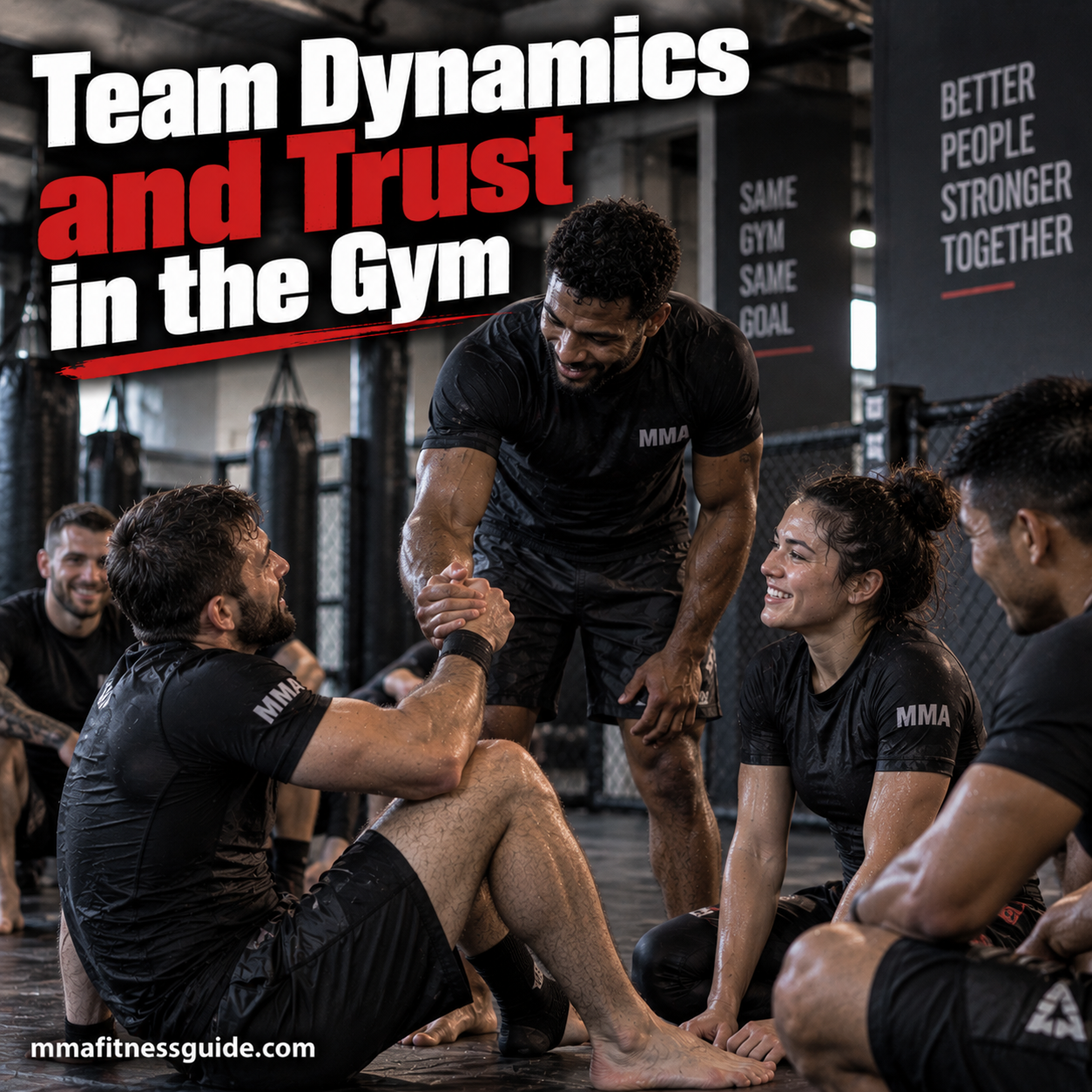
Trust develops through everyday interactions, from respecting training boundaries to supporting teammates after difficult sessions.
Your sparring partner catches you in an armbar. You tap, but they hold the submission a moment longer before releasing it. During the next round, you hesitate to engage because you’re no longer confident they’ll respect your limits. What should have been a productive training session has become a situation where you’re more concerned about protecting yourself than improving your technique.
Trust in an MMA gym develops through everyday interactions: respecting tap-outs, agreeing on sparring intensity, communicating injuries, and knowing coaches will address unsafe behavior. When teammates consistently honor these expectations, fighters can practice unfamiliar techniques, ask questions, and learn from mistakes without unnecessary intimidation. Building that environment requires accountability from coaches and athletes alike, especially when competitive ambition begins to interfere with partner safety.
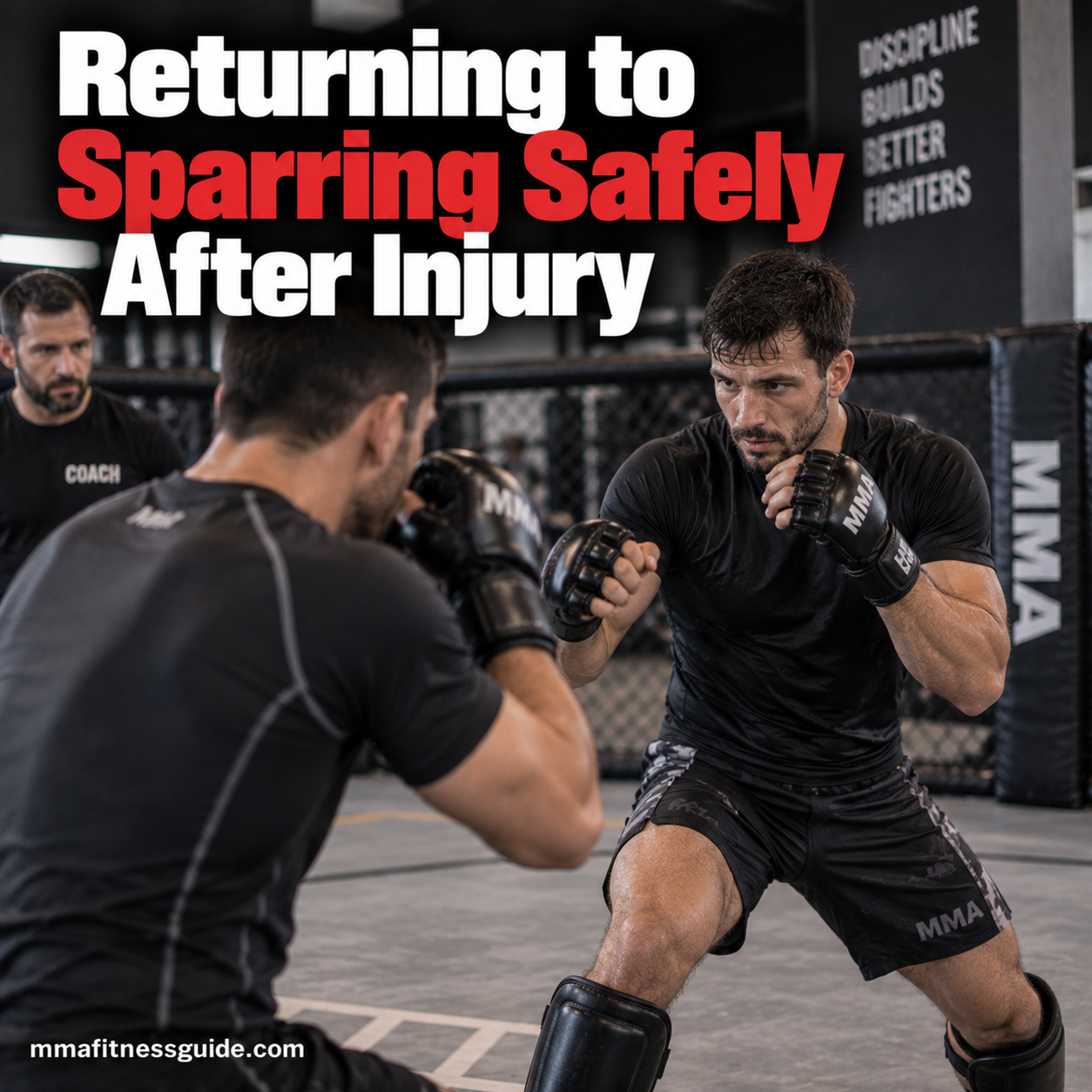
A gradual progression from drilling to controlled contact can help fighters rebuild the physical demands of live sparring after injury.
Hitting pads without pain doesn’t necessarily mean you’re ready for an opponent who changes direction, shoots unexpectedly, or fires back. Sparring adds reactions, fatigue, impact, awkward positions, and split-second decisions that controlled rehabilitation exercises cannot fully reproduce.
That gap is where a gradual return matters. Instead of using one hard round to “test” an injured knee, shoulder, wrist, or other body part, fighters can progressively add movement, resistance, contact, and unpredictability while monitoring how the injury responds.
The objective isn’t simply completing a sparring session. It’s being able to train, recover afterward, and return for the next session without symptoms escalating.
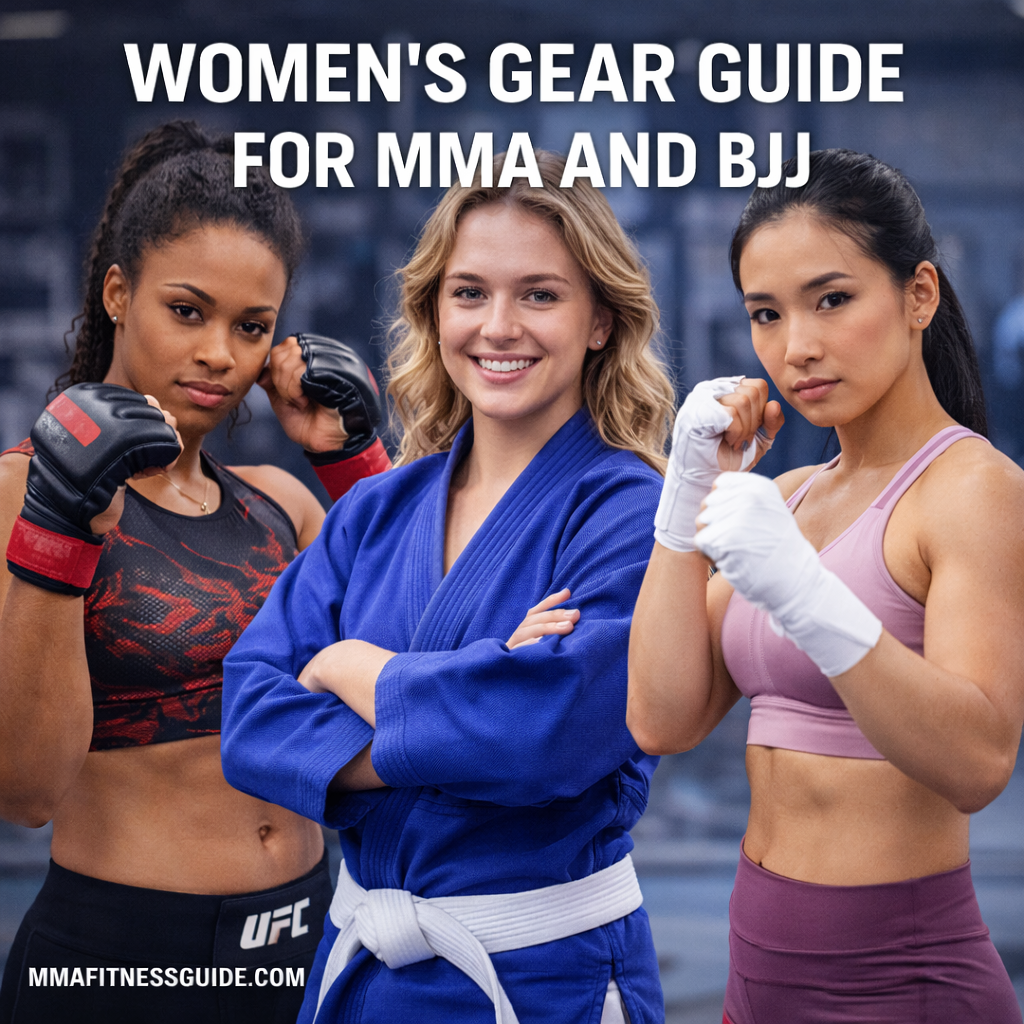
Diverse female athletes display essential MMA and BJJ training gear designed for comfort, performance, and protection.
Women’s participation in MMA and Brazilian Jiu-Jitsu has grown rapidly, and having the right gear makes a major difference in comfort, safety, and performance. Equipment designed specifically for women fits better, lasts longer, and allows athletes to focus on training instead of constant adjustments or discomfort.
This women’s gear guide for MMA and BJJ breaks down essential equipment, explains what to look for when choosing gear, and highlights practical considerations for training and competition.
Peek-a-Boo, Philly Shell, and high guard positions use different combinations of hand placement, head movement, shoulder positioning, and footwork.
A boxer with both gloves tight to the temples is solving a different defensive problem from a fighter standing sideways with the lead shoulder protecting the chin. Both positions can defend punches, but they create different openings for counters—and expose different targets.
These positions are commonly described as defensive shells. The high guard emphasizes coverage, the Peek-a-Boo combines a compact guard with active head movement, the Philly Shell uses shoulder positioning and deflections, and the long guard creates distance with frames and extended hand positioning.
The ruleset changes how each approach can be used. A defensive position developed for boxing may need significant adjustment in MMA, where kicks, knees, clinches, takedowns, smaller gloves, and cage pressure introduce threats that aren’t present in a boxing match.
Rather than treating one shell as the answer to every exchange, it helps to understand what each guard protects, where it creates openings, and how footwork and positioning complete the defense.
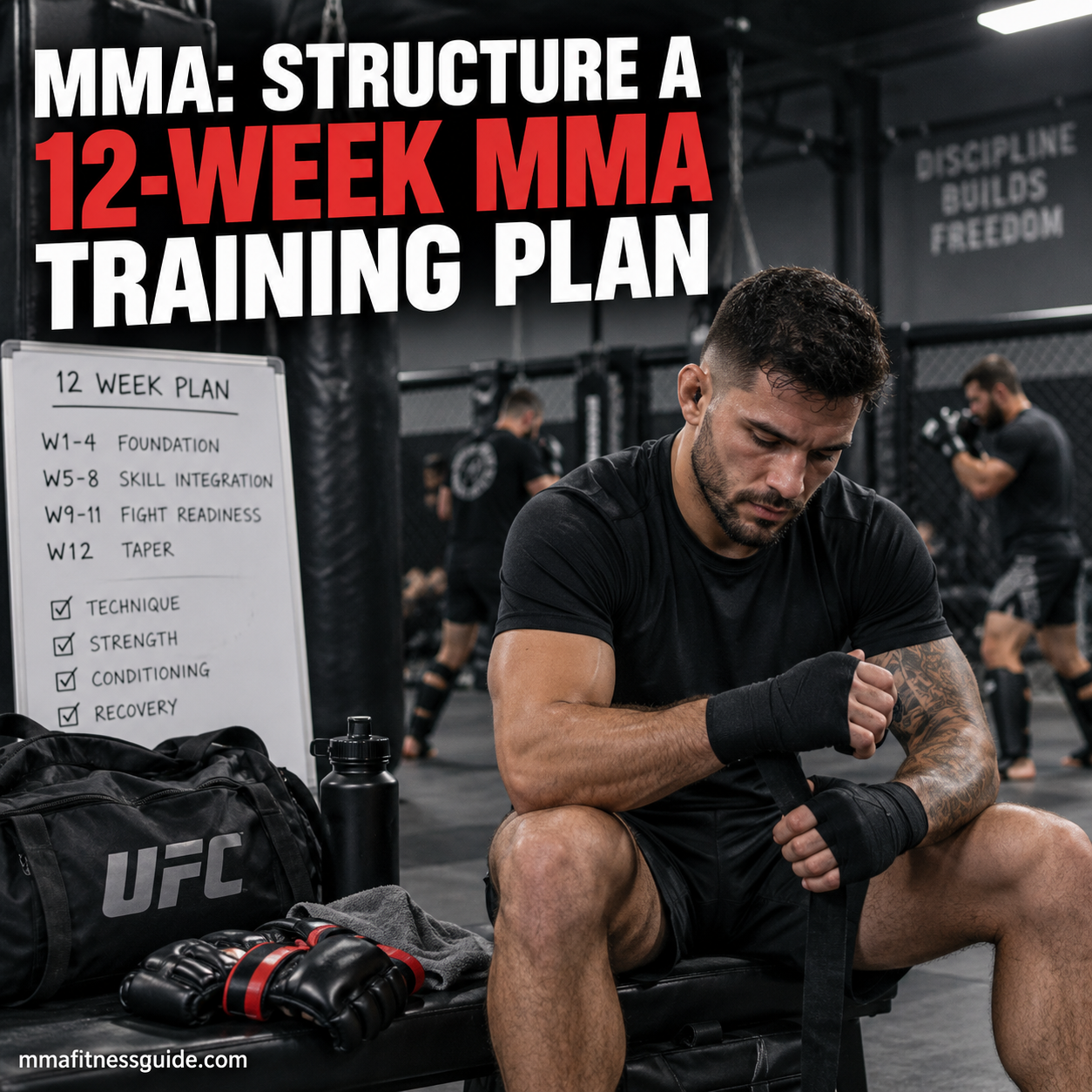
A structured 12-week MMA training plan progresses from foundation work to skill integration, fight-specific preparation, and tapering.
A 12-week MMA training plan gives you enough time to build conditioning, develop technical skills, increase fight-specific intensity, and taper before competition. Instead of pushing every training variable at once, the schedule progresses through phases so your workload becomes more specific as the weeks advance.
Whether you’re preparing for an amateur fight, improving your overall MMA game, or returning to consistent training, the goal is the same: organize striking, grappling, strength, conditioning, and recovery so they complement rather than compete with each other.
This guide breaks a 12-week MMA training cycle into practical phases and explains how training priorities should change along the way.
MMA gym members engage with coaching staff as part of a structured retention plan that supports long-term training commitment.
In the MMA business, attracting new members is important—but retaining existing ones is what keeps gyms profitable, stable, and growing long term. High turnover drains revenue, disrupts culture, and forces constant marketing just to stay afloat. A strong retention plan creates consistency, improves member satisfaction, and turns casual trainees into long-term supporters of your gym.
This guide explains how to create a retention plan that actually works for MMA gyms, covering systems, communication, culture, and practical strategies that keep athletes training month after month.