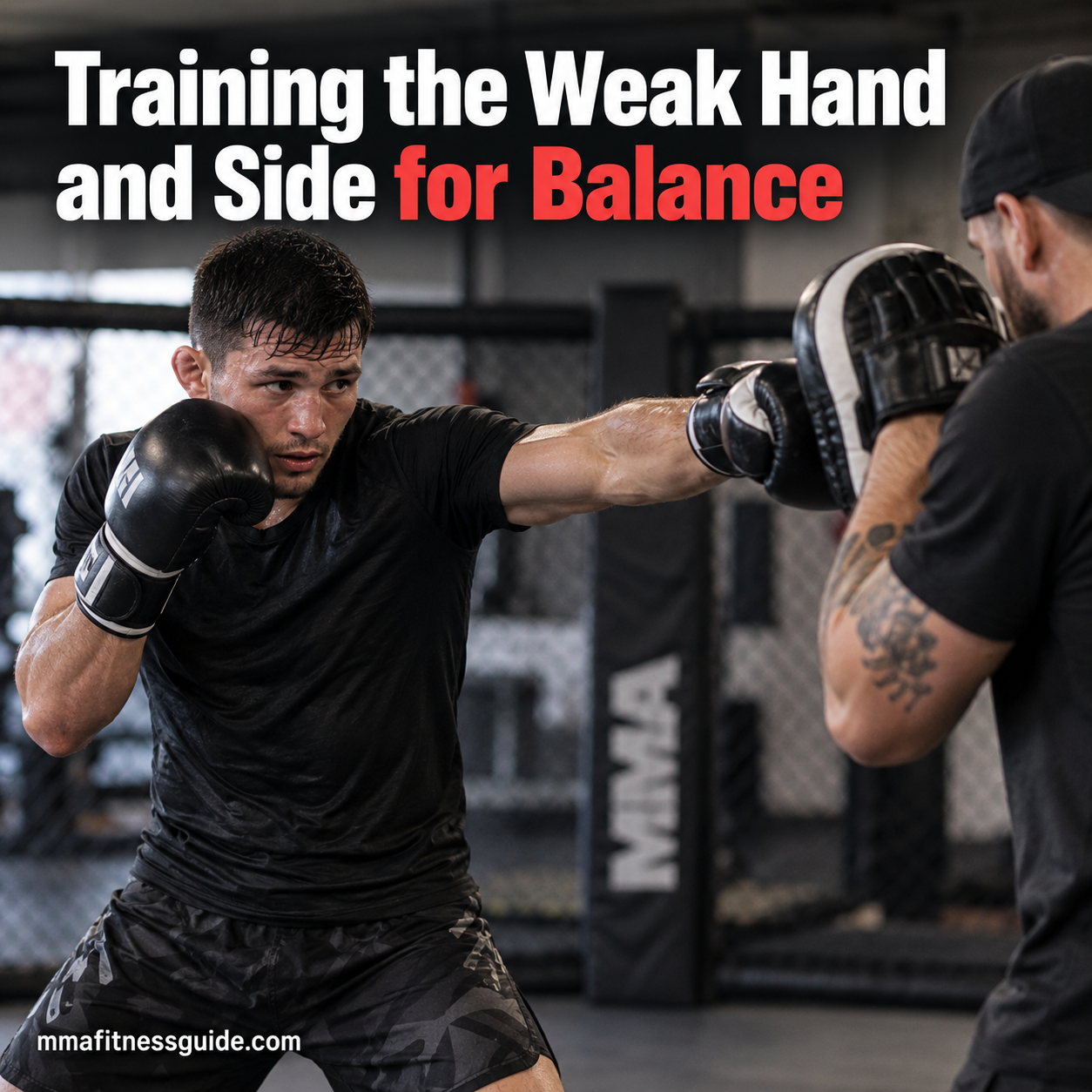
Training the weaker hand and side helps MMA fighters develop better balance, coordination, defense, and adaptability.
Every fighter has a side they trust when things get difficult. It’s the hand that fires first, the direction they naturally pivot, and the side they instinctively use to defend or escape. That preference can become a problem when an opponent recognizes it.
In MMA, relying too heavily on your dominant side can make your attacks easier to anticipate and leave you uncomfortable when exchanges, scrambles, or positioning force you the other way. Developing your weaker side gives you more options without taking away the weapons you already do well.
The goal isn’t to become perfectly ambidextrous. It’s to make your weaker hand, footwork, defense, and grappling movements reliable enough that you can use them when the fight demands it.
Hydrating fruits, electrolyte-rich foods, carbohydrates, and protein help MMA fighters replenish fluids and support recovery after training.
Introduction
Hydration is not just about how much water you drink. What you eat also contributes to fluid intake, electrolyte replacement, muscle repair, and energy restoration after MMA training.
A fighter can lose substantial amounts of sweat during a demanding wrestling session, especially in a hot gym. That sweat contains water and electrolytes, particularly sodium. At the same time, intense exercise uses stored carbohydrates and places stress on muscles that need adequate nutrition to recover.
Drinking water helps replace lost fluid, but it does not address every recovery requirement.
A balanced post-training meal can provide carbohydrates to replenish glycogen, protein to support muscle repair, and sodium to replace sweat losses. Fruits, vegetables, dairy products, soups, and other water-rich foods can also contribute to daily hydration.
However, there is no single food that guarantees faster recovery. Fluid needs depend on training intensity, environmental conditions, individual sweat rate, and how soon the next session begins.
A fighter completing two demanding workouts in one day may need a more deliberate recovery strategy than someone finishing a short technical session.
This guide explains the best foods for hydration and recovery, how different nutrients contribute to the process, and how MMA athletes can combine ordinary foods into practical meals that support consistent training.
Avoid common MMA conditioning mistakes by balancing aerobic training, high-intensity workouts, structured progression, and recovery.
Conditioning is one of the most misunderstood aspects of MMA training. Fighters spend countless hours running, sprinting, hitting pads, wrestling, and completing exhausting circuits, yet many still struggle to maintain their performance during later rounds.
A fighter might feel powerful during the first round but lose striking accuracy in the second. Another might dominate early grappling exchanges before struggling to maintain pressure. Some athletes train so hard between sessions that they arrive at sparring already fatigued.
These problems do not always indicate a lack of effort. They can result from poorly structured conditioning, insufficient recovery, inappropriate intensity, or training that does not address the athlete’s actual needs.
Effective conditioning is not about making every workout as difficult as possible.
It is about developing the physical capacity to repeatedly perform demanding movements while maintaining technical quality.
MMA conditioning must account for several factors: aerobic endurance, explosive energy production, muscular endurance, recovery between exchanges, and the ability to manage effort across multiple rounds.
This guide examines 13 common fighter conditioning mistakes, explains how they affect performance, and provides practical strategies for building endurance without compromising strength, technical development, or long-term health.
A successful MMA gym rebrand should reflect genuine changes in the gym’s identity, audience, programs, and long-term direction.
Your MMA gym may look very different today than it did when you first opened. You may have added new disciplines, expanded into youth or fitness programs, changed coaches, moved locations, or built a community that no longer matches the identity you started with.
When the name, messaging, or visual identity no longer represents the gym people actually experience, rebranding may be worth considering. Done at the right time, it can sharpen your positioning, attract the right members, and give the business renewed momentum. Done too early—or for the wrong reasons—it can create confusion and weaken years of recognition and trust.
The key is knowing whether your brand has genuinely fallen behind your gym’s evolution or whether the real problem lies somewhere else.
Lifelong fitness means adapting your training as you age while maintaining consistent movement, strength, and healthy habits.
The workout that fits your life at 25 may not be the workout you need at 45, 65, or 80. Your strength, recovery, schedule, responsibilities, and goals will change—but the value of staying active doesn’t disappear with them.
That’s why lasting fitness isn’t built around completing a 30-day challenge or following the hardest routine you can tolerate. It comes from learning how to keep moving through busy seasons, setbacks, injuries, aging, and changes in motivation.
The goal is not to train perfectly for a few months. It’s to build a relationship with movement that can adapt with you for decades.
Beginner MMA athletes recover after their first week of training, focusing on rest, hydration, and muscle recovery.
Your first week of MMA training is exciting—but it can also leave your body feeling sore, fatigued, and overwhelmed. New movements, unfamiliar conditioning, and constant muscle engagement place stress on areas you may not have used much before. Recovery after your first week is essential for preventing injury, improving performance, and ensuring you actually want to keep training.
This guide explains how beginners can recover properly after their first week of MMA, what sensations are normal, and how to set yourself up for long-term progress.
A fighter listens to his coaching team between rounds, where tactical adjustments, composure, and clear communication can change the course of an MMA fight.
Sixty seconds can change an MMA fight. Between rounds, an exhausted fighter sits on a stool while coaches have only moments to identify what is going wrong, deliver a tactical adjustment, control emotions, and make sure their fighter understands exactly what needs to happen next. Sometimes, one instruction is enough to alter the course of the fight.
MMA history is filled with corner moments where calm advice, urgent motivation, or a perfectly timed strategic adjustment became part of the story of the bout itself. These exchanges reveal an often-overlooked side of fighting: the trust and communication between a fighter and the coaches trying to solve a high-level contest in real time.
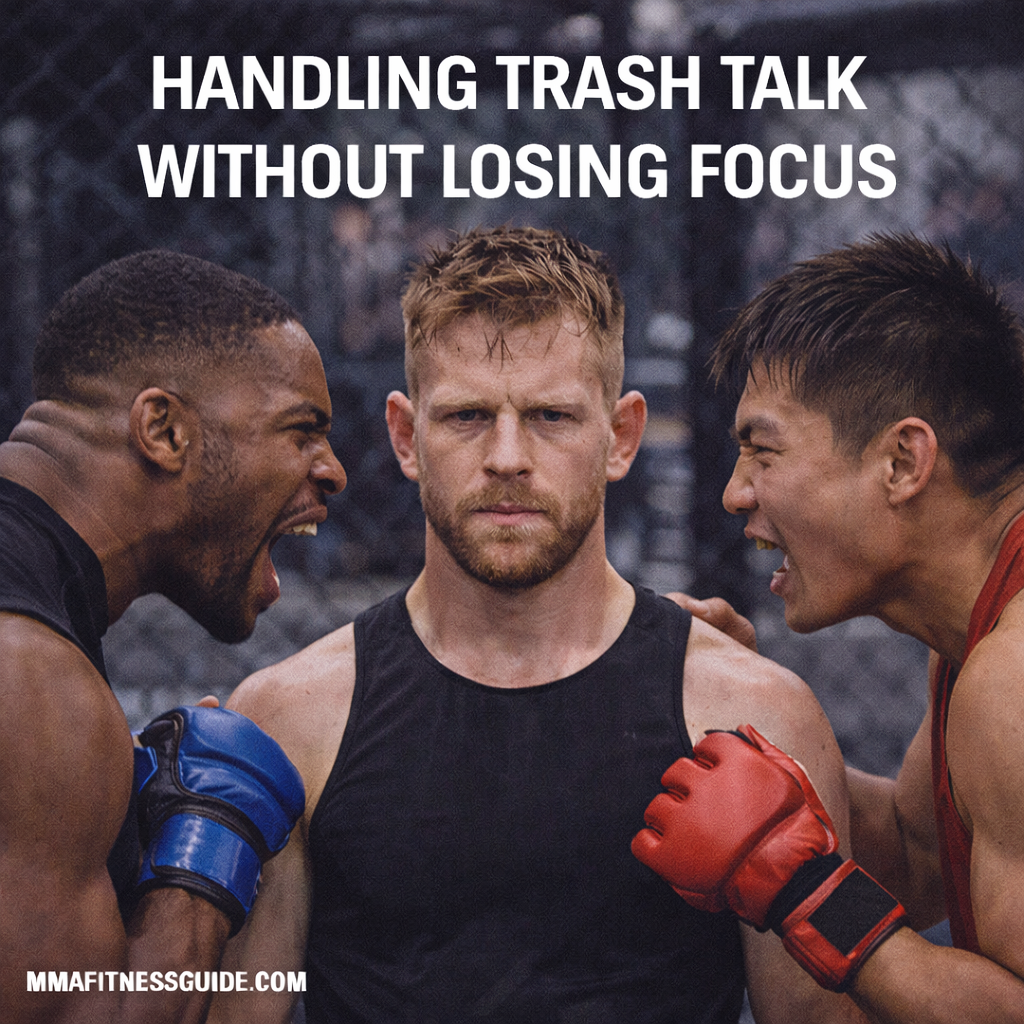
Maintaining composure and concentrating on preparation can help fighters avoid unnecessary distractions from opponent trash talk.
Your opponent posts a video mocking your striking a week before the fight. Within hours, teammates are sending you clips, fans are tagging you in comments, and you’re tempted to fire back. Instead of reviewing your game plan, you spend the evening thinking about what they said. By the next morning, you’re more concerned with proving them wrong than executing the strategy you’ve spent weeks preparing.
Trash talk can create distractions long before two fighters enter the cage. Whether it comes from an opponent, a training partner, or someone online, the challenge is recognizing when an emotional reaction starts influencing your decisions. Setting boundaries, limiting unnecessary engagement, and returning your attention to specific training objectives can help you manage provocation without allowing it to dictate your preparation or fighting style.
Young martial artists train confidently using kid-friendly protective gear designed for safety, comfort, and enjoyment.
Introducing kids to martial arts can build confidence, discipline, coordination, and healthy habits—but safety and comfort must come first. Choosing kid-friendly gear ensures young martial artists can train safely, enjoy the experience, and develop skills without unnecessary risk or frustration.
This guide covers kid-friendly gear picks for young martial artists, explaining what equipment matters most, how to choose the right fit, and what parents and coaches should prioritize.
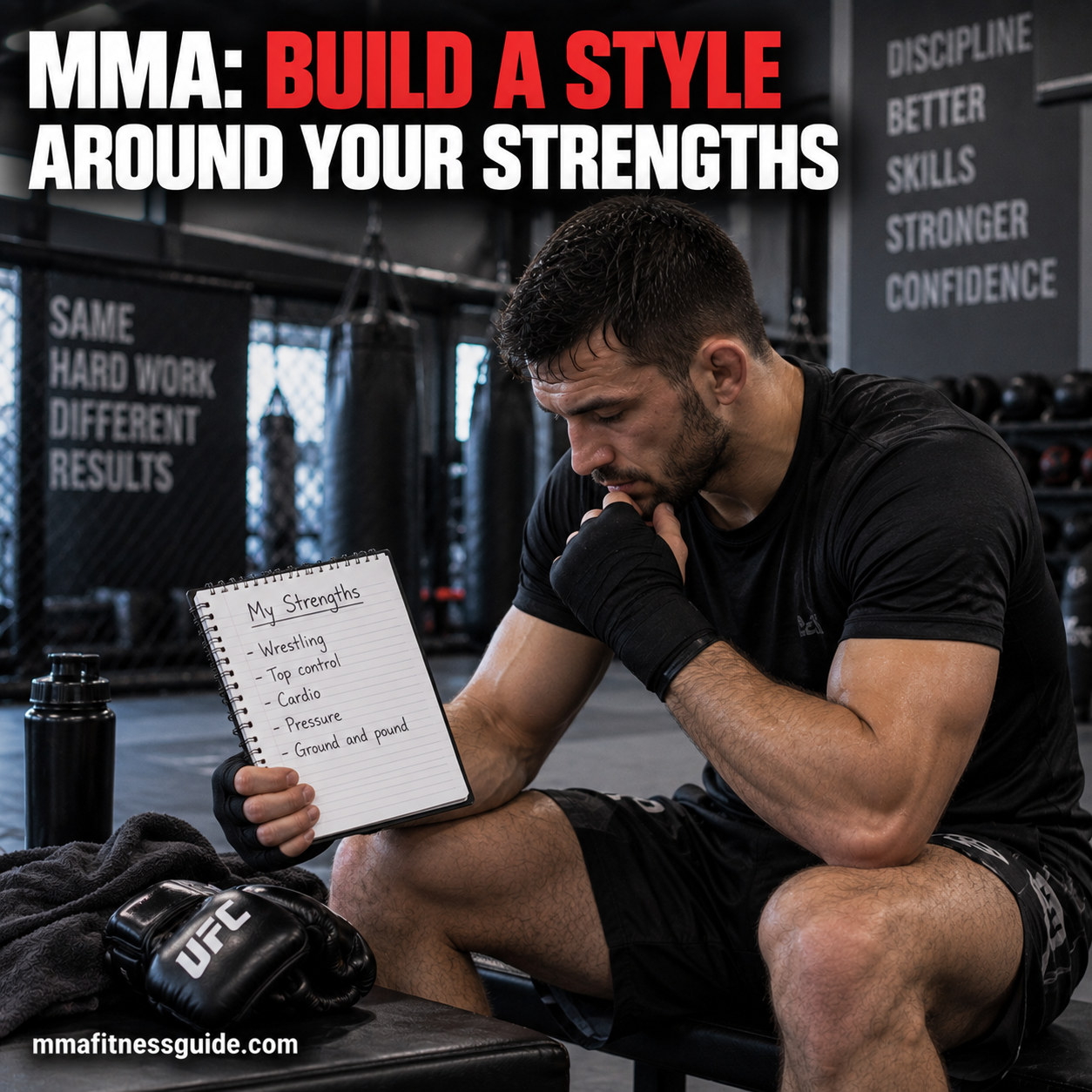
Identifying the techniques, attributes, and positions that consistently work for you can help shape a more focused MMA training style.
A long-limbed fighter who controls opponents with a jab has different tools than a stocky wrestler who can repeatedly drive opponents into the cage. Give both fighters the same game plan, and you may be asking one of them to work against the attributes that already give them an advantage.
Building an MMA style starts with recognizing what consistently works for you—your best techniques, preferred range, physical attributes, athletic background, and reactions under pressure. Those strengths can then shape which combinations you drill, how you enter exchanges, where you try to take the fight, and how you spend your training time.
The goal isn’t to ignore weaknesses or become a one-dimensional fighter. It’s to develop enough skill everywhere while creating a clear path toward the positions and techniques where you perform best.