A male and female coach reviewing testimonials and case studies together inside an MMA gym, illustrating how real student stories build trust in martial arts businesses.
In the MMA world, trust is everything. Whether you run a gym, coach fighters privately, or offer online instruction, potential students want proof that your training actually works. Testimonials and case studies transform your results into credible, relatable stories that help people feel confident choosing you.
Done correctly, these tools become some of the most powerful marketing assets for any coach, gym, or martial arts business.
A happy MMA athlete standing confidently in the gym, symbolizing how small daily wins lead to big long-term results.
Big goals in MMA don’t happen overnight. Fighters often focus on major milestones — earning a belt, winning a tournament, mastering a complex technique — but the real progress happens in the small, consistent wins that stack up over time. Small wins build confidence, momentum, and discipline. They keep you moving forward on days when motivation is low and training feels tough. Over weeks and months, those tiny steps add up to massive changes in your skill level, conditioning, and mindset.
Learning to recognize fatigue, soreness, and changes in technique can help MMA beginners decide when to keep training and when to recover.
During MMA training, your breathing gets heavier, muscles tighten, reactions slow, and unfamiliar aches can appear. Some of those sensations are a normal part of adapting to training. Others are signs that it’s time to reduce the intensity or stop.
For beginners, telling the difference can be difficult. A hard conditioning round may leave your legs burning without anything being wrong, while a sudden pain in your knee during a takedown drill deserves a very different response.
Learning these differences helps you decide when to keep working, when to recover, and when a physical warning shouldn’t be ignored.
Silhouetted fighters inside an MMA cage under arena lights, representing the history and evolution of iconic submission moments in the sport.
Submissions have shaped some of the most iconic moments in MMA history. From championship upsets to last-second comebacks, these techniques showcase skill, timing, and a deep understanding of grappling mechanics. Historic submissions don’t just win fights — they influence how athletes train, how coaches teach, and how the sport evolves.
This guide looks at legendary submission moments and breaks down the mechanics behind why they worked.
A fighter sitting in an MMA gym gathering his focus, symbolizing the mental resilience needed to push through tough training sessions.
Every fighter faces training days that feel heavier than the rest — when your body is tired, your mind is overwhelmed, or motivation drops before warm-ups are even finished. Tough sessions happen to everyone, but how you respond determines whether you grow from them or spiral into frustration.
Coaching yourself isn’t about forcing your way through pain. It’s about managing your mindset, choosing smart internal cues, and staying focused on progress instead of pressure. With the right self-coaching strategies, you can turn difficult sessions into your biggest mental wins.
Meals containing adequate protein, carbohydrates, healthy fats, fruits, and vegetables can provide nutrients needed during recovery from demanding MMA training.
A fighter finishing an evening of wrestling and sparring has more to replace than calories. Muscle tissue needs protein for repair, depleted glycogen needs carbohydrate, and fluids and electrolytes lost through sweat need to be restored before the next demanding session.
Hard training also produces a temporary inflammatory response. That response is part of normal recovery and adaptation, so the goal isn’t to eliminate inflammation after every workout. Instead, consistent nutrition can provide the energy, protein, healthy fats, vitamins, minerals, and plant compounds the body needs while recovery takes place.
For MMA athletes training several days per week—or sometimes twice in one day—the bigger nutritional advantage comes from what is eaten consistently. Meals built around adequate protein, carbohydrates, fruits and vegetables, minimally processed foods, and appropriate hydration create a stronger recovery foundation than relying on a single “anti-inflammatory” food or supplement.
Wrestling shoes prioritize mat grip and flexibility, while cross-training shoes provide a more stable platform for lifting, conditioning, and agility work.
A wrestling shot requires your feet to grip the mat as you drop levels and drive forward, while a strength or conditioning session may have you lifting, jumping, sprinting, and changing direction on a completely different surface. One pair of shoes rarely handles both situations equally well.
Wrestling shoes use thin, flexible soles to keep the feet close to the mat and provide traction during shots, pivots, and scrambles. Cross-training shoes typically have a flatter, more supportive base designed for lifting, agility work, and conditioning. Wearing either type for the wrong activity can mean unnecessary wear, poor traction, or less stability under load.
For MMA athletes moving between wrestling practice and general conditioning, matching the footwear to the session matters more than finding a single shoe that claims to do everything.
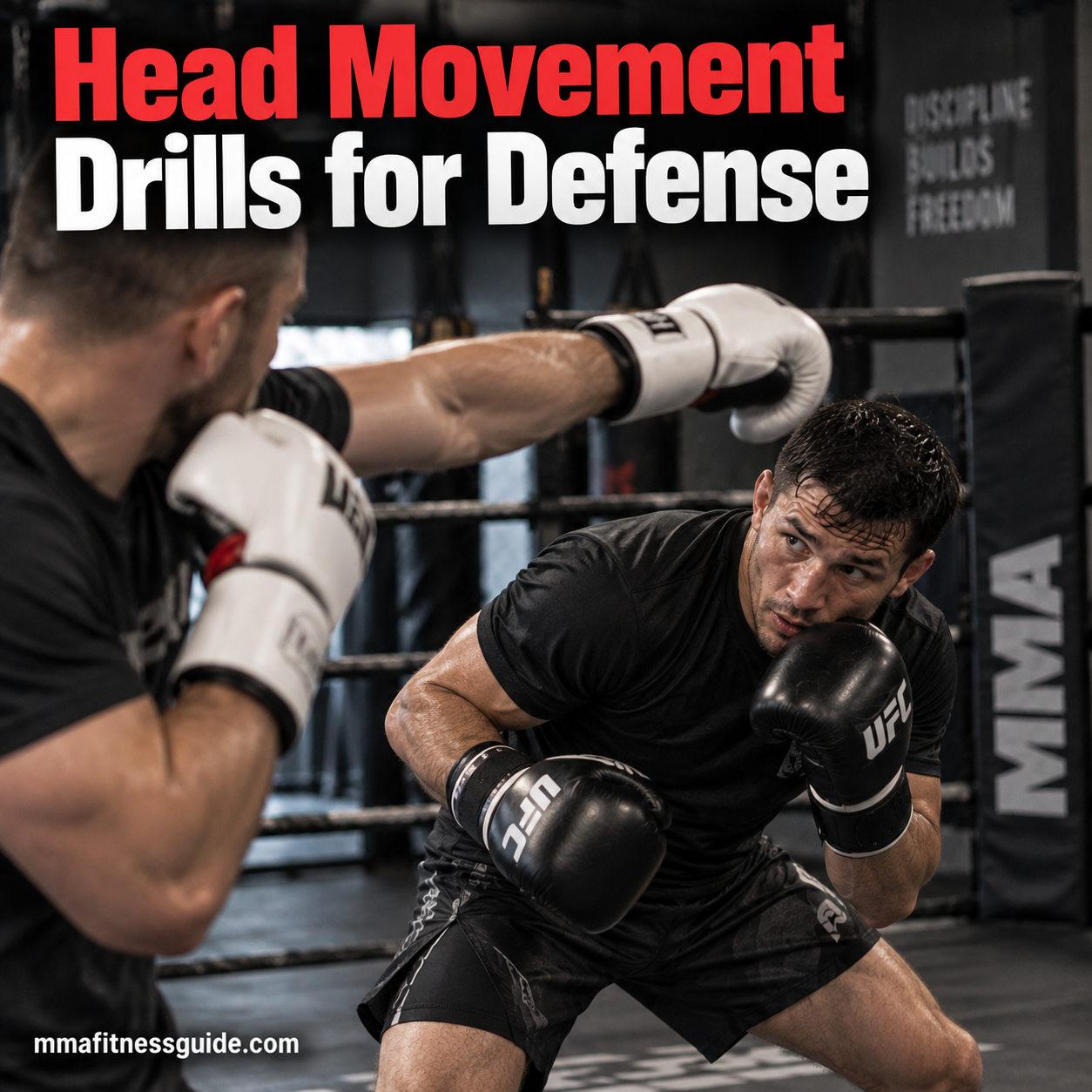
Controlled slips and rolls help fighters move off the centerline while staying balanced and ready to counter.
A punch doesn’t have to miss by six inches to miss cleanly. A small slip outside the jab or a controlled roll under a hook can move your head off the target while leaving your feet planted and your hands ready to counter.
In MMA, boxing, Muay Thai, and kickboxing, that efficiency matters. Large, exaggerated movements can pull you out of position, expose you to follow-up strikes, or make it harder to respond. Good head movement shifts the target just enough to avoid the shot while preserving balance, vision, and offensive options.
The drills below focus on developing those small movements until slipping, rolling, and changing angles become natural parts of your defense.
MMA athlete holding a sports drink after training, symbolizing smart post–weight cut recovery and hydration strategies.
Cutting weight is one of the hardest parts of a fighter’s journey — physically, mentally, and emotionally. But the biggest danger isn’t always the cut itself.
It’s what happens after the weigh-in.
Many fighters experience the post-cut crash:
Extreme fatigue
Brain fog
Weakness
Stomach discomfort
Emotional drop-offs
Poor fight-night performance
The good news? Crashing isn’t guaranteed. With the right rehydration and refueling plan, you can stabilize energy, restore strength, and feel sharp when you step into the cage.
This guide shows you how to avoid the crash and recover the right way after cutting weight.
A male fighter doing push-ups alongside a female athlete performing squats, illustrating the intensity of a full-body fighter workout.
A great fighter isn’t just strong, or fast, or explosive — they’re all three. MMA demands full-body power, endurance, mobility, and resilience. Whether you’re a beginner or an experienced athlete, a well-designed full-body workout helps you build the strength and conditioning needed for striking, grappling, and everything in between.
This Ultimate Full-Body Fighter Workout is built to mimic real MMA demands: pushing, pulling, rotation, grip strength, explosive power, and sustainable cardio. You can use it on strength days, conditioning days, or as a complete standalone session.