A fighter finishing an evening of wrestling and sparring has more to replace than calories. Muscle tissue needs protein for repair, depleted glycogen needs carbohydrate, and fluids and electrolytes lost through sweat need to be restored before the next demanding session.
Hard training also produces a temporary inflammatory response. That response is part of normal recovery and adaptation, so the goal isn’t to eliminate inflammation after every workout. Instead, consistent nutrition can provide the energy, protein, healthy fats, vitamins, minerals, and plant compounds the body needs while recovery takes place.
For MMA athletes training several days per week—or sometimes twice in one day—the bigger nutritional advantage comes from what is eaten consistently. Meals built around adequate protein, carbohydrates, fruits and vegetables, minimally processed foods, and appropriate hydration create a stronger recovery foundation than relying on a single “anti-inflammatory” food or supplement.
What Causes Excess Inflammation for Fighters?
Fighters deal with more inflammation than the average athlete because of:
- Heavy sparring and pad work
- High training volume
- Strength + conditioning on top of skills training
- Repeated impact on joints and connective tissue
- Weight cuts and dehydration
- Nutrient deficiencies
- Poor sleep or chronic stress
When inflammation stays high, you feel:
- Sluggish
- Sore for longer
- Stiff in joints and muscles
- Slower to recover
- Mentally foggy
Nutrition helps control all of this.
The Anti-Inflammatory Nutrition Foundation
These core habits reduce inflammation before you even focus on specific foods.
Hydrate consistently
Dehydration increases inflammation and joint stiffness.
Eat whole foods most of the time
Protects your immune system and reduces inflammatory load.
Aim for protein at every meal
Supports muscle repair and recovery.
Include colorful fruits and vegetables
High in antioxidants that reduce inflammation after training.
Limit processed oils
Seed oils and fried foods can make inflammation worse.
These small habits add up fast.
Best Anti-Inflammatory Foods for Fighters
These foods support recovery, reduce soreness, and help your body repair itself.
Fatty Fish
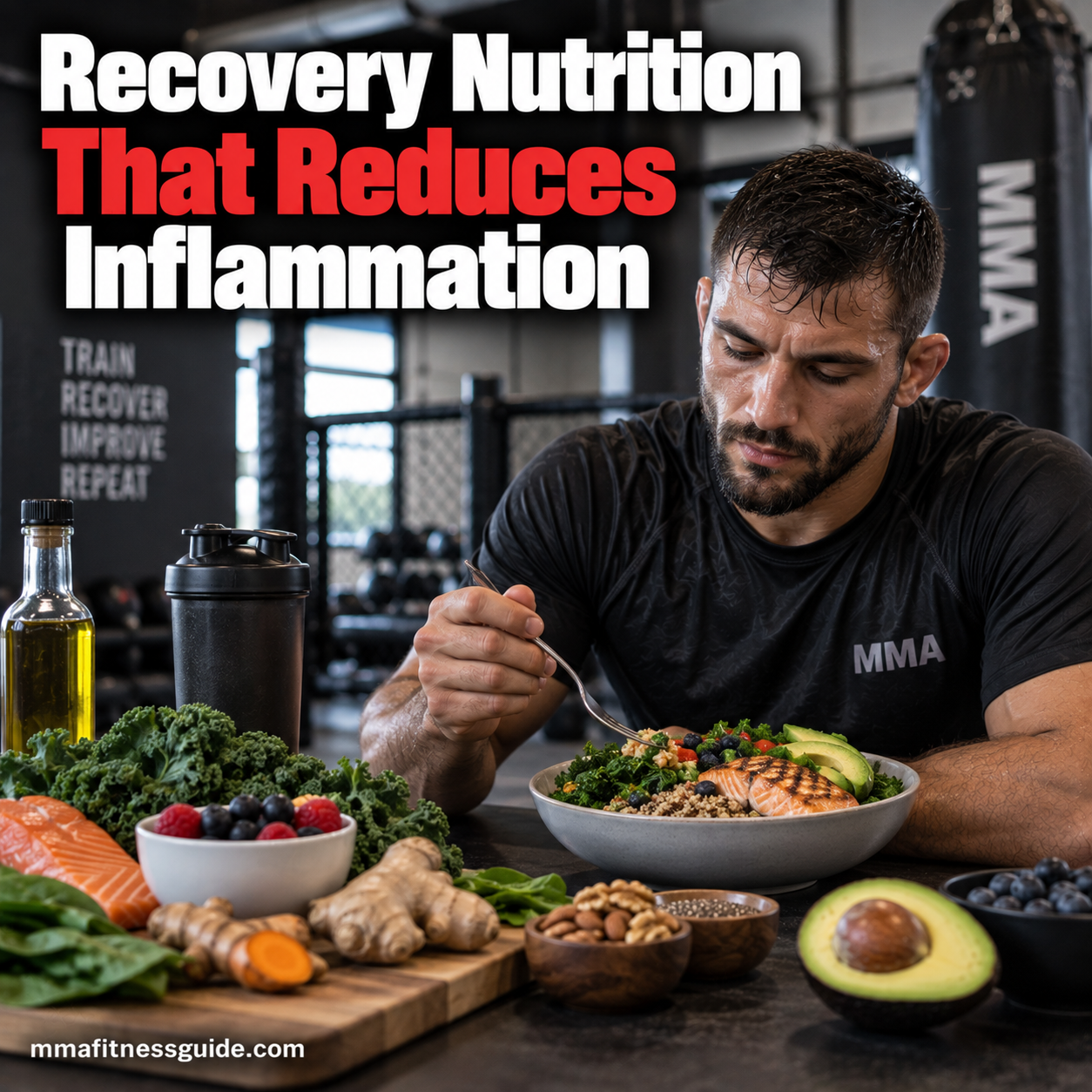
Options like salmon, mackerel, and sardines are rich in omega-3s, which directly reduce inflammation.
Why they help
Omega-3s lower levels of inflammatory markers caused by hard training.
Berries
Blueberries, strawberries, raspberries, and blackberries are loaded with antioxidants.
Why they help
They fight oxidative stress created during intense workouts.
Leafy Greens
Spinach, kale, arugula, chard — all nutrient-dense and inflammation-fighting.
Why they help
They provide vitamins A, C, K, magnesium, and antioxidants essential for recovery.
Turmeric and Ginger
Two of the most effective natural anti-inflammatory ingredients.
Why they help
Curcumin (turmeric) and gingerols (ginger) reduce soreness and joint inflammation.
Olive Oil
A healthier fat for cooking and dressings.
Why it helps
Olive oil contains anti-inflammatory compounds that improve recovery.
Nuts and Seeds
Almonds, walnuts, chia seeds, and flaxseeds offer healthy fats and micronutrients.
Why they help
The omega-3s and minerals support joint health and reduce inflammation.
Tart Cherry Juice
Research-backed for reducing soreness after high-intensity training.
Why it helps
Its antioxidants help decrease muscle damage and improve sleep quality.
High-Quality Protein Sources
Chicken, turkey, eggs, Greek yogurt, lean beef, tofu, and whey protein.
Why they help
Protein repairs damaged muscle fibers, helping inflammation go down faster.
Foods That Increase Inflammation (Limit These)
You don’t need to eliminate these foods — just avoid overdoing them.
Processed sugars
Candy, pastries, sugary drinks spike inflammation.
Deep-fried foods
Hard on recovery and joints.
Excess alcohol
Slows recovery and increases inflammation dramatically.
Seed oils
Found in most fast food and processed snacks.
Keeping these limited makes a huge difference.
Post-Training Anti-Inflammatory Meal Ideas
Try these simple meals after training:
Rice bowl with salmon, spinach, and olive oil
Anti-inflammatory fats + carbs to refill energy.
Greek yogurt with berries and chia seeds
Great for morning sessions or snacks.
Chicken, sweet potato, and broccoli
Balanced and easy to digest.
Omelet with spinach and turmeric
Excellent recovery breakfast.
Smoothie with berries, banana, whey protein, and ginger
Fast to make and gentle on the stomach.
Supplements That May Help (Optional)
Supplements aren’t required, but some fighters find these helpful:
- Omega-3 fish oil
- Curcumin/turmeric
- Magnesium
- Vitamin D
- Collagen + vitamin C
- Tart cherry extract
Always use supplements to support nutrition — not replace it.
Final Takeaway
Reducing inflammation doesn’t require a complicated diet — just smarter choices. By fueling your body with anti-inflammatory foods, staying hydrated, avoiding inflammatory triggers, and eating consistently, you can recover faster, reduce soreness, and train at a higher level.
Smart recovery = better performance.
And nutrition is one of the strongest tools you have.