Male photographer capturing video of a female MMA athlete in a gym, shown with bold text promoting photography and video tips for MMA promotions.
Why High-Quality Photos and Videos Matter in MMA
Whether you’re an amateur fighter trying to build a name or a coach promoting your gym, strong visuals are your most powerful marketing tool. In today’s MMA world, people discover fighters on Instagram, TikTok, YouTube, and gym websites long before seeing them compete live.
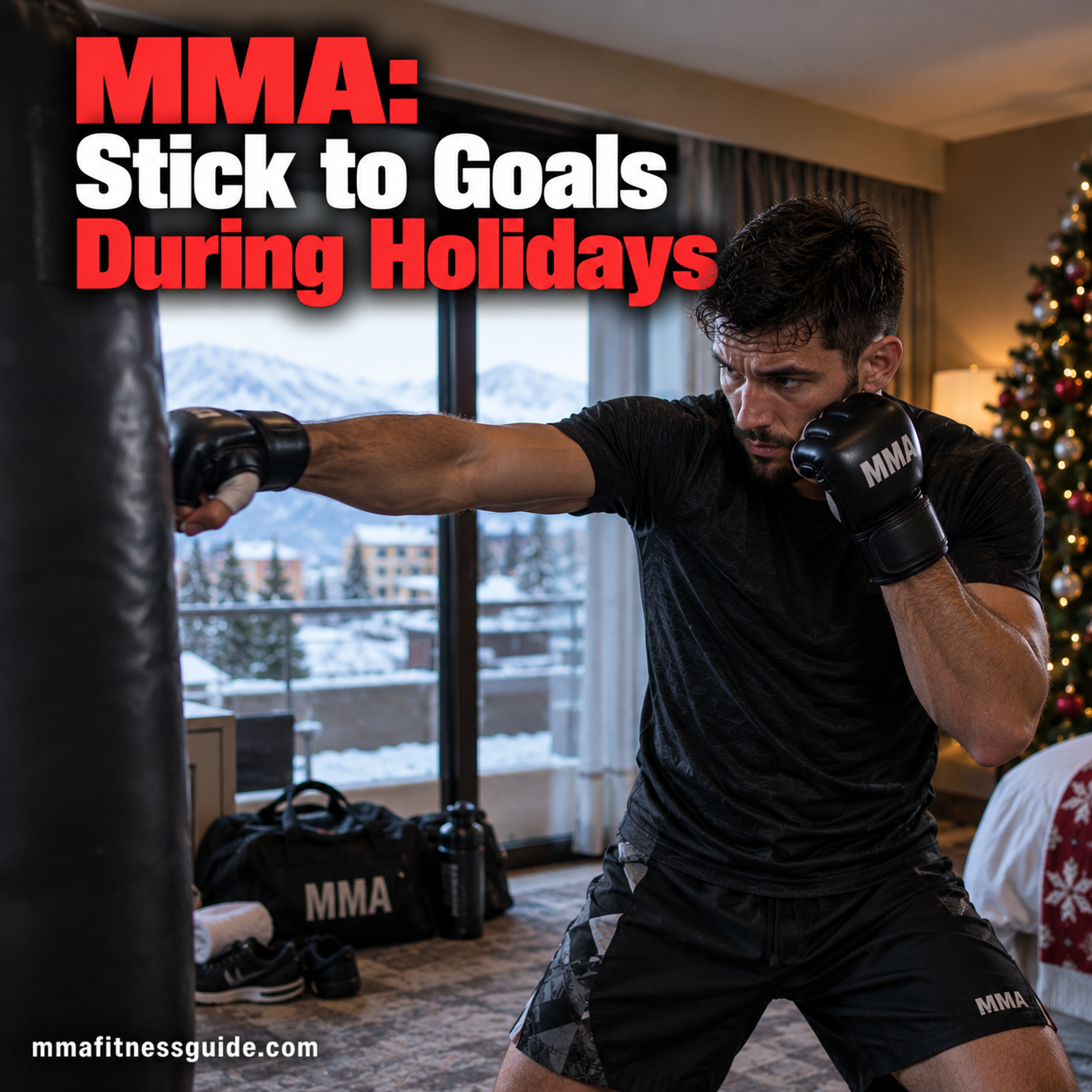
Short workouts and a flexible training plan can help MMA athletes maintain their routine when holiday travel and commitments disrupt normal training.
Why Holidays Make Goal-Sticking Hard
A normal training week can disappear quickly once holiday travel, family dinners, closed gyms, late nights, and changing schedules start competing for the same hours. Missing one practice is rarely the problem. The bigger issue is allowing several disrupted days to turn into several weeks without training.
For MMA athletes, the goal during the holidays does not have to be setting conditioning records or following a fight-camp schedule. Maintaining a few key habits—short training sessions, mobility work, reasonable nutrition, and regular movement—can make returning to a normal schedule much easier.
Instead of trying to force your usual routine into an unusual week, decide which parts of your training are worth protecting and build a smaller holiday version around them.
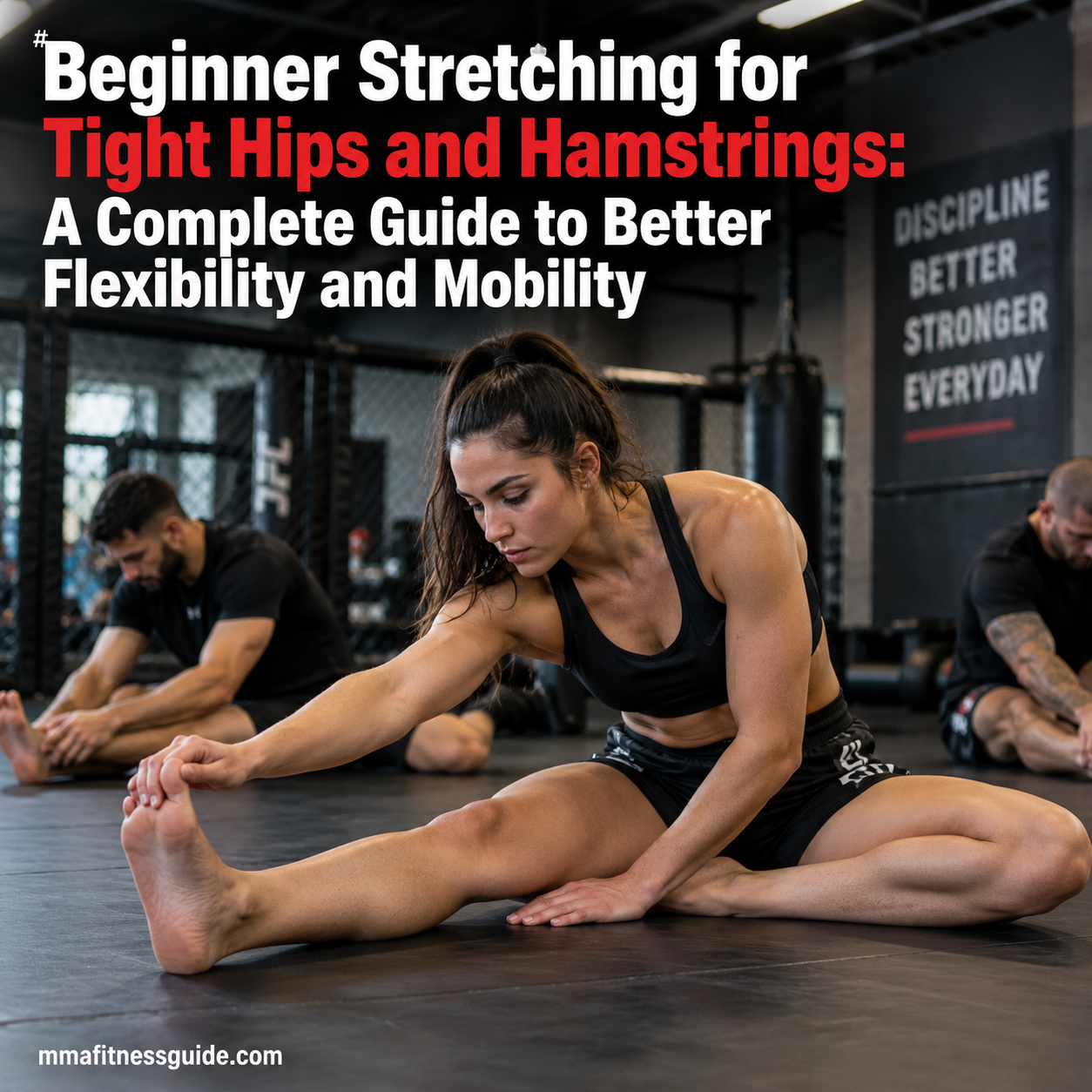
Beginner-friendly stretches can help improve hip and hamstring flexibility for MMA training and everyday movement.
Tight hips and hamstrings can make even simple movements feel harder than they should. Bending forward to tie your shoes, lowering into a squat, climbing stairs, or throwing a controlled kick may feel uncomfortable when your muscles and joints aren’t moving freely.
For beginners entering MMA, kickboxing, Brazilian jiu-jitsu, or general fitness, limited flexibility can be particularly noticeable. Kicks require coordinated hip movement, grappling involves positions that challenge your range of motion, and strength exercises demand control through different joint angles.
Fortunately, you don’t need advanced yoga poses or an hour-long stretching session to start improving your flexibility.
A short, consistent routine combining gentle stretching, controlled mobility exercises, and basic strengthening can help you gradually increase your usable range of motion.
This guide covers seven beginner-friendly stretches, proper technique, common mistakes, a practical weekly routine, and ways to make your flexibility improvements useful during everyday activities and combat sports training.
Collage featuring four female MMA fighters in dramatic UFC moments with title text highlighting the most shocking upsets.
Why UFC Upsets Captivate Fans
Few things electrify MMA fans like a true upset — the moment when the entire world predicts one outcome and reality delivers the opposite. Upsets shake rankings, rewrite narratives, humble legends, and inspire new generations of fighters.
But more importantly, they reveal the heart of MMA: unpredictability. In a sport with four-ounce gloves, elite athletes, and endless stylistic clashes, anything is possible.
Here are the most shocking UFC upsets in history — the ones that shook arenas, silenced crowds, and instantly became part of MMA lore.
Legendary MMA fighters demonstrate how preparation, adaptation, and perseverance can shape a career through victories and setbacks.
Why Fighter Resilience Matters
A single punch can change a fight. An injury can erase months of preparation. A losing streak can force an athlete to question the training methods that once brought success.
Georges St-Pierre lost his welterweight title in a stunning upset. Michael Bisping spent years pursuing a championship while dealing with a serious eye injury. Anderson Silva suffered a broken leg that threatened to end his career.
Their stories show different responses to adversity. Some fighters changed training environments, others adjusted their techniques, and some had to reconsider what competing meant to them.
For MMA athletes, these experiences offer practical lessons about recovering from defeat, recognizing when change is necessary, and maintaining perspective when progress stalls.
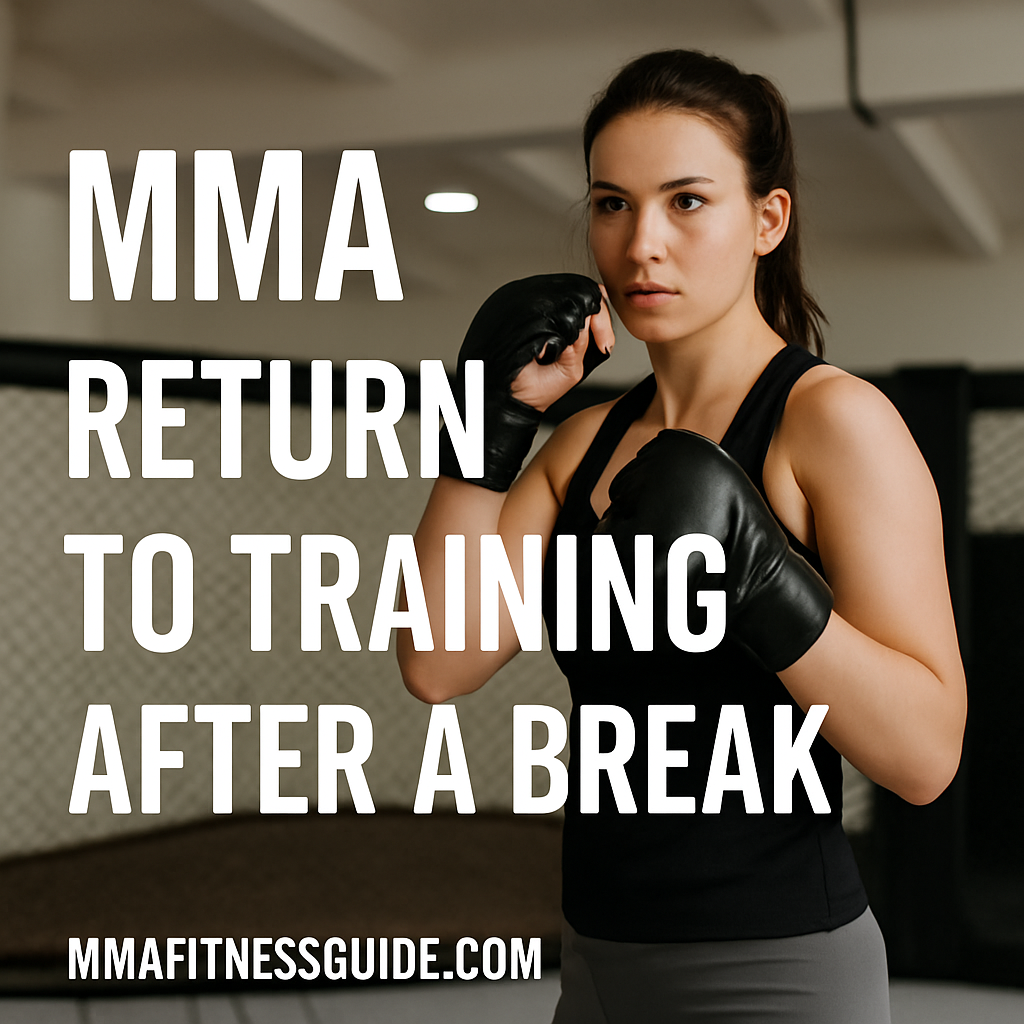
Female MMA athlete preparing to return to training after a break, shown in a fight stance with text overlay.
What Happens to Your Body During Time Off
Taking a break from MMA—whether it’s one week, one month, or an entire year—is completely normal. But the longer you’re away, the more your body changes. Knowing these changes helps you create a smart, safe return plan. Here’s what typically happens:
Properly fitted ear guards can reduce friction and direct contact around the ears during wrestling, BJJ, and MMA grappling sessions.
During a tight headlock, takedown scramble, or guard pass, the ear can get folded and pressed between your opponent and the mat. Repeat that friction several times a week and tenderness, bruising, or swelling can make even light contact uncomfortable.
Ear guards create a padded barrier around the outer ear while still allowing the head to move naturally during wrestling, BJJ, judo, and MMA grappling. Soft neoprene designs minimize bulk for rolling, while rigid and hybrid models provide additional structure for takedown-heavy sessions.
Fit matters as much as padding. An ear guard that slides over the eyes, catches during scrambles, or requires constant adjustment quickly becomes another distraction, so look closely at strap design, profile, ventilation, and how securely the guard stays positioned.
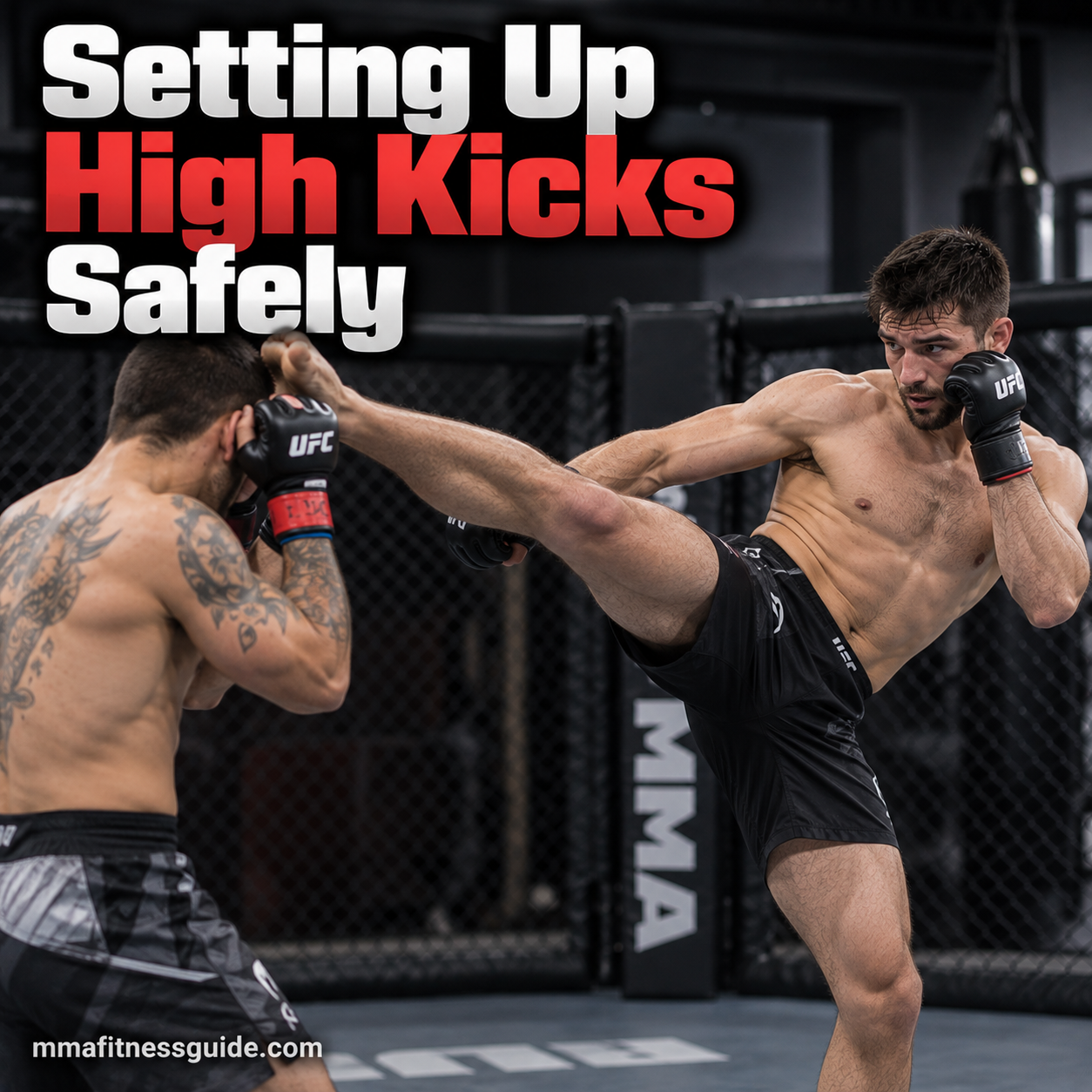
Punches, feints, and angle changes can disguise a high kick while giving the fighter a better position to recover safely.
The moment your kicking foot leaves the floor, your opponent has opportunities they did not have a second earlier. Your weight is supported by one leg, your stance is temporarily compromised, and a poorly disguised kick can give them time to counter with punches, catch the leg, or change levels for a takedown.
That is why a high kick usually becomes safer when the work begins before the leg ever rises. A jab can occupy the guard, a body attack can pull an elbow downward, and a small angle change can move the kick around the opponent’s defense. Even showing low kicks earlier in the round can influence how they react when the same hip movement appears again.
The goal is to make the high kick the final action in a sequence rather than an isolated attack. Good positioning, believable threats, and a quick recovery give the kick a cleaner path while reducing the time available for the opponent to respond.
A focused MMA athlete holding a water bottle in the gym, representing smart hydration strategies for tournament day performance.
Tournament days hit differently. The pace is faster, the nerves are higher, and the physical demands can spike without warning. Whether you’re competing in MMA, BJJ, wrestling, or striking events, proper hydration can make the difference between staying sharp or fading early.
Hydration is more than just drinking water — it’s managing fluids, electrolytes, timing, and energy throughout the entire day. These simple hydration hacks will help you stay ready, focused, and performing at your best from warm-up to finals.
A male and female fighter warming up with light shadowboxing in an MMA gym, representing the difference between training camps and year-round conditioning.
Most fighters think of training in two phases: the intense push during a training camp and the more relaxed period between fights. But as the sport evolves, more athletes are discovering that year-round conditioning is one of the biggest advantages you can have. Both approaches have benefits — and both come with challenges. The key is knowing how each one fits into your goals, your schedule, and your style of fighting.
Understanding the difference can help you stay healthier, sharper, and more prepared all year long.