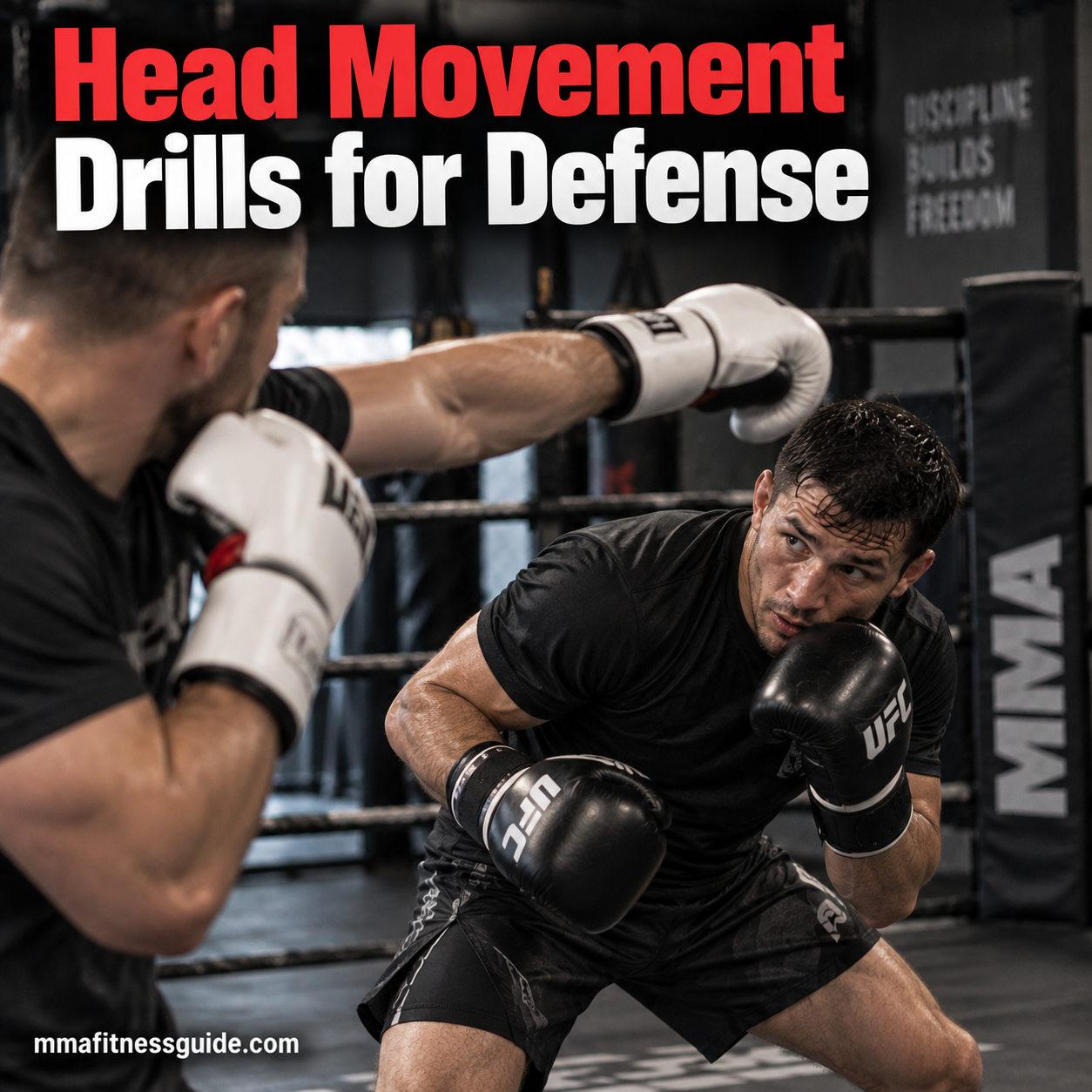
A punch doesn’t have to miss by six inches to miss cleanly. A small slip outside the jab or a controlled roll under a hook can move your head off the target while leaving your feet planted and your hands ready to counter.
In MMA, boxing, Muay Thai, and kickboxing, that efficiency matters. Large, exaggerated movements can pull you out of position, expose you to follow-up strikes, or make it harder to respond. Good head movement shifts the target just enough to avoid the shot while preserving balance, vision, and offensive options.
The drills below focus on developing those small movements until slipping, rolling, and changing angles become natural parts of your defense.
Why Head Movement Matters in MMA
Keeping your head on the centerline makes combinations easier to land. Moving it at the right moment forces an opponent to adjust while creating openings for your own attacks.
Head movement can help you:
- Avoid punches without retreating every time
- Create immediate countering opportunities
- Stay balanced for pivots and angle changes
- Reduce the number of clean punches absorbed in sparring
- Give opponents a less predictable target
- Develop better timing and reactions
A slip of only a few inches can turn an opponent’s jab into a miss while putting your cross or hook in position to land.
Key Principles of Good Head Movement
Before adding speed, build the movement correctly.
Stay Relaxed
Tight shoulders and a rigid upper body make quick reactions harder. Keep enough structure to defend while allowing your torso and hips to move freely.
Keep Your Hands Up
Slipping doesn’t make your guard unnecessary. Your hands still need to protect against combinations, kicks, elbows, and punches you fail to read.
Move From Your Legs and Hips
Instead of bending your neck sharply to avoid a punch, use subtle movement through the knees, hips, and torso. This keeps your stance underneath you.
Keep Motions Small
Move only as far as necessary to clear the strike. Oversized slips and rolls take longer and can leave you exposed to the opponent’s next attack.
Maintain Vision
Keep your eyes on your opponent as you move. Looking down or turning away makes it harder to recognize follow-up strikes and countering opportunities.
Essential Head Movement Drills for Fighters
Each drill isolates a different part of defensive movement before combining it with realistic striking and footwork.
Slip Line Drill
A rope or hand wrap stretched across the training area gives you a physical reference for controlling the height and direction of your movement.
How to Do It
- Hang a rope or hand wrap roughly around shoulder height
- Take your normal fighting stance beside the line
- Move forward while slipping from one side to the other
- Add controlled rolls underneath the line
- Gradually incorporate punches and footwork
What It Develops
- Smaller slips and rolls
- Better posture
- Lower-body involvement
- Balance while moving
Start slowly enough that every repetition looks controlled before increasing the pace.
Mirror Shadowboxing
A mirror provides immediate feedback when your head movement becomes exaggerated or your stance begins to break down.
How to Do It
- Take your fighting stance in front of a mirror
- Throw relaxed combinations
- Slip, roll, or change your angle after each sequence
- Check whether your hands stay up and your feet remain underneath you
- Reset whenever your posture deteriorates
The goal isn’t to move constantly. Practice making each defensive action look deliberate and compact.
Slip and Counter Drill
A successful slip often puts you in position to attack before your opponent has completely recovered their stance.
How to Do It
- Begin in your normal stance
- Visualize or have a partner present a jab
- Slip just outside the punch
- Immediately return with a cross, hook, or body shot
- Reset and repeat from both sides
This teaches your defense and offense to function as one sequence rather than two separate actions.
Partner Reaction Drill
Predictable solo drills build mechanics. A partner introduces uncertainty.
How to Do It
- Have your partner stand at realistic striking distance
- Let them present light jabs, crosses, and feints
- Respond with controlled slips and rolls
- Add simple counters once your reactions become consistent
- Gradually vary the rhythm rather than simply increasing speed
Watch the opponent’s shoulders, chest, and overall movement instead of staring at their gloves.
Double-End Bag Head Movement
The double-end bag rebounds quickly and changes direction, forcing you to coordinate offense and defense without a perfectly predictable rhythm.
How to Do It
- Strike the bag with controlled punches
- Allow it to rebound toward you
- Slip, roll, or step away from its return path
- Re-enter with another combination
- Add pivots as your timing improves
Keep the punches controlled. Turning the drill into a power session makes it harder to concentrate on positioning and reactions.
Roll Under Hooks Drill
Rolling underneath hooks requires more than dropping your head. Your knees and hips should lower your level while your stance remains stable.
How to Do It
- Begin in your fighting stance
- Visualize a hook approaching from one side
- Bend through the knees and hips
- Move underneath the imagined punch
- Rise on the opposite side in position to counter
- Repeat in both directions
Avoid bending forward excessively at the waist. Your eyes should remain up and your feet ready to move.
Defensive Footwork and Head Movement Flow
Once individual movements feel comfortable, connect them to changes in position.
Practice sequences such as:
- Slip → pivot
- Roll → step out
- Jab → slip → angle
- Cross → roll → hook
- Slip → counter → lateral exit
This prevents head movement from becoming a stationary habit. In MMA, changing where your head is located often works best when you also change where your feet take you.
Tips to Improve Head Movement
Keep these details in mind during technical rounds:
- Relax your shoulders and neck
- Keep your stance underneath your upper body
- Move only far enough to clear the punch
- Return to a protected position after each movement
- Combine slips and rolls with footwork
- Practice both directions instead of favoring one side
- Start slowly before introducing unpredictable attacks
- Add counters once the defensive mechanics are reliable
Five controlled repetitions teach better habits than twenty rushed ones.
Final Takeaway
Good head movement makes an opponent repeatedly adjust their aim. A jab that barely misses can leave an opening for your cross; rolling underneath a hook can put you beside the opponent at an attacking angle; combining a slip with a pivot can move you away from the next punch entirely.
Build those reactions progressively. Start with controlled slips and rolls, connect them to footwork, then introduce counters and unpredictable partner attacks. Over time, the goal is for your head to leave the target naturally while your stance stays balanced and your eyes remain ready for what comes next.