Community Outreach and School Programs

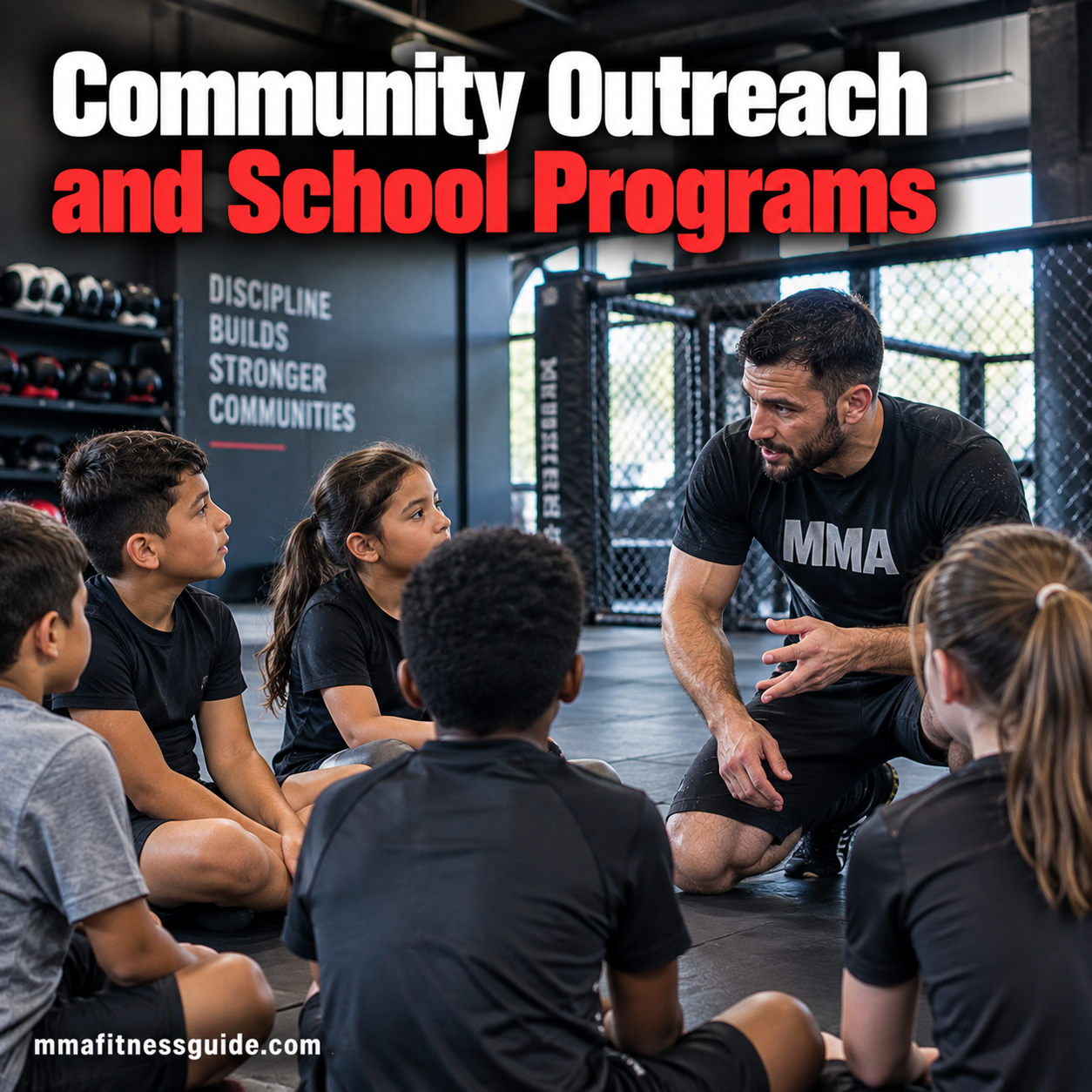
MMA coach leading a group of young students during a community martial arts program in a training gym.

An MMA coach does not have to teach takedowns or submissions to introduce martial arts concepts in a school. A 45-minute session might involve stance and movement drills, coordination exercises, basic fitness, discussions about avoiding confrontation, and simple partner activities built around control and respect.

Programs like these give gyms, coaches, and fighters a way to work with families and organizations that may never otherwise enter an MMA facility.

They can also create professional opportunities outside competition, from after-school coaching and youth programs to workshops, community partnerships, and contracted instruction.

Continue reading “Community Outreach and School Programs”
Training Partners and Accountability

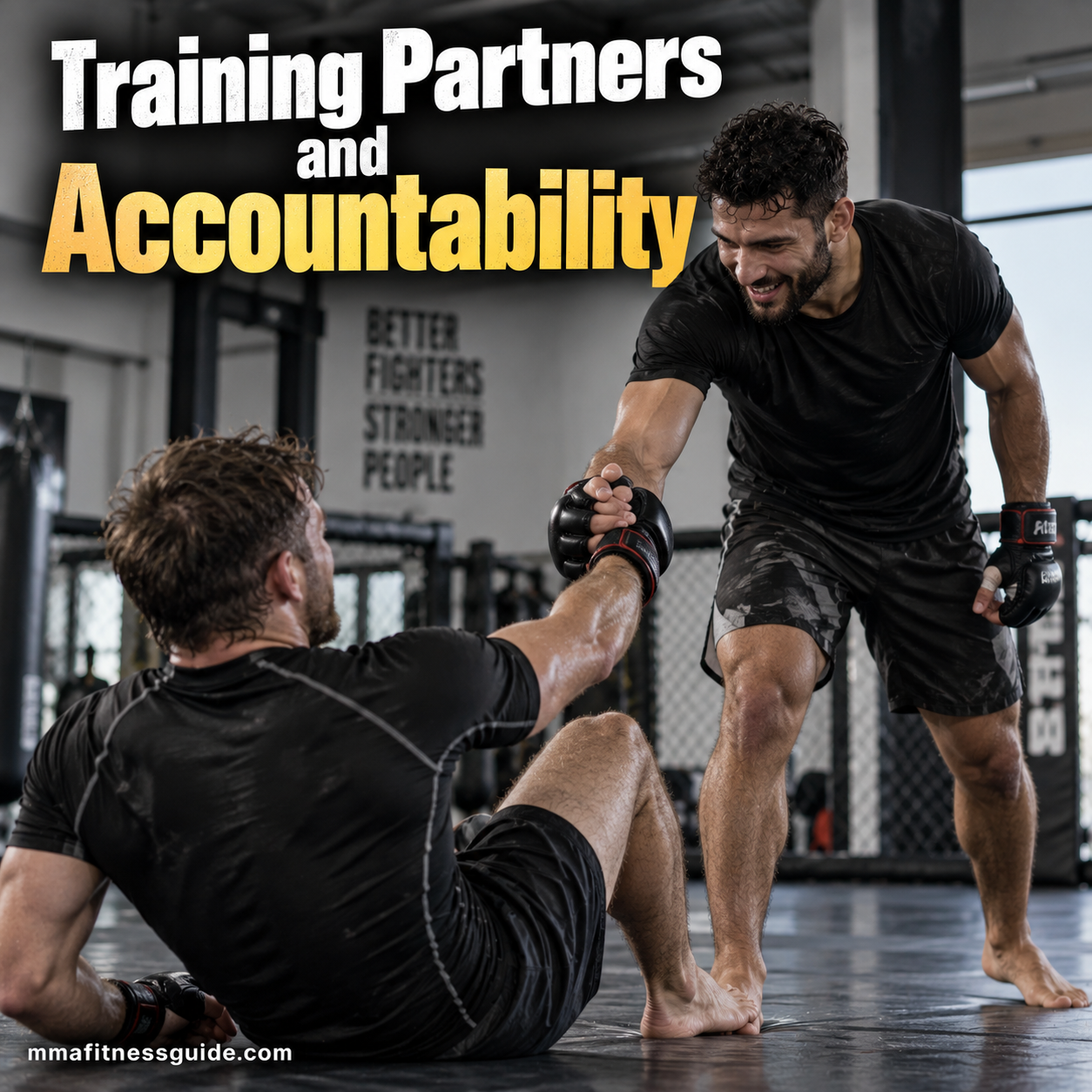
MMA training partners helping each other during a training session at an MMA gym.
Reliable training partners can build accountability, encourage consistency, and help MMA athletes stay committed to their training.

It’s much harder to skip a 6:00 p.m. training session when you know someone is already at the gym wrapping their hands and expecting you to show up. That simple expectation can be more powerful than waiting for motivation to strike.

In MMA, training partners do more than provide someone to drill, spar, or grapple with. The right partners help keep your schedule consistent, your effort honest, and your standards high—especially on the days when you’re tired, distracted, or tempted to stay home.

Over time, that accountability can turn sporadic training into a dependable routine. And when a regular partner isn’t available, the same principles can be built into your schedule, coaching relationships, and solo training habits.

Continue reading “Training Partners and Accountability”

MMA: Stay Consistent for 30 Days: A Beginner’s Guide to Building Momentum

MMA fighter training alone in the gym, representing a beginner’s guide to staying consistent with MMA training for 30 days.
An MMA athlete training with focus and discipline, illustrating how beginners can build momentum through 30 days of consistent practice.

Starting MMA training is exciting—but staying consistent is where most beginners struggle. Motivation is high at the beginning, then life, soreness, self-doubt, and schedule conflicts slowly chip away at momentum.

The good news is this: you don’t need perfection to succeed. You only need consistency. This 30-day MMA consistency guide is designed specifically for beginners who want to build habits, confidence, and discipline without burnout.

Continue reading “MMA: Stay Consistent for 30 Days: A Beginner’s Guide to Building Momentum”

Greatest Title Reigns and Defenses

Legendary MMA champions holding championship belts representing the greatest title reigns and defenses in MMA history.
Iconic MMA champions showcasing historic title reigns and multiple championship defenses.

Winning an MMA championship can take one perfect performance. Keeping that championship means beating the next top contender—and then doing it again while the entire division studies how to defeat you.

That is what separates a memorable title win from a legendary championship reign. Anderson Silva defended the UFC middleweight title 10 times, Georges St-Pierre built a dominant run at welterweight, and Demetrious Johnson reached a record-setting 11 consecutive UFC title defenses. Other champions established their greatness by conquering multiple divisions or remaining at the top through generations of challengers.

The greatest title reigns in MMA weren’t simply long. They were built on repeated victories against elite opposition, constant adaptation, and the ability to perform when every challenger entered the cage specifically prepared to take the belt away.

Continue reading “Greatest Title Reigns and Defenses”

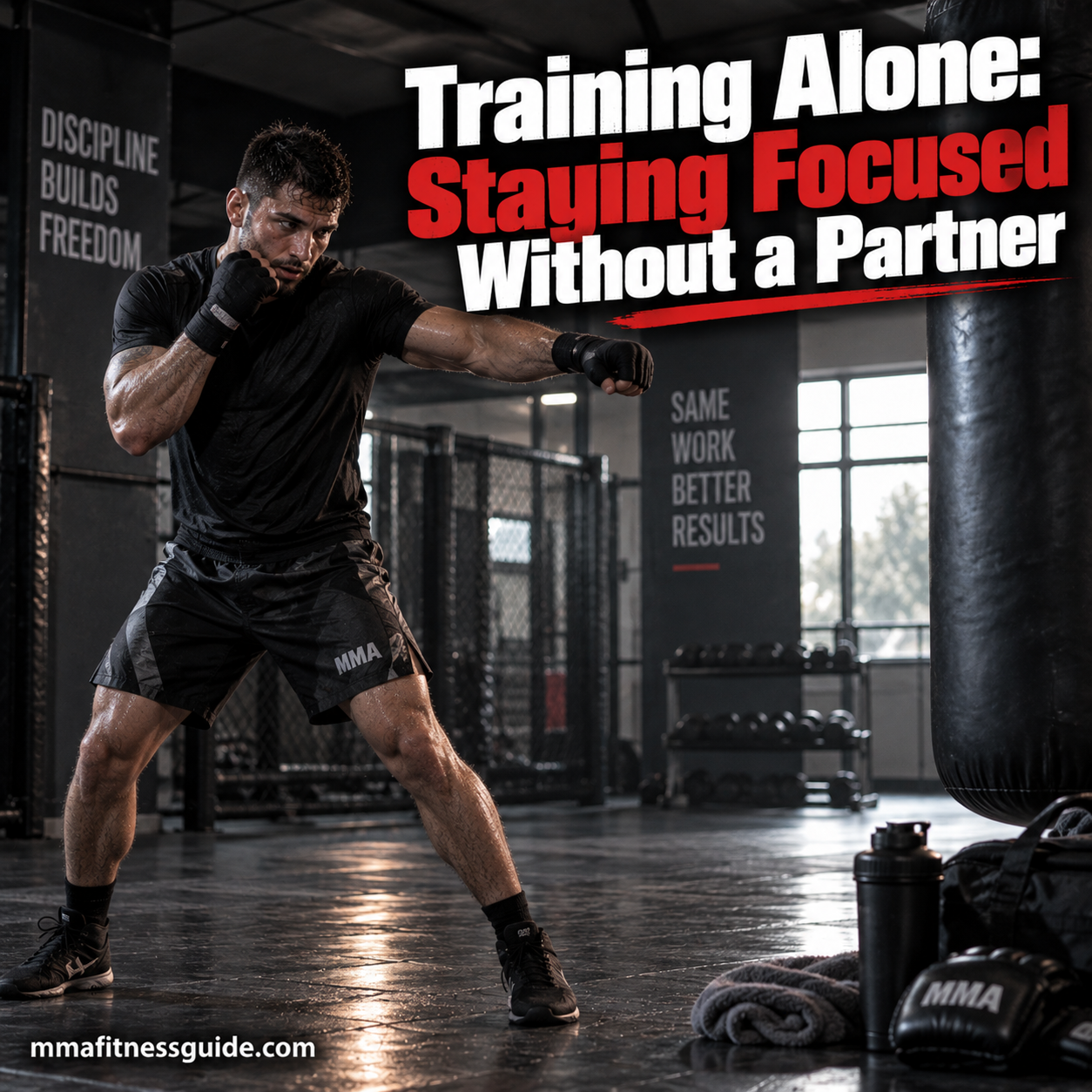
Training Alone: Staying Focused Without a Partner

MMA fighter practicing shadowboxing alone in an empty gym with a heavy bag and training equipment nearby.
Structured solo MMA sessions can help fighters improve movement, conditioning, and training consistency when partners are unavailable.

You arrive at the gym ready to train, but your usual partner cancels at the last minute. There’s no coach calling out combinations, no teammate pushing the pace, and nobody watching when you start slowing down. Twenty minutes into shadowboxing, you catch yourself checking the clock instead of concentrating on your footwork.

Solo training presents a different challenge from working with a partner: you have to create your own structure, maintain your attention, and recognize when your technique starts to slip. With clear objectives, timed rounds, and regular self-assessment, fighters can use sessions alone to refine movement, improve conditioning, and develop consistent training habits. The goal isn’t to replace sparring or coaching, but to make productive use of the hours when neither is available.

Continue reading “Training Alone: Staying Focused Without a Partner”

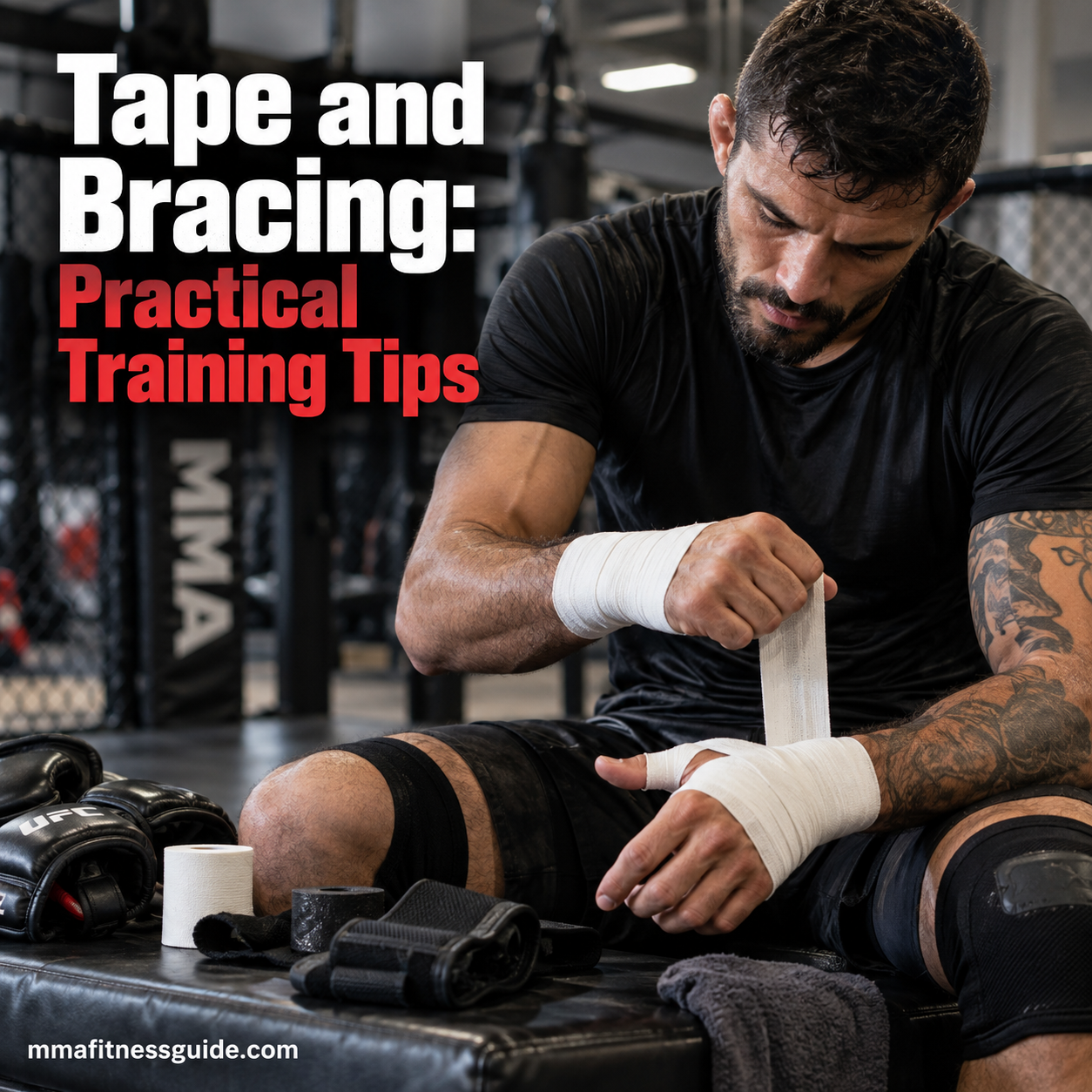
Tape and Bracing: Practical Training Tips

MMA fighter taping his wrists before training for added joint support and injury prevention
Taping and bracing can provide additional joint support during demanding MMA training sessions.

A wrist that bends back while posting, an ankle that rolls during a scramble, or a finger that gets caught during grip fighting can turn a normal training session into weeks of limited work. In MMA, joints are repeatedly exposed to impact, twisting, and awkward positions, so even minor irritation can become a persistent problem when training volume stays high.

Tape and braces can add support where it’s needed without unnecessarily limiting movement. Fighters commonly use them to stabilize wrists, fingers, ankles, and knees during striking, grappling, sparring, and return-to-training sessions.

The key is knowing when that extra support makes sense. Tape or a brace can help manage stress on a vulnerable joint, but it shouldn’t be used to push through an injury that needs rest, rehabilitation, or medical evaluation.

Continue reading “Tape and Bracing: Practical Training Tips”

Digital Tools: Timers, Trackers, and Apps

MMA fighters using digital tools including timers, fitness trackers, and training apps during workout sessions.
Male and female MMA athletes using timers, trackers, and training apps to enhance performance and recovery.

Set a five-minute round timer, hit the heavy bag until the buzzer, rest for 60 seconds, and repeat. After training, a smartwatch might show how your heart rate changed between rounds, while a training app records the session alongside the rest of your week.

That’s where digital tools can be useful in MMA: handling simple measurements that are difficult to track while you’re focused on training.

A timer keeps rounds and rest periods consistent. A tracker can reveal patterns in heart rate, sleep, and workload. A scheduling app can show whether you’ve accidentally stacked hard sparring, conditioning, and strength sessions too closely together.

None of that replaces a coach watching your technique or your own judgment about how your body feels. The useful data is the information that helps you make a practical decision—when to push, when to recover, and whether your training is actually progressing.

Continue reading “Digital Tools: Timers, Trackers, and Apps”

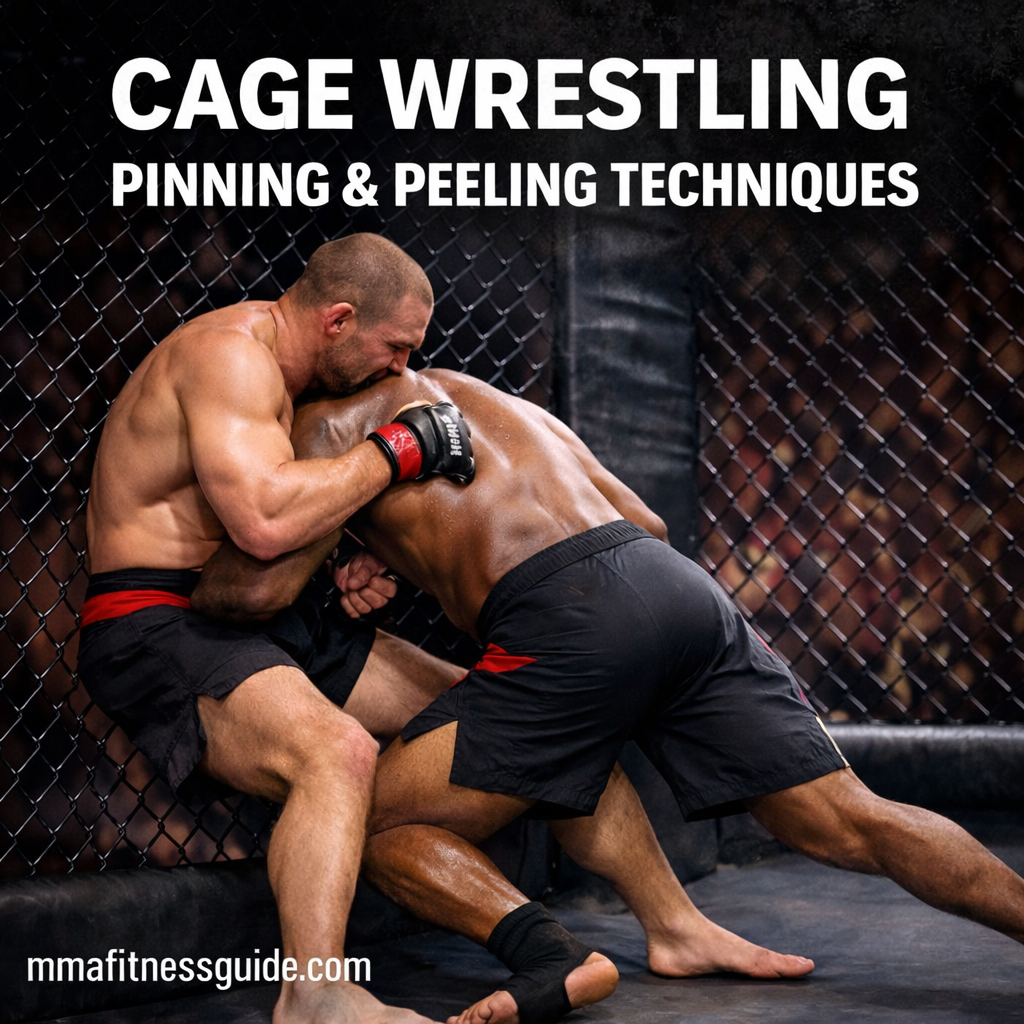
Cage Wrestling: Pinning and Peeling Techniques

MMA fighter using a body lock and head positioning to pin an opponent against the cage during a wrestling exchange.
Pinning pressure, underhook control, and frame-clearing techniques help MMA fighters maintain cage control and create takedown opportunities.

An opponent’s back hits the fence, but they immediately dig for an underhook, frame against your shoulder, and turn their hips toward open space. Simply driving harder won’t necessarily keep them there. You need to control their position, clear the frames preventing your advance, and adjust your pressure before they escape.

That’s where pinning and peeling come together in cage wrestling. Pinning limits an opponent’s movement through head position, underhooks, foot placement, and body pressure. Peeling removes the grips and frames they use to create space, opening opportunities for body locks, trips, single-leg takedowns, and short strikes.

The challenge is connecting those movements without wasting energy. Rather than holding an opponent against the fence through strength alone, effective cage wrestling uses small positional adjustments to turn defensive reactions into openings for the next attack.

Continue reading “Cage Wrestling: Pinning and Peeling Techniques”

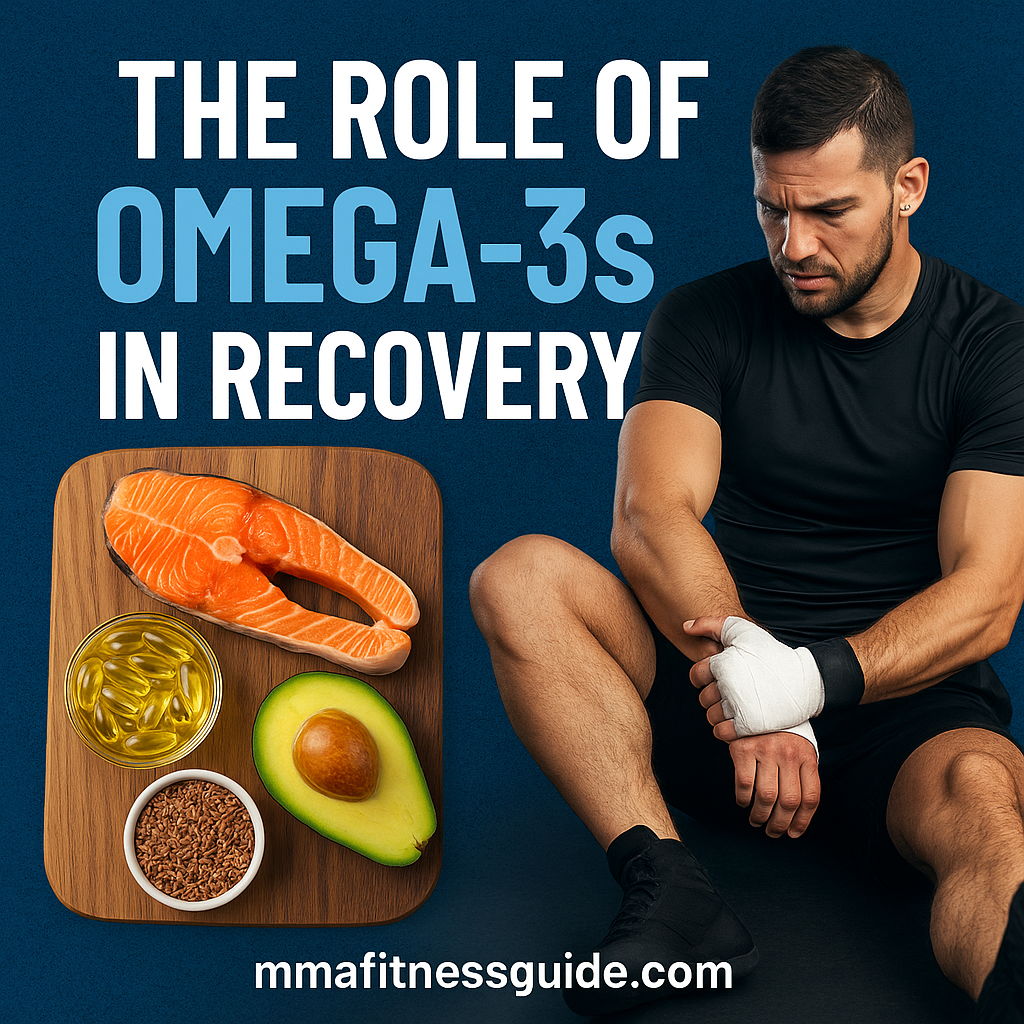
The Role of Omega-3s in Recovery

Main image showing a male athlete wrapping his wrist beside a cutting board of omega-3 foods, illustrating the role of omega-3s in recovery.
A male athlete sits beside omega-3-rich foods, highlighting how omega-3s support recovery.

Why Omega-3s Matter for MMA Athletes

Recovery is where real progress happens in MMA. Hard training breaks the body down — recovery rebuilds it stronger. Omega-3 fatty acids are one of the most powerful nutrition tools for reducing inflammation, boosting joint health, sharpening mental clarity, and supporting long-term performance.

Most fighters focus on protein, electrolytes, and carbs for recovery. Omega-3s often get overlooked, yet they play a direct role in how fast you bounce back between grappling rounds, striking sessions, and strength work.

Understanding how these fatty acids work can give you a serious edge.

Continue reading “The Role of Omega-3s in Recovery”

MMA: Build Mental Stamina During Long Workouts

Female MMA athlete standing in a gym wearing a burgundy sports outfit, looking focused beside bold text about building mental stamina during long workouts.
Female MMA athlete standing in a gym with focused posture, shown next to bold text promoting mental stamina during long workouts.

Why Mental Stamina Matters in MMA

When most people think about long MMA workouts, they picture physical exhaustion—burning lungs, tired legs, heavy arms. But in reality, the mind gives out long before the body does. Mental stamina is what allows fighters to push through fatigue, stay sharp in later rounds, and train with intention when everyone else fades.

Building mental endurance isn’t just about “toughing it out.” It’s a skill that can be trained and strengthened like any muscle. With the right strategies, you can stay focused, composed, and disciplined even during long conditioning sessions or extended sparring rounds.

Continue reading “MMA: Build Mental Stamina During Long Workouts”