Guard Passing Basics for New Grapplers

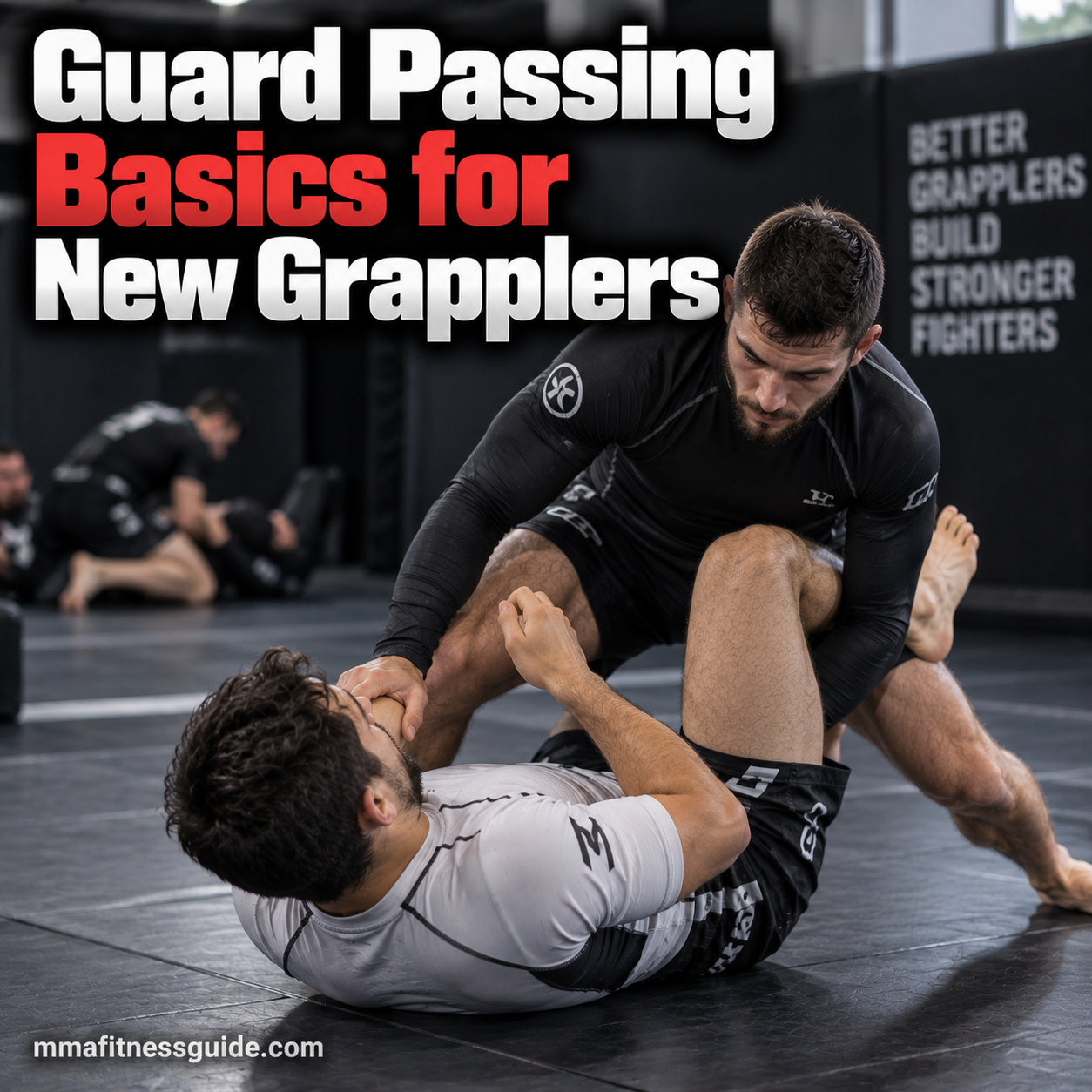
Two grapplers practicing basic guard passing techniques during a BJJ and MMA training session.
New grapplers can build their guard passing around posture, leg control, positioning, and a small number of reliable passes.

A new grappler often gets stuck before the pass even begins. They lean forward, reach for the legs, and immediately get pulled off balance or caught between their opponent’s knees. The problem usually is not a lack of techniques—it is trying to move around the guard before establishing posture, controlling distance, and dealing with the legs.

Guard passing becomes easier to understand when you give each step a purpose. Establish your base, prevent the bottom player from controlling your posture, open or clear the guard, control the legs or hips, and then move into a stable top position.

Start with a small number of passes and learn what makes them work. Once those mechanics become familiar, variations are much easier to add.

Continue reading “Guard Passing Basics for New Grapplers”
Wrestling Setups for Successful Takedowns

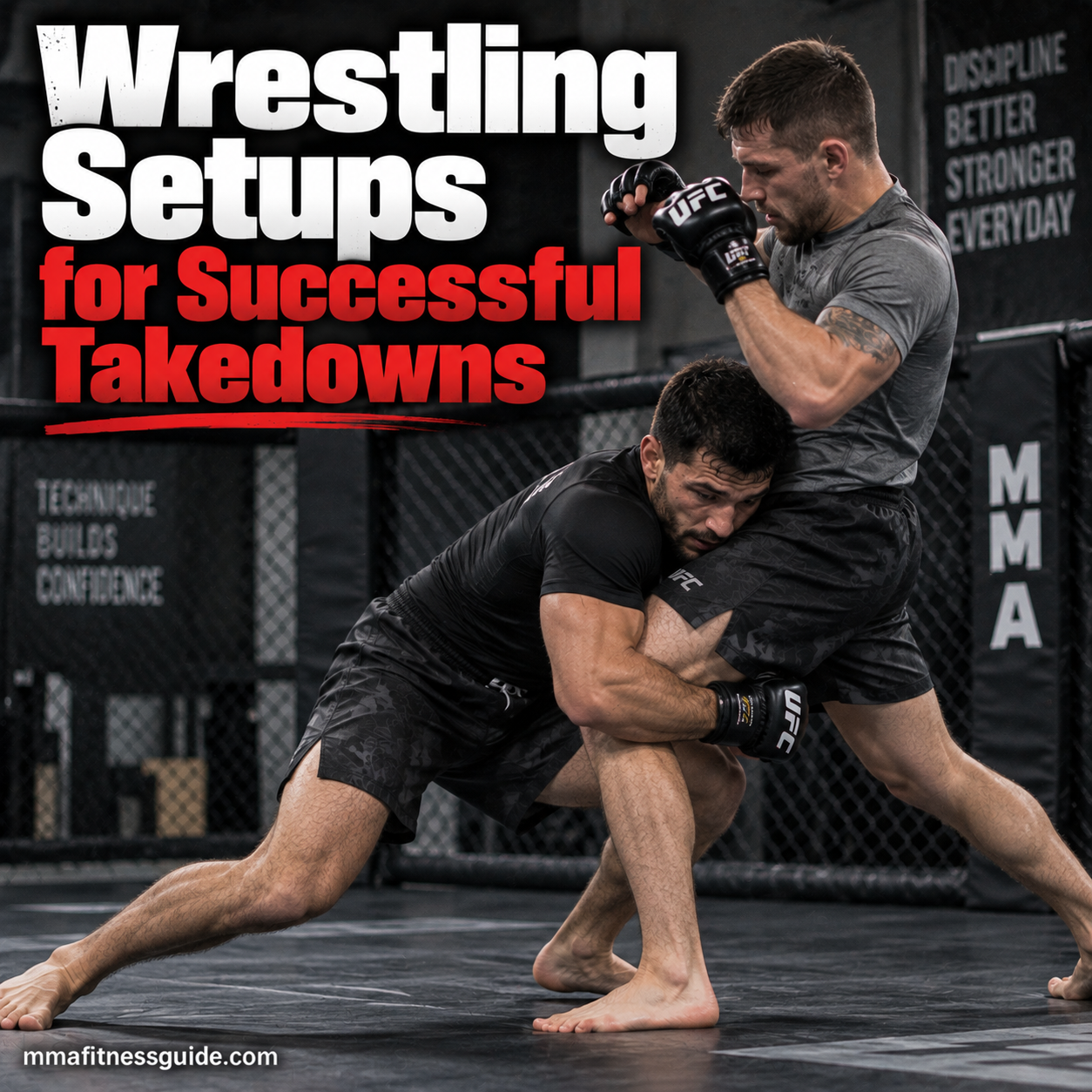
MMA fighter using a wrestling setup to enter a takedown during training
Strikes, feints, hand fighting, footwork, and timing can create openings for cleaner wrestling entries in MMA.

A double-leg attempt looks very different when the opponent is standing balanced and waiting for it versus when they’re reacting to a jab, stepping forward, or recovering their posture after a feint. The takedown may be identical, but the opening isn’t.

That’s the purpose of a wrestling setup.

In MMA, shooting directly at an opponent from predictable range gives them time to sprawl, frame, circle away, or counter. Strikes, level changes, hand fighting, footwork, and feints can disguise the entry or encourage a reaction that makes the legs and hips easier to reach.

Good setups also connect wrestling to the rest of MMA. A jab can lead into a double leg, cage pressure can transition into a body lock, and a fake shot can bring an opponent’s hands down before you return to striking.

Rather than treating the takedown as an isolated technique, think of the setup and entry as one continuous sequence: create a reaction, recognize the opening, change levels, and attack from a position where the opponent has less time to respond.

Continue reading “Wrestling Setups for Successful Takedowns”

Counter-Striking Strategies for Stand-Up Fighting

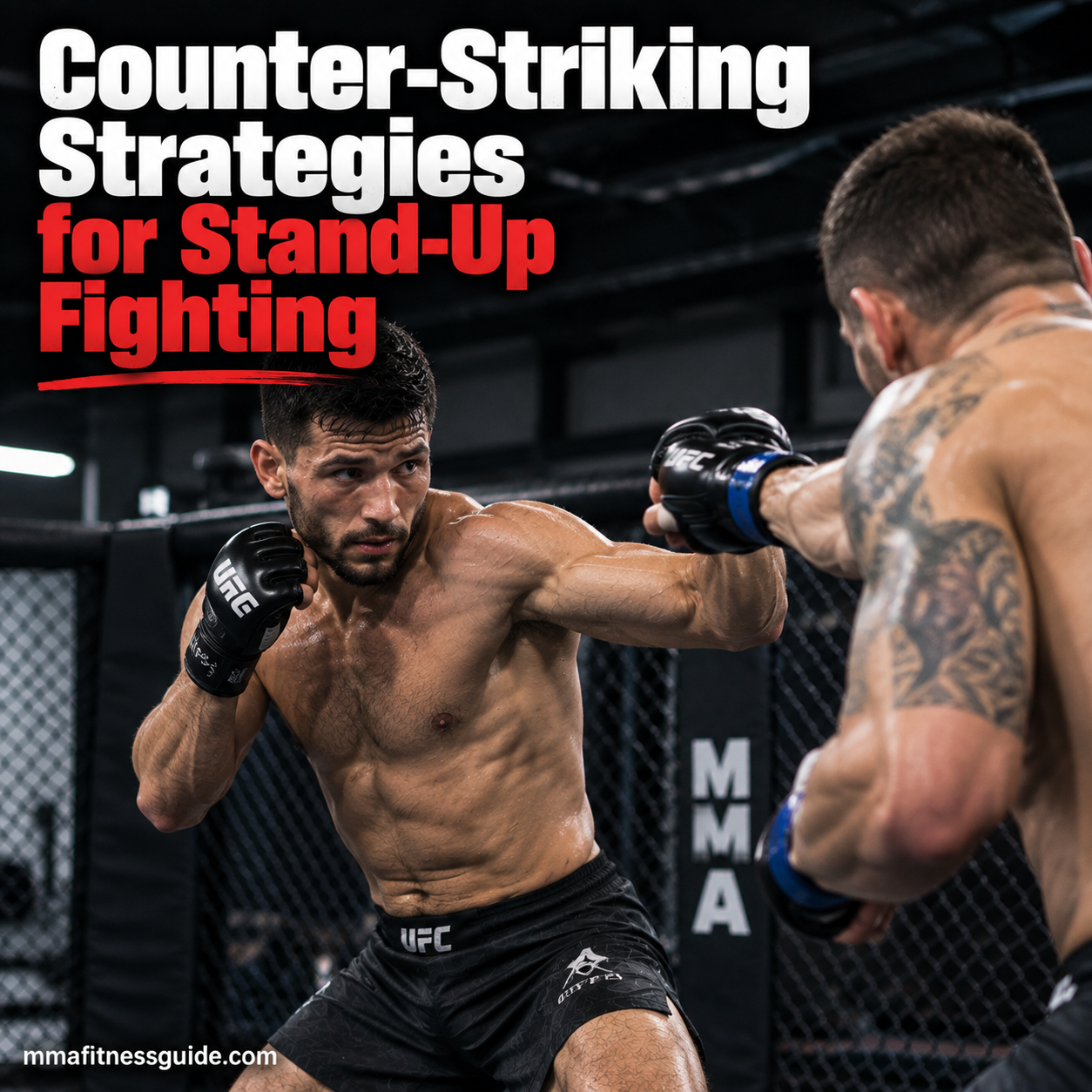
Two MMA fighters practicing counter-striking during a stand-up exchange inside a cage
Counter-striking uses timing, defensive movement, distance control, and positioning to respond when an opponent creates an opening.

A fighter throws a jab, leaves the hand extended for a fraction of a second, and gets hit with a cross before returning to stance. Another steps forward with a heavy right hand, misses, and turns directly into a hook.

Those brief moments are where counter-striking happens.

Instead of attacking an opponent who is already set to defend, a counter-striker looks for the instant when the opponent is punching, kicking, stepping forward, or recovering from an attack. Timing the response correctly can create openings that disappear once the opponent regains position.

In MMA, the threat of kicks, takedowns, clinches, and small-glove punches makes those decisions more complicated. Good counter-striking therefore depends on more than fast reactions—it requires distance management, pattern recognition, positioning, and disciplined shot selection.

Continue reading “Counter-Striking Strategies for Stand-Up Fighting”

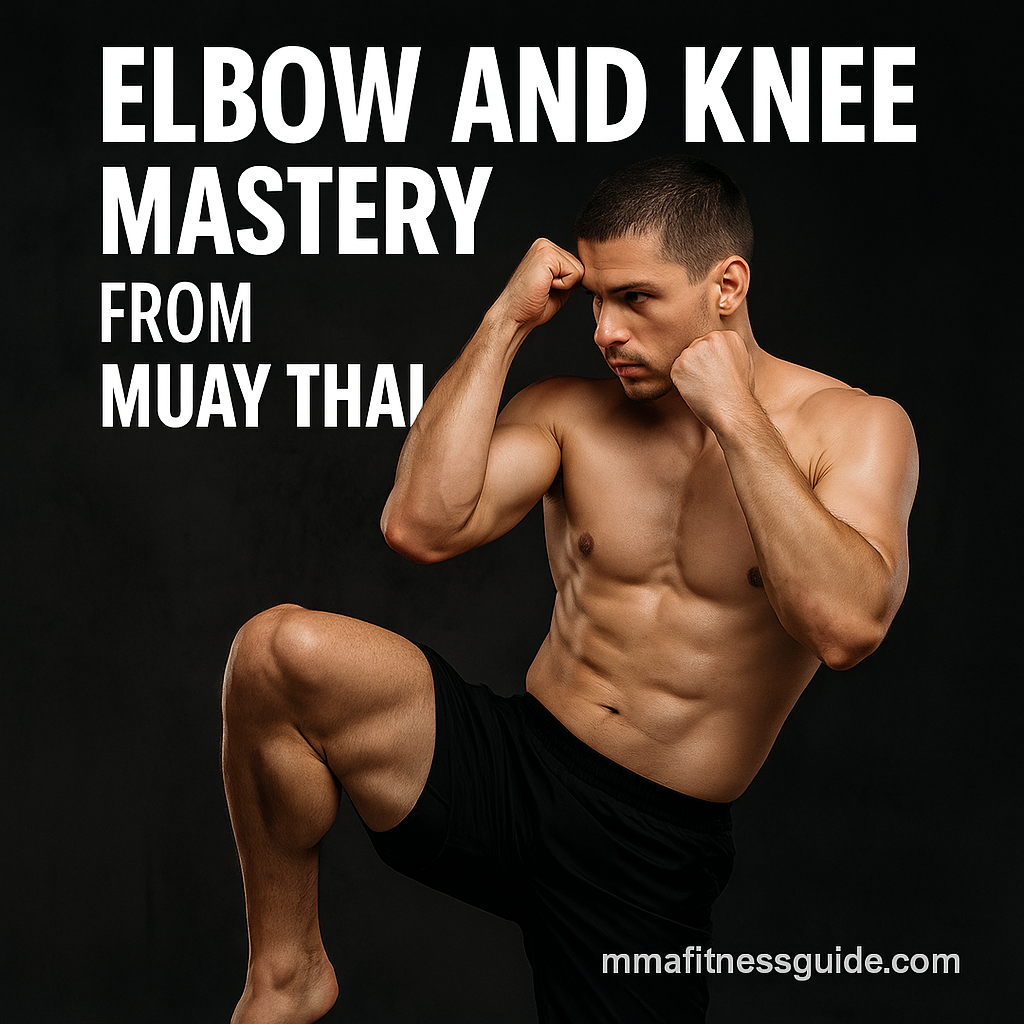
Elbow and Knee Mastery from Muay Thai

Male Muay Thai fighter performing a powerful elbow and knee striking pose against a dark background with title text reading Elbow and Knee Mastery from Muay Thai.
Muay Thai elbow and knee mastery demonstrated through dynamic striking posture, highlighting power, technique, and close-range effectiveness.

Muay Thai is known as “The Art of Eight Limbs,” and two of those limbs—the elbows and knees—are among the most feared weapons in all combat sports. For MMA fighters, mastering these close-range strikes can instantly elevate clinch work, counter-striking, and finishing ability. Elbows slice through guards, knees break posture, and both deliver devastating power from short distances.

This guide explains how to develop precision, timing, and confidence with Muay Thai elbows and knees, and how to adapt them for MMA environments like the cage, wall work, and grappling transitions.

Continue reading “Elbow and Knee Mastery from Muay Thai”

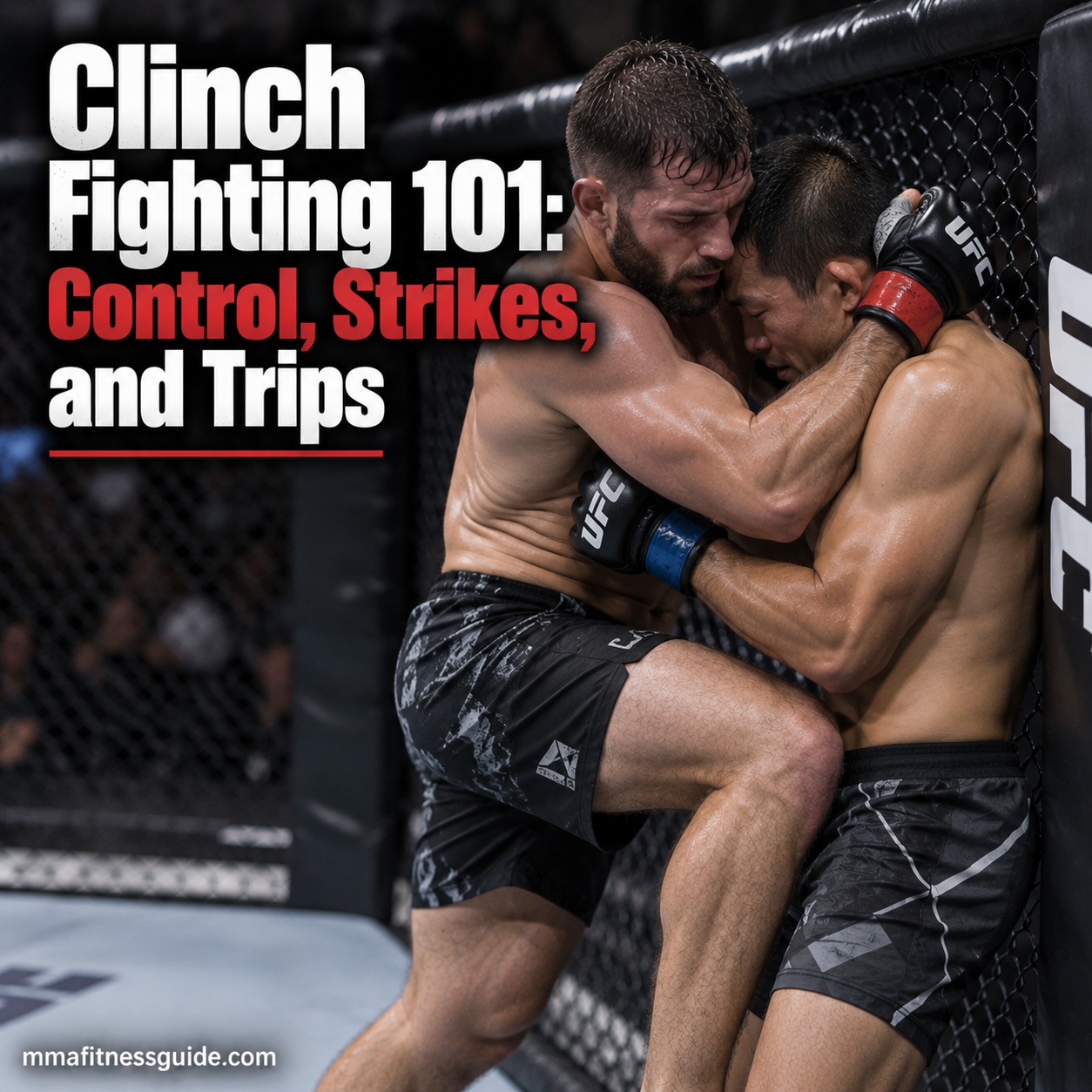
Clinch Fighting 101: Control, Strikes, and Trips

Two MMA fighters practicing clinch control and close-range striking against the cage
MMA clinch fighting combines head position, underhooks, pressure, short-range strikes, trips, and takedowns to control close-range exchanges.

Introduction

When two fighters close the distance and neither can strike freely or complete a takedown immediately, the fight often turns into a battle for grips, head position, underhooks, and balance.

That’s the clinch.

From this range, a fighter can pin an opponent against the cage, land short knees and punches, attack a body lock, set up a trip, or create enough space to return to striking range.

Good clinch work isn’t simply about being stronger. Position, leverage, foot placement, timing, and the ability to transition between striking and grappling determine what you can accomplish at close range.

Continue reading “Clinch Fighting 101: Control, Strikes, and Trips”

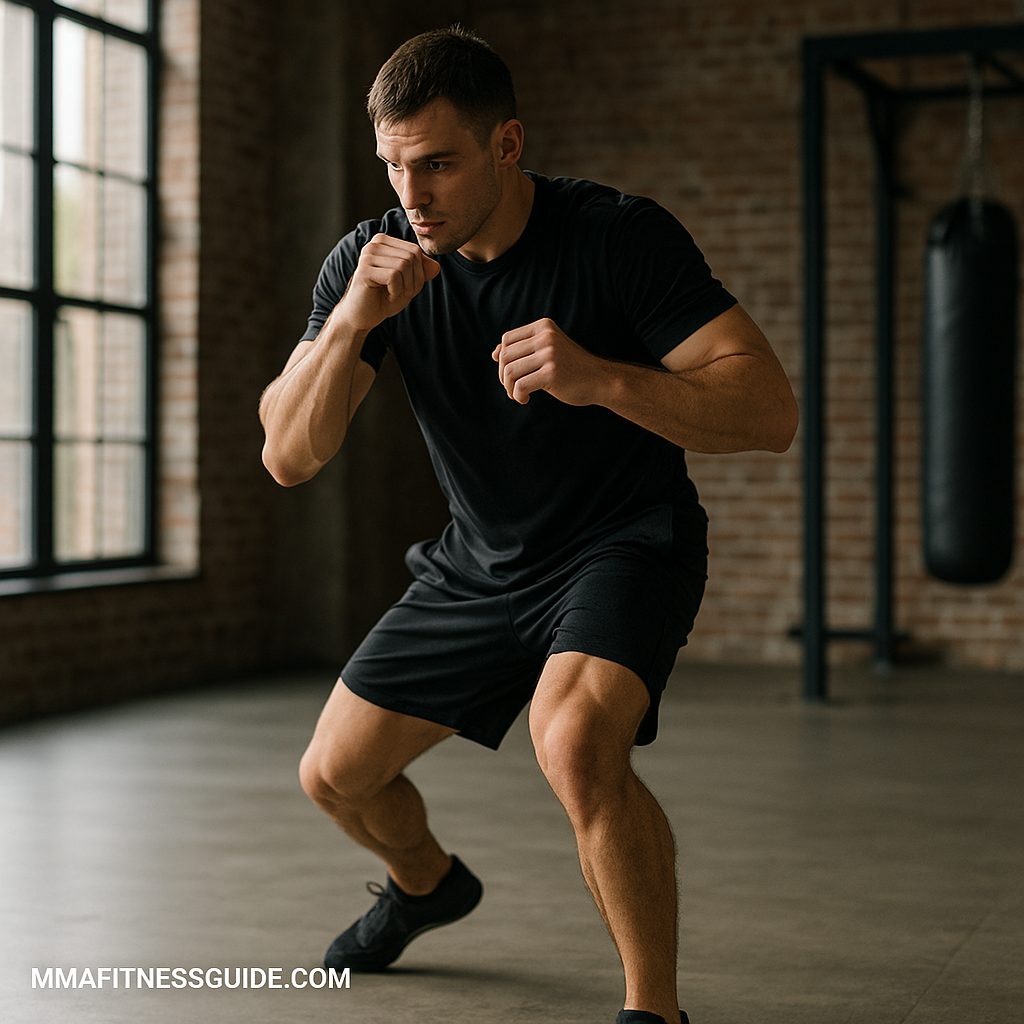
Blending Styles: How to Build a Hybrid Skill Set

Male athlete training in a gym and practicing movement and agility drills with focus.
Male MMA athlete practicing movement and agility drills in the gym, representing the balance of hybrid training and adaptability.

The Evolution of Modern MMA

When MMA first exploded in the 1990s, the sport was defined by specialists — strikers versus grapplers, kickboxers versus wrestlers.
Today, the best fighters aren’t specialists — they’re hybrids.

Blending martial arts styles has become essential for success in modern MMA.
The goal isn’t to master every art perfectly, but to combine skills seamlessly into a style that fits your strengths.

Continue reading “Blending Styles: How to Build a Hybrid Skill Set”

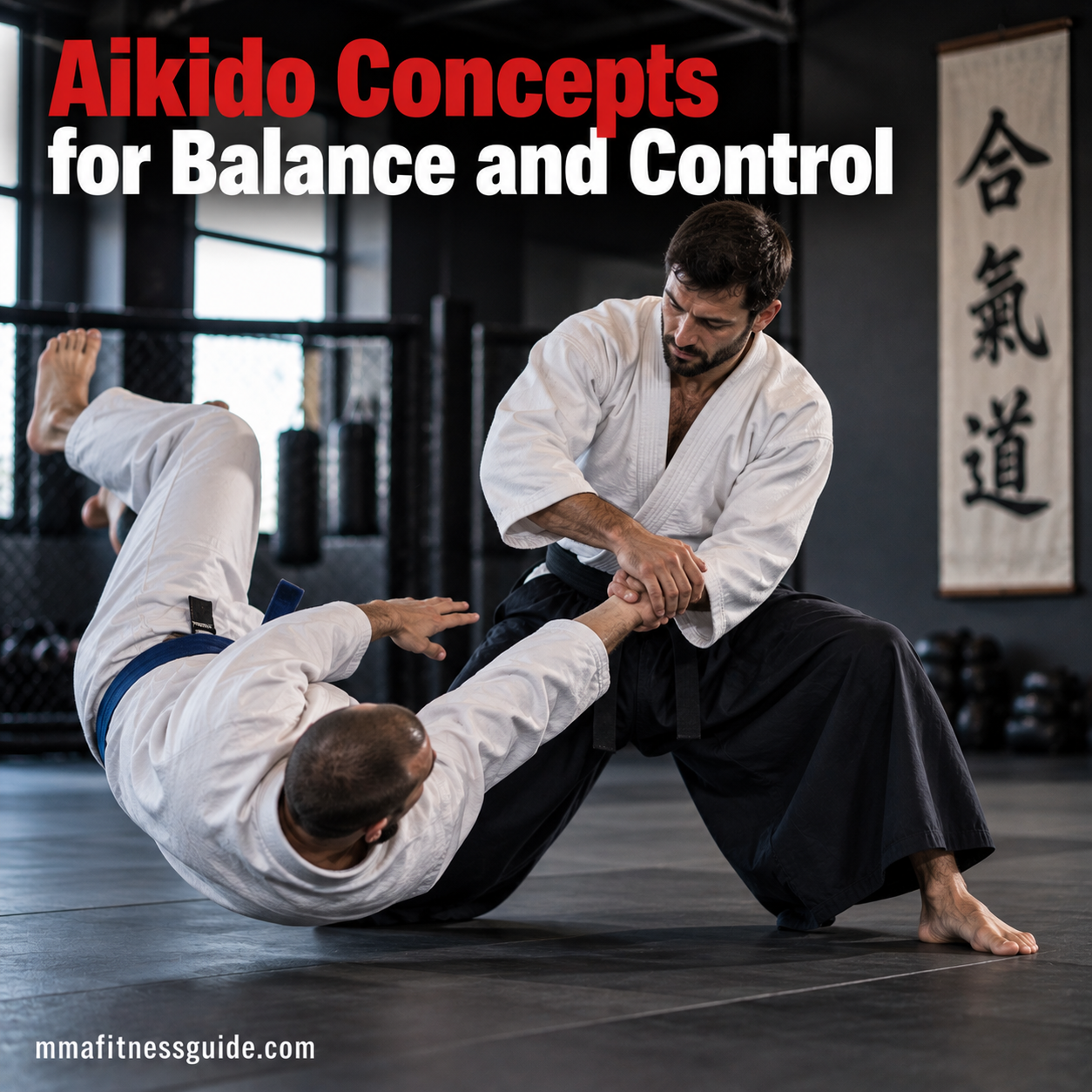
Aikido Concepts for Balance and Control

Two Aikido practitioners demonstrating a controlled wrist technique and throw on martial arts training mats.
Aikido emphasizes balance, body positioning, and controlled movement—concepts that can complement MMA training when practiced against realistic resistance.

An opponent grabs your wrist and pulls you forward. Your first instinct might be to pull backward, turning the exchange into a contest of strength. But what happens if you adjust your footwork, maintain your posture, and move at an angle instead?

You may create an opportunity to regain your balance, change your position, or break the grip without relying entirely on strength.

This scenario illustrates several concepts associated with Aikido, a Japanese martial art that emphasizes movement, balance, timing, and the redirection of force.

Although Aikido and mixed martial arts approach combat differently, some of their underlying movement principles overlap.

The important distinction is that understanding a principle doesn’t automatically make a technique effective against a resisting opponent. MMA fighters need to test movements through realistic drilling, positional sparring, and live training.

When approached with that distinction in mind, Aikido offers an interesting perspective on how fighters can think about balance, body positioning, and control.

Continue reading “Aikido Concepts for Balance and Control”

Kung Fu Principles for Distance and Timing

Male martial artist practicing Kung Fu form in a gym, demonstrating precise distance and timing control.
Male Kung Fu practitioner training in a gym, applying traditional principles of distance and timing for modern martial arts.

Ancient Roots, Modern Relevance

Kung Fu isn’t just a striking art — it’s a science of rhythm, awareness, and control.
While its techniques were developed centuries ago, the principles of distance and timing remain essential to modern MMA fighters today.

From footwork to counter-striking, mastering when and how to move can make the difference between landing a clean shot and walking into one.

Continue reading “Kung Fu Principles for Distance and Timing”

Judo Throws That Work in MMA

Male MMA fighter performing a judo hip throw on a training partner in a gym with natural lighting.
Male MMA fighter executing a powerful judo hip throw during training, demonstrating technique and control.

From the Dojo to the Octagon

Judo’s influence on MMA is undeniable. Long before grappling became mainstream, judo practitioners were demonstrating how leverage, timing, and technique could overpower raw strength.

From Ronda Rousey’s lightning-fast armbar setups to Karo Parisyan’s hip tosses, judo has repeatedly proven that throws can change the course of a fight — fast.

Let’s explore the judo techniques that truly translate into mixed martial arts competition.

Continue reading “Judo Throws That Work in MMA”

What Krav Maga Teaches About Real-World Defense

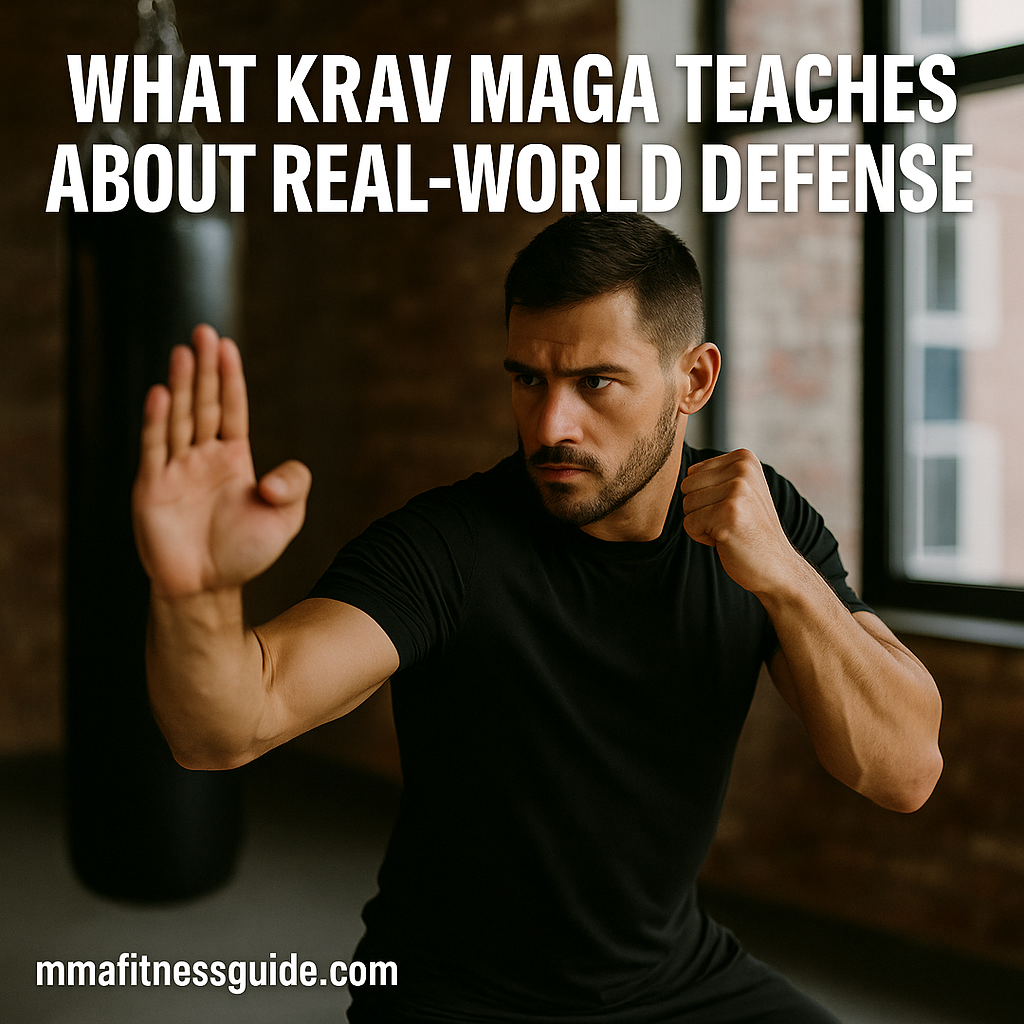
Male MMA athlete practicing self-defense technique in a gym with focused expression and natural lighting.
Male MMA fighter training self-defense techniques inspired by Krav Maga to improve awareness and real-world readiness.

Beyond the Gym: The Reality of Self-Defense

Most martial arts focus on competition — rounds, points, and rules.
Krav Maga is different. Born out of necessity, it’s a real-world combat system designed for one purpose: survival.

Developed by Imi Lichtenfeld for the Israeli Defense Forces, Krav Maga combines techniques from boxing, wrestling, judo, and street fighting. It’s direct, practical, and brutally efficient — built for real-life threats, not tournament trophies.

For MMA athletes, studying Krav Maga adds a layer of awareness and adaptability that can carry over to both training and life.

Continue reading “What Krav Maga Teaches About Real-World Defense”