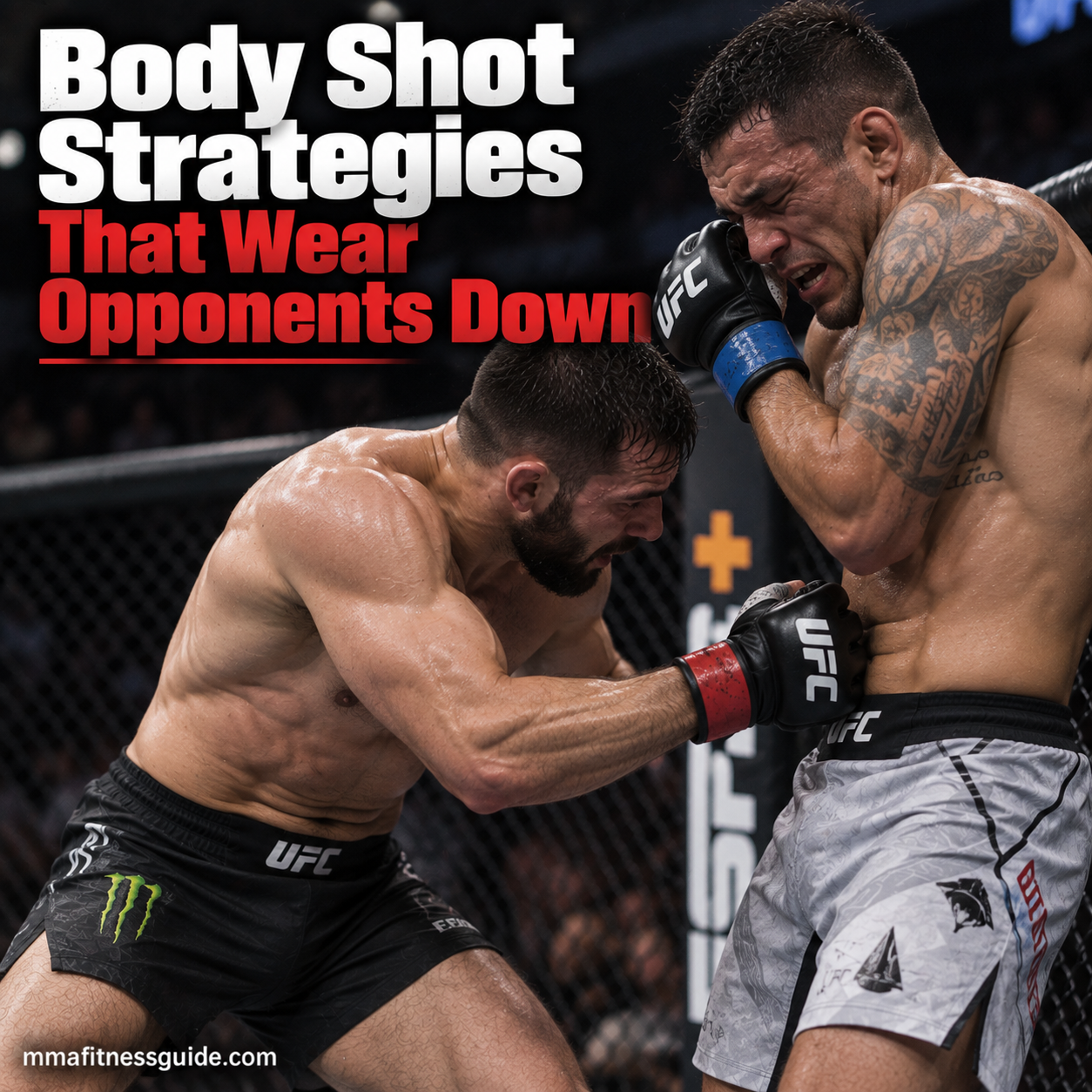
A clean hook to the ribs can change an exchange without producing a knockdown. The opponent may tighten their elbows, hesitate before stepping forward, or become more protective of the midsection—creating openings elsewhere.
That’s what makes sustained body work useful in MMA, boxing, Muay Thai, and kickboxing. Punches, kicks, knees, and teeps to legal body targets can disrupt breathing, punish predictable defensive positions, and force an opponent to divide their attention between protecting the head and torso.
Body attacks also create tactical opportunities beyond immediate damage. A fighter who repeatedly threatens the body can use level changes and feints to disguise head strikes, interrupt forward pressure, or create openings during combinations.
The sections below cover how to build body attacks into combinations, choose appropriate targets, transition between head and body strikes, and practice these strategies safely during pads, bag work, and controlled sparring.
Why Body Shots Are So Effective
Body shots attack systems that fighters rely on to survive rounds, not just to avoid being knocked out.
Key reasons body shots work:
- They sap cardio by restricting breathing
- They weaken posture and core stability
- They force opponents to lower their guard
- They accumulate damage that compounds over time
- They increase mental fatigue and hesitation
Even when a body strike doesn’t look dramatic, it taxes the diaphragm, ribs, liver, and abdominal muscles—areas that don’t “recover” quickly during a fight.
The Physiology Behind Wearing an Opponent Down
Understanding what body shots do inside the body explains why they are so effective long term.
Breathing Disruption
Strikes to the solar plexus and diaphragm cause involuntary gasping and shallow breathing. Once breathing becomes compromised:
- Movement slows
- Reaction time drops
- Defensive awareness declines
An opponent who can’t breathe efficiently can’t maintain pace.
Liver and Organ Trauma
Liver shots are especially devastating because:
- They trigger systemic shock
- Pain is delayed but overwhelming
- The body temporarily shuts down
Even partially blocked liver shots accumulate trauma and make future strikes more effective.
Core Fatigue
Repeated body attacks fatigue the muscles responsible for balance, rotation, and power generation. As the core weakens:
- Punches lose snap
- Kicks become slower
- Clinch resistance drops
Strategic Benefits of Body Attacks
Beyond physical damage, body shots create strategic advantages that smart fighters exploit.
Lowering the Guard
Consistent body attacks force opponents to protect their midsection. This creates:
- Openings for head strikes
- Slower hand recovery
- Defensive confusion
Breaking Rhythm and Confidence
Body shots interrupt an opponent’s rhythm and comfort zone. Over time, they:
- Reduce forward pressure
- Cause hesitation before engaging
- Make opponents overly defensive
Core Body Shot Techniques That Wear Opponents Down
Straight Body Punches
Straight punches to the body are fast, efficient, and low risk when set up correctly.
Best uses:
- Off jabs or feints
- After slipping a punch
- As part of a 1–2–body combination
They are especially effective for tall fighters who can level change smoothly.
Hooks to the Body
Body hooks are devastating when thrown with proper rotation.
Key targets:
- Liver (right side of opponent)
- Floating ribs
- Obliques
Tips for effectiveness:
- Bend your knees, not your back
- Rotate the hips fully
- Exit at an angle after the strike
Uppercuts to the Body
Body uppercuts excel at close range, especially in the pocket or clinch breaks.
They work best:
- After opponents shell up
- When opponents lean forward
- As a surprise strike from low guard
Kicks That Drain Opponent Stamina
Roundhouse Kicks to the Body
Body kicks are among the highest-damage strikes in martial arts.
Benefits:
- High impact with low concussion risk
- Massive energy drain
- Strong visual scoring in some rule sets
Repeated body kicks make it nearly impossible for opponents to maintain pressure.
Teep and Push Kicks
While not always damaging, teeps:
- Disrupt breathing rhythm
- Drain leg and core energy
- Control distance and pace
They are especially effective in Muay Thai and MMA to slowly wear opponents down.
Body Shots in the Clinch
The clinch is a prime environment for grinding body damage.
Effective clinch body strikes:
- Short knees to the ribs and solar plexus
- Digging punches under the elbows
- Shoulder pressure to restrict breathing
Clinching body work accumulates fatigue without giving opponents space to reset.
Combining Head and Body Attacks
The most effective body shot strategies blend seamlessly with head strikes.
Head-to-Body Combinations
Examples:
- Jab → cross → body hook
- Slip → head hook → body hook
- Feint jab → straight to the body
These combinations prevent opponents from predicting target selection.
Body-to-Head Setups
Repeated body attacks condition opponents to lower their guard. Capitalize by:
- Faking the body and going upstairs
- Throwing rising hooks or uppercuts
- Timing head kicks after body shots
Style-Specific Body Shot Strategies
Boxing
Boxers excel at:
- Digging hooks under tight guards
- Using level changes to disguise attacks
- Accumulating rib damage over rounds
Body work is especially valuable in longer boxing matches.
Muay Thai
Muay Thai emphasizes:
- Powerful roundhouse kicks
- Knees in the clinch
- Teeps to manage fatigue
Consistent body kicks often decide fights before knockdowns occur.
MMA
In MMA, body shots:
- Slow wrestling entries
- Reduce clinch resistance
- Drain energy needed for scrambles
Ground-and-pound body strikes also exhaust opponents without risking position.
Kickboxing
Kickboxing blends:
- Punch-kick combinations
- Fast body kicks
- Volume-based body attacks
Wearing opponents down sets up late-round finishes.
Common Mistakes When Targeting the Body
Many fighters abandon body work due to avoidable errors.
Avoid these mistakes:
- Overcommitting and exposing your head
- Telegraphing level changes
- Ignoring exits after body shots
- Giving up on body work too early
Body strategies pay off over time—not instantly.
How to Train Body Shot Endurance and Accuracy
Pad and Bag Work
Focus on:
- Repetitive body combinations
- Power generation from hips
- Smooth transitions between head and body
Sparring With Intent
In sparring:
- Designate rounds focused on body attacks
- Practice clinch body work
- Track how opponents react over time
Conditioning
Build the engine to sustain body-focused pressure:
- Core strengthening
- Rotational power exercises
- Cardio under fatigue
Final Thoughts
Body shot strategies are about patience, intelligence, and long-term control. Fighters who invest in body work don’t just chase knockouts—they systematically dismantle their opponents’ ability to fight back. By draining stamina, breaking posture, and creating openings, body shots turn close fights into one-sided victories as rounds progress.
Mastering body attacks isn’t flashy, but it’s one of the most reliable ways to wear opponents down and take over a fight.