Your trusted source for MMA fitness, nutrition, and fighter-level health.
Category: Injury Prevention & Recovery
Injury Prevention & Recovery focuses on keeping athletes healthy, resilient, and training consistently. Topics include prehab, recovery habits, pain awareness, mobility, and strategies to reduce injury risk over the long term.
An MMA athlete showing proper upright posture inside the gym for the posture improvement guide.
Posture isn’t just about standing up straight — in combat sports, it’s the foundation of power, balance, speed, and injury prevention. Whether you’re striking, grappling, or transitioning between positions, good posture helps you generate force efficiently while staying protected. Poor posture, on the other hand, leads to slower reactions, weaker strikes, compromised balance, and a much higher chance of injury.
Improving posture is one of the simplest ways to boost performance in MMA.
Controlled mobility exercises and progressive strength training help MMA fighters prepare their shoulders and hips for demanding training.
You reach for an underhook during a wrestling exchange, and your shoulder feels tight. Later, while throwing a high kick, you notice that one hip moves comfortably while the other feels restricted. Neither sensation necessarily means you’re injured, but both are worth paying attention to.
MMA places unusual demands on the shoulders and hips. Punching requires rapid arm movement and coordinated rotation. Wrestling involves pulling, pushing, lifting, and resisting unpredictable forces. Kicking demands strength and control through large ranges of motion, while grappling can place joints in positions rarely encountered during ordinary strength training.
Building durable shoulders and hips means preparing these areas to tolerate the demands of your sport. That requires more than stretching before class or lifting heavy weights twice a week.
A useful approach combines appropriate mobility, progressive strength training, movement control, sensible training loads, and adequate recovery.
No exercise routine can make a joint injury-proof. However, developing these qualities can improve your physical capacity and help you train more consistently.
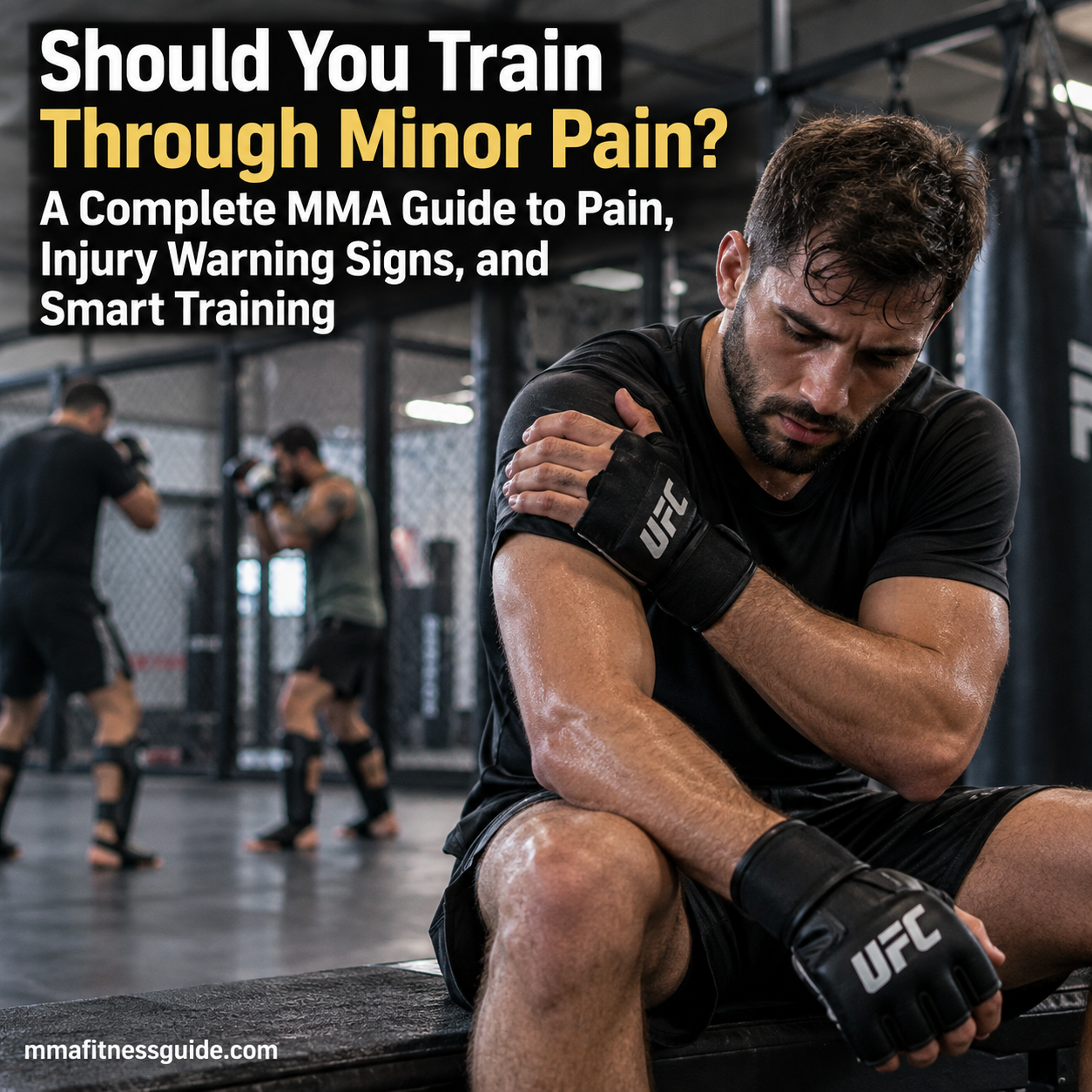
Recognizing the difference between normal training soreness and injury warning signs helps MMA fighters make safer training decisions.
Minor aches are practically unavoidable in MMA. After a demanding week of wrestling, striking, grappling, and strength training, you might wake up with sore shoulders, stiff hips, tender forearms, or a nagging ache in your lower back.
But what happens when that discomfort follows you into your next training session?
Should you push through it, reduce your intensity, or take the day off entirely?
The answer depends on several factors, including where the pain is located, how it started, whether it changes during movement, and how your body responds afterward.
The goal isn’t to avoid every uncomfortable sensation. It’s to recognize when training is productive and when continuing could make an existing problem worse.
A fighter who misses one hard sparring session to address a developing injury may avoid missing several weeks of training later. At the same time, unnecessary inactivity can interrupt conditioning, technical development, and training consistency.
This guide explains how to evaluate minor pain, distinguish ordinary soreness from possible injury, modify MMA workouts, and decide when professional medical assessment is necessary.
Medical note: This article provides general training education, not an individual diagnosis. Pain intensity and symptoms alone cannot reliably establish whether an injury is present. Seek medical assessment for concerning, persistent, or worsening symptoms.
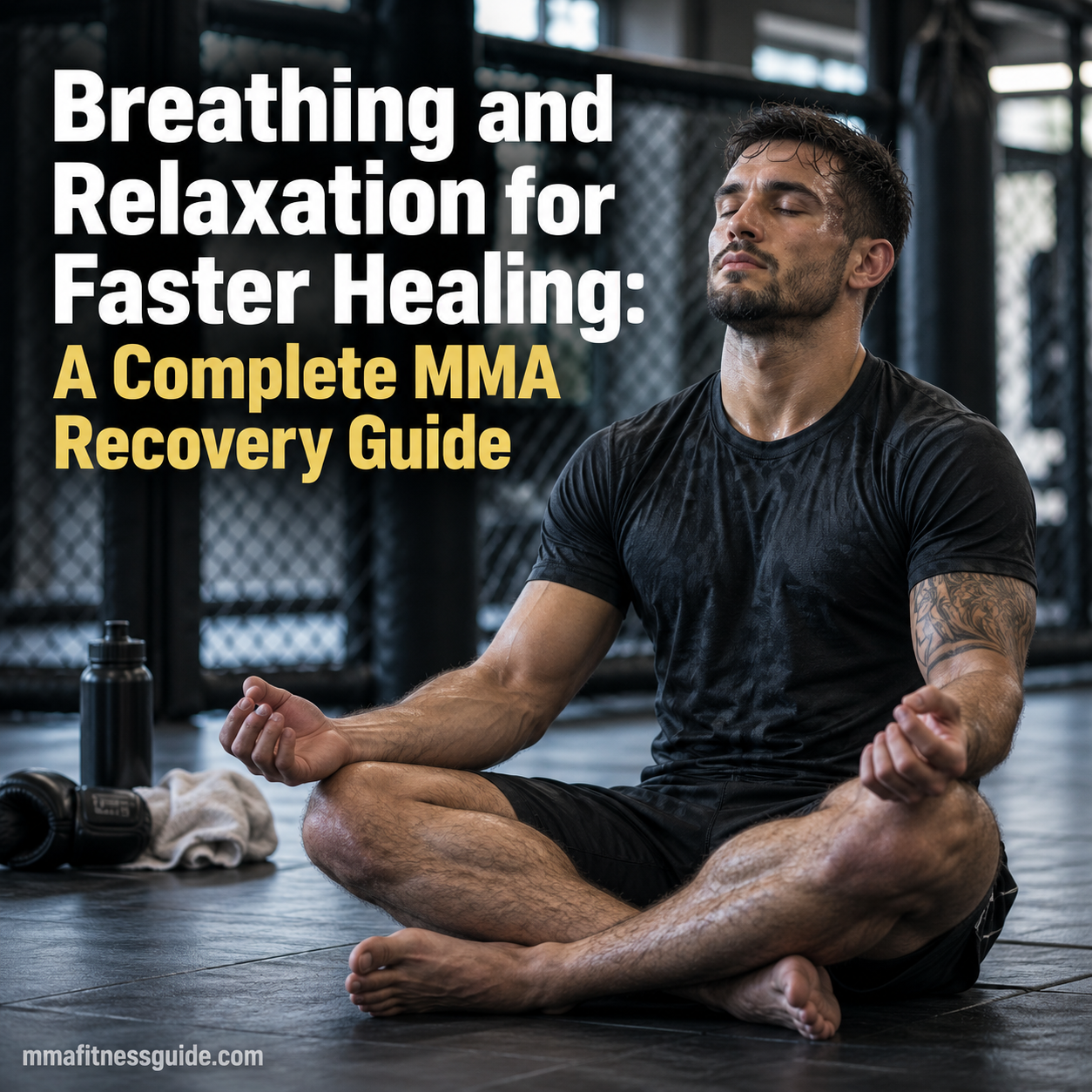
Controlled breathing can help MMA fighters manage stress, release tension, and support recovery.
Recovery is not just about resting sore muscles or waiting for an injury to disappear. For MMA fighters, it also involves managing stress, improving sleep, controlling unnecessary muscle tension, and creating the conditions that allow the body to repair itself.
One of the simplest ways to support that process is through controlled breathing.
After a demanding sparring session, your heart rate may remain elevated, your shoulders may feel tight, and your mind may continue replaying exchanges long after training ends. Even when you are physically resting, your body can remain in a heightened state of arousal.
Breathing and relaxation techniques can help you transition from intense physical activity toward a calmer state.
They may reduce perceived stress, ease muscle tension, improve relaxation, and support better sleep. These benefits can make recovery more comfortable and help you maintain consistent rehabilitation habits.
However, breathing exercises do not directly repair torn ligaments, heal fractures, or replace medical treatment. Their primary value is supporting the conditions in which normal recovery takes place.
This guide explains how fighters can use breathing, relaxation, and gentle movement during everyday recovery, after intense training, and while managing minor injuries.
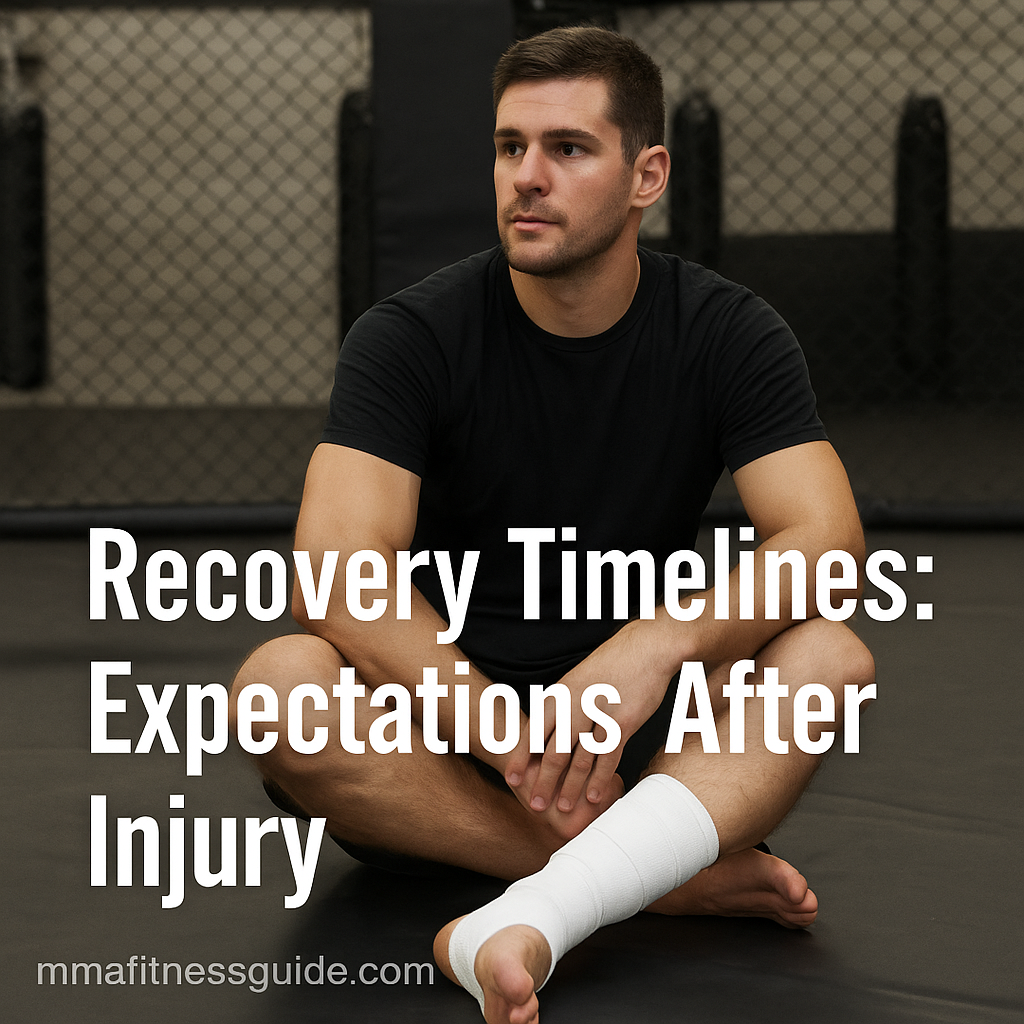
A fighter taking time to recover after an injury, following safe recovery timelines before returning to full training.
Introduction
Recovering from an injury is one of the most frustrating parts of combat sports. You want to get back on the mats, keep improving, and stay consistent — but pushing too soon can turn a minor injury into a long-term problem. Knowing realistic recovery timelines helps you stay patient, avoid setbacks, and return to training stronger than before.
Here’s what you can expect from common MMA injuries and how to manage recovery the smart way.
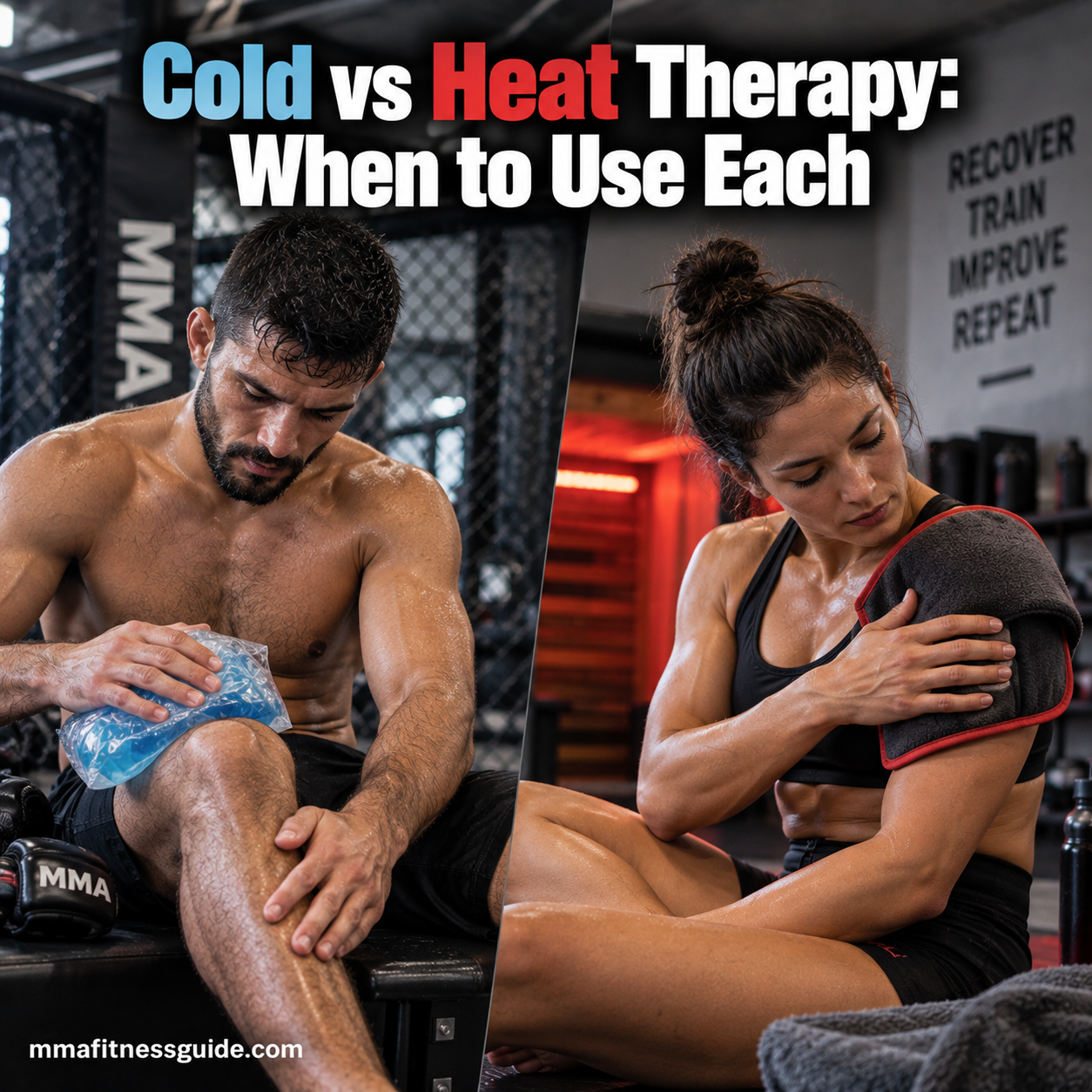
Cold and heat serve different purposes when managing soreness, stiffness, and minor training-related injuries.
Introduction
A swollen ankle after a wrestling scramble and stiff hips the morning after hard sparring are two different recovery problems. Reaching for the same treatment in both situations may not give you the result you want.
Cold and heat affect the body differently. Cold can temporarily reduce pain and limit swelling after certain acute injuries, while heat can make stiff muscles and joints feel more comfortable before mobility work or training. The right choice depends on what happened, how the area feels, and when the symptoms started.
For fighters dealing with the routine bumps, soreness, and stiffness that come with MMA training, knowing those differences makes it easier to choose an appropriate recovery method—and recognize when an injury needs more than home treatment.
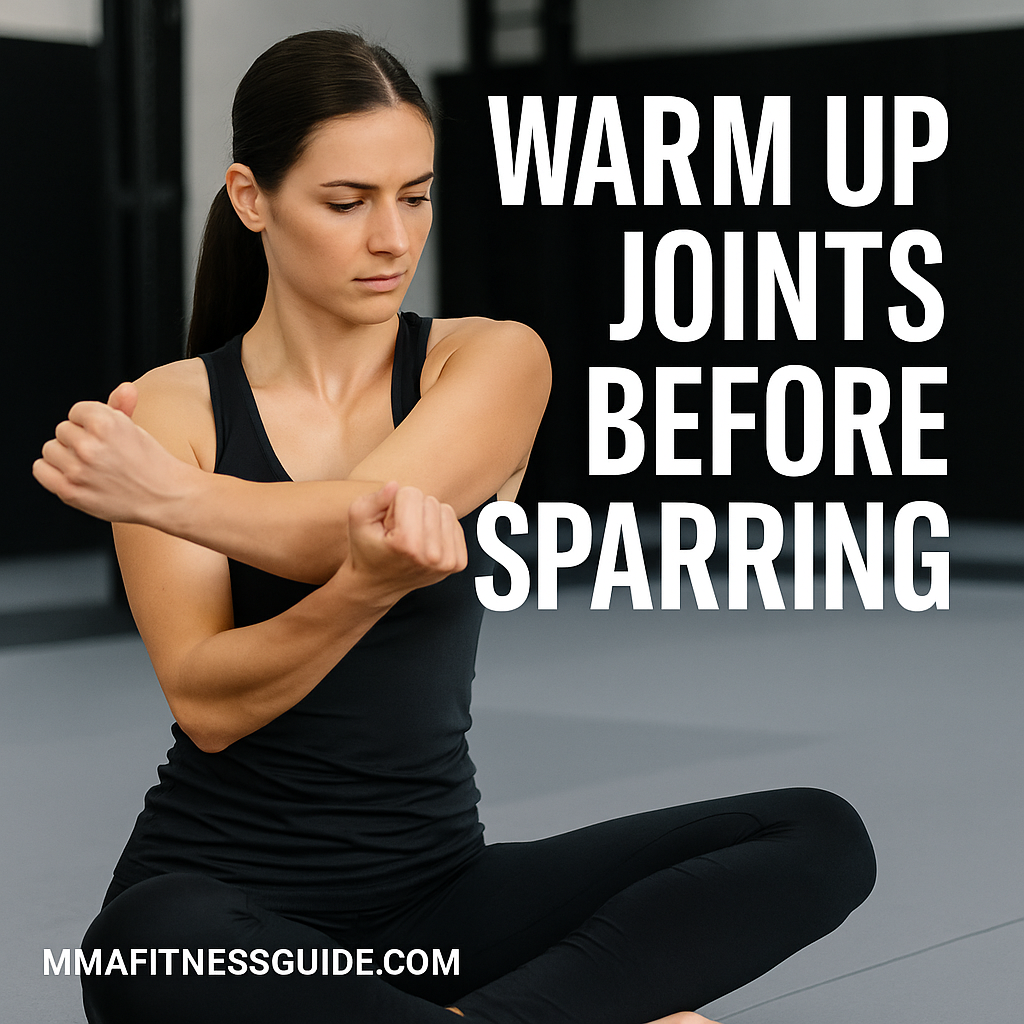
A fighter performing a simple joint warm-up drill before sparring.
Introduction
Sparring is one of the most demanding parts of MMA training. Your body needs to move fast, react quickly, change levels, and absorb impact — all while staying relaxed and controlled. That’s why a proper joint-focused warm-up is essential. Tight joints slow you down, make movements sloppy, and increase the risk of injury.
The good news is that warming up your joints doesn’t take long. With a few simple drills, you can prepare your body, move more smoothly, and spar with better confidence and safety.
Here’s a beginner-friendly joint warm-up routine designed specifically for MMA sparring.
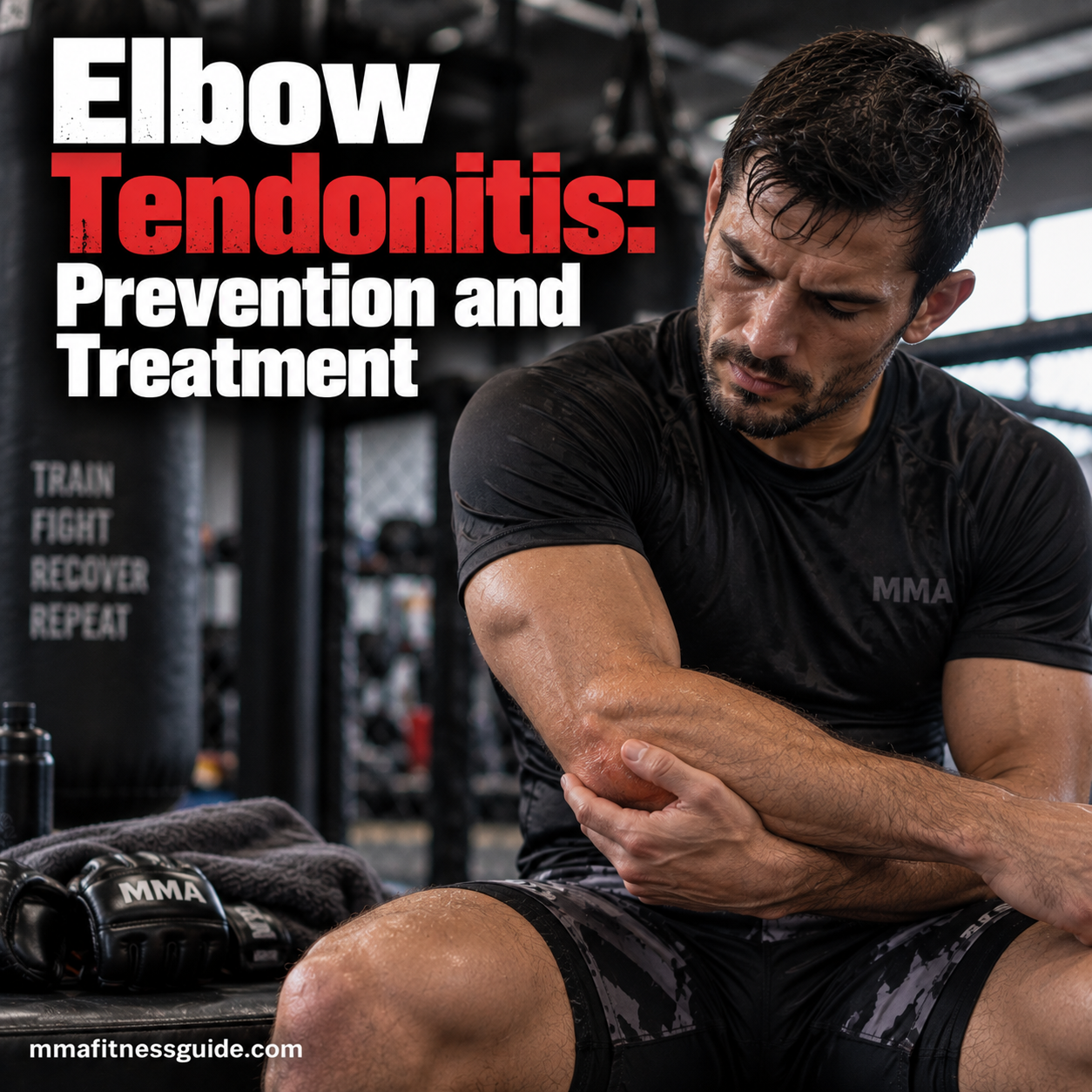
Repeated striking, gripping, and grappling can place substantial load on the tendons around a fighter’s elbow.
Repeated jabs, hard collar ties, posting during scrambles, and rounds of grip fighting can load the elbow hundreds of times in a single MMA session. When that workload exceeds what the forearm tendons can comfortably handle, pain may begin appearing on the inside or outside of the elbow.
At first, it might only hurt when squeezing a glove, gripping a training partner, or extending a punch. Continuing the same training volume without addressing the problem can make those symptoms increasingly difficult to ignore.
Managing elbow tendon pain usually involves identifying the movements that aggravate it, temporarily adjusting training load, and gradually rebuilding the strength and capacity of the forearm muscles and tendons.
A fighter taking a moment to assess symptoms and follow proper concussion safety protocols.
Introduction
Concussions are one of the most serious risks in combat sports. Even light sparring, accidental clashes, or unexpected falls can cause head impacts that affect your brain. While MMA training can be done safely, it’s important for every athlete — beginner or advanced — to understand what concussions look like and how to respond to them.
You don’t need medical training to spot warning signs. A little awareness helps protect both yourself and your training partners.
Below is a simple, practical guide to concussion basics and safe protocols to follow.
Striking, grappling, lifting, and sudden changes in training volume can all contribute to lower back discomfort in martial artists.
A poorly positioned sprawl can suddenly load the lower back, while hundreds of kicks, takedown attempts, guard exchanges, and strength-training reps can irritate the same area gradually. For martial artists, back pain can show up as anything from stiffness when getting out of bed to discomfort that makes rotating, changing levels, or grappling difficult.
The source isn’t always the back itself. Training volume, lifting technique, hip and trunk strength, mobility, previous injuries, and even the amount of time spent sitting between sessions can influence how the lower back responds to training.
Mild muscular soreness may settle with appropriate movement and recovery, but persistent or worsening pain deserves more attention. Identifying when symptoms appear—and which movements aggravate them—provides a better starting point than simply stretching or trying to train through the discomfort.