Your trusted source for MMA fitness, nutrition, and fighter-level health.
Category: Injury Prevention & Recovery
Injury Prevention & Recovery focuses on keeping athletes healthy, resilient, and training consistently. Topics include prehab, recovery habits, pain awareness, mobility, and strategies to reduce injury risk over the long term.
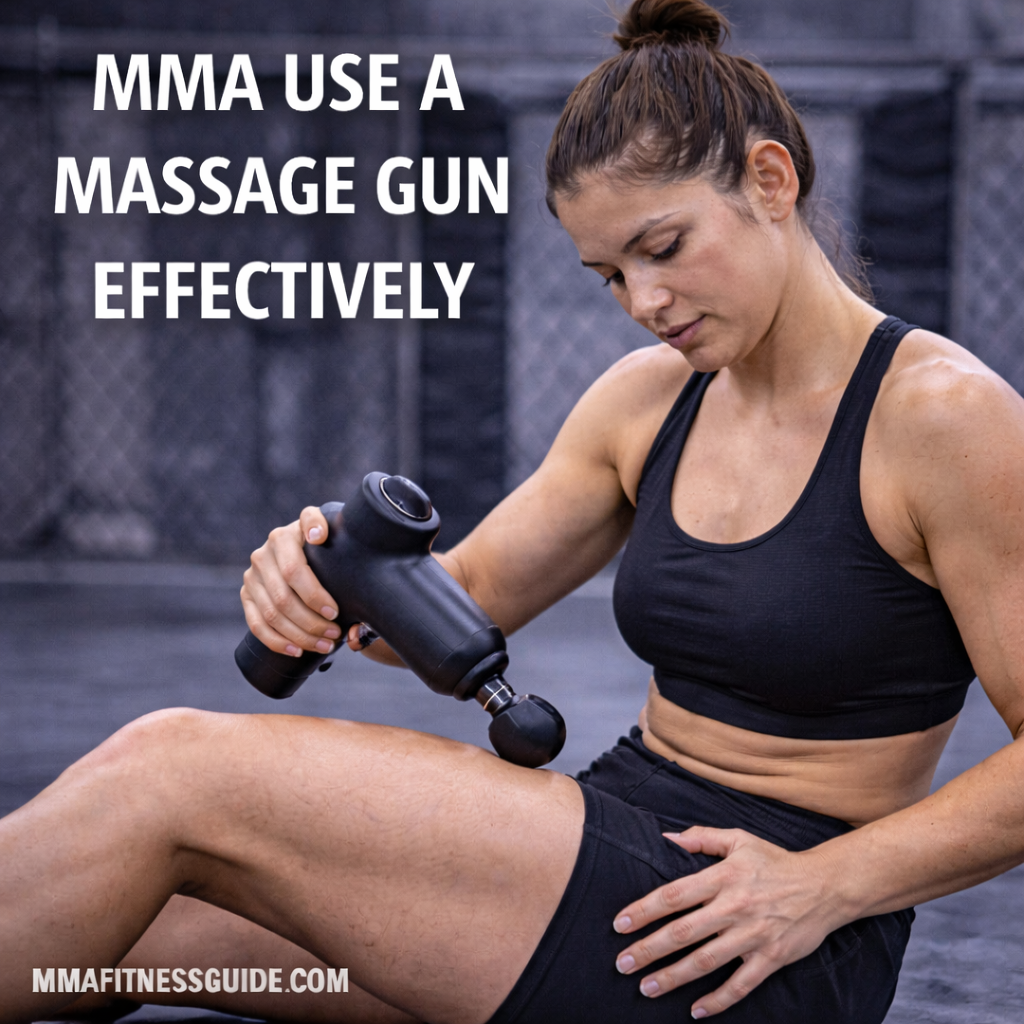
MMA athlete using a massage gun to support muscle recovery after training.
Massage guns have become a common recovery tool in MMA gyms, fight camps, and locker rooms. When used correctly, they can help fighters reduce soreness, improve circulation, and stay mobile between intense sessions. When used incorrectly, they can irritate tissue, delay recovery, or even increase injury risk.
This guide explains how MMA fighters can use a massage gun effectively — when to use it, where to apply it, and how to avoid common mistakes.
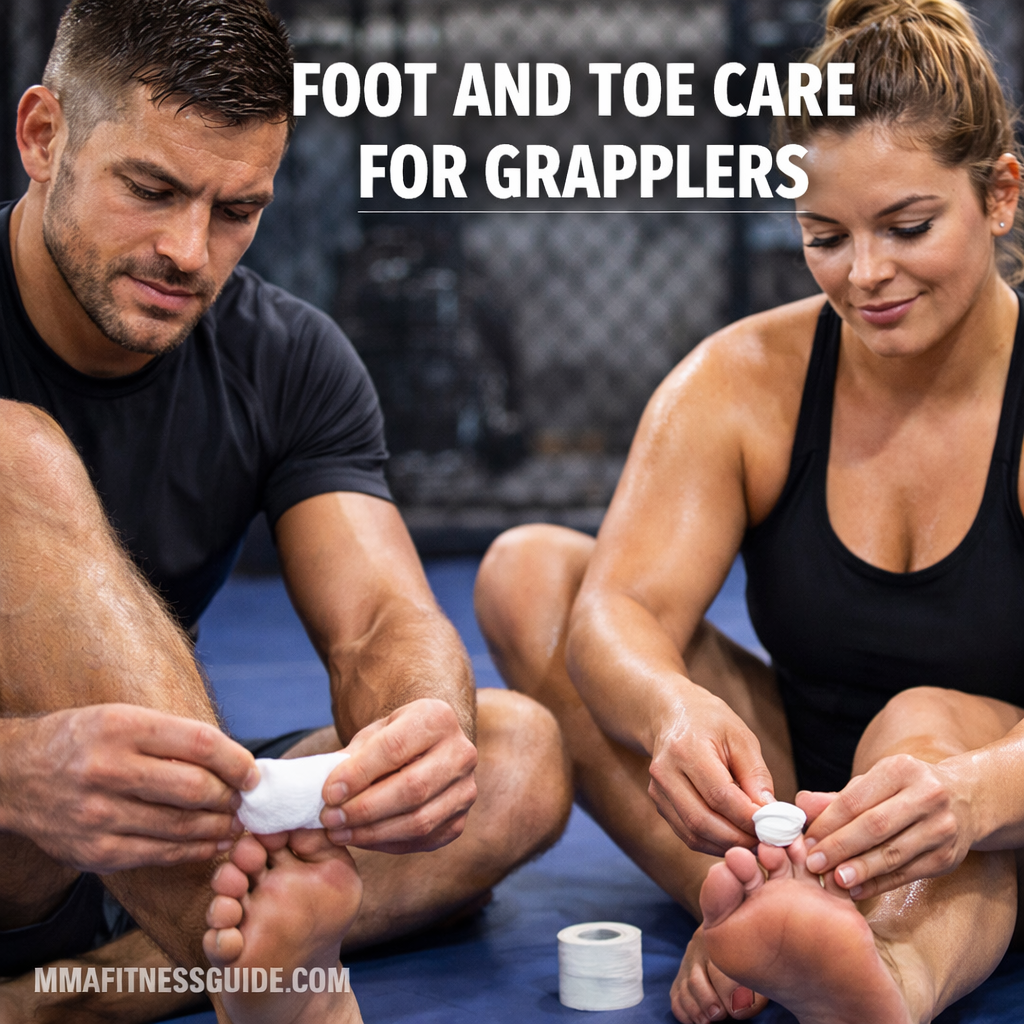
Two grapplers performing foot and toe care on the mats after training.
Foot and toe injuries are some of the most common — and most ignored — problems in grappling sports. Brazilian Jiu-Jitsu, wrestling, judo, and MMA grappling place constant stress on the feet through gripping, posting, twisting, and mat friction. Small issues can quickly turn into chronic pain, infections, or performance-limiting injuries if not addressed early.
Proper foot and toe care isn’t just about hygiene. It’s about maintaining balance, grip, mobility, and longevity on the mats. This guide covers essential foot care practices every grappler should follow.
An MMA athlete experiencing shoulder discomfort, illustrating early warning signs of overuse injuries in training.
Overuse injuries are one of the most common—and most preventable—setbacks in MMA. Unlike acute injuries that happen suddenly, overuse injuries develop gradually. They often start as minor discomfort that fighters ignore, train through, or dismiss as “normal soreness” until it becomes a problem that forces time off.
Learning how to spot early warning signs of overuse injuries allows fighters to adjust training before damage becomes serious. This guide explains what overuse injuries are, why MMA athletes are especially vulnerable, and how to recognize red flags early enough to protect long-term performance.
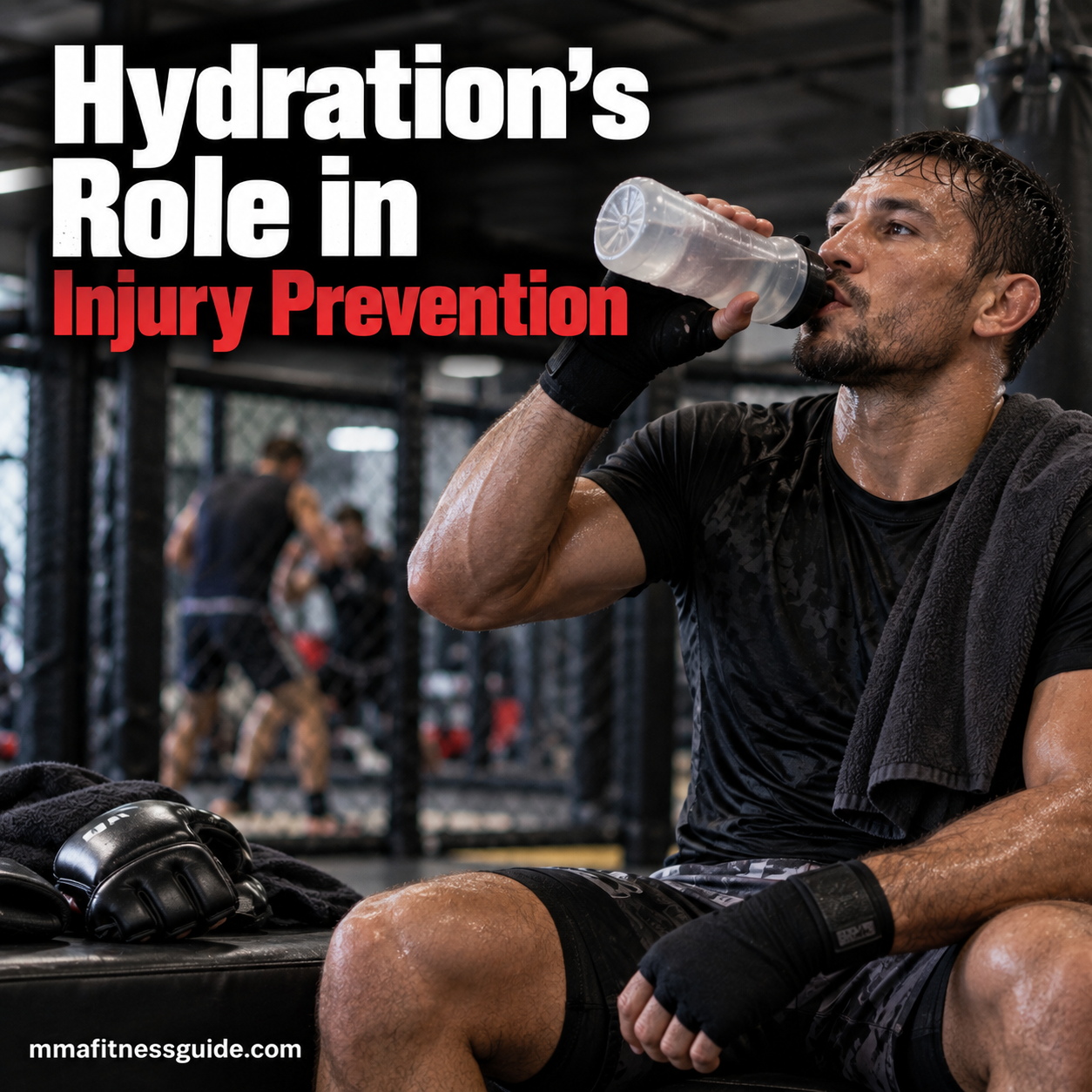
Replacing fluids during demanding MMA sessions helps maintain normal physical and mental performance as training progresses.
A fighter can lose a significant amount of fluid during a hard session of pad work, wrestling, sparring, or conditioning—especially in a hot gym or during two-a-day training. As those losses accumulate, fatigue rises, concentration can slip, and muscles may not perform as consistently during explosive movements.
That matters for injury prevention. A tired fighter who reacts a fraction slower, loses coordination during a scramble, or struggles to maintain technique late in a session may be more likely to land awkwardly, overextend a joint, or strain a fatigued muscle.
Consistent hydration helps maintain normal muscle and nervous-system function, regulate body temperature, and replace fluids lost through sweat. For MMA athletes, managing those losses before, during, and after training is part of staying prepared for the next round—not just avoiding thirst.
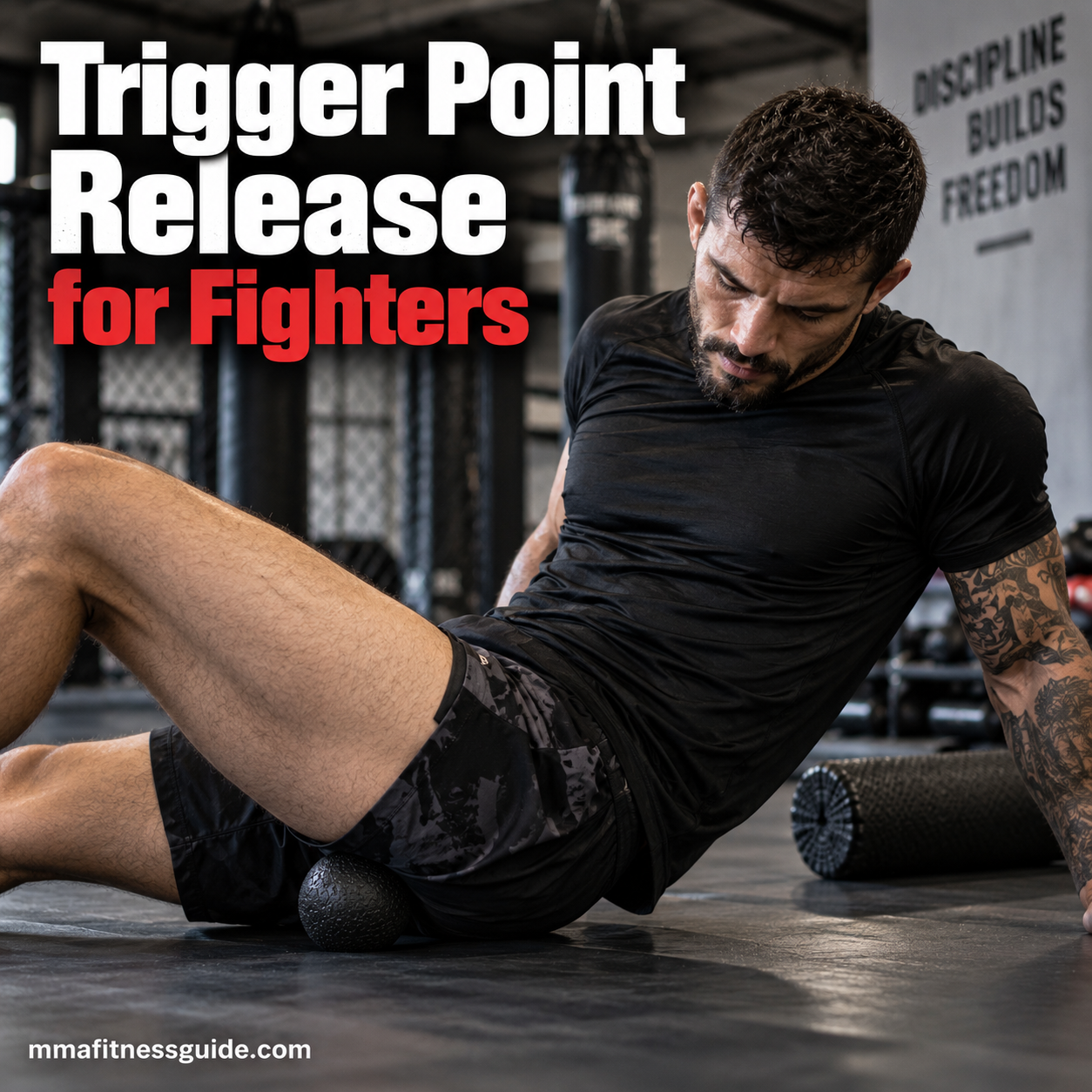
Controlled trigger point work can help fighters address muscular tightness and maintain comfortable movement between training sessions.
Hard rounds leave their mark in predictable places: tight calves after hours of footwork, stiff hips after wrestling, knotted forearms from grip fighting, and tense shoulders from striking and clinch work. When those areas stay tight between sessions, normal MMA movements can start to feel restricted or uncomfortable.
Targeted pressure with a foam roller, massage ball, or similar tool can temporarily reduce muscle tension and improve range of motion. For fighters training several times per week, a short trigger point routine can be incorporated alongside sleep, nutrition, mobility work, and appropriate rest.
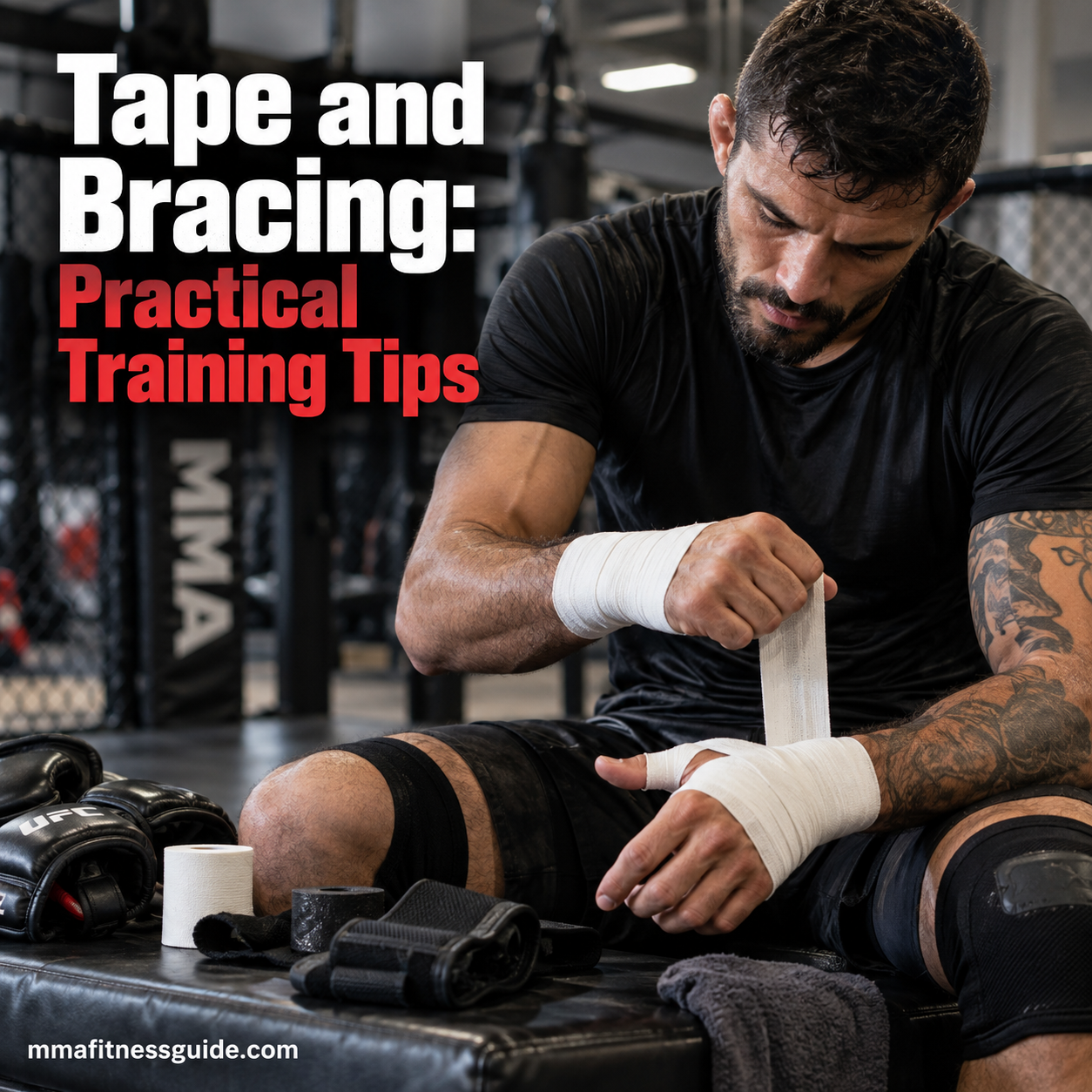
Taping and bracing can provide additional joint support during demanding MMA training sessions.
A wrist that bends back while posting, an ankle that rolls during a scramble, or a finger that gets caught during grip fighting can turn a normal training session into weeks of limited work. In MMA, joints are repeatedly exposed to impact, twisting, and awkward positions, so even minor irritation can become a persistent problem when training volume stays high.
Tape and braces can add support where it’s needed without unnecessarily limiting movement. Fighters commonly use them to stabilize wrists, fingers, ankles, and knees during striking, grappling, sparring, and return-to-training sessions.
The key is knowing when that extra support makes sense. Tape or a brace can help manage stress on a vulnerable joint, but it shouldn’t be used to push through an injury that needs rest, rehabilitation, or medical evaluation.
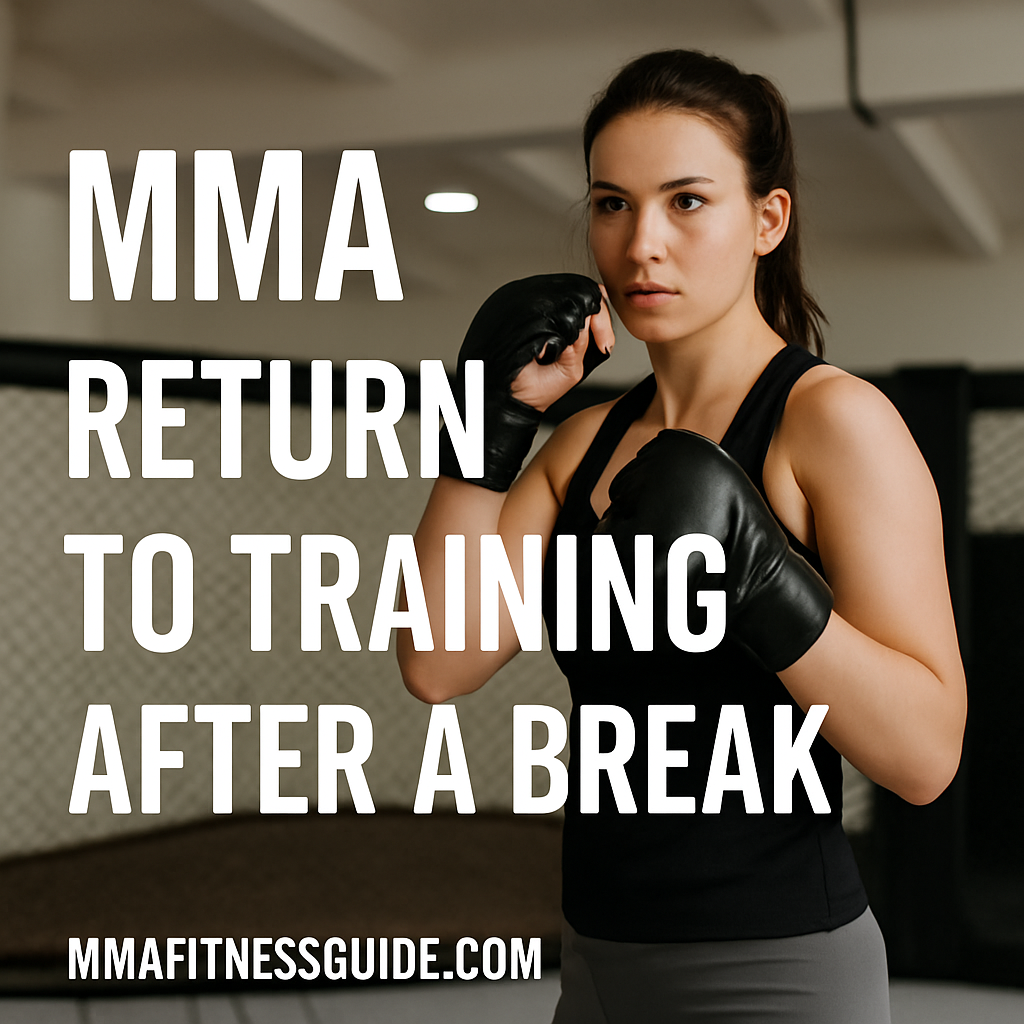
Female MMA athlete preparing to return to training after a break, shown in a fight stance with text overlay.
What Happens to Your Body During Time Off
Taking a break from MMA—whether it’s one week, one month, or an entire year—is completely normal. But the longer you’re away, the more your body changes. Knowing these changes helps you create a smart, safe return plan. Here’s what typically happens:
Meals containing adequate protein, carbohydrates, healthy fats, fruits, and vegetables can provide nutrients needed during recovery from demanding MMA training.
A fighter finishing an evening of wrestling and sparring has more to replace than calories. Muscle tissue needs protein for repair, depleted glycogen needs carbohydrate, and fluids and electrolytes lost through sweat need to be restored before the next demanding session.
Hard training also produces a temporary inflammatory response. That response is part of normal recovery and adaptation, so the goal isn’t to eliminate inflammation after every workout. Instead, consistent nutrition can provide the energy, protein, healthy fats, vitamins, minerals, and plant compounds the body needs while recovery takes place.
For MMA athletes training several days per week—or sometimes twice in one day—the bigger nutritional advantage comes from what is eaten consistently. Meals built around adequate protein, carbohydrates, fruits and vegetables, minimally processed foods, and appropriate hydration create a stronger recovery foundation than relying on a single “anti-inflammatory” food or supplement.
A fighter seated on the gym mats checking his lower leg, visually representing shin splint prevention and care.
Shin splints are one of the most common overuse injuries in MMA and combat sports. Whether you’re drilling kicks, running for conditioning, or pushing through long training sessions, the repeated impact can irritate the muscles and connective tissue along the shin. Left unchecked, shin splints can turn from a minor annoyance into a serious setback.
Understanding what causes shin splints — and how to prevent and treat them — helps you stay consistent, reduce pain, and protect your long-term performance.
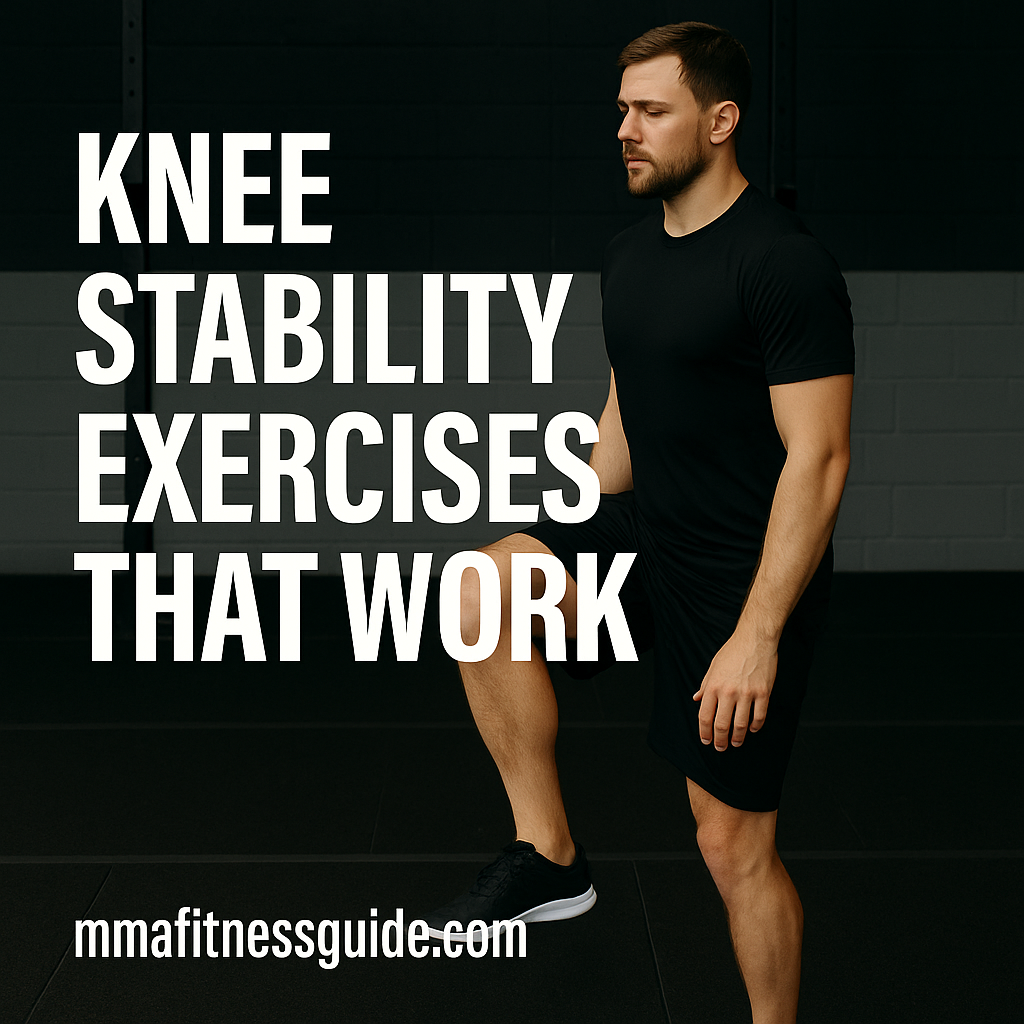
A fighter practicing a single-leg knee stability exercise in the gym, highlighting movements that support stronger and safer knees.
Strong, stable knees are essential for every fighter. Whether you’re shooting takedowns, checking kicks, pivoting on strikes, or scrambling on the ground, your knees take a beating in MMA. Without proper stability training, the risk of sprains, ACL injuries, and chronic pain goes way up.
The good news: you can build strong, resilient knees with simple exercises that improve balance, joint control, and the strength of the muscles surrounding the knee.
These knee stability exercises work for fighters at every level — and they take just a few minutes a day.