

Stretching Routines That Keep Fighters Flexible

MMA fighter performing a seated leg stretch during a flexibility and mobility session at a combat sports gym.
Regular mobility and stretching work can help MMA fighters maintain the range of motion needed for striking, wrestling, and grappling.

Flexibility affects nearly every phase of MMA. A fighter needs enough hip mobility to throw clean head kicks, enough shoulder range to hand-fight and grapple, and enough movement through the ankles, knees, and spine to change levels, scramble, and defend takedowns.

When those ranges become restricted, technique can start compensating. A tight hip may force a kick to come around awkwardly. Limited shoulder mobility can make certain grappling positions harder to escape. Tight hamstrings can interfere with stance changes, guard work, and level changes.

A consistent stretching routine helps maintain the usable range of motion that MMA training demands.

Continue reading “Stretching Routines That Keep Fighters Flexible”
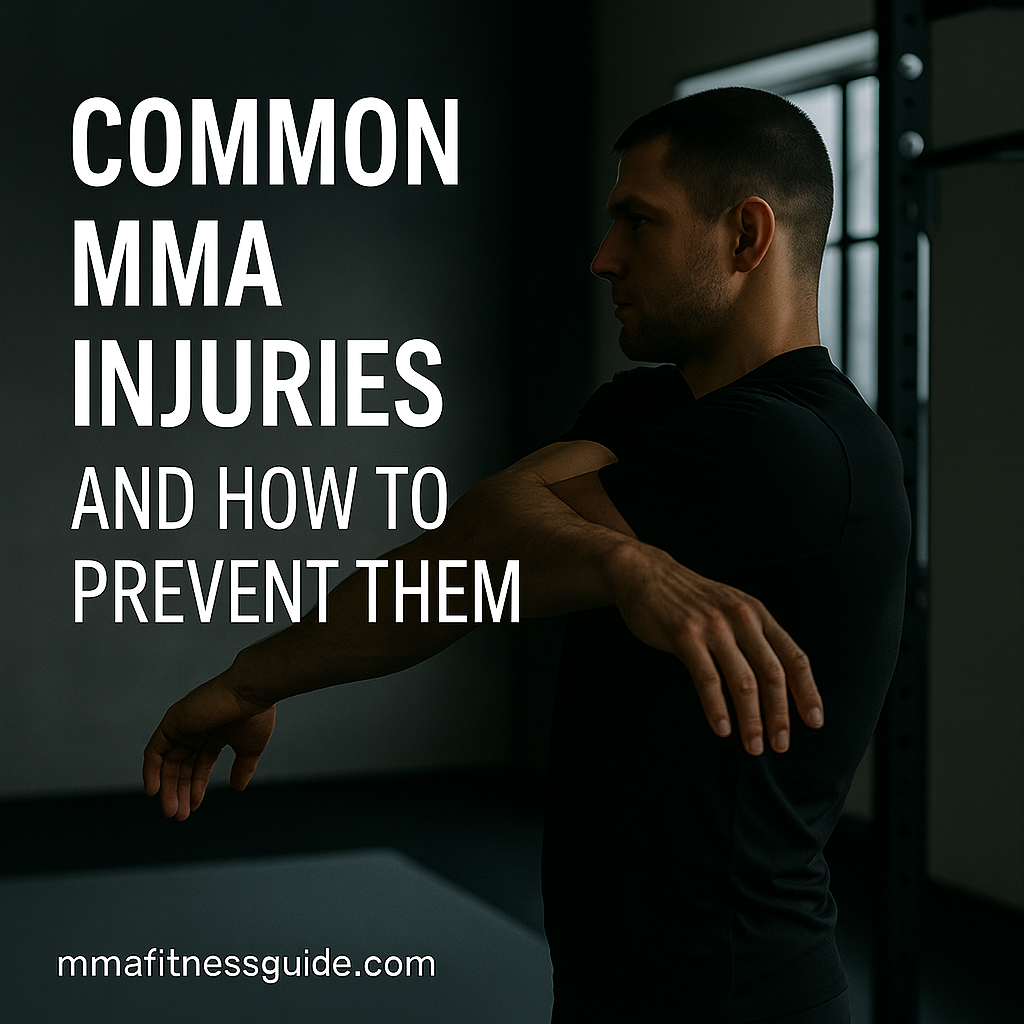
Common MMA Injuries and How to Prevent Them

MMA fighter sitting in a gym while a coach helps wrap his injured knee following training.
Recognizing injuries early, adjusting training intensity, and allowing adequate recovery can help MMA fighters reduce unnecessary risks.

A fighter throws a punch during heavy bag training and feels a sharp pain in their wrist. Another twists their knee while defending a takedown. During sparring, someone takes a hard shot to the head and feels dizzy afterward.

These situations illustrate the different injury risks involved in mixed martial arts.

MMA combines striking, wrestling, submissions, and demanding physical conditioning. Each discipline places different stresses on the body, and injuries can occur during both competition and regular training.

Some injuries develop suddenly through a single impact or awkward movement. Others appear gradually when training demands exceed the body’s ability to recover.

Although no training program can eliminate every risk, appropriate coaching, sensible training loads, protective equipment, and early recognition of symptoms can help reduce preventable injuries.

Understanding common MMA injuries also helps fighters recognize when to modify training and when professional medical attention is necessary.

Continue reading “Common MMA Injuries and How to Prevent Them”