Beginner-Friendly HIIT Routines

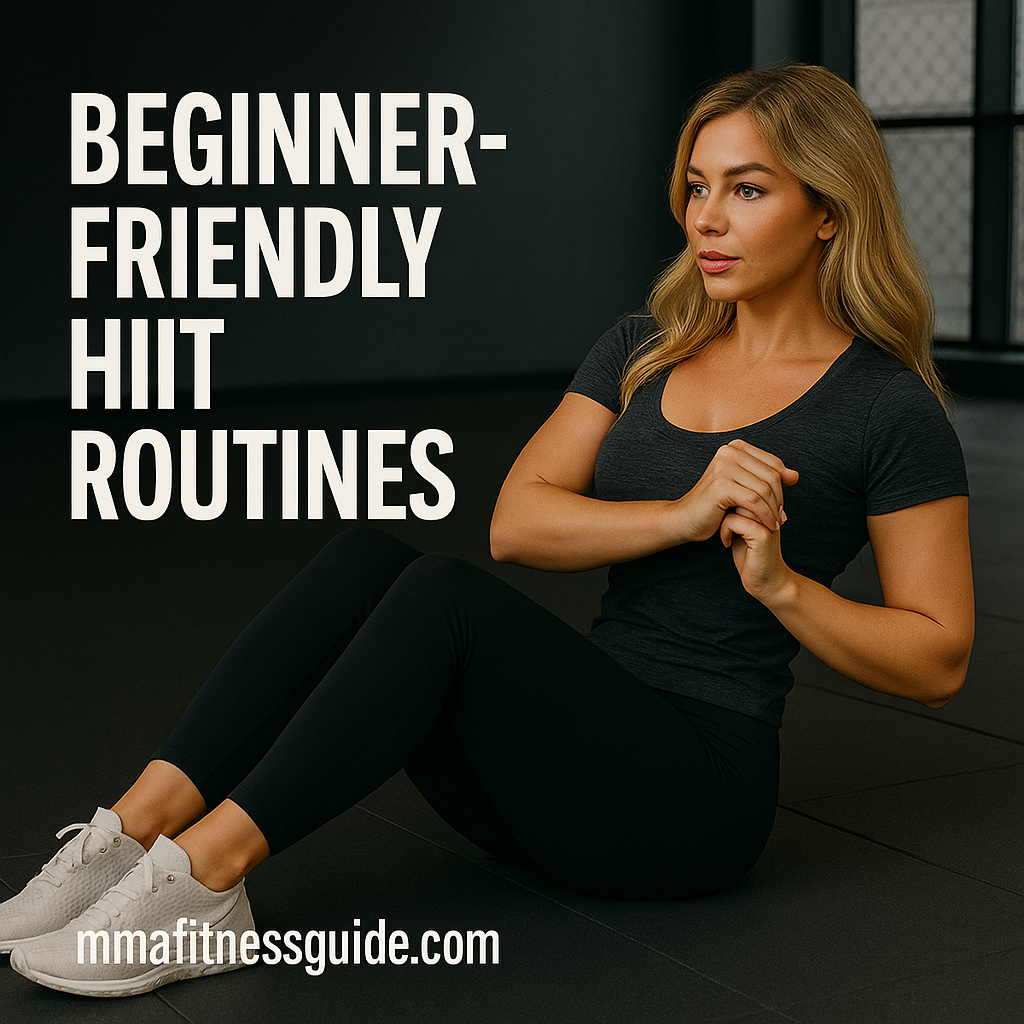
A woman performing a seated core exercise in a gym setting, illustrating a beginner-friendly HIIT workout.
A woman training in the gym, representing the simple HIIT routines covered in this beginner guide.

High-Intensity Interval Training (HIIT) is one of the fastest, simplest, and most beginner-friendly ways to build cardio, burn fat, and improve overall athletic conditioning. For new fighters and everyday beginners alike, HIIT delivers maximum results in minimal time — no fancy equipment required.

Whether you’re just starting your fitness journey or looking for an effective routine to pair with martial arts training, these beginner-friendly HIIT workouts will help you build endurance, strength, and confidence without feeling overwhelmed.

Continue reading “Beginner-Friendly HIIT Routines”

MMA: Build a Home Workout Space

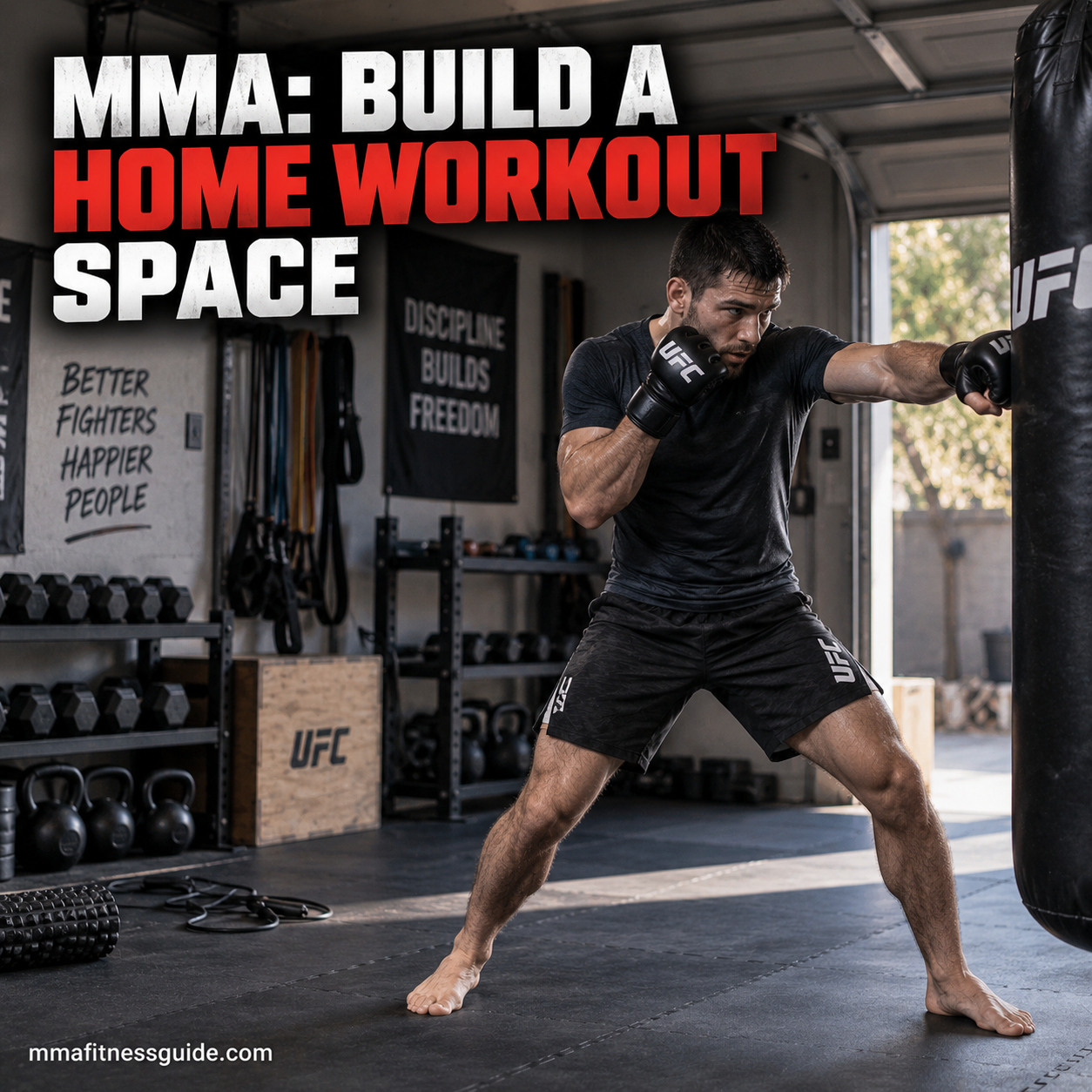
MMA athlete practicing punches on a heavy bag in a home workout space equipped with mats, dumbbells, and kettlebells.
A home MMA workout space with a punching bag, exercise mats, and strength equipment provides a convenient setup for striking and conditioning.

A cleared garage, a few exercise mats, and enough room to throw punches without hitting the furniture can be the foundation of a useful home MMA workout space.

You don’t need an expensive training facility to improve your conditioning, practice footwork, or develop strength. Many exercises used by mixed martial artists can be performed at home with minimal equipment.

However, setting up an MMA training area requires more planning than simply buying a punching bag and finding somewhere to hang it.

The floor needs to provide reliable traction. You need enough room to move safely, and your equipment should match the activities you actually intend to perform.

A well-designed home setup can support striking drills, strength training, cardiovascular conditioning, and mobility work. It can also make training more convenient when getting to a gym isn’t practical.

Here’s how to create a functional MMA workout space without wasting money or compromising safety.

Continue reading “MMA: Build a Home Workout Space”

Easy Nutrition Training Tips for New Fitness Habits

A fit male athlete standing in a kitchen while holding a bowl of salad, with the title “Easy Nutrition Training Tips for New Fitness Habits” shown in all-white text.
A beginner-friendly visual promoting simple nutrition habits to support new training routines.

Introduction

Starting a new fitness routine is exciting — but it can also feel overwhelming, especially when nutrition enters the mix. You want more energy, better results, and healthier habits, but you don’t want complicated meal plans or strict diets. The truth is, beginners don’t need perfection. They need simple, repeatable nutrition habits that support training and build long-term consistency.

Whether you’re hitting MMA classes, running, lifting, or just getting active again, these easy nutrition tips will help fuel your progress and make your new fitness lifestyle feel natural.

Continue reading “Easy Nutrition Training Tips for New Fitness Habits”

MMA Start Running Without Injury

MMA athlete running outdoors to build cardio and endurance while gradually increasing training.
Starting with manageable runs and gradually increasing your workload can help you build cardio without overwhelming your MMA training.

Running can add useful aerobic conditioning to an MMA training schedule, but the first few weeks are where beginners often do too much too soon. A fighter who is already comfortable doing rounds on the mats may still have calves, shins, ankles, and knees that aren’t accustomed to repeated running impact.

Starting with three hard miles, adding sprints immediately, or running every day can turn a conditioning plan into sore shins or irritated knees before a routine has even formed.

A better starting point is deliberately easy: short runs, walking breaks, recovery days, and gradual increases in workload.

Continue reading “MMA Start Running Without Injury”

Simple Mobility Routines for Everyday Life

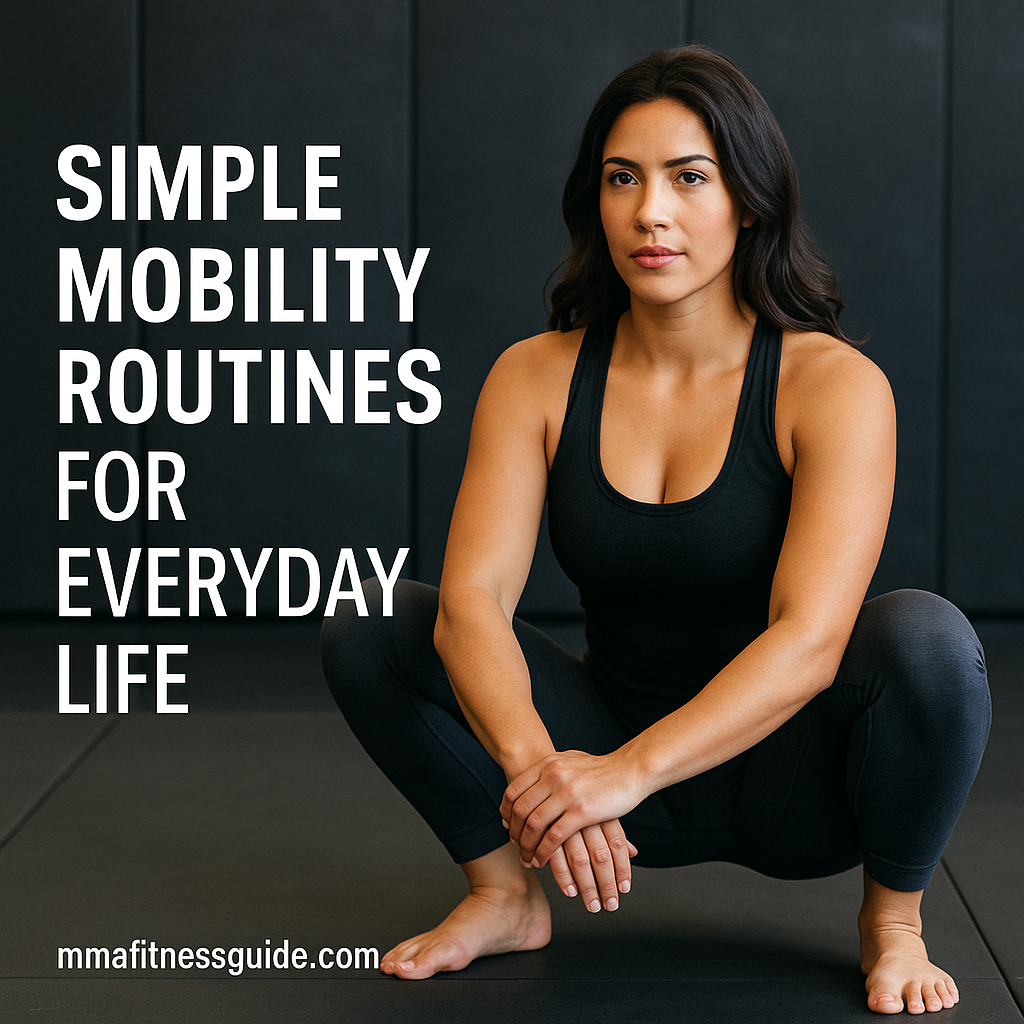
Fit and attractive female MMA athlete performing a deep squat mobility stretch on gym mats, with the title “Simple Mobility Routines for Everyday Life” displayed.
A fighter practicing a simple daily mobility routine to stay flexible, healthy, and ready for training.

Introduction

Mobility doesn’t require fancy equipment, long sessions, or extreme stretching. In fact, some of the most effective routines take just a few minutes and can be done anywhere. Whether you train MMA, work a desk job, or simply want to feel better throughout the day, mobility makes movement easier, smoother, and more comfortable.

These simple routines keep your joints healthy, reduce tightness, and help your body stay ready for training or everyday life.

Continue reading “Simple Mobility Routines for Everyday Life”

MMA: Avoid Common Beginner Mistakes

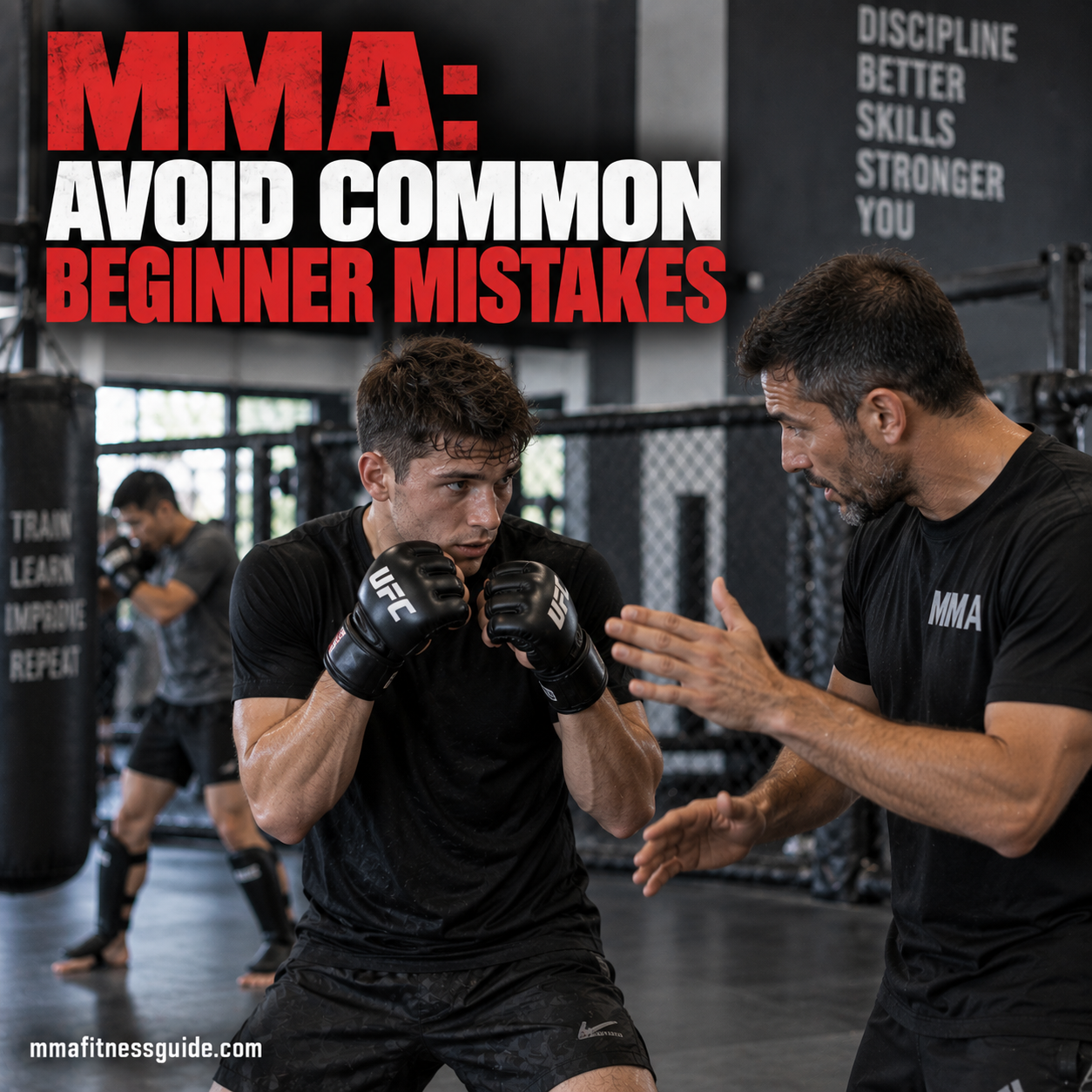
Beginner MMA fighter receiving technique and defensive guidance from a coach during training.
Learning proper technique, controlling training intensity, and listening to coaching can help new MMA trainees avoid common early mistakes.

Introduction

The first few months of MMA can feel like information overload. You’re trying to remember your stance, keep your hands up, breathe during combinations, move your feet, and follow your coach’s instructions—all while your conditioning is being tested.

That learning curve also makes it easy to develop habits that work against you. Training at full intensity every session, rushing into sparring, relying on strength instead of technique, or copying advanced teammates can make training harder than it needs to be.

Early progress comes from getting the basics right: train at an intensity you can control, pay attention to technique, recover between sessions, ask questions, and give yourself enough time to improve. Fixing these habits now is much easier than trying to unlearn them months later.

Continue reading “MMA: Avoid Common Beginner Mistakes”

Rest Days: Why They Matter for Progress

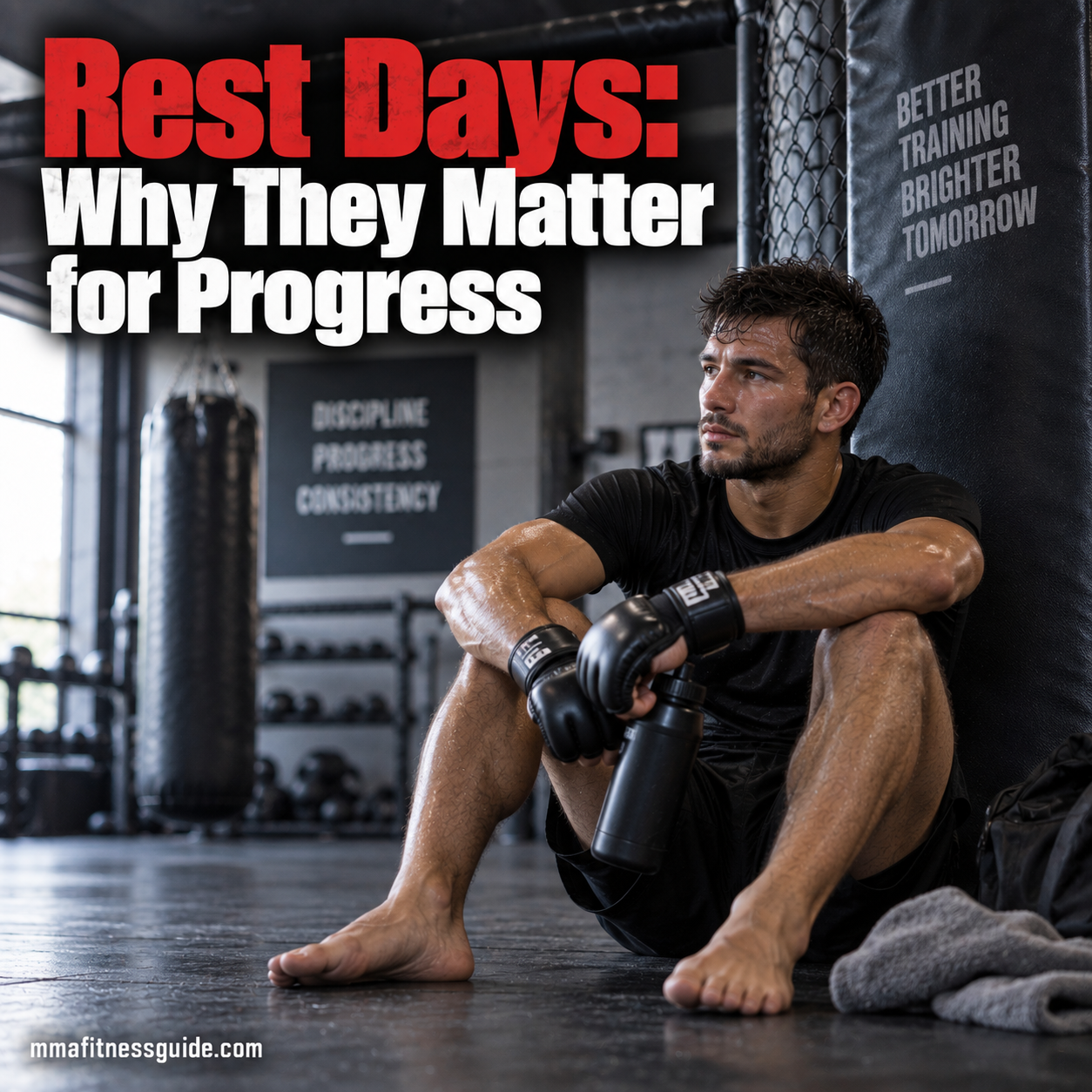
MMA fighter resting beside the cage after training to recover between workouts.
Rest days give MMA trainees time to recover from accumulated fatigue before returning to striking, grappling, and conditioning.

Introduction

After a few MMA sessions, the effects start adding up. Your shoulders may still be tired from punching, your legs feel heavy during footwork, your grip is fatigued from grappling, and movements that felt sharp earlier in the week suddenly feel slower.

Adding another hard workout isn’t always the answer.

Training creates the workload; recovery gives your muscles, connective tissues, energy stores, and nervous system time to adapt to it. A well-placed rest day can mean returning to the gym with better movement and concentration instead of dragging accumulated fatigue into another session.

For beginners especially, learning when to recover is part of learning how to train. The goal isn’t to fit in as many workouts as possible—it’s to build a schedule your body can handle consistently for months and years.

Continue reading “Rest Days: Why They Matter for Progress”

MMA: Choose the Right Gym for You

Male athlete standing inside an MMA gym looking around as if evaluating the environment, with the title “Choose the Right MMA Gym for You” displayed.
A beginner assessing an MMA gym to find the best training fit.

Introduction

Choosing the right MMA gym can feel overwhelming when you’re just starting out. Each gym has its own vibe, coaching style, and training approach. The goal isn’t to find the most “hardcore” gym — it’s to find a place where you can learn safely, stay consistent, and enjoy the process.

Below is a simple guide to help you pick the right MMA gym for your needs and goals.

Continue reading “MMA: Choose the Right Gym for You”

Low-Impact Conditioning for Joint Fitness

Female athlete performing a low-impact conditioning stretch on a gym mat with bold white text reading Low-Impact Conditioning for Joint Fitness.
A focused female martial artist demonstrating low-impact conditioning to support joint-friendly fitness.

Not all conditioning has to be high-impact or high-intensity. For beginners, older athletes, or martial artists recovering from injury, low-impact conditioning is one of the safest and most effective ways to build endurance, strength, and movement confidence without stressing the joints.

Whether you’re dealing with knee pain, tight hips, sore ankles, or just want sustainable cardio, this guide breaks down the best low-impact conditioning options that protect your joints while still improving your fitness.

Continue reading “Low-Impact Conditioning for Joint Fitness”

10-Minute Workouts for Busy Schedules

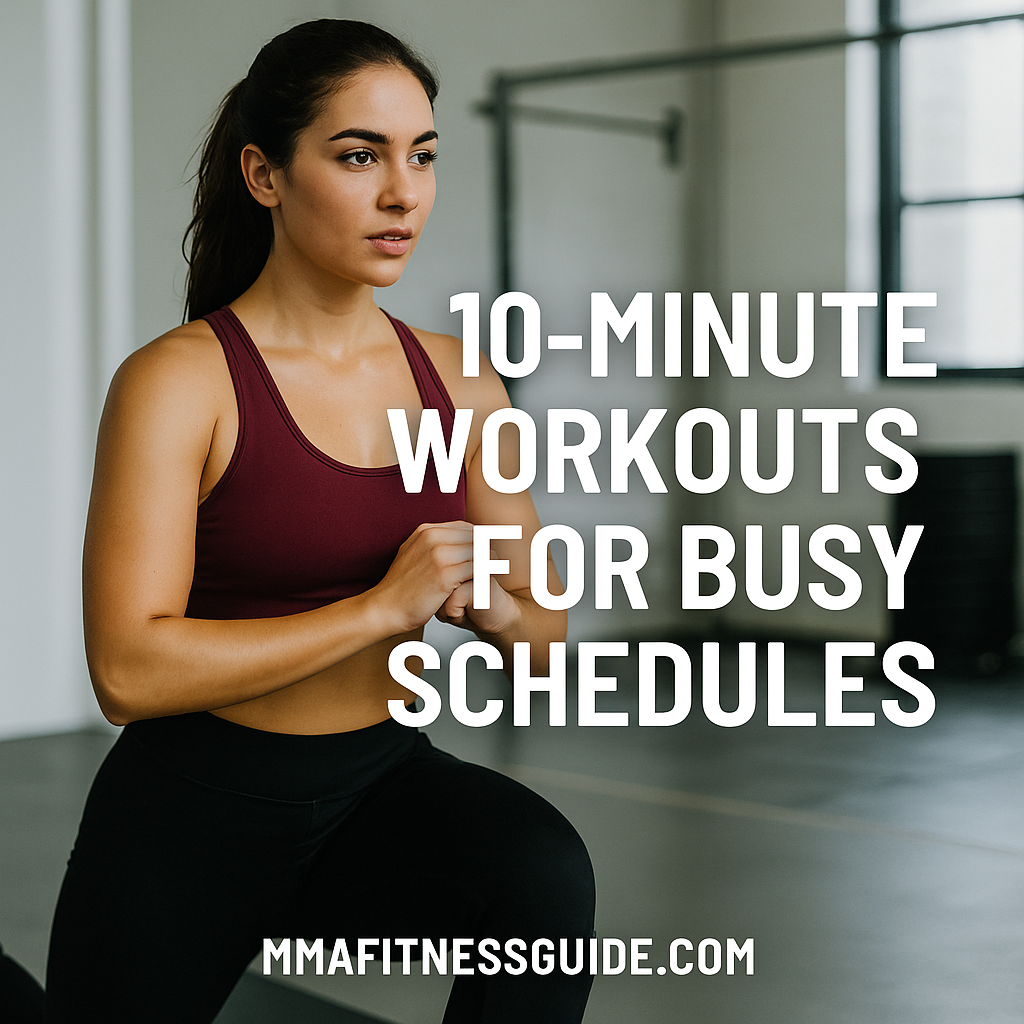
Fit young woman performing a lunge exercise in a bright gym with bold white title text promoting 10-minute workouts for busy schedules.
A focused female athlete demonstrating a quick, effective workout for people with busy schedules.

Finding time to train can be tough — especially if you juggle work, family, school, or unpredictable hours. But staying fit doesn’t require hour-long gym sessions. In fact, 10-minute workouts can boost your conditioning, mobility, and overall health when done consistently.

Short, focused sessions help beginners stay active without feeling overwhelmed. They also keep you connected to your goals, even on the busiest days. This guide gives you fast, effective 10-minute workouts perfect for anyone who wants to stay consistent, build momentum, and improve fitness in a tight schedule.

Continue reading “10-Minute Workouts for Busy Schedules”