Your trusted source for MMA fitness, nutrition, and fighter-level health.
Category: Fitness for Beginners
Fitness for Beginners provides accessible guidance for those new to MMA, fitness, or physical activity. Articles focus on recovery, mobility, consistency, confidence, and building healthy habits without overwhelm.
MMA athletes monitoring daily steps and activity levels as part of overall conditioning and recovery.
For beginners starting a fitness routine, consistency matters more than intensity. One of the simplest and most effective ways to stay consistent is tracking daily steps and activity goals. You don’t need intense workouts every day to make progress — steady movement builds habits, supports recovery, and improves overall health.
This guide explains how tracking steps and daily activity helps beginners stay active, how to set realistic goals, and how to use step tracking without overcomplicating fitness.
Fluid needs vary with training intensity, sweat rate, temperature, and workout duration, making regular hydration an important part of an athlete’s routine.
Halfway through an MMA class, dehydration can become difficult to ignore. Your mouth feels dry, the room seems hotter, your concentration starts slipping, and the rounds feel harder than they did at the beginning.
Sweating during boxing, grappling, conditioning, or strength training means losing both water and electrolytes. How much you lose depends on the workout, your individual sweat rate, the temperature, humidity, clothing, and how long you’re training.
For beginners, the practical goal isn’t to calculate every ounce. Arrive reasonably hydrated, drink according to your needs during training, and replace the fluid you’ve lost afterward.
Preparing proteins, carbohydrates, and vegetables in advance makes it easier to assemble quick meals around work, training, and a busy weekly schedule.
A long workday can turn a planned chicken-and-rice dinner into takeout surprisingly quickly. Add training, commuting, family responsibilities, and errands, and cooking three fresh meals every day becomes unrealistic for many people.
Meal prep gives you another option: cook several basic ingredients when you have time, portion or refrigerate them, and assemble meals in minutes during the week. A tray of roasted chicken, a pot of rice, chopped vegetables, yogurt, fruit, and a few grab-and-go snacks can cover several days without turning Sunday into an all-day cooking project.
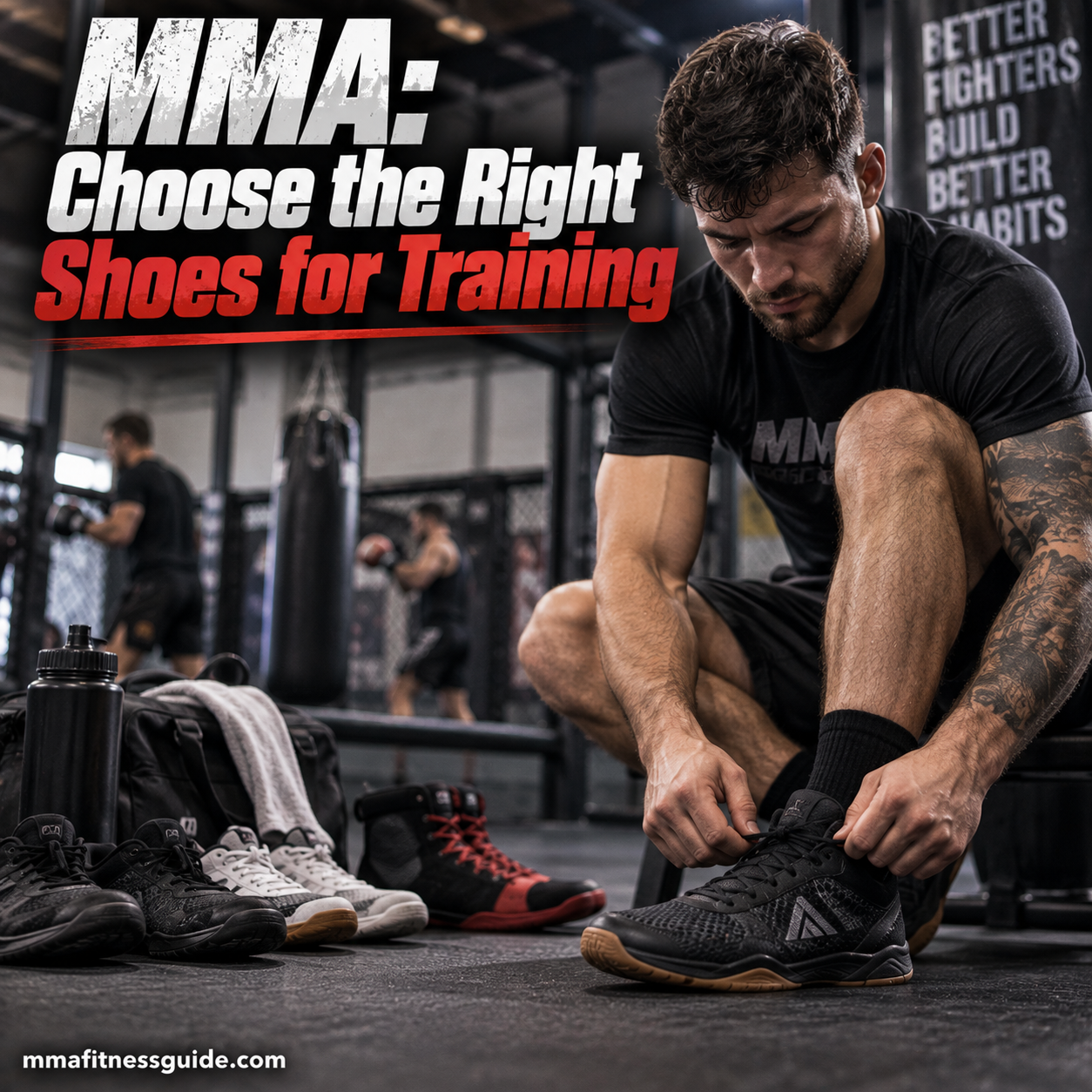
The right MMA training shoes provide a stable, low-profile base for conditioning, strength work, bag drills, and other off-mat training.
Walk into an MMA gym and you might spend one part of the session barefoot on the mats, another hitting the heavy bag, and the final 30 minutes lifting weights or pushing a sled across turf. One pair of shoes isn’t appropriate for every part of that workout—and in some parts, shoes shouldn’t be worn at all.
For most beginners, the goal isn’t to buy specialized footwear for every drill. It’s to find a stable, low-profile training shoe that handles conditioning, strength work, and movement comfortably while understanding when barefoot training or wrestling-specific footwear makes more sense. Getting that choice right can improve balance and footwork while avoiding unnecessary stress on the feet, ankles, and knees.
Motivation won’t always be there. Building consistent training habits helps MMA beginners keep moving forward even on difficult days.
Every beginner experiences it. You start training with excitement and energy, then a few weeks later the alarm goes off and going to the gym suddenly feels like work. You’re sore, progress feels slower than expected, and skipping one session becomes surprisingly easy to justify.
That’s the point where consistency matters most. Instead of waiting until you feel motivated again, the better approach is to make training easier to start, adjust your workload when needed, and keep the routine alive—even if that means doing a shorter or lighter session.
The goal on low-motivation days isn’t to have your best workout. It’s to avoid turning one skipped session into a week away from training.
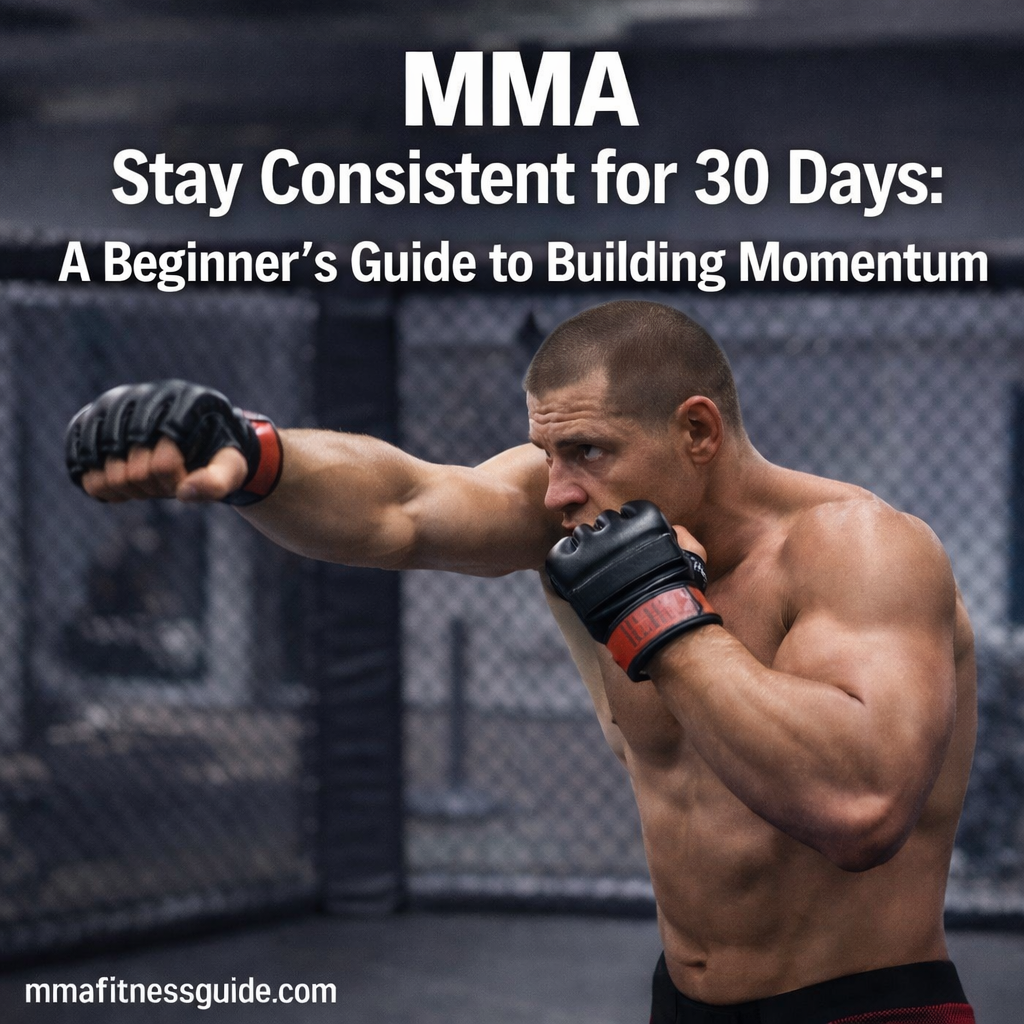
An MMA athlete training with focus and discipline, illustrating how beginners can build momentum through 30 days of consistent practice.
Starting MMA training is exciting—but staying consistent is where most beginners struggle. Motivation is high at the beginning, then life, soreness, self-doubt, and schedule conflicts slowly chip away at momentum.
The good news is this: you don’t need perfection to succeed. You only need consistency. This 30-day MMA consistency guide is designed specifically for beginners who want to build habits, confidence, and discipline without burnout.
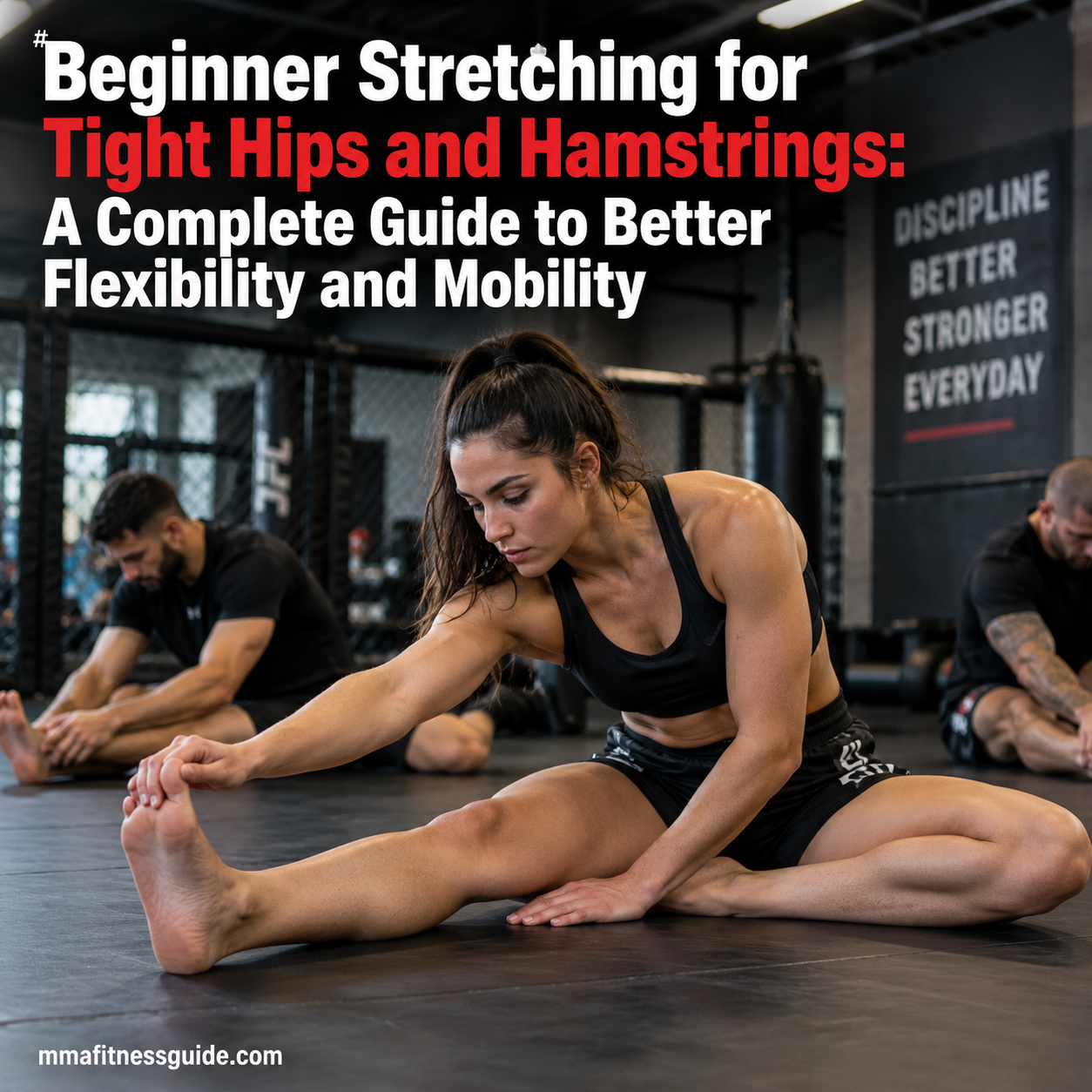
Beginner-friendly stretches can help improve hip and hamstring flexibility for MMA training and everyday movement.
Tight hips and hamstrings can make even simple movements feel harder than they should. Bending forward to tie your shoes, lowering into a squat, climbing stairs, or throwing a controlled kick may feel uncomfortable when your muscles and joints aren’t moving freely.
For beginners entering MMA, kickboxing, Brazilian jiu-jitsu, or general fitness, limited flexibility can be particularly noticeable. Kicks require coordinated hip movement, grappling involves positions that challenge your range of motion, and strength exercises demand control through different joint angles.
Fortunately, you don’t need advanced yoga poses or an hour-long stretching session to start improving your flexibility.
A short, consistent routine combining gentle stretching, controlled mobility exercises, and basic strengthening can help you gradually increase your usable range of motion.
This guide covers seven beginner-friendly stretches, proper technique, common mistakes, a practical weekly routine, and ways to make your flexibility improvements useful during everyday activities and combat sports training.
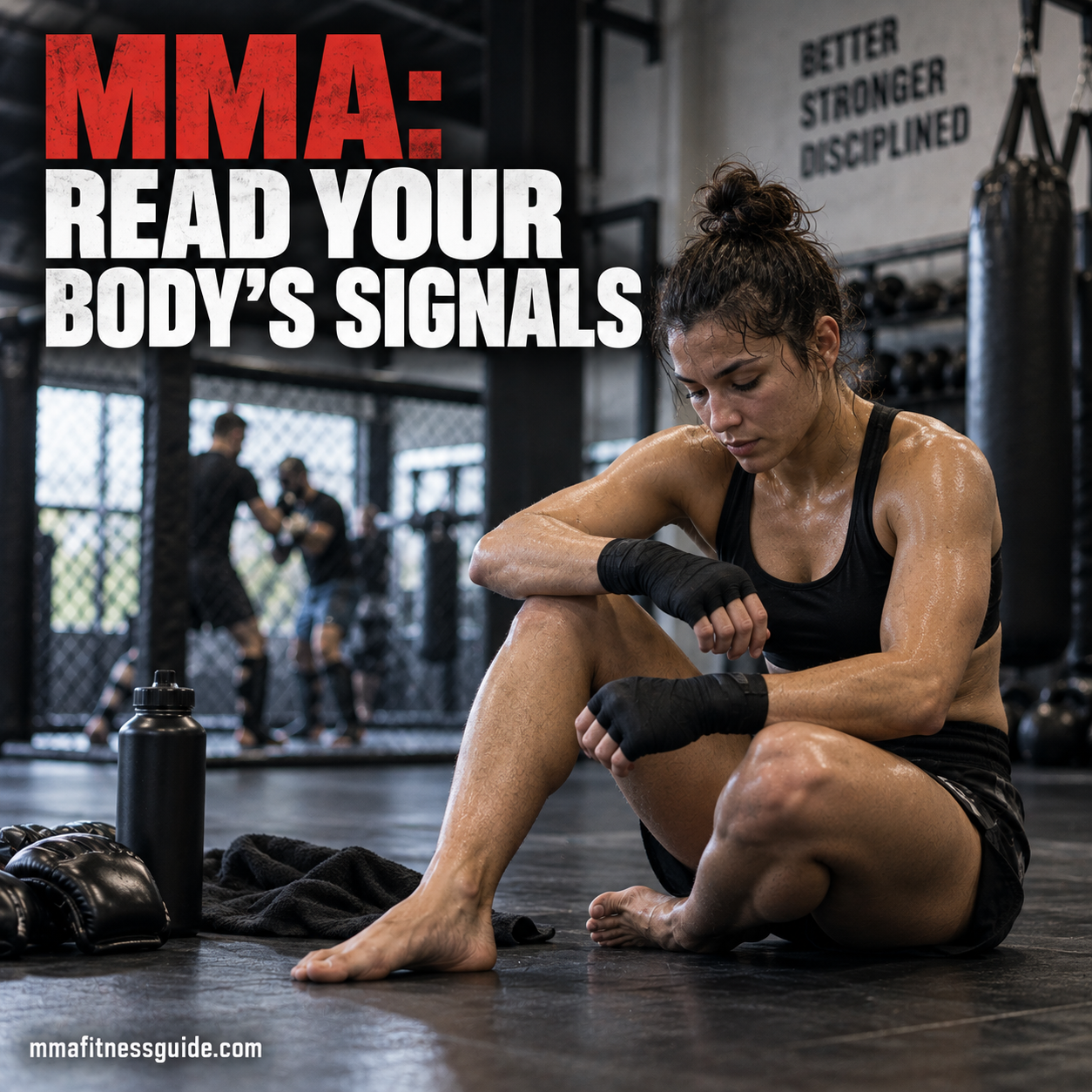
Learning to recognize fatigue, soreness, and changes in technique can help MMA beginners decide when to keep training and when to recover.
During MMA training, your breathing gets heavier, muscles tighten, reactions slow, and unfamiliar aches can appear. Some of those sensations are a normal part of adapting to training. Others are signs that it’s time to reduce the intensity or stop.
For beginners, telling the difference can be difficult. A hard conditioning round may leave your legs burning without anything being wrong, while a sudden pain in your knee during a takedown drill deserves a very different response.
Learning these differences helps you decide when to keep working, when to recover, and when a physical warning shouldn’t be ignored.
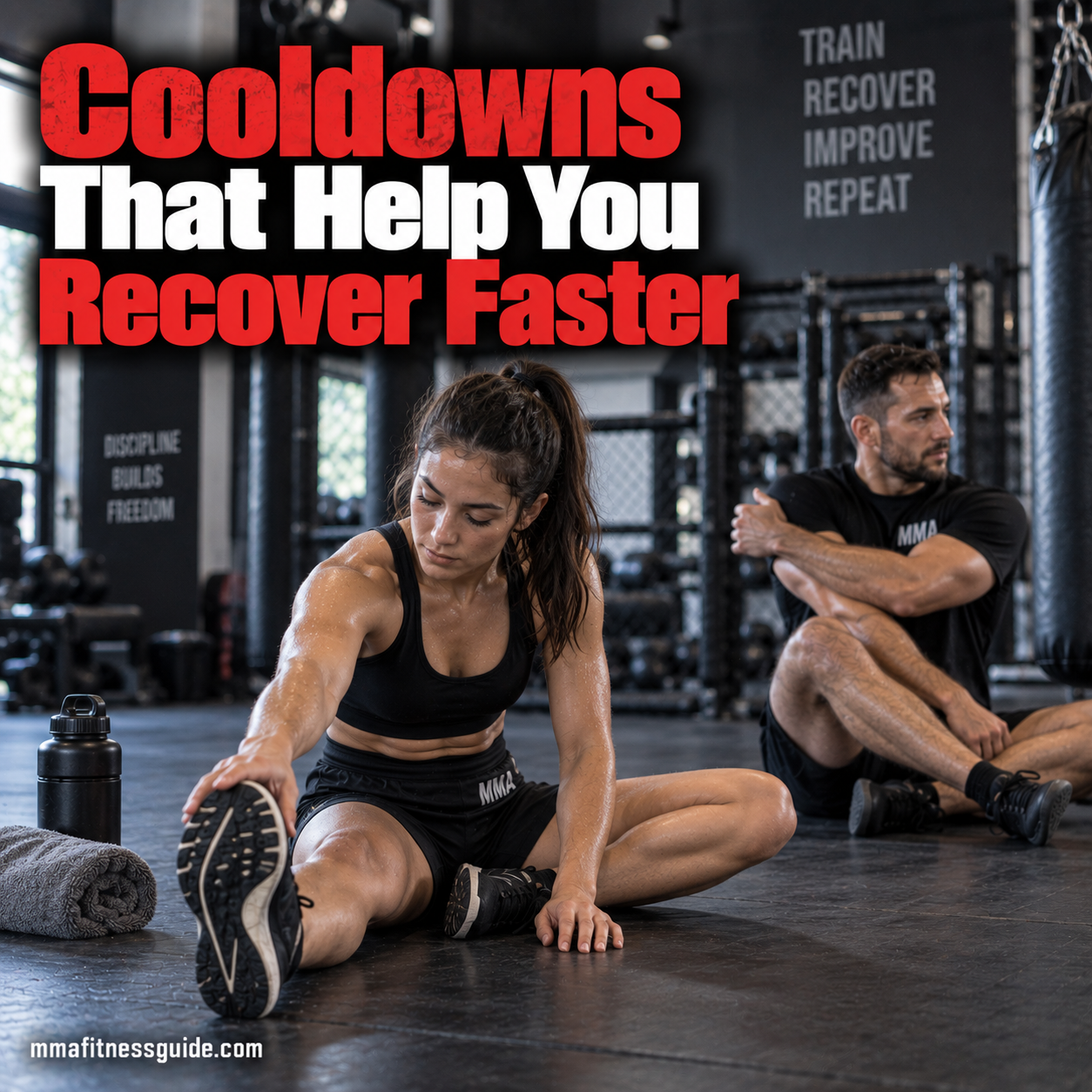
Light movement, controlled breathing, and comfortable stretching can help MMA trainees transition gradually from a hard workout into recovery.
After the final round, it’s tempting to take off your gloves, grab your water bottle, and head straight for the door. But your heart may still be racing, your shoulders and hips are tight, and your breathing hasn’t fully settled from the last few minutes of work.
Spending another five to ten minutes walking, breathing slowly, and moving through a few comfortable stretches gives your body a gradual transition from hard training back toward rest.
For MMA beginners, that short period is also a useful check-in. Once the intensity drops, you can notice which muscles feel unusually tight, whether anything hurts, and how well your breathing and heart rate are settling before you leave the gym.
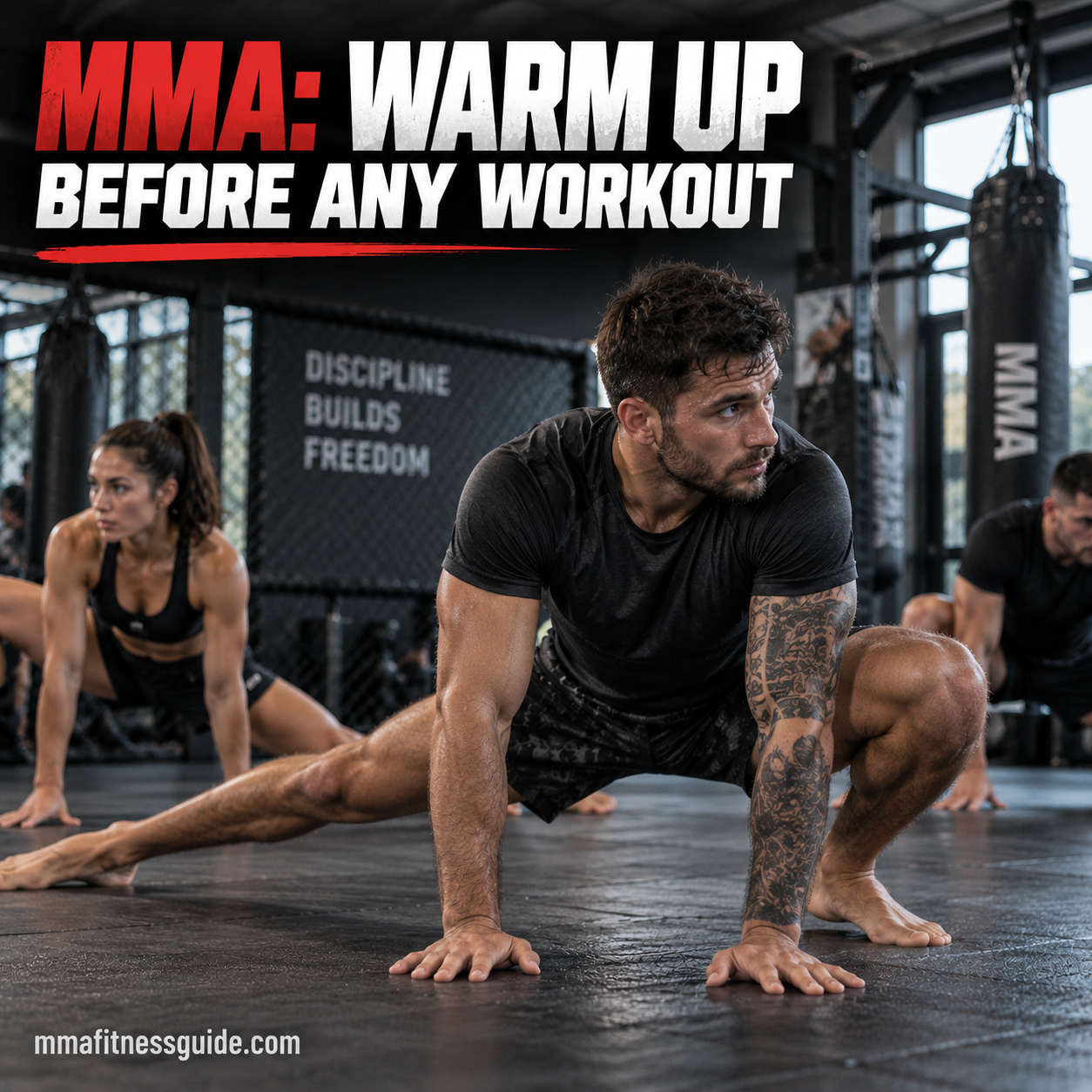
Prepare your body for MMA training with a proper warm-up that improves mobility, activates key muscles, and builds movement readiness.
A proper warm-up sets up everything that follows in an MMA session, yet it’s often the first thing beginners skip when they’re short on time.
Whether you’re hitting pads, lifting weights, drilling takedowns, practicing Brazilian jiu-jitsu, or completing a conditioning circuit, your body needs time to transition from everyday activity into demanding exercise.
Mixed martial arts places significant demands on your shoulders, hips, knees, ankles, and spine. A single training session might involve throwing punches, rotating through kicks, changing levels for takedowns, and repeatedly getting up from the ground.
Going directly from sitting at a desk to performing explosive movements isn’t an ideal way to prepare for those demands.
A structured MMA warm-up gradually raises your heart rate, increases muscle temperature, moves your joints through comfortable ranges of motion, and introduces the movement patterns you’ll use during training.
It can improve readiness and performance and may contribute to injury prevention as part of a broader training program. However, warming up cannot eliminate injury risk, particularly in contact sports.
The good news is that beginners don’t need an elaborate routine.
A well-designed 5–10-minute warm-up can prepare you for most general MMA workouts. Hard sparring, heavy lifting, and particularly demanding sessions may require additional preparation.
This guide explains why warming up matters, provides a complete beginner routine, and shows you how to adjust your preparation for striking, grappling, strength training, and conditioning.