Your trusted source for MMA fitness, nutrition, and fighter-level health.
Category: Fitness for Beginners
Fitness for Beginners provides accessible guidance for those new to MMA, fitness, or physical activity. Articles focus on recovery, mobility, consistency, confidence, and building healthy habits without overwhelm.
Female MMA beginner performing a light gym workout, illustrating the foundation of a weekly training plan for new athletes.
Starting your MMA fitness journey doesn’t have to be intimidating. Whether you’ve never stepped into a gym before or you’re returning after a long break, this weekly plan will help you build strength, improve endurance, and prepare your body for future martial arts training — no previous experience required.
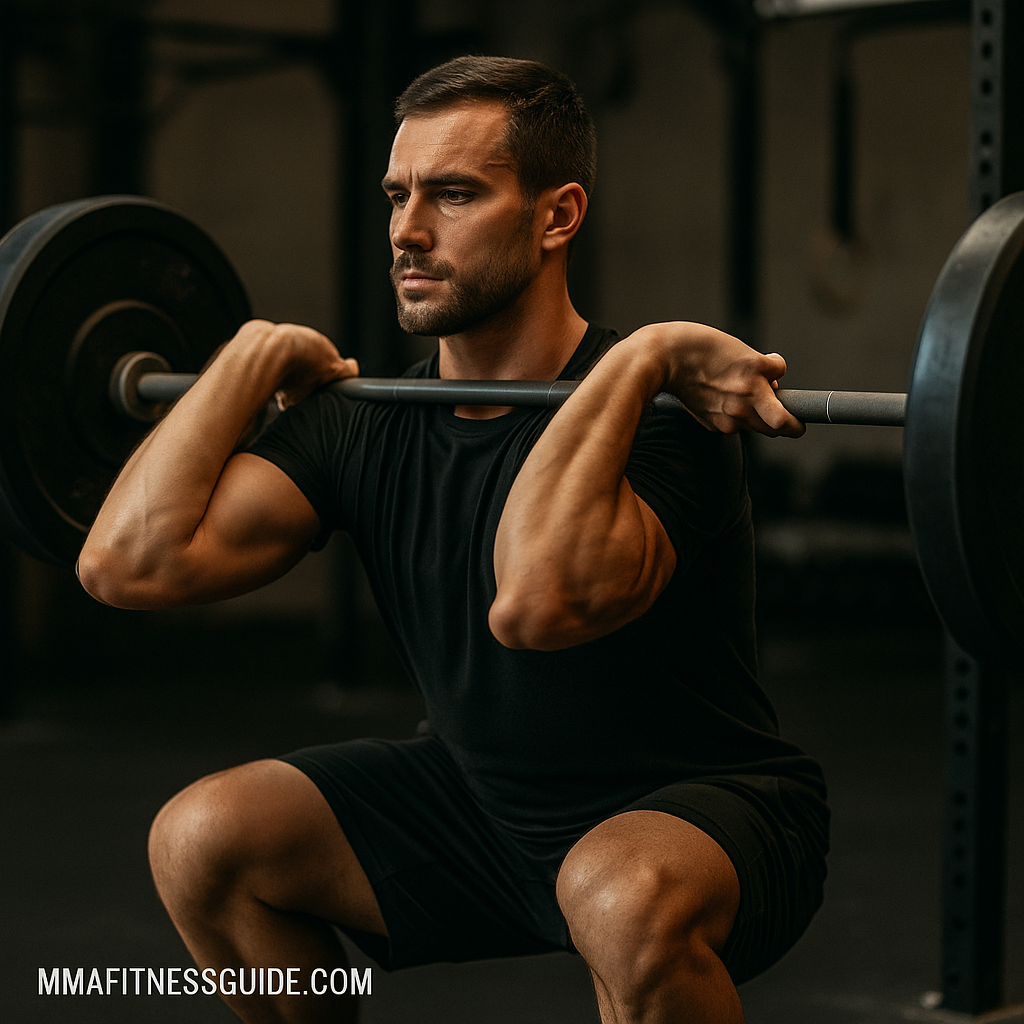
Proper lifting technique and gradual increases in resistance help MMA athletes develop strength while managing training risks.
You’re halfway through a set of squats when the weight suddenly feels heavier. Your heels begin to lift, your knees move differently, and you rush the final repetition just to finish.
You completed the set, but did you get the training benefit you intended?
For MMA fighters, strength training isn’t simply about moving the heaviest weight possible. The goal is to develop strength that supports striking, wrestling, grappling, and the ability to maintain performance throughout demanding training sessions.
Proper exercise technique allows you to train the intended movement, apply progressive overload, and manage unnecessary physical stress.
That doesn’t mean every repetition must look identical or that lifting heavy weights is inherently dangerous. It means choosing loads you can control and understanding when your technique needs adjustment.
Learning that distinction can make your strength training more productive.
Tracking workouts, technique improvements, and recovery helps MMA athletes identify weaknesses, set realistic goals, and maintain consistent training habits.
You finish a tough MMA class, head home exhausted, and wonder whether you’re actually getting any better.
Your punches still feel awkward. Someone caught you in the same submission twice. You struggled through the final conditioning round.
It’s easy to focus on what went wrong, especially when you’re surrounded by more experienced fighters.
But think back to your first week. Maybe you couldn’t finish a three-minute round without stopping. Perhaps you struggled to remember basic combinations or had no idea how to escape side control.
Those improvements are easy to overlook when you’re concentrating on the next challenge.
Tracking your MMA training helps you recognize progress, identify weaknesses, and make better decisions about what to practice next.
You don’t need complicated software or an elaborate spreadsheet. A simple training journal, a few measurable goals, and a consistent review process can make your workouts more purposeful.
Here’s how to track your development without turning training into another chore.
Female MMA fighter preparing for a training session, emphasizing focus and consistency in fitness.
Consistency Beats Intensity
When it comes to MMA fitness, it’s not the hardest workout that changes you — it’s the one you stick to. Many beginners jump in with full energy, only to burn out after a few weeks. The secret to lasting results? Consistency over intensity.
Whether you train to compete, get stronger, or simply feel better, a structured, repeatable routine keeps progress steady and motivation alive.
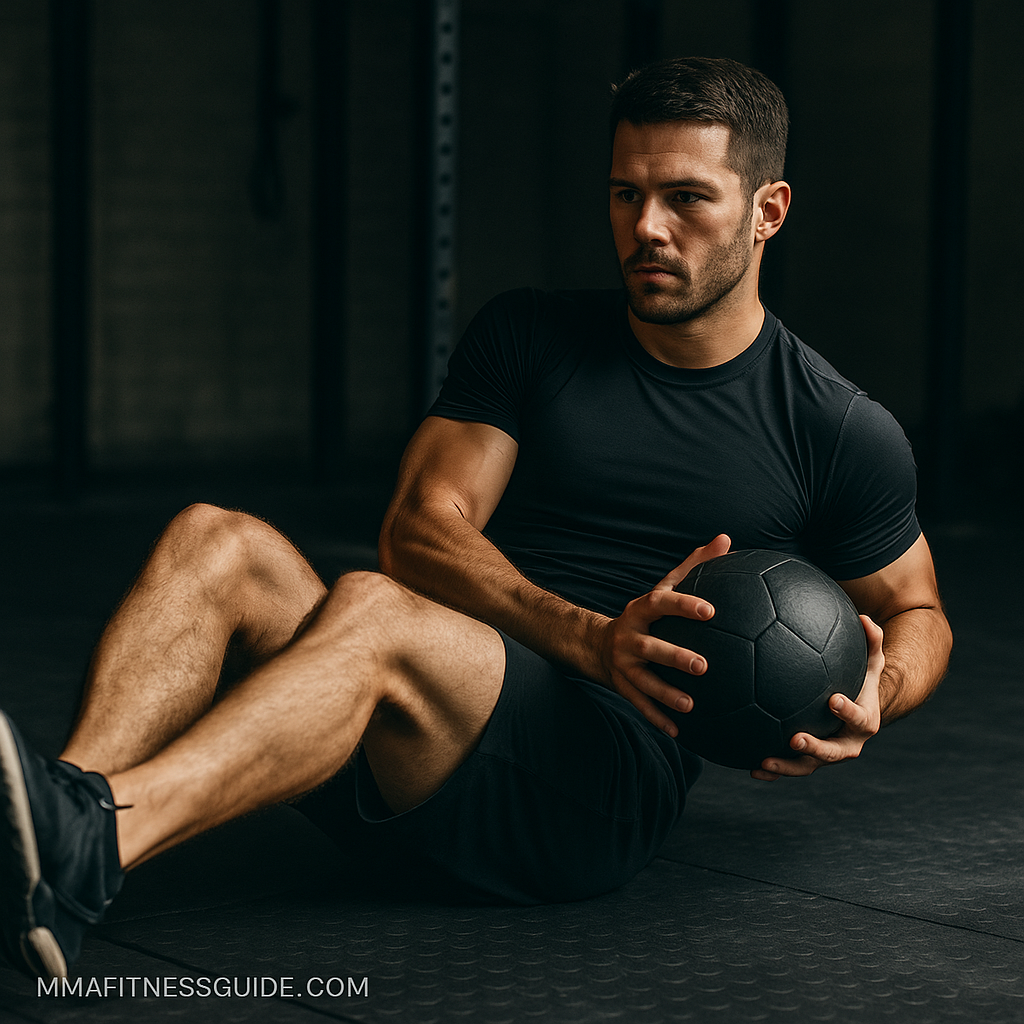
Male MMA athlete training core stability and power with a medicine ball exercise on gym mats.
Strength Starts at the Center
Every punch, kick, and takedown in MMA begins with one thing — core power. Your core isn’t just your abs — it’s the foundation of every movement. It connects your upper and lower body, stabilizes balance, and transfers force into your strikes and grappling.
A strong core means sharper technique, faster transitions, and fewer injuries. Whether you’re a beginner or just building your fitness base, mastering the fundamentals of core training will transform how you move, fight, and perform.
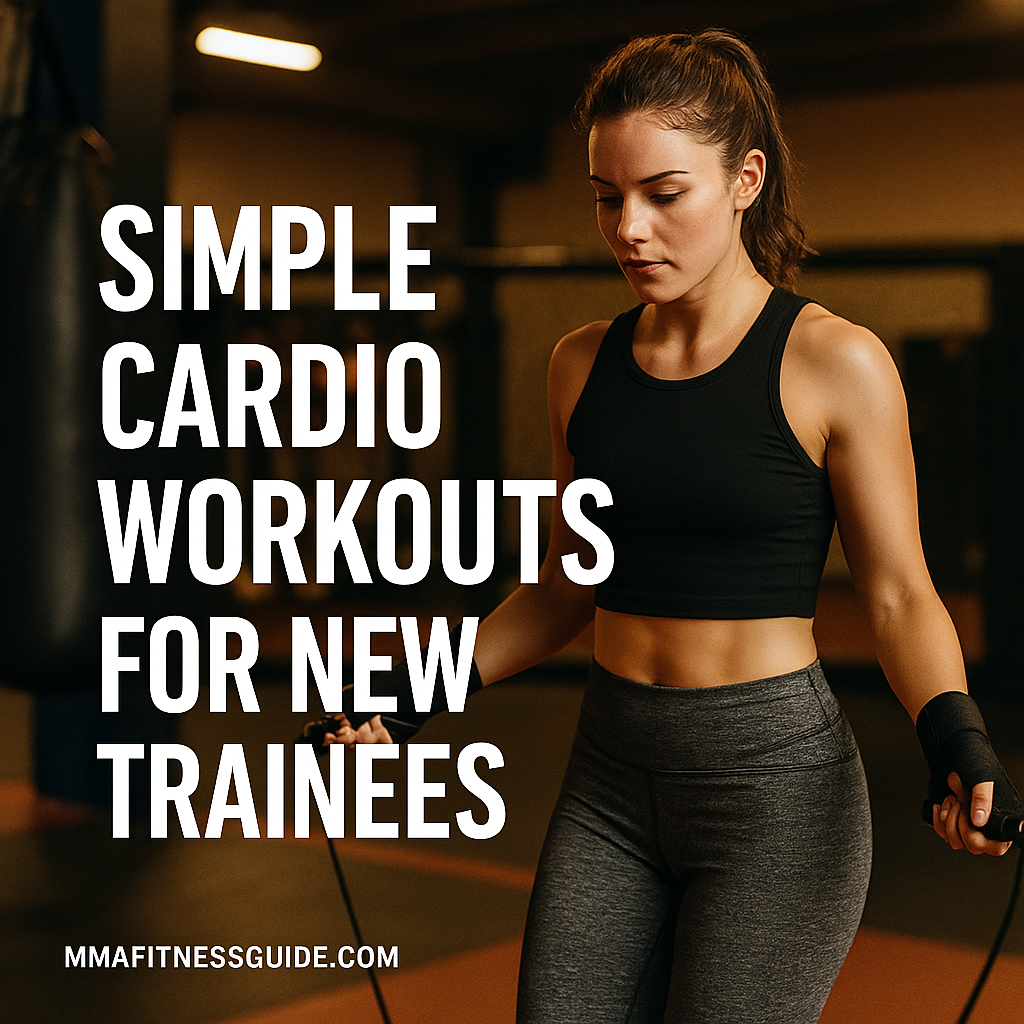
Simple cardio sessions using jump rope, shadowboxing, bag work, and aerobic training can help beginners gradually build conditioning for MMA.
Build Your Engine Before You Step Into the Cage
MMA can expose poor conditioning quickly. Your punches lose speed, your stance gets sloppy, and even simple combinations become harder when you’re struggling to catch your breath.
Beginners can start addressing that with straightforward cardio sessions built around walking, running, cycling, jump rope, shadowboxing, bag work, and bodyweight exercises.
You don’t have to use all of them. Start with a few activities you can recover from consistently, then increase the workload as your conditioning improves.
Female MMA fighter practicing balance and coordination in training, improving stability and body control.
Why Balance and Coordination Matter in MMA
Balance and coordination aren’t flashy — but they’re the foundation of every powerful technique in MMA. Every punch, kick, takedown, and transition depends on how well you can control your body.
Without balance, you waste energy and lose stability. Without coordination, your movements become predictable and easy to counter. Together, these two skills make you fluid, explosive, and efficient — the mark of a true martial artist.
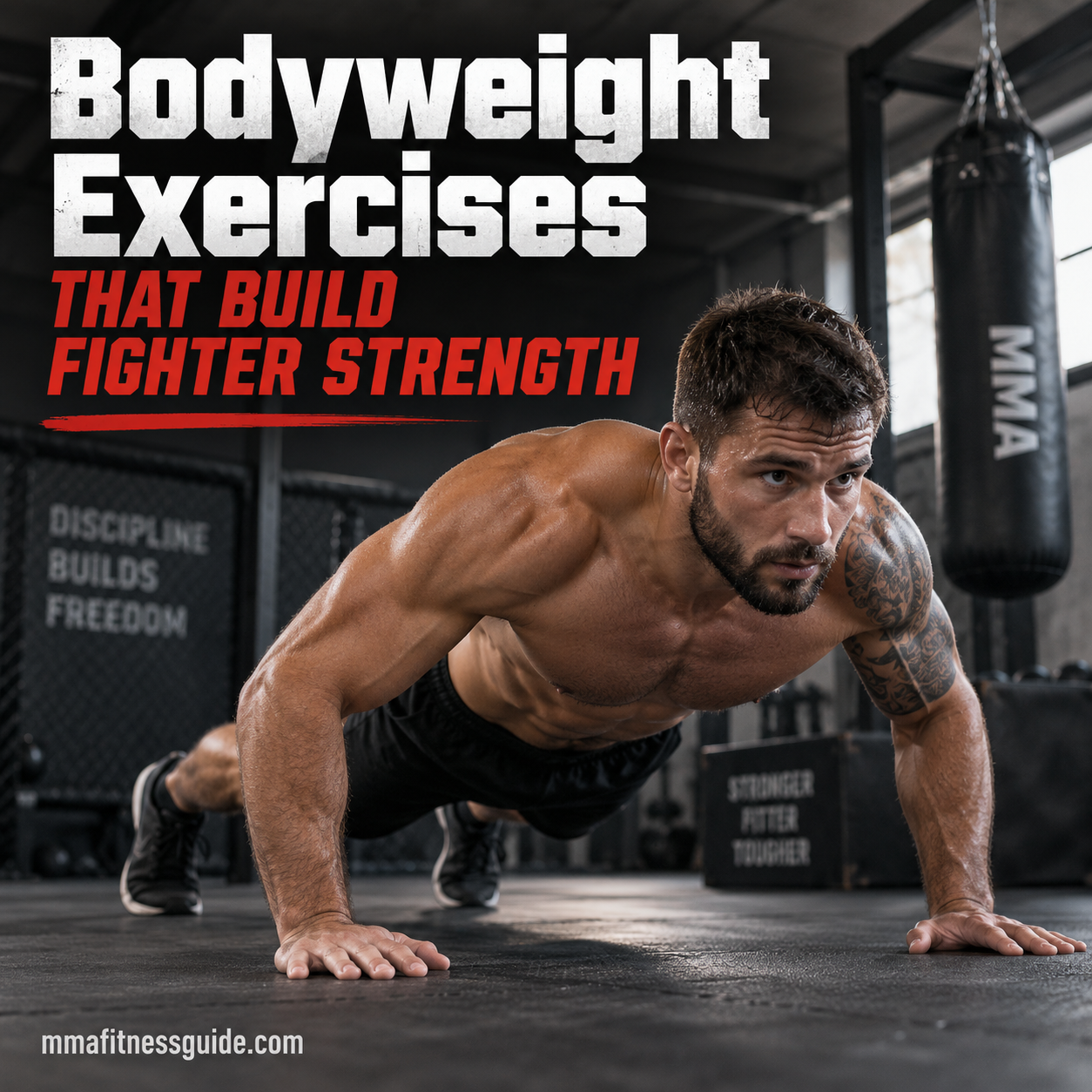
Build fighter strength anywhere with bodyweight exercises that improve power, endurance, balance, and control for MMA.
Building strength for mixed martial arts doesn’t require a fully equipped gym, expensive machines, or a room full of weights. Some of the most important physical qualities a fighter needs—balance, muscular endurance, coordination, and body control—can be developed through consistent bodyweight training.
Push-ups, pull-ups, squats, lunges, planks, and burpees provide a practical foundation for fighters who want to become stronger without relying entirely on traditional weightlifting.
However, fighter strength involves more than completing hundreds of repetitions. It requires the ability to produce force, maintain stable positions, resist fatigue, and control your body while an opponent is actively working against you.
A fighter needs strong legs to drive through takedowns, a stable core to transfer force during strikes, and upper-body strength to maintain control in the clinch. Bodyweight exercises can help develop these qualities when performed with proper technique and progressively increased difficulty.
This guide covers seven essential bodyweight exercises for MMA, explains how they contribute to fighting performance, and provides practical workout routines for beginners and experienced athletes.
Whether you’re training at home, supplementing martial arts classes, or building your fitness before joining an MMA gym, these exercises can form the foundation of an effective strength program.
A beginner MMA enthusiast training at home, building fitness and technique through dedication.
Starting MMA-inspired fitness training does not require a gym membership, professional equipment, or prior combat experience. Many effective MMA workouts can be done at home using bodyweight movements, controlled striking drills, and basic conditioning exercises.
Beginner MMA workouts focus on building foundational strength, endurance, coordination, and movement awareness. These workouts borrow techniques from mixed martial arts training while emphasizing fitness, safety, and gradual progression rather than competition or fighting.
This guide explains how beginners can safely start MMA-style workouts at home, what types of exercises to include, how often to train, and how to build a routine that supports long-term fitness development.