
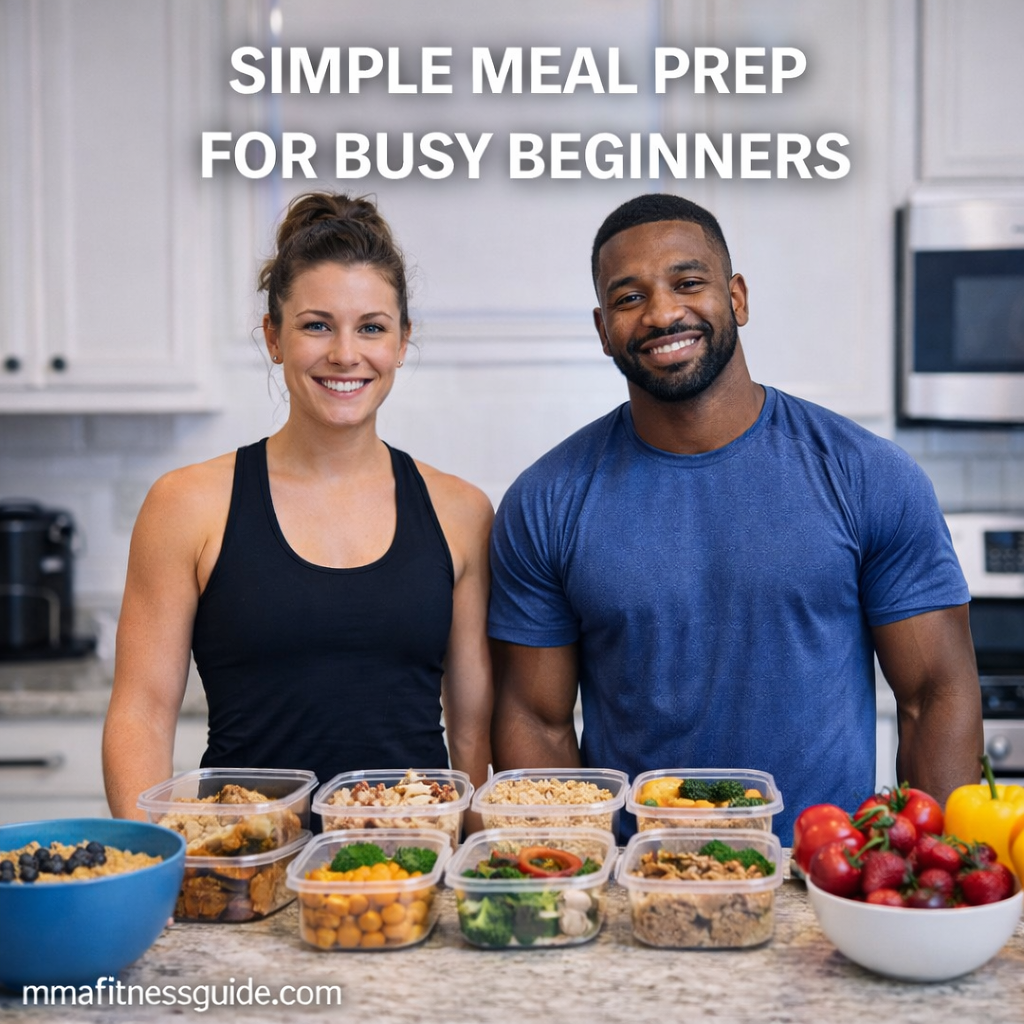
A long workday can turn a planned chicken-and-rice dinner into takeout surprisingly quickly. Add training, commuting, family responsibilities, and errands, and cooking three fresh meals every day becomes unrealistic for many people.
Meal prep gives you another option: cook several basic ingredients when you have time, portion or refrigerate them, and assemble meals in minutes during the week. A tray of roasted chicken, a pot of rice, chopped vegetables, yogurt, fruit, and a few grab-and-go snacks can cover several days without turning Sunday into an all-day cooking project.
Why Meal Prep Helps Beginners
Nutrition becomes harder when every meal requires a new decision.
Having food prepared ahead of time makes it easier to:
- Eat regularly during busy days
- Bring lunch instead of relying on takeout
- Have food available after training
- Control portions and ingredients
- Spend less time deciding what to eat
The practical advantage is simple: when you open the refrigerator hungry, there is already something ready.
Why Beginners Struggle With Nutrition
A meal plan can look easy on paper and fall apart once a busy week starts.
Typical problems include:
- Getting home too late to cook
- Forgetting to pack lunch
- Buying groceries without planning meals
- Following recipes with too many ingredients
- Having nothing convenient available after training
Instead of relying on motivation at every meal, meal prep handles some of those decisions in advance.
What Simple Meal Prep Actually Looks Like
Meal prep doesn’t have to mean seven identical containers lined up in the refrigerator.
A more flexible approach is to prepare individual components. For example, cook chicken, ground turkey, rice, potatoes, and roasted vegetables separately. During the week, those ingredients can become rice bowls, wraps, salads, or simple plated meals.
This approach provides variety without requiring several different recipes.
How Often Should Beginners Meal Prep?
Start with one or two cooking sessions each week.
For example, you might prepare food on Sunday and make a smaller batch on Wednesday. Each session could take roughly 60–90 minutes depending on what you’re cooking.
There is little benefit in preparing an entire week of elaborate meals if the process is difficult enough that you stop doing it after two weeks.
Build Meals From Basic Components
Instead of searching for complicated meal-prep recipes, choose foods from a few basic categories.
Protein Sources
Protein-rich foods can form the center of each meal.
Convenient options include:
- Chicken breast or thighs
- Ground turkey or lean beef
- Eggs
- Greek yogurt
- Beans or lentils
Cook one or two proteins in larger batches and use them in different meals.
Carbohydrate Sources
Carbohydrates can provide useful fuel for training and daily activity.
Easy options include:
- Rice
- Quinoa
- Potatoes or sweet potatoes
- Oats
- Whole-grain wraps
- Fruit
Choose foods that fit your preferences, digestion, and training schedule rather than forcing yourself to eat a particular “fitness food.”
Vegetables and Fiber
Vegetables don’t need elaborate preparation.
Try:
- Sheet-pan broccoli, carrots, peppers, or zucchini
- Pre-washed salad greens
- Frozen vegetable mixes
- Baby carrots or other ready-to-eat vegetables
Frozen vegetables are particularly useful because they last longer and can be heated in minutes.
Fats
A meal can also include foods such as:
- Olive oil
- Avocado
- Nuts
- Seeds
- Nut butter
These are easy additions, but portions can add up quickly because many fat-rich foods are calorie-dense.
Try the 2-2-2 Method
A simple grocery and cooking framework is to choose:
- 2 proteins
- 2 carbohydrate sources
- 2 vegetables
For example:
Proteins: chicken and eggs
Carbohydrates: rice and potatoes
Vegetables: broccoli and bell peppers
Those six ingredients can produce several combinations without filling your refrigerator with dozens of different foods.
Next week, swap a few ingredients to keep things interesting.
Cook Several Foods at the Same Time
The kitchen becomes much more efficient when different foods cook simultaneously.
You could:
- Put chicken and vegetables in the oven.
- Start rice on the stove or in a rice cooker.
- Boil several eggs while everything else cooks.
- Wash fruit and portion snacks while waiting.
Instead of completing one recipe before beginning another, use cooking time to prepare the next ingredient.
Sheet pans, rice cookers, air fryers, and slow cookers can make this process even easier, but none is required.
Store Food So You Can See It
Prepared food isn’t very useful if it disappears behind condiments and leftovers.
Use containers that are easy to stack and appropriate for refrigeration and reheating. Clear containers make it easier to see what needs to be eaten first.
You can either portion complete meals immediately or keep ingredients in larger containers and assemble meals as needed.
Follow appropriate food-storage and refrigeration guidance for the ingredients you’re preparing.
Example of a Simple Meal Prep Day
Your meals don’t have to look like a bodybuilding diet.
A normal day might look like this:
Breakfast
Greek yogurt with oats, berries, and nuts.
This takes only a few minutes to assemble and can be packed for work.
Lunch
Chicken, rice, and roasted vegetables.
Add a sauce or seasoning you enjoy so the meal doesn’t become monotonous.
Dinner
Ground turkey or beef with potatoes and a side salad.
The protein and potatoes can be reheated while the salad is assembled.
Snacks
Keep several easy options available:
- Hard-boiled eggs
- Fruit
- Greek yogurt
- Nuts
- Cheese
- Leftover protein
A prepared snack can be especially useful when several hours separate lunch from an evening workout.
Reduce Daily Food Decisions
Imagine finishing a workout at 8 p.m. without dinner prepared. You now have to decide what to eat, find ingredients, cook, and clean up while already tired and hungry.
If dinner is waiting in the refrigerator, most of those steps disappear.
That’s where meal prep earns its value. It moves decisions and cooking to a time when you have more control over your schedule.
Training Days and Rest Days
Beginners usually don’t need entirely separate menus for training and rest days.
Depending on training volume, appetite, body size, and goals, you might adjust portions instead. Someone doing a demanding evening session, for example, may want additional carbohydrates around that workout.
Nutrition needs vary considerably between people, so avoid copying another athlete’s portions without considering your own needs.
Make Grocery Shopping Predictable
Meal prep begins before you enter the kitchen.
Decide what you’ll cook first, then build the shopping list around those meals.
A basic list might contain:
- Two protein sources
- Two carbohydrate sources
- Two or three vegetables
- Fruit
- Breakfast foods
- A few convenient snacks
- Seasonings or sauces
This prevents buying a refrigerator full of unrelated ingredients and trying to invent meals afterward.
Keep Backup Foods for Busy Weeks
Some weeks won’t leave enough time for a full prep session.
Keep a few faster options available, such as:
- Frozen vegetables
- Microwaveable rice
- Canned beans
- Eggs
- Greek yogurt
- Canned tuna or other convenient proteins
- Pre-washed salad
- Rotisserie chicken
These foods can turn “I didn’t meal prep” into a 10-minute dinner rather than an automatic fast-food run.
Common Meal Prep Mistakes
Preparing Too Much Food
Making seven days of meals immediately can create waste if your schedule changes or you get tired of the food.
Start with a few days and learn how much you actually eat.
Choosing Foods You Don’t Like
Chicken and broccoli aren’t mandatory.
If you dislike something when it’s freshly cooked, you probably won’t be excited about eating it from a container three days later.
Making Every Meal Complicated
Five different recipes mean more ingredients, cooking methods, dishes, and cleanup.
Repeat ingredients instead and change seasonings, sauces, or combinations.
Ignoring Your Schedule
Prep around your actual week.
If Tuesday and Thursday are late training nights, make sure those dinners require almost no preparation. If you work from home Friday, that may be a better day to cook something fresh.
Meal Prep on a Budget
Basic ingredients can stretch across several meals.
Rice, oats, potatoes, eggs, beans, frozen vegetables, and larger packages of meat can often cost less per serving than individually packaged convenience foods.
Compare unit prices rather than package prices, freeze food you won’t use soon, and avoid buying bulk quantities simply because they appear cheaper. Bulk purchases only save money when the food actually gets eaten.
Adjust Meal Prep as Training Changes
A beginner training twice per week may eat differently after progressing to four or five sessions.
Changes in training volume can affect hunger, energy needs, and recovery. You may eventually find yourself increasing portions, adding a pre-workout snack, preparing more carbohydrates, or simply cooking larger batches.
Your meal-prep routine should change with your schedule rather than remaining fixed.
Build a Routine You Can Repeat
A workable system might be surprisingly ordinary:
Shop Saturday. Cook Sunday afternoon. Prepare another protein Wednesday night. Keep frozen vegetables and rice available for unexpected schedule changes.
That routine is far more useful than an elaborate plan that requires three hours of cooking, 20 ingredients, and perfect adherence every week.
Meal prep should reduce the amount of work required to eat well—not create another demanding project.
Final Thoughts
Start with enough food for the busiest two or three days of your week. Cook a protein, a carbohydrate, and some vegetables, then keep breakfast foods and a couple of convenient snacks available.
Once that feels routine, add more variety or another prep session if you actually need it.
The real test isn’t whether your refrigerator looks like a fitness influencer’s meal-prep photo. It’s whether you can come home tired on a Wednesday night, open the refrigerator, and have a reasonable meal ready in a few minutes.