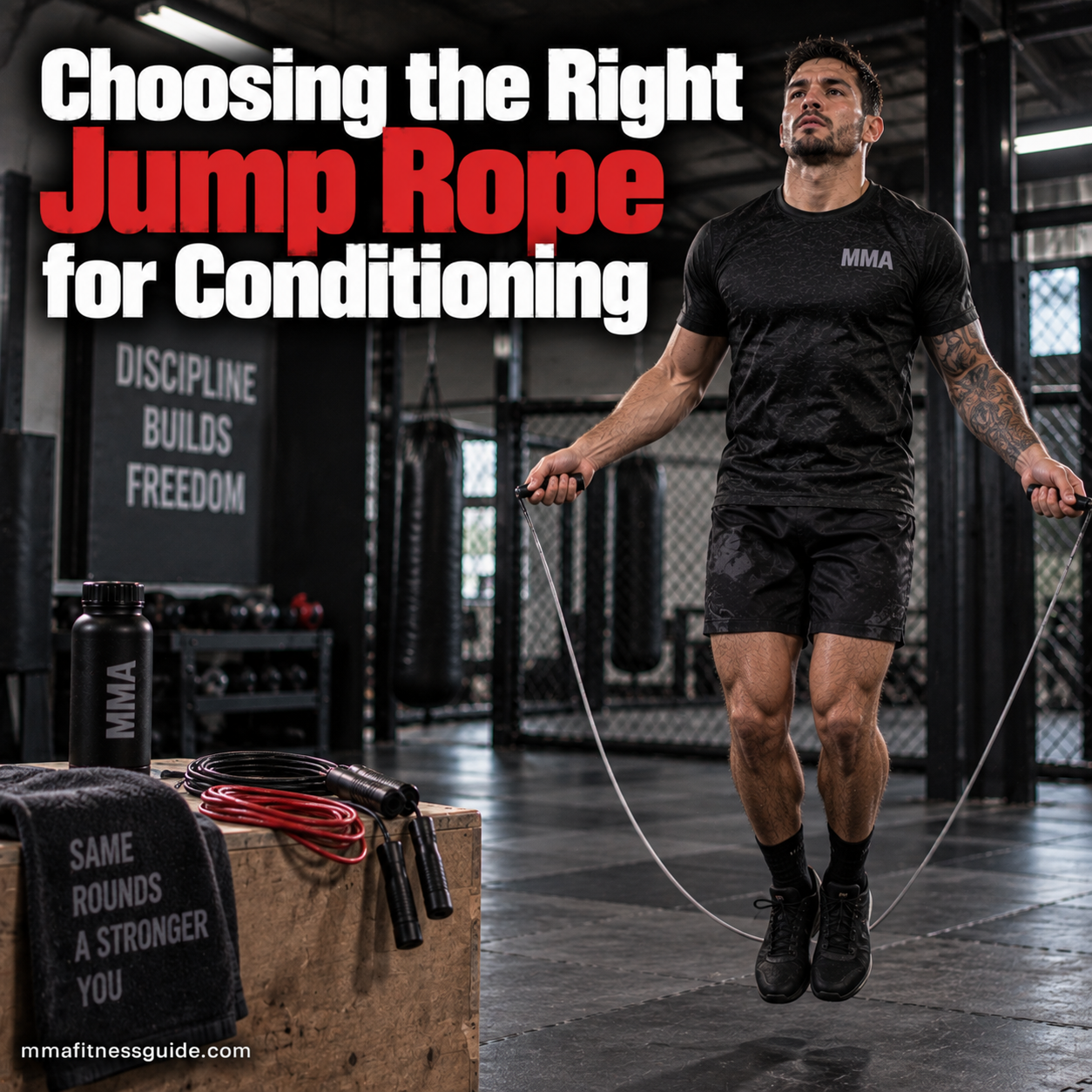
A thin speed rope can whip around fast enough for double-unders, while a heavy rope forces your shoulders and forearms to work through every rotation. A basic PVC rope sits somewhere in between, giving beginners enough feedback to learn timing without requiring perfect technique.
Those differences matter for fighters.
Jumping rope can be used for a five-minute warm-up before striking, longer conditioning rounds, quick-footwork drills, or additional shoulder endurance work. The rope that works well for one of those jobs may feel awkward for another.
For most beginners, a controllable PVC rope is a practical starting point. Fighters chasing faster turnover may prefer a cable speed rope, while heavier ropes can add resistance to shorter conditioning rounds.
Before buying one, consider the cord material, weight, handle design, adjustability, and—most importantly—whether the rope is the correct length for your height and jumping style.
Continue reading “Choosing the Right Jump Rope for Conditioning”