A long flight, hours behind the wheel, unfamiliar food, and several nights away from your usual gym can quickly leave you feeling stiff and out of rhythm. For fighters, even a short trip can interrupt the conditioning, mobility, and technical repetition that normally keep the body sharp.
The solution isn’t trying to recreate your full training camp in a hotel room. A few rounds of shadowboxing, targeted mobility work, bodyweight conditioning, and smart recovery habits can preserve much of what you’ve built until normal training resumes.
With as little as 15–20 minutes a day and minimal equipment, you can keep your movement sharp, maintain your conditioning, and return home ready to step back into regular MMA training.
Why Travel Challenges Fighters
Travel disrupts the fundamentals of training:
- Your routine and schedule change
- Access to equipment is limited
- Sleep may be inconsistent
- Food options aren’t always ideal
- Stress and dehydration increase
For fighters, these factors can quickly create stiffness, fatigue, or lost momentum. But with smart adjustments, you can keep your body ready and your mind sharp until you’re back home or in camp.
Rule #1: Keep Your Body Moving Daily
Travel days often create long periods of sitting — airplanes, cars, airports, waiting rooms. Even 10–15 minutes of movement dramatically improves how you feel.
Simple daily travel routine:
- 1–2 minutes: deep nasal breathing
- 4 minutes: hip mobility + thoracic mobility
- 5 minutes: shadowboxing or dynamic footwork
- Optional: 3–5 minutes bodyweight conditioning
Movement keeps your joints alive and prevents that “stiff, drained” feeling after travel.
Rule #2: Use Bodyweight Training to Stay Fight-Ready
You don’t need a full gym to stay sharp. Fighters can maintain most of their conditioning with minimal equipment.
Highly effective bodyweight options:
- Push-ups (regular, explosive, shoulder-tap)
- Squats + squat jumps
- Lunges in all directions
- Plank variations
- Burpees (sparingly)
- Hip bridges
- Mountain climbers
MMA-specific bodyweight drills:
- Technical stand-ups
- Sprawls
- Shadow wrestling shots
- Knee entries + grips
- Shadowboxing with head movement
These movements keep your coordination sharp and your gas tank active.
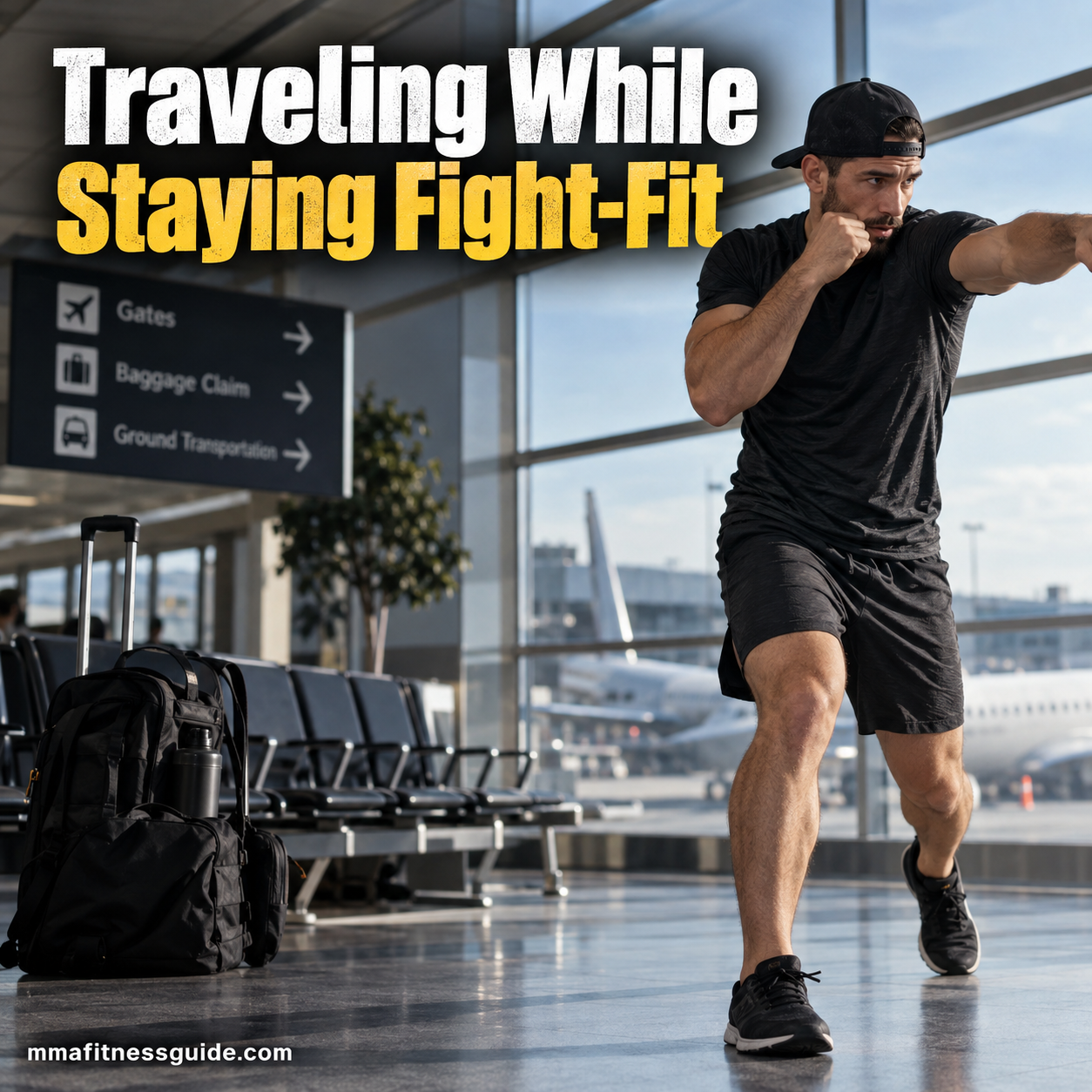
Rule #3: Shadowboxing Is Your Secret Weapon
Shadowboxing is one of the most complete travel-friendly workouts.
Benefits:
- Zero equipment required
- Builds technique, rhythm, and footwork
- Keeps the nervous system sharp
- Burns calories and improves conditioning
- Helps maintain timing and feel
Do 3–5 rounds of 2–3 minutes focusing on looseness, breathing, and clean movement.
If you’re in a hotel, use mirrored closets or windows to refine form.
Rule #4: Use Resistance Bands for Power + Mobility
A single resistance band can replace a surprising amount of gym equipment.
Use it for:
- Rows
- Rotational punches
- Face pulls
- Hip mobility drills
- Banded sprawls
- Rear-naked choke grip strength work
Bands fit in a backpack and give fighters enough resistance to maintain strength patterns.
Rule #5: Stay Fight-Fit by Managing Nutrition
You can’t out-train chaotic travel eating.
Simple travel nutrition rules:
- Prioritize protein at every meal
- Drink water frequently (planes dehydrate you fast)
- Keep snacks clean: nuts, jerky, protein bars
- Limit heavy meals before training
- Avoid airport sugar overload
If you’re cutting weight, track your intake lightly to avoid accidental overeating.
Rule #6: Recreate Your Training Structure, Even If Shorter
Your training doesn’t need to be perfect — it just needs to exist.
Sample 20-minute travel workout:
- 3 min mobility
- 3 min shadowboxing
- 6 min conditioning (30 sec on / 15 sec off)
- 4 min technique emphasis (one specific combo or footwork pattern)
- 4 min cool down and breathing
This preserves your timing, conditioning, and discipline.
Rule #7: Train at Local Gyms When Possible
Most cities have:
- MMA gyms
- BJJ academies
- Muay Thai schools
- Boxing gyms
Dropping in gives you:
- Fresh training partners
- New coaching cues
- Motivation boost
- Community connection
Many gyms offer affordable drop-in rates or a free first class.
Rule #8: Manage Sleep and Recovery Aggressively
Sleep is the first thing travel disrupts — and the first thing to fix.
Tips:
- Dark room
- Cool temperature
- Nasal breathing before bed
- Magnesium glycinate
- Avoid late caffeine
- Stretch lightly before sleeping
Recovery often matters more than training while on the road.
Rule #9: Keep Hydration High
Flying, long drives, and unfamiliar climates cause dehydration quickly.
Aim for:
- At least 2–3 liters per day
- Electrolytes if training intensely
- Extra water on flight days
Hydration keeps your muscles responsive and your cardio stable.
Rule #10: Keep Your Mind in Fighter Mode
Being away from your routine can create frustration or stress.
Stoic mindset principles help a lot here:
- Control what you can (movement, nutrition, effort)
- Accept changes without emotional negativity
- Stay adaptable
- Keep your goals in perspective
A fighter who stays disciplined while traveling returns stronger than they left.
Final Thoughts: Staying Fight-Fit Anywhere
Travel doesn’t have to derail your fitness. With light equipment, intentional movement, and smart habits, you can maintain strength, cardio, flexibility, and technique no matter where you go.
Staying fight-fit while traveling is less about intensity and more about consistency. Move daily, eat smart, hydrate well, and keep your body primed until you return to full training.