Lower Back Pain: Causes and Solutions

MMA fighter holding his lower back after experiencing pain during training
Striking, grappling, lifting, and sudden changes in training volume can all contribute to lower back discomfort in martial artists.

A poorly positioned sprawl can suddenly load the lower back, while hundreds of kicks, takedown attempts, guard exchanges, and strength-training reps can irritate the same area gradually. For martial artists, back pain can show up as anything from stiffness when getting out of bed to discomfort that makes rotating, changing levels, or grappling difficult.

The source isn’t always the back itself. Training volume, lifting technique, hip and trunk strength, mobility, previous injuries, and even the amount of time spent sitting between sessions can influence how the lower back responds to training.

Mild muscular soreness may settle with appropriate movement and recovery, but persistent or worsening pain deserves more attention. Identifying when symptoms appear—and which movements aggravate them—provides a better starting point than simply stretching or trying to train through the discomfort.

Continue reading “Lower Back Pain: Causes and Solutions”
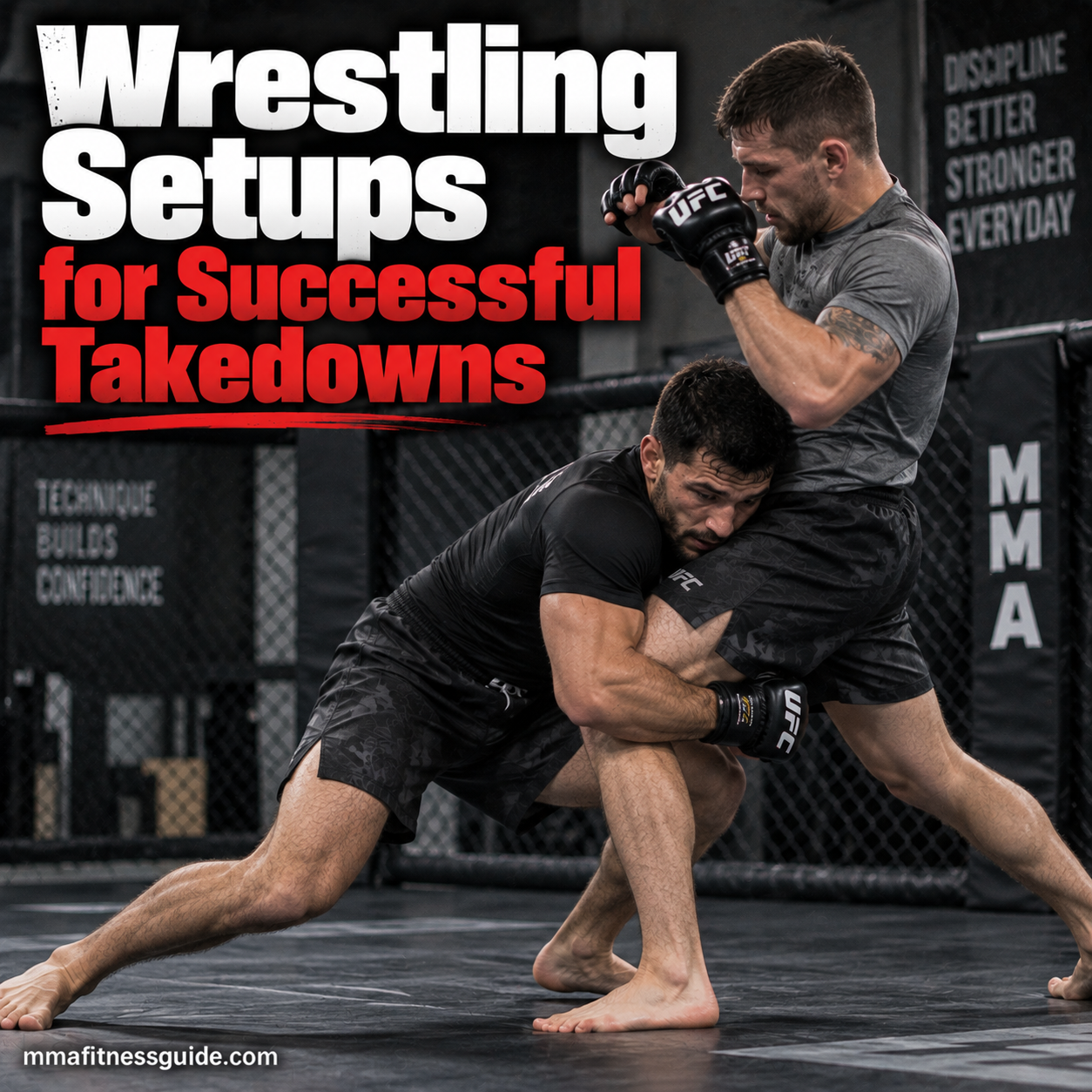

Wrestling Setups for Successful Takedowns

MMA fighter using a wrestling setup to enter a takedown during training
Strikes, feints, hand fighting, footwork, and timing can create openings for cleaner wrestling entries in MMA.

A double-leg attempt looks very different when the opponent is standing balanced and waiting for it versus when they’re reacting to a jab, stepping forward, or recovering their posture after a feint. The takedown may be identical, but the opening isn’t.

That’s the purpose of a wrestling setup.

In MMA, shooting directly at an opponent from predictable range gives them time to sprawl, frame, circle away, or counter. Strikes, level changes, hand fighting, footwork, and feints can disguise the entry or encourage a reaction that makes the legs and hips easier to reach.

Good setups also connect wrestling to the rest of MMA. A jab can lead into a double leg, cage pressure can transition into a body lock, and a fake shot can bring an opponent’s hands down before you return to striking.

Rather than treating the takedown as an isolated technique, think of the setup and entry as one continuous sequence: create a reaction, recognize the opening, change levels, and attack from a position where the opponent has less time to respond.

Continue reading “Wrestling Setups for Successful Takedowns”

Post-Fight Recovery Meals That Work

MMA fighter eating grilled chicken, rice, and broccoli after a fight, with a protein shake, bananas, berries, and water nearby.
Balanced post-fight meals provide protein, carbohydrates, and fluids to support muscle repair, energy replenishment, and rehydration.

The final bell rings, your gloves come off, and the adrenaline begins to fade. Your muscles are sore, your energy is depleted, and you may have lost considerable fluid through sweating or pre-fight weight cutting. Even if you’re not hungry, your body still needs nutrients to begin recovering from the physical demands of competition.

A protein shake and a banana might be all you can manage immediately after a fight, but your next meals should provide more substantial nutrition. Chicken and rice, salmon with potatoes, or a hearty bowl of soup can supply the protein, carbohydrates, fluids, and electrolytes needed to support muscle repair and replenish energy stores.

Recovery doesn’t end with your first post-fight meal. What you eat and drink over the following 24–48 hours can help restore hydration, support tissue repair, and prepare your body for a gradual return to training. The key is to start with foods your stomach can tolerate, rehydrate appropriately, and build toward balanced meals as your appetite returns.

Continue reading “Post-Fight Recovery Meals That Work”

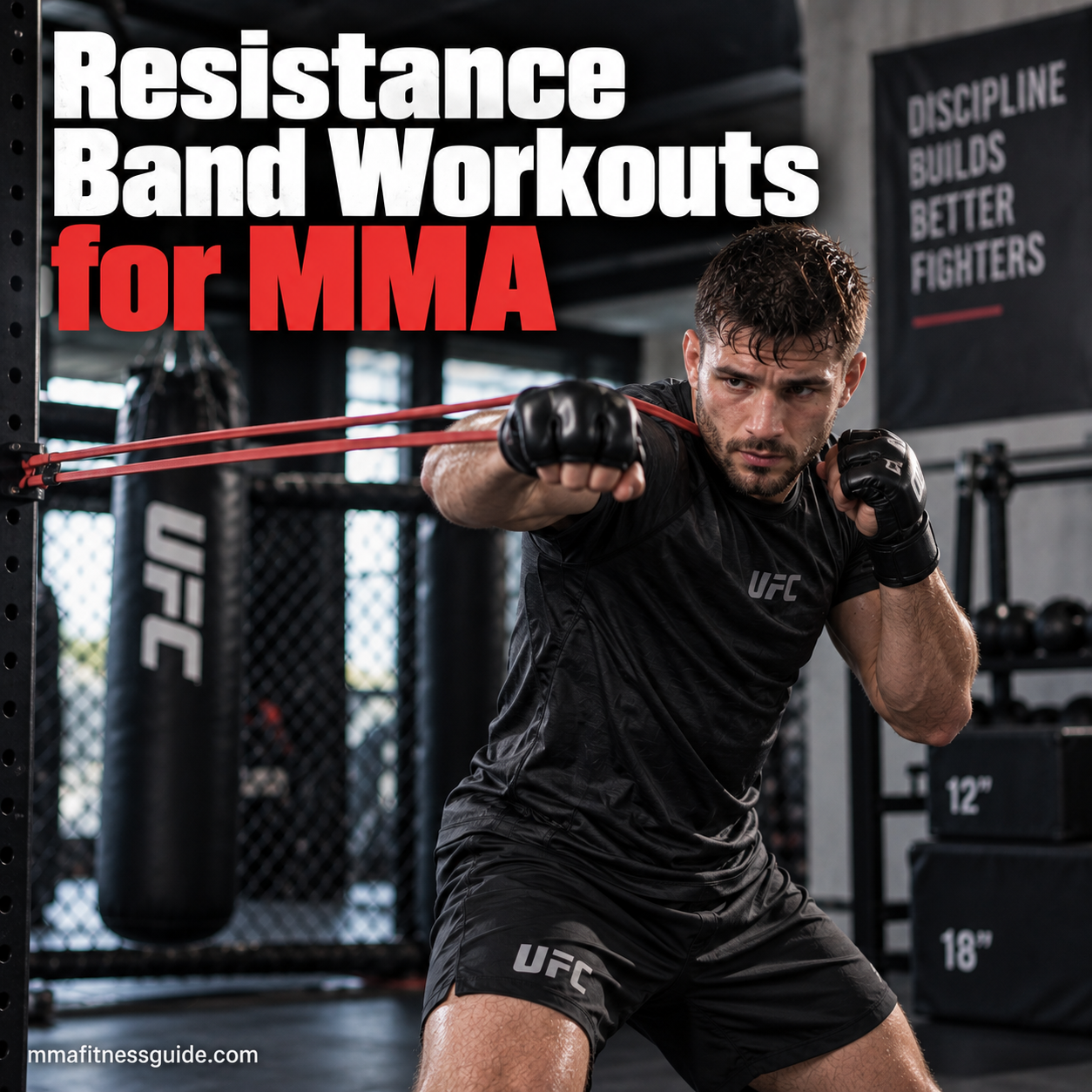
Resistance Band Workouts for MMA

MMA fighter performing resistance band punches during a strength and conditioning workout.
Resistance bands can add progressive resistance to punching, rotational movements, level changes, and other fighter-focused strength exercises.

Attach a resistance band behind a fighter during a penetration step and the hips have to drive harder to complete the movement. Anchor one behind the shoulders during straight punches and every extension has added resistance. Use a mini band during lateral movement and the hips must work continuously to maintain stance and knee position.

That versatility makes resistance bands particularly useful for MMA training.

Bands can add resistance to punching, level changes, rows, rotational movements, hip exercises, and conditioning drills without requiring a rack of weights. Because resistance generally increases as the band stretches, fighters can also use them to train acceleration through specific movement patterns.

They work especially well as a supplement to regular strength, conditioning, and technical training rather than a replacement for those methods. A few bands can provide additional resistance for warm-ups, accessory strength work, explosive drills, and short conditioning sessions whether you’re training at a full MMA gym or away from your usual equipment.

The key is choosing exercises that reinforce useful movement patterns instead of simply adding band resistance to every MMA technique.

Continue reading “Resistance Band Workouts for MMA”

Writing a Business Plan for a Fight Gym

Fight gym owner writing a business plan at a desk inside an MMA training facility.
Planning a fight gym starts with mapping out costs, membership goals, staffing, marketing, and long-term growth.

Opening an MMA, Muay Thai, Brazilian Jiu-Jitsu, boxing, or other combat sports gym requires more than coaching experience and a suitable training space. Before signing a lease or purchasing mats and equipment, you need to understand how many members the gym must attract, what it will cost to operate, and how those members will find you.

A business plan puts those decisions in one place. It defines the gym’s concept, target market, programs, expenses, revenue model, staffing requirements, and growth targets.

If you’re applying for financing or bringing in business partners, the plan also gives lenders and investors something concrete to evaluate.

Here’s how to structure a business plan specifically for a fight gym.

Continue reading “Writing a Business Plan for a Fight Gym”

MMA: Build a Supportive Gym Community

Diverse group of MMA teammates supporting each other after training inside a martial arts gym.
Respect, encouragement, safe training, and strong relationships between teammates help create a supportive MMA gym community.

A new student walks into an MMA gym knowing almost nobody. Within the first few minutes, they’re greeted by a coach, introduced to a patient training partner, shown where the equipment is, and reassured that nobody expects them to know every drill on day one.

That experience can determine whether they return next week.

Strong MMA communities are built through interactions like these: experienced students helping beginners, sparring partners controlling their intensity, coaches correcting mistakes without humiliation, and teammates recognizing each other’s progress.

Coaches, gym owners, fighters, and recreational students all influence that environment. When respect, safety, encouragement, and teamwork become everyday habits, the gym becomes a place where people can train hard, improve their skills, and genuinely enjoy showing up.

Continue reading “MMA: Build a Supportive Gym Community”

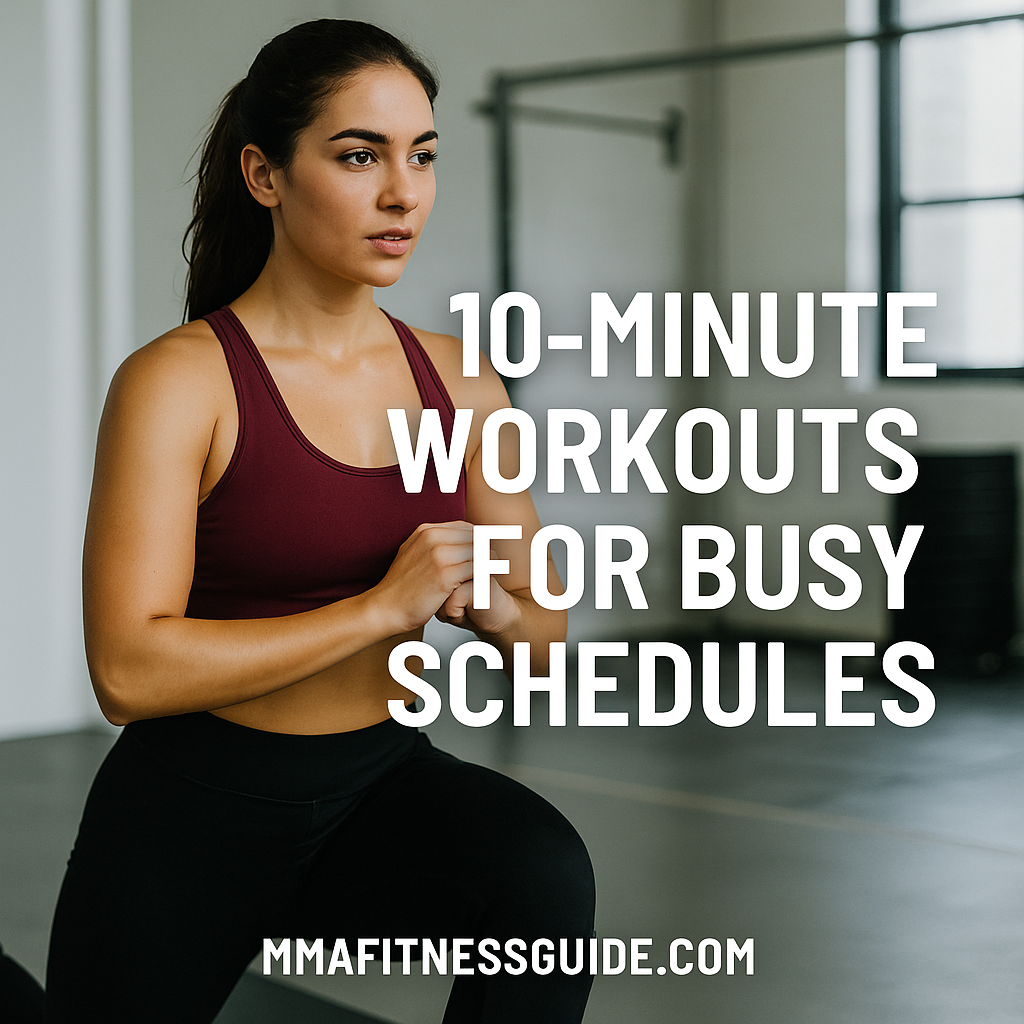
10-Minute Workouts for Busy Schedules

Fit young woman performing a lunge exercise in a bright gym with bold white title text promoting 10-minute workouts for busy schedules.
A focused female athlete demonstrating a quick, effective workout for people with busy schedules.

Finding time to train can be tough — especially if you juggle work, family, school, or unpredictable hours. But staying fit doesn’t require hour-long gym sessions. In fact, 10-minute workouts can boost your conditioning, mobility, and overall health when done consistently.

Short, focused sessions help beginners stay active without feeling overwhelmed. They also keep you connected to your goals, even on the busiest days. This guide gives you fast, effective 10-minute workouts perfect for anyone who wants to stay consistent, build momentum, and improve fitness in a tight schedule.

Continue reading “10-Minute Workouts for Busy Schedules”

The Evolution of Weight Classes in MMA

Evolution of MMA weight classes showing an early openweight size mismatch alongside modern fighters competing in regulated divisions
MMA evolved from early openweight contests with extreme size differences to structured weight classes designed to create safer and more competitive matchups.

At UFC 3 in 1994, roughly 200-pound Keith Hackney stepped across the Octagon from Emmanuel Yarborough, a sumo wrestler who weighed well over 600 pounds. A matchup with that kind of size difference would be unimaginable in a major MMA promotion today, but in the sport’s earliest years, it was part of the experiment.

MMA eventually moved away from unrestricted size matchups and toward regulated divisions designed to create fairer, safer competition. From the UFC’s first basic weight categories to today’s flyweight-through-heavyweight structure, that transformation changed matchmaking, championship systems, fighting styles, and even how athletes prepare for competition. It also created a new problem the earliest fighters rarely faced: the increasingly extreme practice of cutting weight to make a division.

Continue reading “The Evolution of Weight Classes in MMA”

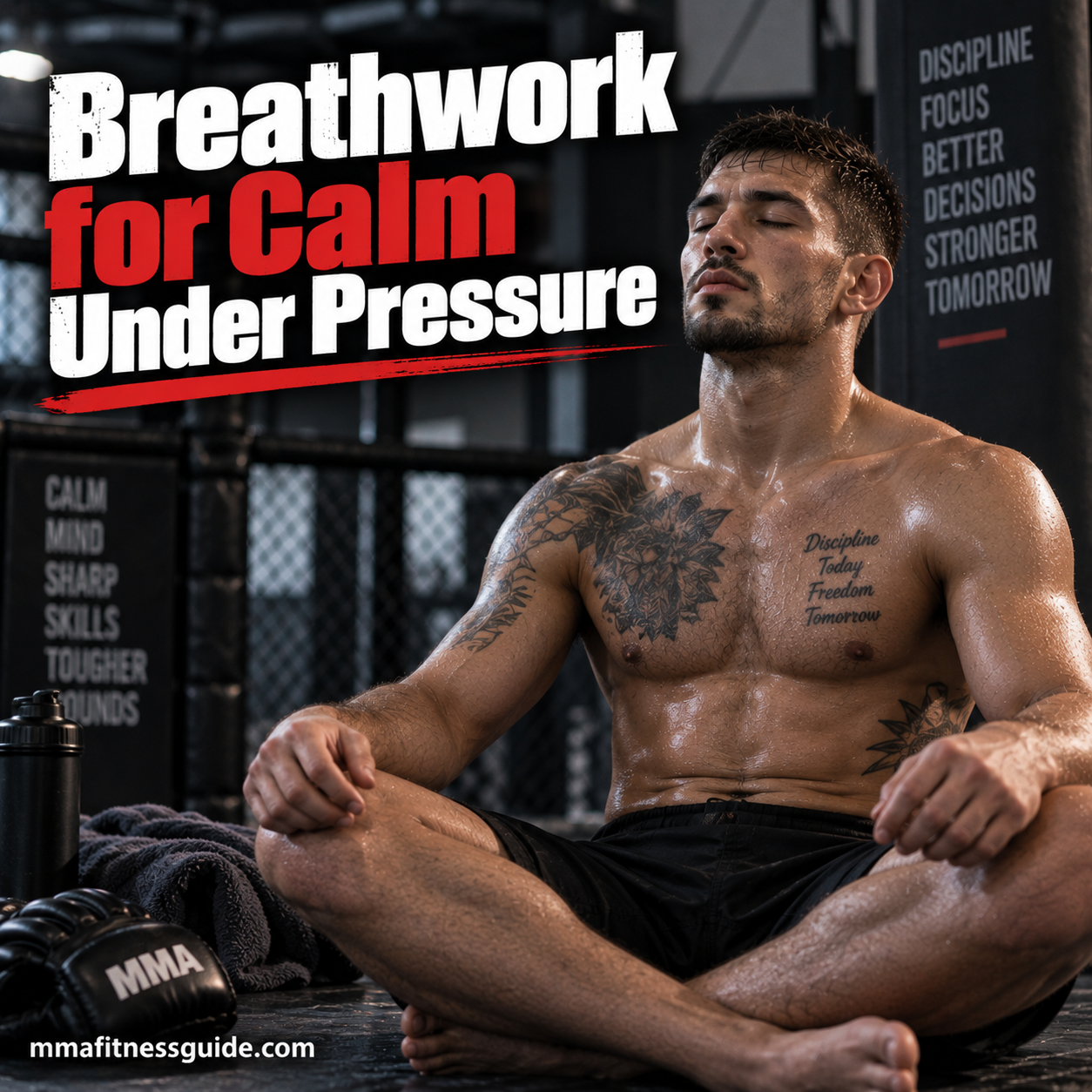
Breathwork for Calm Under Pressure

MMA fighter sitting cross-legged with his eyes closed in a training gym, practicing calm breathing after a workout.
Controlled breathing can help MMA fighters manage tension and regain composure before and after demanding training sessions.

You’re pinned against the cage during a hard sparring round. Your opponent is applying pressure, your shoulders are tightening, and you catch yourself holding your breath while trying to escape. As fatigue builds, you begin rushing your movements instead of looking for an opening. A brief opportunity to create space gives you a chance to exhale, regain your breathing rhythm, and focus on your next move.

Breathing habits can influence how fighters respond to physical exertion and psychological stress. Practicing slow, comfortable breathing during recovery periods may help reduce feelings of tension, while learning to avoid unnecessary breath-holding can support more controlled movement during training. From managing pre-fight nerves to recovering between rounds, developing awareness of your breathing gives you another practical skill to use when pressure rises.

Continue reading “Breathwork for Calm Under Pressure”

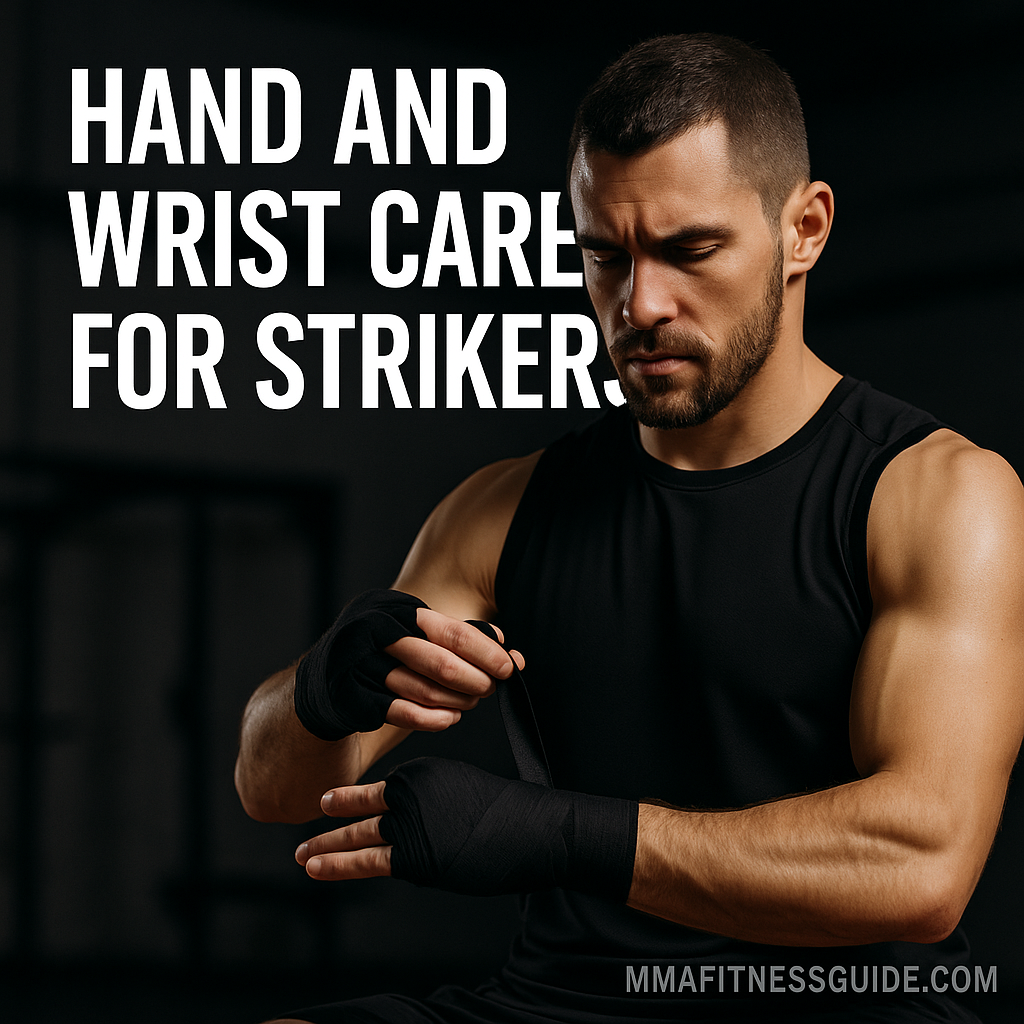
Hand and Wrist Care for Strikers

Male MMA striker wrapping his hands in a dim gym, demonstrating proper hand and wrist care with bold white title text.
A focused MMA fighter wrapping his hands as part of essential hand and wrist care for strikers.

Striking puts massive stress on the hands and wrists — especially in MMA, Muay Thai, and boxing, where fighters throw hundreds of punches per session. Even with wraps and gloves, small repetitive impacts add up over time, leading to soreness, swelling, and long-term damage if not properly managed.

Hand and wrist care isn’t optional for strikers. It’s a non-negotiable part of training longevity. This guide covers the best ways to protect your hands, strengthen the supporting muscles, and prevent the most common injuries in striking-heavy training.

Continue reading “Hand and Wrist Care for Strikers”