
Natural Foods That Support Hormonal Balance

MMA athlete preparing a balanced meal with salmon, eggs, avocado, vegetables, and whole grains to support hormonal health.
A varied diet containing adequate energy, protein, healthy fats, and micronutrients helps support normal hormonal function in athletes.

Introduction

A fighter increases training volume, cuts calories to make weight, and starts sleeping fewer hours to fit in extra sessions. Within a few weeks, recovery slows, energy levels drop, and workouts that once felt manageable become exhausting. These changes may reflect inadequate fueling and accumulated stress, both of which can affect normal hormonal function.

Hormones such as testosterone, estrogen, cortisol, insulin, and thyroid hormones help regulate metabolism, muscle repair, reproduction, and the body’s response to physical stress. Consistently eating too little, restricting entire food groups, or failing to recover between demanding sessions can interfere with these processes.

Supporting hormonal health starts with meeting your body’s nutritional and energy requirements. Foods such as fatty fish, eggs, whole grains, legumes, vegetables, and nuts provide protein, essential fats, vitamins, and minerals involved in normal physiological function.

For MMA athletes, the goal isn’t to boost individual hormones through specific foods. It’s to maintain adequate nutrition, avoid prolonged underfueling, and establish recovery habits that support normal hormonal function throughout training and competition.

Continue reading “Natural Foods That Support Hormonal Balance”

Building a Home MMA Gym on a Budget

Fighter training on a heavy bag in a budget home MMA gym with mats, dumbbells, kettlebells, and conditioning equipment
A practical home MMA gym can combine open training space, safe flooring, a heavy bag, basic weights, and conditioning equipment without requiring a large setup.

A jump rope, resistance bands, open floor space, and somewhere to shadowbox can cover a surprising amount of MMA conditioning at home. Add a pull-up bar, kettlebell, or heavy bag later, and the same space can support strength work and more specialized drills.

The key is buying equipment based on how you’ll actually train.

A small spare room, garage, or cleared section of a basement can become a useful MMA training area without filling it with machines or specialty equipment. Start with the floor and available space, add a few versatile tools, and expand only when your training creates a reason to do so.

Continue reading “Building a Home MMA Gym on a Budget”

Brand Partnerships the Right Way

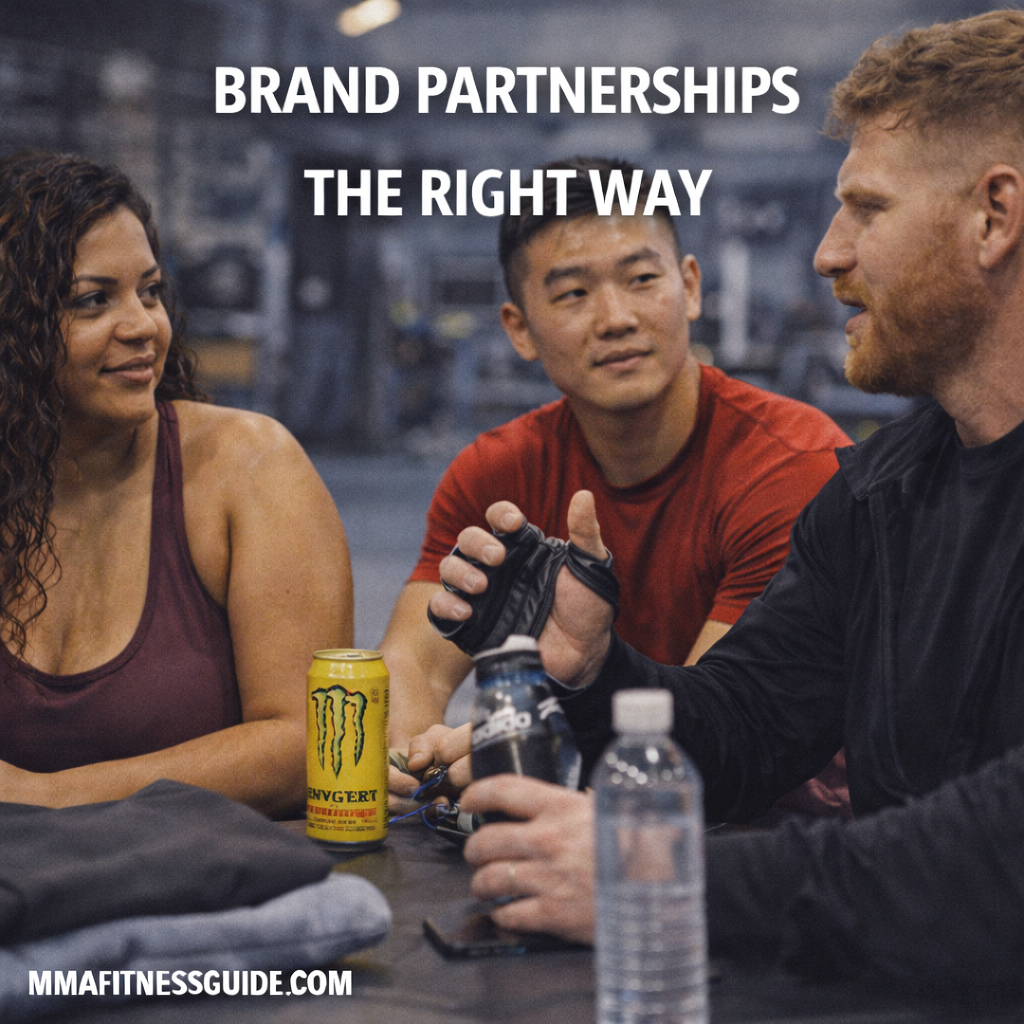
MMA fighter wrapping his hands in a training gym, illustrating brand partnerships and sponsorship opportunities for fighters.
Building authentic brand partnerships can help MMA fighters support their training, develop their careers, and create income beyond competition.

Brand partnerships can be a powerful income stream and career accelerator for MMA fighters, but only when approached correctly. The wrong partnerships can damage credibility, alienate fans, and limit future opportunities. The right partnerships can help cover training expenses, strengthen a fighter’s public image, and create income that continues long after their competitive career ends.

For fighters balancing gym fees, coaching expenses, travel, recovery, and everyday living costs, sponsorships can provide valuable financial support. However, building successful partnerships requires more than posting a company’s logo on Instagram or wearing branded clothing during training.

Fighters need to understand what businesses expect, how to communicate their value, how to negotiate agreements, and how to protect their reputation.

Whether you’re an amateur looking for your first local sponsor or a professional developing relationships with established brands, this guide explains how to build authentic, financially worthwhile, and sustainable brand partnerships.

Continue reading “Brand Partnerships the Right Way”

Decluttering Your Fitness Routine

MMA athletes organizing training gear in a gym, representing a simplified and focused fitness routine.
MMA athletes organizing their training gear to simplify and declutter their fitness routine.

Many athletes believe progress comes from doing more — more workouts, more exercises, more programs, more tracking. In reality, excess complexity often leads to confusion, burnout, and stalled results. Decluttering your fitness routine means stripping away what doesn’t serve you so you can focus on what actually drives progress.

For MMA athletes and fitness enthusiasts alike, a simpler routine is often more effective, sustainable, and mentally freeing. This guide explains how to declutter your training without sacrificing results.

Continue reading “Decluttering Your Fitness Routine”

MMA: Set Realistic Fitness Goals

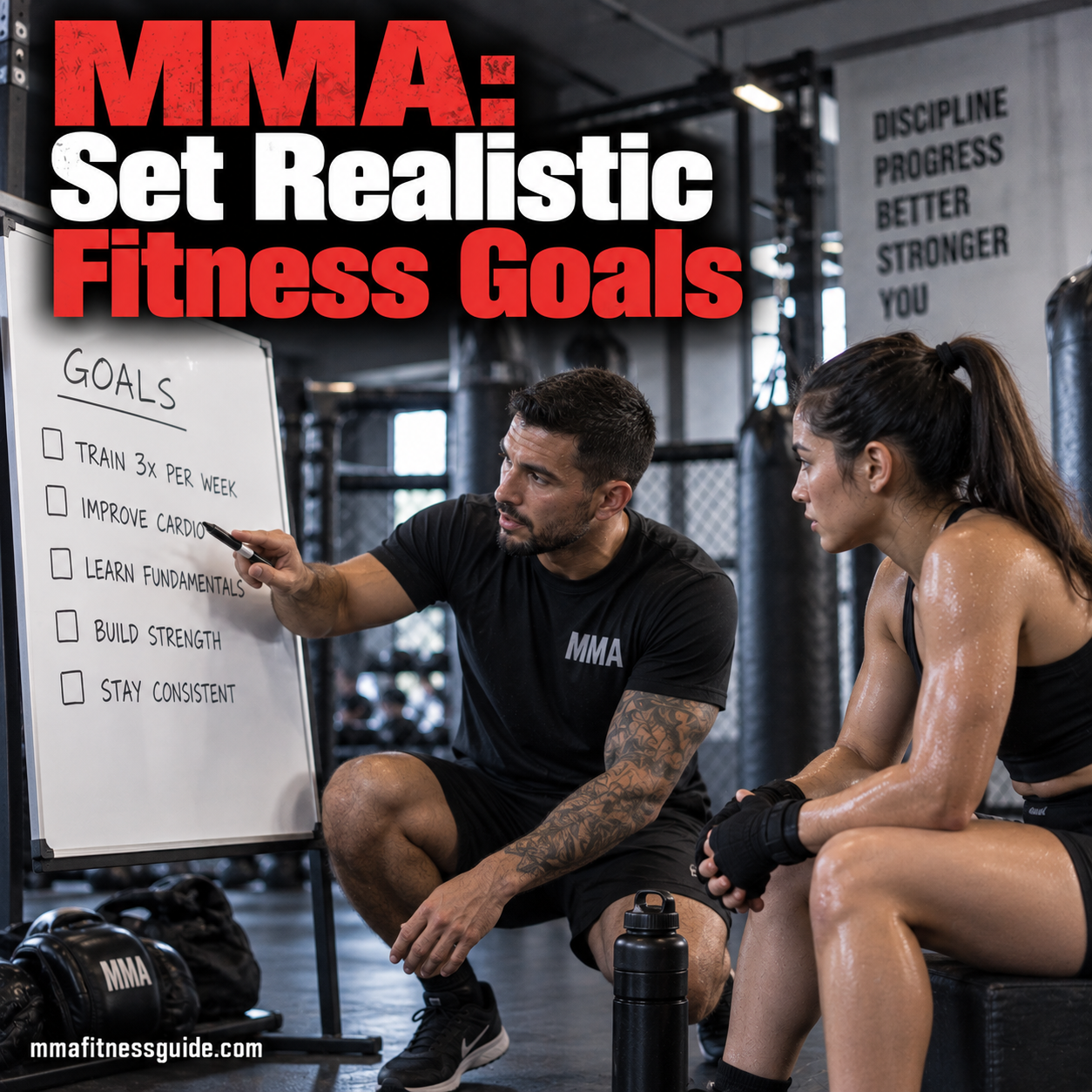
MMA coach helping a beginner fighter set realistic training, cardio, strength, and skill goals.
Setting measurable goals around attendance, technique, conditioning, and recovery gives MMA beginners clear targets for their training.

A beginner can walk into an MMA gym with a long list of expectations: lose 20 pounds, develop great cardio, learn to fight, start sparring, and completely transform their fitness within a few months.

Then actual training begins.

Two classes per week may leave you surprisingly sore. Basic footwork requires more coordination than expected. A three-minute round feels much longer when you’re throwing combinations, defending takedowns, or working from the ground.

Good goals account for that learning curve. Instead of measuring success only by weight, appearance, or how quickly you can spar, build targets around things you can repeatedly control—attendance, technique, conditioning, and recovery.

Continue reading “MMA: Set Realistic Fitness Goals”

The Evolution of Judging and Scoring

Two MMA fighters standing in the octagon as a referee speaks between rounds, representing judging and scoring decisions in modern MMA.
MMA fighters listening to the referee inside the octagon, highlighting the role of judging and scoring in professional bouts.

Judging and scoring have shaped MMA just as much as techniques and rules. From the early days of no-time-limit bouts to today’s structured rounds and scorecards, how fights are evaluated has influenced fighter strategy, pacing, and even the evolution of entire fighting styles.

Understanding the evolution of MMA judging and scoring helps fans, fighters, and coaches better understand why fights look the way they do today — and why judging remains one of the most debated aspects of the sport.

Continue reading “The Evolution of Judging and Scoring”

MMA: Build Unshakeable Confidence

Female MMA fighter wrapping her hands in a gym while preparing mentally for training.
Unshakeable confidence in MMA begins with consistent preparation, mental discipline, and trust in your training.

You’re halfway through a hard round when everything starts going wrong.

A punch you didn’t see coming snaps your head back. Your takedown gets stuffed. Your opponent starts pressing forward, and suddenly the pace feels much faster than it did a minute ago. Your breathing gets heavier, your reactions slow down, and the game plan you felt confident about before the round starts slipping away.

This is where confidence in MMA actually matters.

Confidence isn’t believing you’ll dominate every opponent or convincing yourself that nothing can go wrong. Fighting is too unpredictable for that. Real confidence is knowing that when something does go wrong, you can stay composed enough to respond.

That kind of belief has to be earned.

It develops through preparation, repetition, pressure, honest assessment, and experiencing difficult situations often enough that they stop feeling unfamiliar.

Continue reading “MMA: Build Unshakeable Confidence”

Sauna and Steam for Recovery

MMA fighter relaxing in a sauna after training as part of his recovery routine
Short sauna or steam sessions may help fighters relax after training, provided heat exposure does not interfere with hydration or recovery.

Twenty minutes in a hot sauna after wrestling practice can produce plenty of additional sweat—but that doesn’t necessarily mean additional recovery. For an MMA fighter who has already lost substantial fluid during pads, grappling, or conditioning, another bout of heat can either feel relaxing or leave them more dehydrated for the next session.

Saunas and steam rooms are better viewed as optional recovery environments than treatments that repair training damage. Heat may temporarily ease feelings of stiffness, promote relaxation, and provide a useful transition from hard training into recovery. Those benefits depend heavily on timing, duration, hydration, and how demanding the preceding workout was.

For fighters training several times per week, the question isn’t simply whether heat feels good. It’s whether the session leaves you better prepared—or less prepared—for the training that follows.

Continue reading “Sauna and Steam for Recovery”

How Often to Replace Training Equipment

MMA fighters examining worn gloves, shin guards, and training gear in a gym, highlighting when to replace MMA training equipment.
MMA athletes inspecting worn training equipment to determine when replacements are needed for safety and performance.

MMA training equipment takes a beating. From gloves and shin guards to rash guards and mouthguards, your gear absorbs sweat, impact, and constant friction. Using worn-out equipment doesn’t just affect comfort — it can increase injury risk, reduce training quality, and create hygiene problems.

Knowing when to replace your training gear helps you stay safe, train effectively, and avoid preventable setbacks. Here’s how often common MMA equipment should actually be replaced, and the warning signs to watch for.

Continue reading “How Often to Replace Training Equipment”

Chaining Takedowns: Single to Double Variations

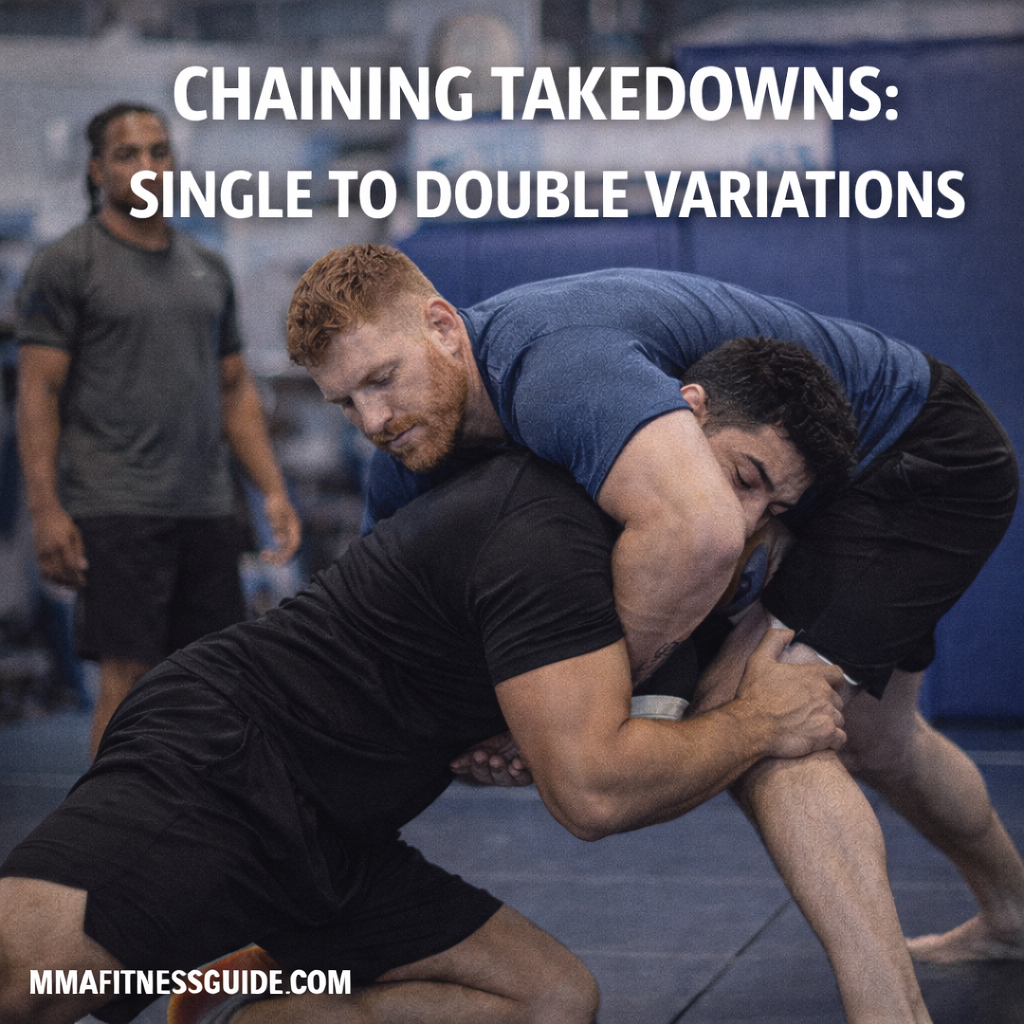
MMA fighter transitioning from a single-leg attack toward a double-leg takedown during grappling.
Chaining a single-leg into a double-leg allows an MMA fighter to adjust as an opponent defends the initial takedown.

A fighter shoots for a single-leg, but the opponent widens their base, hops away, or starts driving their hips back. Holding onto the original attack can turn a good entry into a stalled position. Switching to both legs while the opponent is adjusting can create a new finishing opportunity before their defense settles.

That is the purpose of chaining takedowns. The first attack forces a response; the next attack targets the position created by that response. A single-to-double transition is a common example because the opponent’s effort to protect one leg can change their balance, hip position, and stance.

Rather than treating a defended single as a failed shot, fighters can use it as the beginning of a sequence.

Continue reading “Chaining Takedowns: Single to Double Variations”