Smart Carb Loading for Peak Performance

MMA fighter eating a carbohydrate-rich meal of rice, chicken, and vegetables after training to replenish glycogen.
Strategic carbohydrate intake helps MMA fighters replenish muscle glycogen and prepare for demanding training sessions.

A fighter can complete several rounds of technical drilling without feeling exhausted, then struggle to maintain the same pace during hard sparring. Repeated takedowns become slower, combinations lose their sharpness, and recovery between rounds takes longer.

Accumulated fatigue has several causes, but inadequate carbohydrate availability can contribute, particularly when athletes train multiple times per day or restrict food intake to make weight.

Carbohydrates replenish muscle glycogen, the stored fuel used heavily during repeated high-intensity efforts. Increasing carbohydrate intake before demanding training or competition can help athletes begin those sessions with sufficient energy reserves.

However, carbohydrate loading is not simply eating larger portions of rice or pasta the night before a fight. It requires planning around training volume, digestive tolerance, hydration, and weigh-in requirements.

For MMA athletes, the objective is to maintain adequate glycogen availability without creating unnecessary gastrointestinal discomfort or unexpected changes in body weight.

Continue reading “Smart Carb Loading for Peak Performance”

How Altitude Training Benefits Fighters

MMA fighter training at high altitude in the mountains to develop conditioning and aerobic endurance.
Altitude training exposes fighters to lower oxygen availability, creating physiological demands that can influence aerobic conditioning and endurance.

A fighter who normally handles five-minute rounds comfortably at sea level may notice the difference quickly when training several thousand feet higher. Familiar drills feel harder, breathing becomes more demanding, and maintaining the same pace can require considerably more effort.

The reason is lower oxygen availability at altitude. With less oxygen available in each breath, the body has to work differently to supply active muscles during running, pad work, wrestling, sparring, and other demanding sessions.

With sufficient exposure, the body can make adaptations that affect oxygen transport and aerobic performance. That has made altitude training an option for some MMA fighters preparing for demanding camps or competitions—particularly when they have enough time to acclimatize rather than simply arriving at elevation and immediately training at full intensity.

The potential advantage isn’t that altitude automatically creates a better-conditioned fighter. It comes from how the exposure is timed, how training intensity is adjusted, and whether the resulting adaptations complement regular fight-specific conditioning.

Used poorly, altitude can reduce training quality and increase fatigue. Used strategically, it can become another component of a fighter’s conditioning plan.

Continue reading “How Altitude Training Benefits Fighters”

Negotiating Fight Purses and Contracts

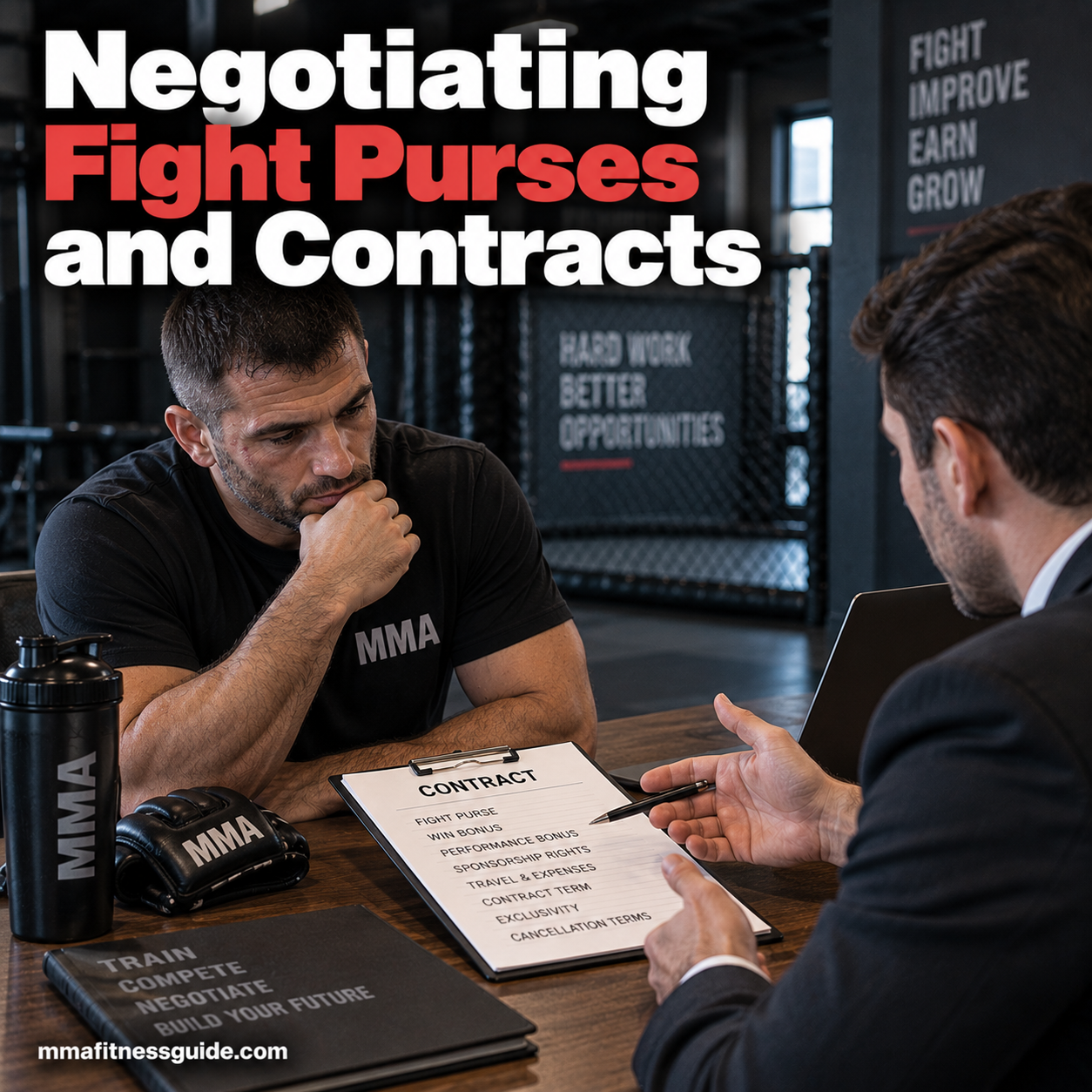
MMA fighter reviewing fight purse and contract terms with a representative inside a training gym.
Fight contracts can address more than purse amounts, including bonuses, expenses, exclusivity, sponsorship rights, and cancellation terms.

A fighter can spend months preparing for a bout and only a few minutes discussing the agreement that determines how much they’re paid, who covers travel, what happens if the fight is canceled, and whether they’re free to compete elsewhere afterward.

Those details can affect far more than the paycheck from one night.

Before accepting a bout, fighters should know the guaranteed compensation, bonus conditions, payment timing, expenses, promotional obligations, exclusivity provisions, cancellation terms, and any restrictions that continue after the event.

You don’t have to turn every offer into a confrontation. The objective is to understand what you’re agreeing to, identify terms worth negotiating, and avoid discovering important restrictions after you’ve already signed.

Continue reading “Negotiating Fight Purses and Contracts”

MMA: Balance Social Life and Fitness

MMA athlete leaving the gym and meeting friends while balancing training, fitness, and social life.
Planning social time around training and recovery can help MMA athletes maintain relationships without sacrificing consistency.

Your friends want to go out Friday night, but Saturday morning is sparring. A family event lands on the same afternoon as class. Someone invites you to dinner just as you’re supposed to start strength training.

Those conflicts are part of training MMA while having a life outside the gym.

The solution isn’t automatically choosing training every time—or skipping workouts whenever something more enjoyable comes along. It’s deciding which sessions matter most, protecting your recovery, and making room for friends and family when your schedule allows.

During fight camp, that may mean turning down late nights for several weeks. During normal training, it might mean moving a workout, meeting friends after class, or deliberately keeping one evening free.

A good balance won’t look the same every week. The goal is to train consistently without allowing MMA to crowd out the relationships and experiences you still want in your life.

Continue reading “MMA: Balance Social Life and Fitness”

Tracking Steps and Daily Activity Goals

Three MMA fighters checking fitness trackers during a walk, illustrating step tracking and daily activity goals for combat athletes.
MMA athletes monitoring daily steps and activity levels as part of overall conditioning and recovery.

For beginners starting a fitness routine, consistency matters more than intensity. One of the simplest and most effective ways to stay consistent is tracking daily steps and activity goals. You don’t need intense workouts every day to make progress — steady movement builds habits, supports recovery, and improves overall health.

This guide explains how tracking steps and daily activity helps beginners stay active, how to set realistic goals, and how to use step tracking without overcomplicating fitness.

Continue reading “Tracking Steps and Daily Activity Goals”

From Vale Tudo to MMA: A Brief History

Two MMA fighters exchanging strikes inside a cage, representing the evolution from Vale Tudo to modern mixed martial arts.
MMA fighters engaging in a controlled exchange that reflects the evolution from Vale Tudo to modern MMA.

Modern MMA didn’t appear overnight. It evolved through decades of experimentation, cultural exchange, and real-world fighting challenges. At the heart of MMA’s origins is Vale Tudo, a no-holds-barred combat style that tested martial arts in the rawest way possible.

Understanding how Vale Tudo transformed into modern MMA helps explain why today’s fighters train the way they do — and why versatility, conditioning, and adaptability are essential in the sport.

Continue reading “From Vale Tudo to MMA: A Brief History”

Impostor Syndrome in Amateur Fighters

Amateur MMA fighters sitting in a gym showing self-doubt and reflection, representing impostor syndrome in combat sports.
Amateur MMA fighters reflecting on self-doubt and confidence challenges during training.

Impostor syndrome is far more common in combat sports than most fighters admit. Many amateur fighters train hard, compete regularly, and continue to improve — yet still feel like they don’t belong, aren’t “real” fighters, or will eventually be exposed as frauds.

These thoughts can quietly undermine confidence, enjoyment, and performance. Understanding impostor syndrome and learning how to manage it is an essential part of mental development for amateur fighters.

Continue reading “Impostor Syndrome in Amateur Fighters”

MMA: Use a Massage Gun Effectively

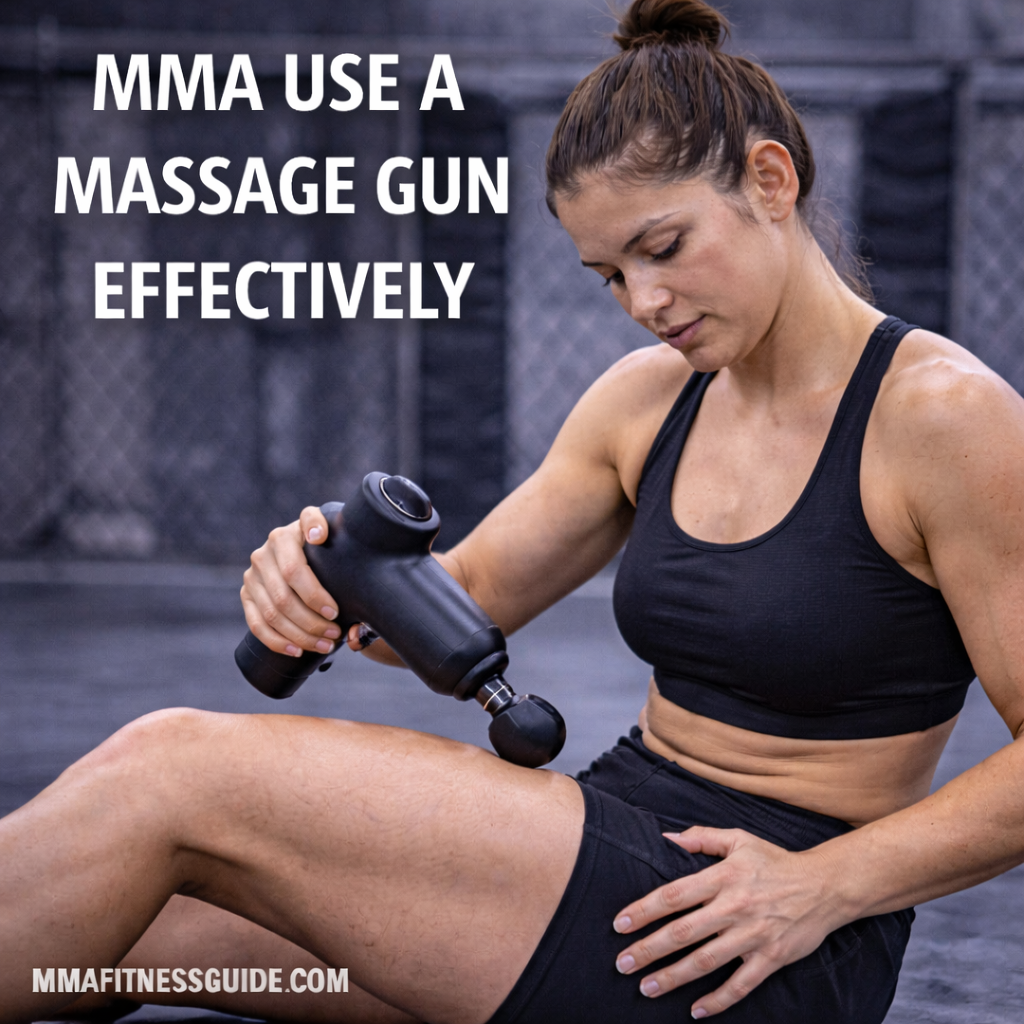
Female MMA athlete using a massage gun on her thigh for muscle recovery inside a training gym.
MMA athlete using a massage gun to support muscle recovery after training.

Massage guns have become a common recovery tool in MMA gyms, fight camps, and locker rooms. When used correctly, they can help fighters reduce soreness, improve circulation, and stay mobile between intense sessions. When used incorrectly, they can irritate tissue, delay recovery, or even increase injury risk.

This guide explains how MMA fighters can use a massage gun effectively — when to use it, where to apply it, and how to avoid common mistakes.

Continue reading “MMA: Use a Massage Gun Effectively”

Upgrading Your Gear as You Progress

MMA fighters comparing and upgrading training gear in a gym, including gloves, shin guards, and protective equipment.
MMA athletes reviewing and upgrading their training gear as they advance in skill level.

When you first start training MMA, basic gear is enough to get moving. But as your skill level, training intensity, and goals increase, your equipment needs change. Gear that once felt fine may start limiting performance, comfort, or safety.

Knowing when and how to upgrade your MMA gear helps you train smarter, reduce injury risk, and get more out of every session. This guide explains what to upgrade, when it matters, and how to make smart gear decisions as you progress.

Continue reading “Upgrading Your Gear as You Progress”

Winning the First Exchange: Fast Openers

MMA fighter using a fast jab during the opening exchange as his opponent raises his guard inside the cage.
A controlled opening attack can establish range and reveal how an opponent reacts before longer exchanges develop.

The referee signals the start, both fighters step toward the center, and within seconds the first useful information appears. A jab reveals how an opponent moves their head. A low kick shows how quickly they check. A level-change feint can expose whether their hands drop when they anticipate a takedown.

A good opening exchange takes advantage of those early reactions without turning the first ten seconds into a reckless sprint. The objective might be to establish range, make the opponent retreat, test a defensive habit, or introduce a threat you plan to use later.

That makes the best openers simple and purposeful. A double jab, low kick, feint, or disguised level change can give you information while putting the opponent under immediate pressure—and still leave you balanced enough to defend whatever comes back.

Continue reading “Winning the First Exchange: Fast Openers”