Introduction
After a few MMA sessions, the effects start adding up. Your shoulders may still be tired from punching, your legs feel heavy during footwork, your grip is fatigued from grappling, and movements that felt sharp earlier in the week suddenly feel slower.
Adding another hard workout isn’t always the answer.
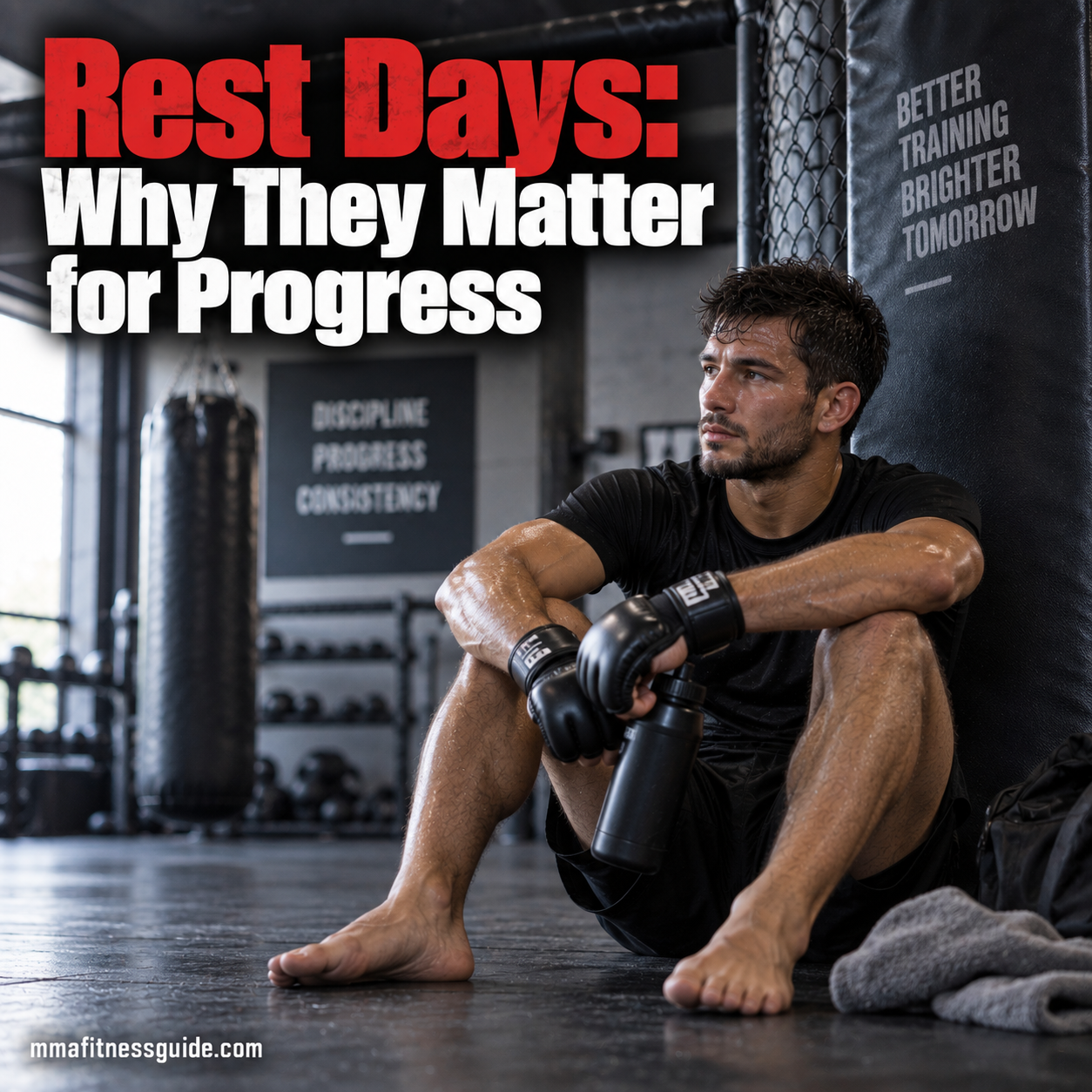
Training creates the workload; recovery gives your muscles, connective tissues, energy stores, and nervous system time to adapt to it. A well-placed rest day can mean returning to the gym with better movement and concentration instead of dragging accumulated fatigue into another session.
For beginners especially, learning when to recover is part of learning how to train. The goal isn’t to fit in as many workouts as possible—it’s to build a schedule your body can handle consistently for months and years.
Rest Days Help Your Muscles Grow
Your muscles don’t get stronger during workouts.
Training breaks down muscle fibers — rest is when they rebuild.
On rest days, your body:
- Repairs tiny muscle tears
- Replenishes energy stores
- Strengthens tendons and joints
- Builds muscle tissue
Without rest, you interrupt the rebuilding process, making training feel harder over time.
Rest Prevents Overuse Injuries
Beginners often push too hard because they’re excited, but this increases injury risk.
Overuse injuries include:
- Tendonitis
- Joint pain
- Muscle strains
- Fatigue-related tweaks
- Wrist, elbow, and shoulder irritation
Rest days give your joints and connective tissues the time they need to recover from repetitive motions like punching, grappling, and lifting.
Rest Supports Better Technique
When you train tired, your technique drops.
This leads to:
- Sloppy footwork
- Slow reaction time
- Poor balance
- Bad habits that stick
After a rest day, your body and mind feel sharper, making it easier to learn and apply technique.
Rest Days Improve Performance in Sparring
Sparring requires:
- Quick thinking
- Good timing
- Fast reflexes
- Clean movement
- Controlled power
These are difficult to maintain when you’re exhausted. Taking rest days actually makes sparring safer and more productive — for you and your partners.
Rest Helps Your Nervous System Reset
MMA isn’t just physically demanding — it’s mentally intense.
Every session requires focus, problem-solving, and emotional control.
Rest days help reduce:
- Mental fatigue
- Stress
- Anxiety
- Overwhelm from hard training
- Burnout
With good rest, you return to training feeling calmer and more in control.
Rest Improves Sleep Quality
Training hard raises your stress hormones.
If you never take rest days, these hormones stay elevated, making it harder to sleep deeply.
A rest day helps:
- Balance your nervous system
- Reduce stress hormones
- Improve overall sleep quality
Better sleep = faster recovery and better performance.
Rest Helps You Stay Consistent Long-Term
Consistency matters more than intensity.
A solid routine of training + rest keeps you progressing without burning out.
Beginners often quit not because training is too hard, but because they never built recovery into their routine.
Rest days make training sustainable.
How Many Rest Days Should Beginners Take?
A simple rule:
2 rest days per week is perfect for most beginners.
Examples:
- Train 3 days, rest 1
- Train 2 days, rest 1
- Train 3–4 days per week with weekends light or off
Your body will tell you what it can handle.
What to Do on Rest Days
Rest days don’t have to mean doing nothing at all. Good active recovery options include:
- Light stretching
- Mobility work
- A slow walk
- Easy shadowboxing
- Foam rolling
- Gentle yoga
- Deep breathing or mindfulness
These help you recover without adding stress.
What to Avoid on Rest Days
Skip activities that keep your body from recovering:
- Hard lifting
- Sprints
- Heavy bag work
- Intense circuits
- Sparring
- Long, tiring runs
These turn rest days into extra training days — and your body pays for it later.
Signs You Need a Rest Day
Listen to your body. If you experience:
- Constant soreness
- Low motivation
- Poor sleep
- Slow reactions
- Irritability
- Stiff joints
- Weak grip or slow punches
- Feeling “heavy” in warm-ups
…it’s a signal you need a break.
Rest Days Make You Improve Faster
Beginners often think rest slows progress.
It’s the opposite.
Rest days improve:
- Strength
- Speed
- Endurance
- Reaction time
- Mental clarity
- Skill learning
- Injury prevention
Rest is a training tool — just like pads, drills, or conditioning.
Final Thoughts
Rest days aren’t a sign of weakness — they’re part of the process. Your body needs downtime to grow stronger, recover from training, and stay healthy. By taking rest seriously, you’ll improve faster, enjoy training more, and stay consistent long-term.
Train hard. Rest smart. Progress steadily.