After a stressful day, another demanding workout may be the last thing you want. Your shoulders are tight, you’ve been sitting for hours, your mind is still running through work or responsibilities, and an intense conditioning session sounds more draining than helpful.
A 20-minute walk, a few slow mobility exercises, or an easy bike ride gives you another option. The purpose isn’t to chase a personal record or finish exhausted. It’s to move at a comfortable pace, loosen areas that feel stiff, and give your attention something other than the day’s stress.
For beginners—and for MMA trainees between harder sessions—gentle movement can provide useful activity without turning every workout into another physical challenge.
How Gentle Movement Can Help With Stress
Stress can show up physically as tight shoulders, shallow breathing, restlessness, difficulty concentrating, or simply feeling mentally drained.
Light physical activity gives you an opportunity to move without adding the demands of a hard workout.
Depending on the activity, you may notice:
- Less muscular tension
- A change of scenery and mental focus
- More comfortable movement after sitting
- Improved mood
- A calmer breathing rhythm
- A chance to temporarily disconnect from stressful tasks
You don’t have to force yourself to feel relaxed. Move comfortably and notice how you feel afterward.
Why Beginners May Prefer Lower-Intensity Sessions
Hard training isn’t always the appropriate choice.
If you’re already tired, unfamiliar with exercise, or recovering between demanding MMA sessions, another high-intensity workout may simply add more fatigue.
Gentle sessions allow beginners to practice:
- Moving regularly
- Learning basic exercises
- Controlling their breathing
- Improving coordination
- Becoming more comfortable with physical activity
Finishing with energy left in the tank is completely acceptable.
Take a Walk
Walking requires little preparation and can easily be adjusted to your current energy level.
You can walk:
- Around your neighborhood
- At a park
- On a treadmill
- During a lunch break
- After dinner
- Around the gym after training
Try 10–30 minutes at a comfortable pace.
Leave the stopwatch alone if tracking pace makes the walk feel like another performance test. The purpose of this session is movement, not speed.
Use Stretching and Mobility to Address Tight Areas
Stress and long periods of sitting can leave certain areas feeling stiff.
Spend several minutes gently moving your:
- Neck
- Shoulders
- Upper back
- Hips
- Ankles
You might use:
- Shoulder rolls
- Gentle neck rotations
- Cat-cow movements
- Hip circles
- Easy lunges
- Calf stretches
Move within a comfortable range rather than forcing deeper stretches.
Stretching should feel controlled. Stop if a position produces sharp pain, numbness, or unusual discomfort.
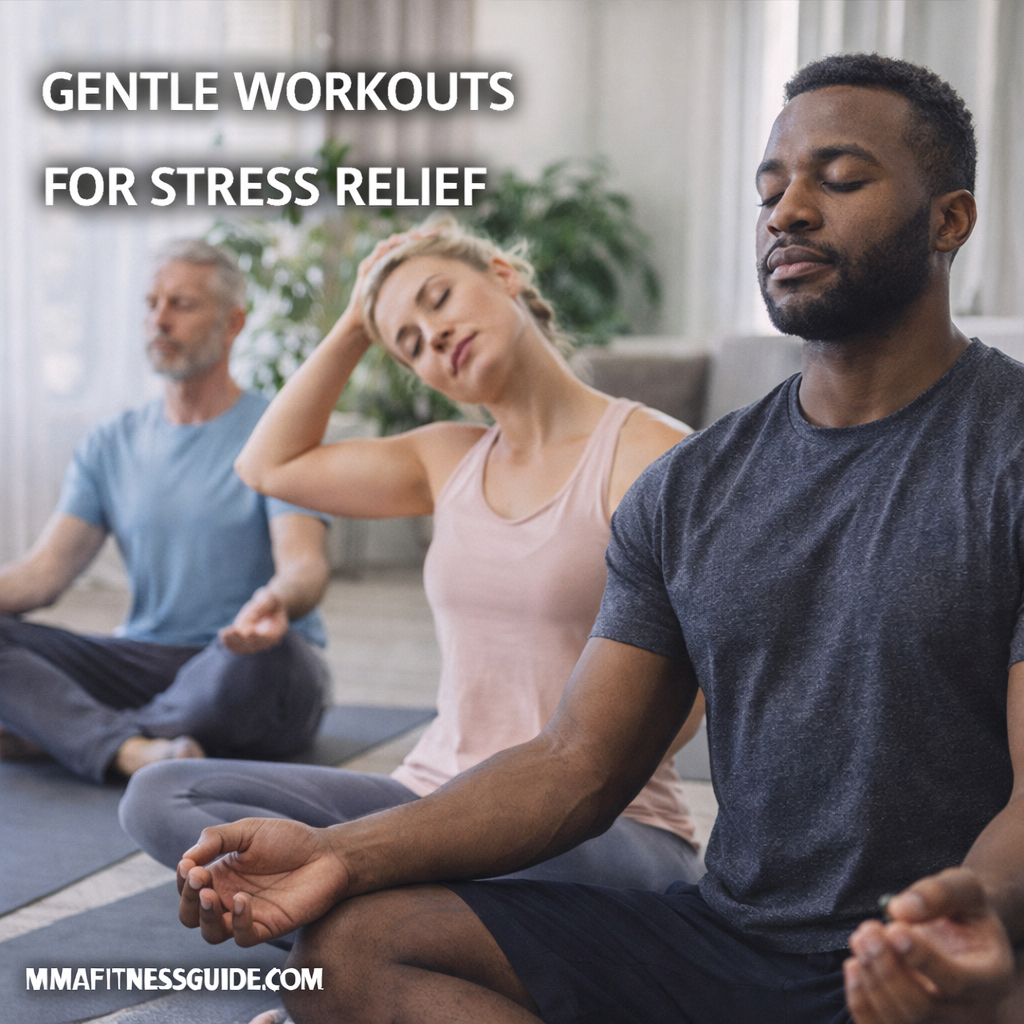
Try a Gentle Yoga Session
A slow yoga routine can combine mobility, balance, controlled breathing, and focused movement.
Beginner-friendly movements might include:
- Child’s pose
- Cat-cow
- Gentle downward dog
- Low lunge
- Seated forward fold
- Supine twists
There’s no requirement to reach a particular depth in a pose.
Use a range of motion you can comfortably control and modify positions when necessary.
Let Your Breathing Set the Pace
Instead of moving as quickly as possible, match simple movements to slower breathing.
For example:
Inhale: Raise your arms overhead.
Exhale: Lower your arms and relax your shoulders.
Or try several slow repetitions of a mobility exercise while maintaining comfortable breathing.
If you’re repeatedly gasping for air, the session has probably moved away from the low-intensity pace you intended.
Explore Tai Chi or Other Slow Movement Practices
Tai chi uses controlled shifts in posture, balance, and coordinated movement.
The slower pace can be useful when you want physical activity without the intensity of running, circuits, or hard bag work.
Beginners may particularly appreciate the emphasis on:
- Balance
- Coordination
- Posture
- Controlled movement
- Concentration
Follow beginner instruction rather than worrying about memorizing long movement sequences immediately.
Do a Light Strength Session
Strength training doesn’t always have to involve heavy weights or difficult sets.
A low-intensity session could include:
- Bodyweight squats
- Wall or elevated push-ups
- Resistance-band rows
- Glute bridges
- Calf raises
- Light carries
Keep the repetitions comfortable and stop each set well before your form begins deteriorating.
For an MMA trainee, this can provide some movement on an easier day without trying to recreate the intensity of a full strength-and-conditioning workout.
Choose Easy Cardio
If you’d rather keep moving continuously, choose an activity that allows you to control the intensity.
Options include:
- Stationary cycling
- Easy swimming
- Elliptical training
- Light rowing
- Walking on a treadmill
Maintain a pace where your breathing remains controlled and you could still carry on a conversation.
Twenty comfortable minutes can be enough.
Build a Simple Stress-Relief Workout
A gentle workout doesn’t require a complicated program.
Try:
5 minutes: Easy walking
5 minutes: Shoulder, hip, and ankle mobility
5–10 minutes: Easy cycling, walking, or bodyweight movements
2–5 minutes: Comfortable stretching and slow breathing
That gives you roughly 15–25 minutes of movement without turning the session into a conditioning test.
Adjust the duration based on your schedule and energy.
Pay Attention to How You Feel
The point of a gentle session is to respond to your current condition rather than ignore it.
Notice:
- Whether your breathing becomes calmer or more strained
- Which muscles feel tight
- Whether movement improves or worsens discomfort
- How your energy changes during the session
- Whether you feel better afterward
If an exercise consistently increases pain or discomfort, modify or stop it rather than pushing through simply because it’s labeled “gentle.”
Combine Movement With Simple Mindfulness
You can make the session less distracting by focusing on what you’re doing instead of simultaneously checking messages, watching the clock, or thinking about performance.
During a walk, notice your surroundings.
During mobility work, notice where movement feels restricted.
During breathing exercises, pay attention to the length and rhythm of each breath.
Your attention will wander. When it does, return it to the movement you’re performing.
Train at Home or Go Outside
The environment can change the experience considerably.
At Home
Home sessions make it easy to:
- Keep the workout short
- Control distractions
- Move at your own pace
- Train without commuting
Outdoors
Walking or light activity outside provides:
- A change of scenery
- Natural light
- Fresh air when conditions allow
- Distance from your usual work or home setup
Choose whichever environment makes it easier to actually do the session.
Don’t Turn Recovery Into Competition
A common mistake is starting an easy workout and gradually turning it into another hard session.
For example:
A relaxing walk becomes a pace challenge.
Light shadowboxing becomes a conditioning workout.
A mobility session becomes an attempt to force deeper stretches.
Keep the purpose of the session clear.
If today is supposed to be easy, allow it to remain easy.
When Gentle Movement Can Fit Into Your Week
Lower-intensity sessions can be useful:
- After a long workday
- Between demanding MMA sessions
- On days when you’re mentally tired
- During lighter training weeks
- When you’re beginning a new fitness routine
- When you want activity without another hard workout
If you’re recovering from an illness or injury, however, don’t assume that every gentle exercise is automatically appropriate. Follow medical or rehabilitation guidance when necessary.
Make It Easy to Repeat
You don’t need an elaborate stress-management routine.
Choose one or two activities you actually enjoy and make them convenient.
That might mean:
- Walking for 15 minutes after work
- Doing mobility while watching television
- Taking an easy bike ride on Sunday
- Following a short beginner yoga routine
- Walking outside during lunch
If 30 minutes feels unrealistic, start with 10.
A short session you regularly complete is more useful than a complicated routine you continually postpone.
Final Thoughts
Not every workout needs rounds, sprints, heavy weights, or a puddle of sweat on the floor.
Some days, a walk and ten minutes of mobility may fit your physical and mental state better than another demanding training session. On other days, you may feel ready for your regular MMA or strength workout.
Learning to use both has value.
Keep gentle sessions genuinely gentle: move comfortably, breathe normally, pay attention to tension and discomfort, and finish without trying to prove anything. The goal is to leave the session feeling like you’ve moved your body—not fought another battle with it.