Flexibility affects nearly every phase of MMA. A fighter needs enough hip mobility to throw clean head kicks, enough shoulder range to hand-fight and grapple, and enough movement through the ankles, knees, and spine to change levels, scramble, and defend takedowns.
When those ranges become restricted, technique can start compensating. A tight hip may force a kick to come around awkwardly. Limited shoulder mobility can make certain grappling positions harder to escape. Tight hamstrings can interfere with stance changes, guard work, and level changes.
A consistent stretching routine helps maintain the usable range of motion that MMA training demands.
Why Flexibility Matters in MMA
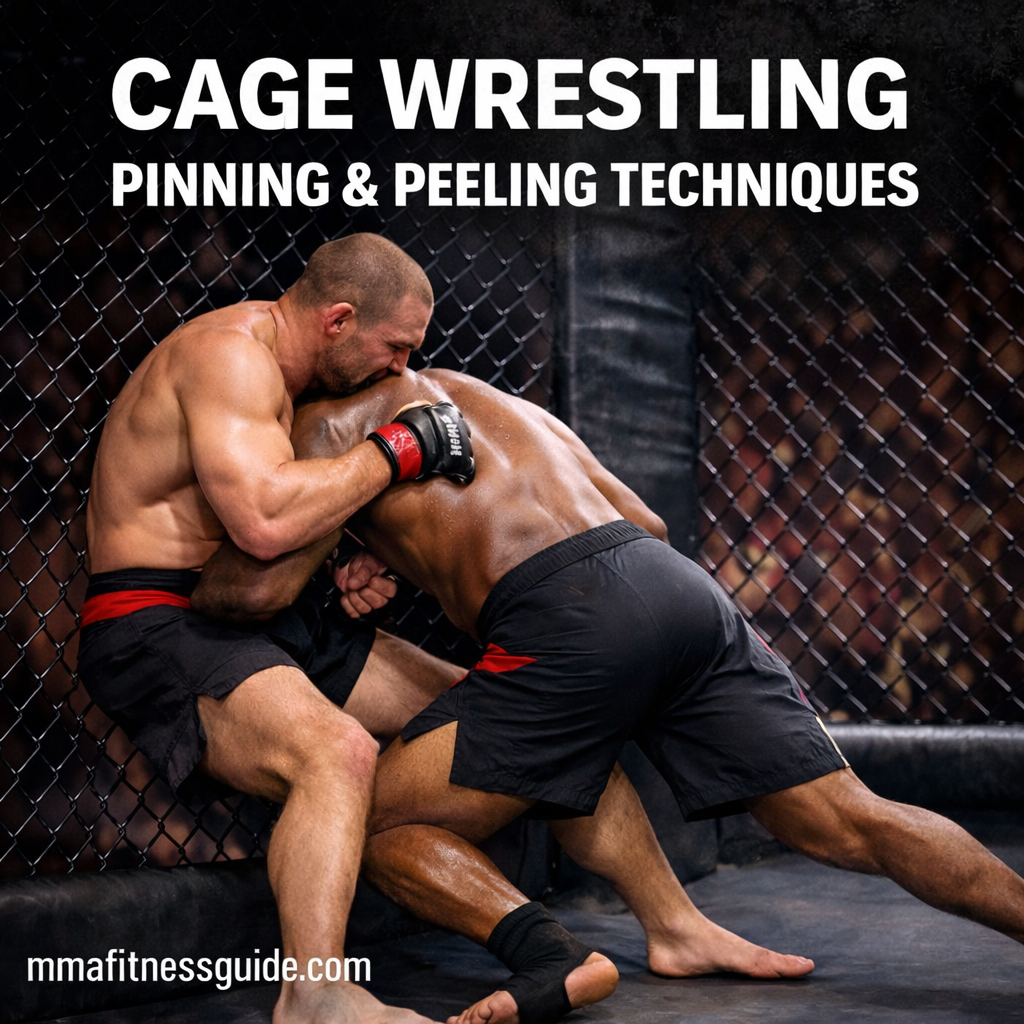
MMA repeatedly moves the body through positions that ordinary strength training may not fully prepare for. Kicks require hip rotation and leg extension. Wrestling involves deep level changes, sprawls, and awkward scrambles. Brazilian jiu-jitsu can place the hips, shoulders, and spine in positions rarely encountered during everyday movement.
Maintaining adequate flexibility can contribute to:
- Greater kicking range and smoother hip rotation
- Easier guard retention and grappling transitions
- More comfortable wrestling stances and level changes
- Better shoulder movement during clinching and ground exchanges
- Less restriction when rotating, sprawling, or scrambling
- Improved movement quality when muscles become tight from repeated training
Flexibility alone cannot prevent injuries, but poor mobility can make certain movements harder to perform efficiently.
Dynamic Stretching Before MMA Training
Dynamic stretching uses controlled movement rather than long stationary holds. It works well before training because the goal is to gradually increase movement, raise body temperature, and prepare the joints and muscles for faster actions.
Useful dynamic movements include:
- Front-to-back leg swings
- Side-to-side leg swings
- Arm circles
- Shoulder rolls
- Hip circles
- Walking lunges
- Torso rotations
- Controlled knee raises
- Light shadowboxing through a comfortable range of motion
Start slowly and increase the range as your body warms up. Leg swings, for example, should not immediately become attempts to kick as high as possible.
A 5–10 minute dynamic mobility sequence can transition naturally into MMA-specific warm-up drills.
Static Stretching After Training
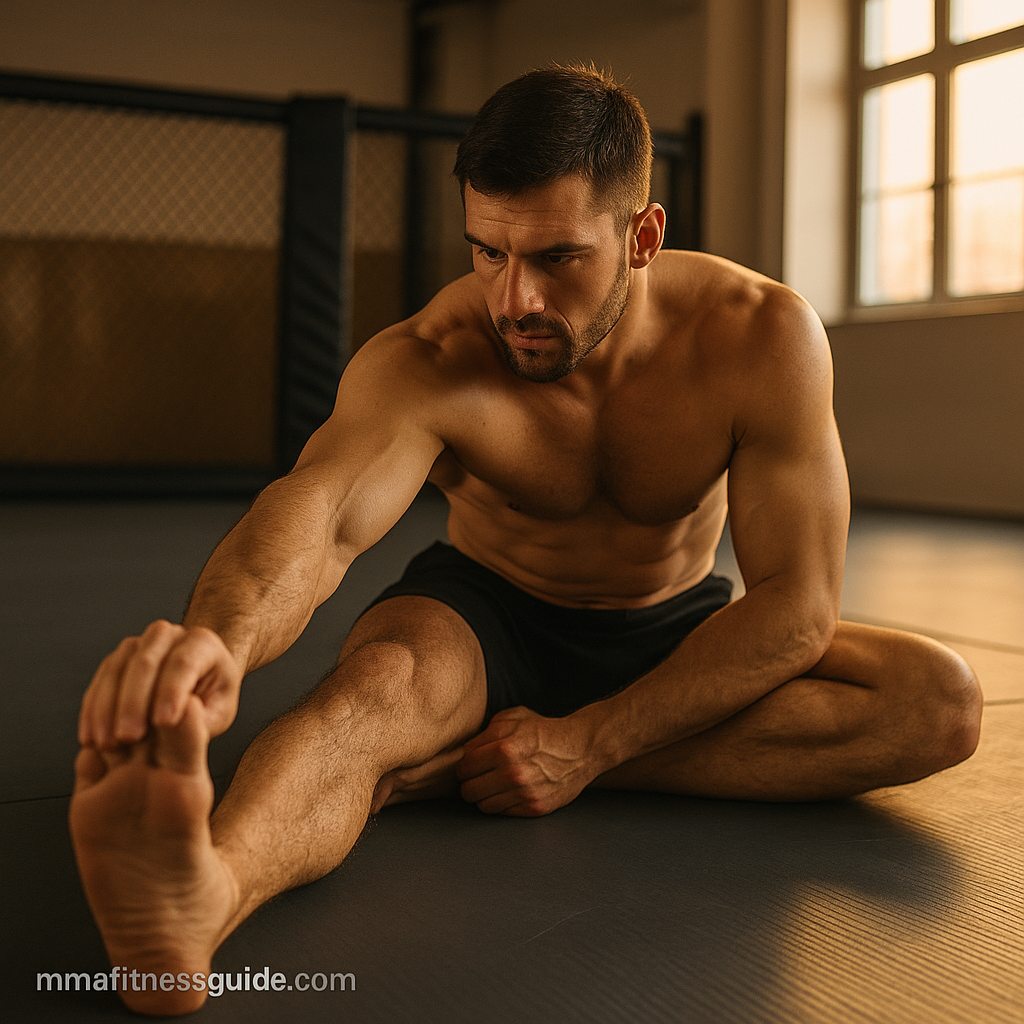
Static stretching involves moving into a comfortable stretched position and holding it rather than repeatedly moving in and out of the range.
After training, fighters can use static stretches to address areas that commonly tighten during striking, wrestling, grappling, and strength work.
Useful options include:
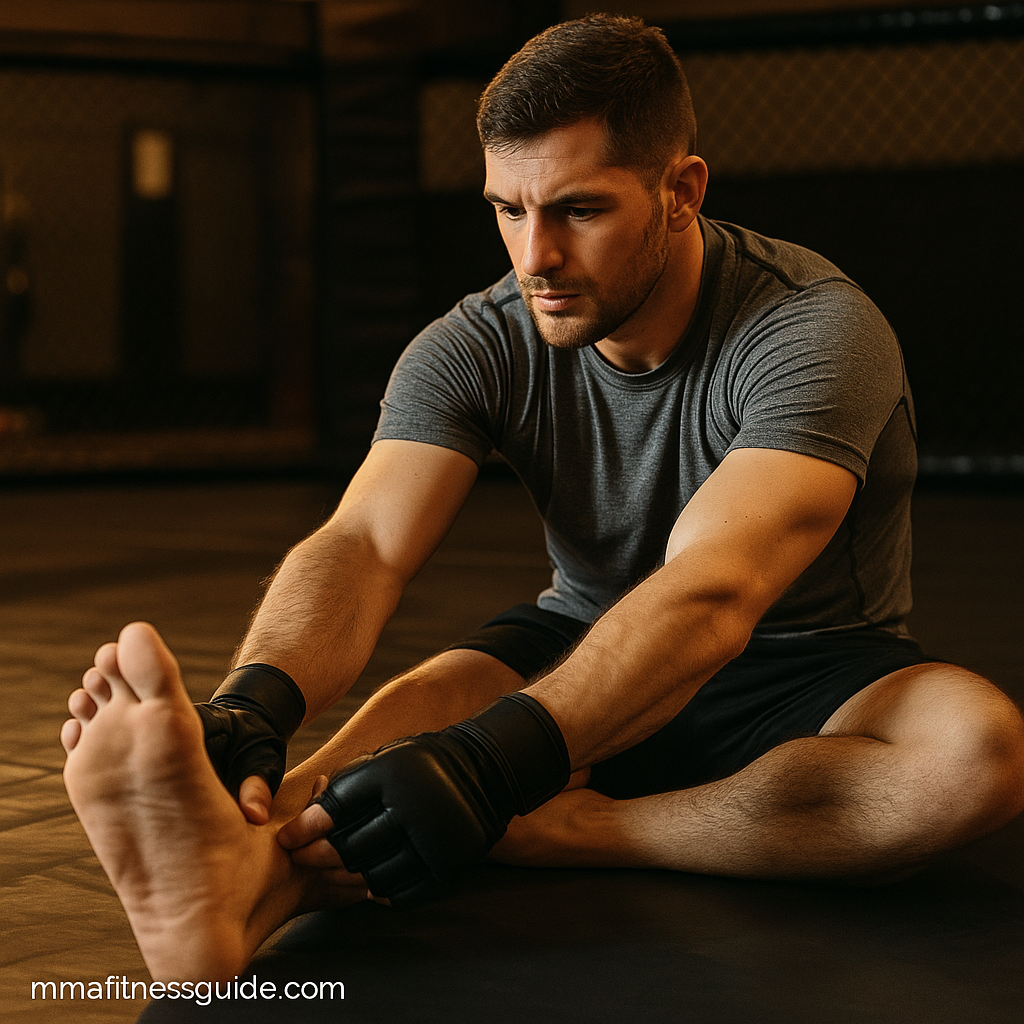
- Seated or standing hamstring stretch
- Butterfly stretch
- Hip-flexor stretch
- Pigeon stretch
- Calf stretch
- Cross-body shoulder stretch
- Chest stretch
- Child’s pose
Most stretches can be held for roughly 20–60 seconds without bouncing.
The sensation should feel like controlled tension rather than sharp pain. Forcing a deeper position simply to reach farther can turn a recovery session into unnecessary strain.
PNF Stretching for Additional Range of Motion
Proprioceptive Neuromuscular Facilitation, commonly called PNF stretching, combines a stretch with a brief muscular contraction.
One basic hamstring example looks like this:
- Move the hamstring into a comfortable stretched position.
- Gently contract the hamstring against resistance for several seconds.
- Release the contraction.
- Move carefully into a slightly deeper stretch.
- Hold the new position briefly before relaxing.
PNF can be useful when working specifically on range of motion, but it does not need to be performed after every MMA session.
Because the technique uses muscular contractions at longer muscle lengths, keep the effort controlled. Fighters dealing with an injury or significant mobility restriction should work with an appropriate qualified professional rather than aggressively stretching the area.
10-Minute Pre-Training Mobility Routine
This sequence can be used before striking, grappling, wrestling, or general MMA practice.
1. Light jumping jacks — 60 seconds
Gradually raise your heart rate and begin moving the shoulders, hips, knees, and ankles.
2. Front-to-back leg swings — 10 each leg
Keep the movement controlled while gradually increasing the swing.
3. Side-to-side leg swings — 10 each leg
Open the hips without forcing the leg into an uncomfortable range.
4. Hip circles — 10 each direction
Move through a smooth circular pattern while keeping the torso relatively stable.
5. Walking lunges with rotation — 8–10 each side
Combine lower-body mobility with controlled trunk rotation.
6. Arm circles and shoulder rolls — 10–15 repetitions
Prepare the shoulders for punching, framing, clinching, and grappling.
7. Easy shadowboxing — 2–3 minutes
Start around technical-drill intensity. Gradually increase speed, footwork, rotation, and striking range.
By the end of the sequence, your movement should feel progressively quicker and less restricted.
10-Minute Post-Training Stretch Routine
After training, shift the emphasis toward slower movements and longer holds.
1. Seated hamstring stretch — 30 seconds each side
Keep the spine controlled rather than aggressively rounding forward.
2. Butterfly stretch — 30–45 seconds
Allow the knees to move toward the floor naturally without forcing them down.
3. Hip-flexor stretch — 30 seconds each side
Keep the pelvis controlled so the stretch stays focused around the front of the hip.
4. Pigeon or figure-four stretch — 30 seconds each side
Use whichever variation allows you to stretch the glutes and hips comfortably.
5. Cross-body shoulder stretch — 30 seconds each arm
Useful after sessions involving heavy punching, clinching, or grappling.
6. Cat-cow — 5 slow repetitions
Move gradually between spinal flexion and extension.
7. Child’s pose — 45–60 seconds
Finish with slow breathing and allow your overall muscular tension to decrease.
The routine can be adjusted according to the session. After a kick-heavy workout, spend additional time on the hips and legs. After wrestling or grappling, the shoulders, upper back, hips, and adductors may deserve more attention.
Flexibility Areas MMA Fighters Should Pay Attention To
Hips
Hip mobility influences roundhouse kicks, knees, sprawls, guard work, takedowns, and scrambling.
Useful movements include:
- 90/90 hip switches
- Hip-flexor stretches
- Butterfly stretches
- Controlled hip rotations
Hamstrings and Glutes
These muscles contribute to hip extension, stance movement, wrestling, kicking, and grappling positions.
Excessive tightness may make deep stances, straight-leg movements, and certain guard positions feel restricted.
Useful options include hamstring stretches, figure-four stretches, and controlled leg swings.
Ankles and Calves
Ankle mobility is easy to overlook, but it affects stance, squatting, level changes, footwork, and the ability to drive through the floor.
Knee-to-wall ankle mobilizations and calf stretches can be useful additions to a fighter’s mobility routine.
Shoulders and Chest
Punching, framing, underhooks, overhooks, posting, and submission defense repeatedly load the shoulders.
Include movements that address both shoulder range and the muscles around the chest and upper back.
Upper Back
Thoracic rotation contributes to punching mechanics, defensive movement, grappling, and transitions.
Controlled torso rotations and thoracic mobility drills can help maintain this movement without relying entirely on the lower back.
Neck
The neck works constantly during clinching, wrestling, grappling, and positional control.
Treat it differently from large muscle groups. Gentle, controlled movement is preferable to aggressively pulling or forcing the neck into extreme positions.
Yoga as Supplemental Mobility Training
Yoga can provide fighters with a structured way to work on flexibility, balance, breathing, and body control away from harder MMA sessions.
Useful positions can include:
- Downward-facing dog
- Warrior II
- Low lunge
- Bridge pose
- Supine twist
- Reclined figure-four
- Child’s pose
A short 15–20 minute session once or twice per week can complement regular mobility work.
Choose the difficulty based on your current range rather than trying to match the deepest version of a pose. MMA requires usable mobility and control, not flexibility for its own sake.
Stretching Mistakes That Can Limit Progress
Going Straight Into Maximum Range
Cold muscles and joints generally need gradual movement before demanding positions. Begin with smaller ranges and build from there.
Turning Every Stretch Into a Flexibility Test
Trying to beat yesterday’s range during every session encourages unnecessary forcing. Progress is better measured over weeks and months.
Using Long Static Holds as the Entire Warm-Up
Before explosive MMA work, prioritize movement that gradually resembles what you are about to do. Save longer relaxed stretches primarily for dedicated flexibility sessions or post-training work.
Ignoring the Upper Body
High kicks often receive most of the attention when fighters think about flexibility, but restricted shoulders and upper-back movement can also interfere with punching, clinching, posting, framing, and grappling.
Bouncing Into a Stretch
Rapid bouncing can make it harder to control the amount of tension being placed on the muscle. Move deliberately and stay within a range you can control.
Stretching Through Pain
A strong stretching sensation and sharp pain are not the same thing. Pain, instability, numbness, or unusual joint discomfort are reasons to stop rather than push deeper.
How Often Should MMA Fighters Stretch?
Short mobility sessions performed consistently are easier to integrate into MMA training than occasional marathon stretching workouts.
A practical weekly approach might include:
- Before MMA training: 5–10 minutes of dynamic mobility
- After training: 5–10 minutes of relaxed stretching where useful
- 1–2 times per week: A longer mobility or yoga session
- Throughout the week: Extra attention to areas that repeatedly become restricted
Not every fighter needs the same amount of flexibility. A kickboxer working toward higher kicks may spend more time developing hip range, while a grappler may prioritize hips, shoulders, and thoracic movement.
Build Flexibility You Can Actually Use
The goal for an MMA fighter is not simply to become as flexible as possible. The useful target is enough range of motion to strike, wrestle, grapple, and transition without unnecessary restriction — while maintaining control throughout that range.
Build the habit around training: dynamic movement before demanding sessions, slower stretching afterward when appropriate, and dedicated mobility work for areas that consistently feel limited.
Over months of training, those small sessions add up. Better movement gives you more options when kicking, changing levels, scrambling, defending, and transitioning — exactly where restricted mobility tends to become noticeable.