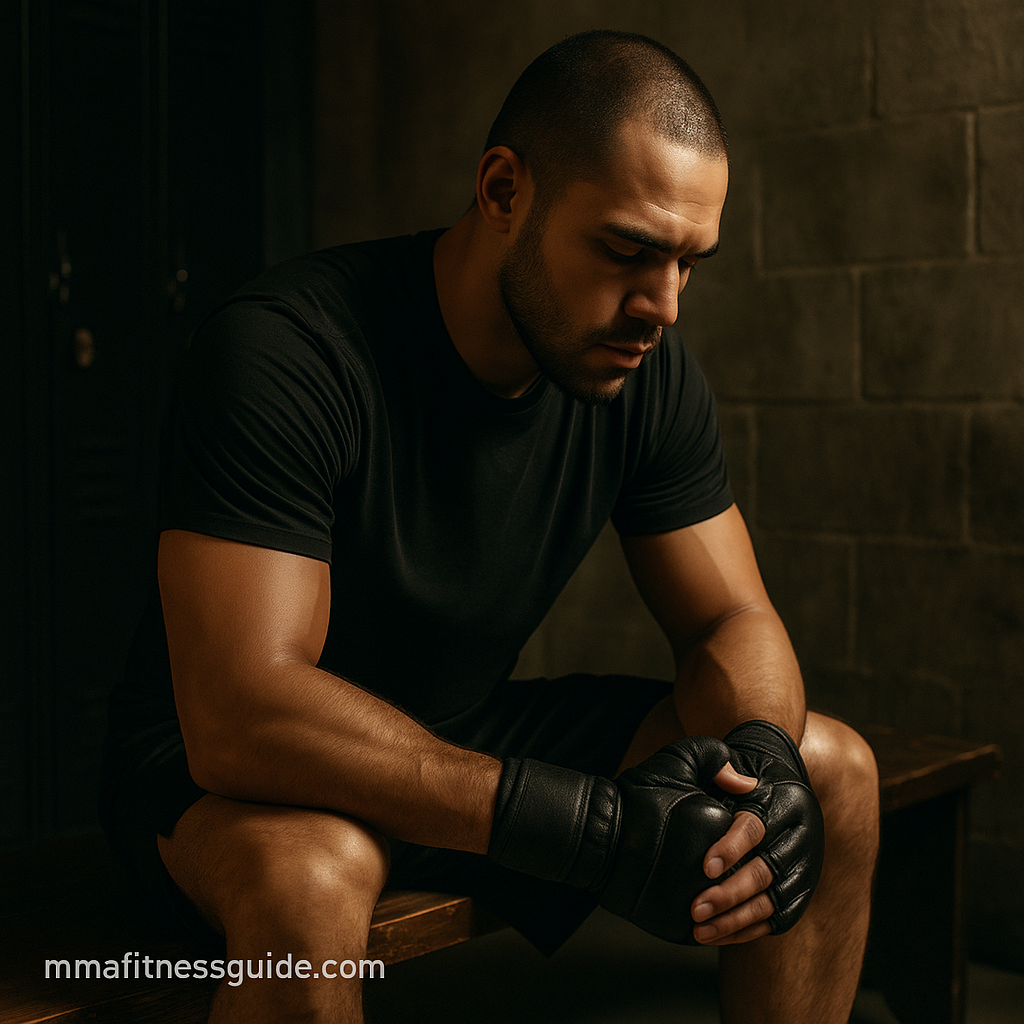
You’re standing outside the cage, waiting for your name to be called. Your heart is pounding, your mouth feels dry, and your mind keeps replaying everything that could go wrong.
You know you’ve trained hard. You’ve drilled your combinations, practiced your takedown defense, and completed countless rounds of sparring. Yet your body seems to have a different opinion about how prepared you are.
This experience isn’t limited to professional fighters. Beginners can feel the same pressure before their first sparring session, while experienced athletes may experience nerves before important competitions.
The challenge isn’t necessarily eliminating nervousness. It’s learning how to respond to it without allowing it to interfere with your preparation, decision-making, or technique.
With consistent mental training, fighters can develop practical strategies for managing pre-fight anxiety, maintaining focus, and performing effectively under pressure.
Why Fighters Get Nervous Before Sparring and Competition
Nervousness is a common response to situations involving uncertainty, perceived danger, or important outcomes.
When your brain identifies a potential threat, your sympathetic nervous system becomes more active.
This response can produce several physical changes:
- Increased heart rate and breathing
- Greater muscle tension
- Sweating and trembling
- Heightened alertness
- Changes in digestion
- A feeling of restlessness or urgency
These reactions are associated with the body’s fight-or-flight response.
In combat sports, the trigger might be an upcoming fight, a difficult sparring partner, or the possibility of performing poorly in front of teammates.
Your brain doesn’t always distinguish neatly between physical danger and psychological pressure.
An athlete might experience similar nervous-system responses before stepping into the cage and before giving an important presentation.
However, the intensity and duration of these responses vary considerably between individuals.
Some fighters become quiet and withdrawn. Others talk excessively, pace around the gym, or feel unusually energetic.
Understanding your own response is the first step toward managing it.
Can Nervousness Actually Improve Fighting Performance?
A certain level of physiological arousal can support performance.
Increased alertness may help an athlete prepare for demanding physical activity, while motivation and attention can encourage greater engagement with the task.
However, more arousal isn’t always better.
Excessive nervousness can interfere with coordination, attention, and decision-making.
For example, a fighter might become so focused on avoiding a takedown that they stop recognizing striking opportunities.
Another athlete might rush forward aggressively because they feel uncomfortable waiting for the opening exchange.
The relationship between arousal and performance depends on the individual, the task, and the situation.
Some athletes perform comfortably at relatively high levels of activation. Others need a calmer state to execute technical movements effectively.
The goal is to find a level of activation that allows you to remain alert without becoming overwhelmed.
This requires experimentation rather than following a universal formula.
1. Reframe Nervousness Without Pretending It Doesn’t Exist
One common mistake is interpreting every physical symptom of nervousness as evidence that something is wrong.
A fighter notices their heart beating quickly and immediately thinks:
“I’m too nervous. I’m going to perform badly.”
That interpretation can create additional worry.
A more useful approach is to acknowledge the sensation without automatically treating it as a prediction of failure.
For example:
“My heart is beating faster because I’m preparing for a demanding situation.”
This doesn’t mean you must convince yourself that anxiety is enjoyable or that nervousness guarantees better performance.
It simply changes how you interpret the experience.
How to Practice Cognitive Reframing
Before training, identify one recurring nervous thought.
Suppose your usual thought is:
“I’m going to get dominated during sparring.”
Replace it with something more specific and actionable:
“My goal is to maintain my stance, defend intelligently, and practice the techniques I’ve been learning.”
The second statement directs attention toward behaviors you can influence.
You cannot completely control your opponent’s actions, the judges’ decisions, or the outcome of a fight.
You can influence your preparation, technical choices, effort, and response to changing circumstances.
This distinction helps prevent nervousness from becoming an endless cycle of worrying about outcomes.
2. Use Breathing to Manage Physical Tension
When fighters become nervous, their breathing may become rapid, shallow, or irregular.
Some athletes also hold their breath during exchanges without realizing it.
Breathing exercises can help regulate attention and reduce the sensation of being overwhelmed.
However, breathing techniques are not guaranteed to produce immediate calm, and they shouldn’t be used to suppress normal breathing during intense exercise.
The most useful time to practice controlled breathing is before training, during rest periods, or when recovering between rounds.
Technique A: Slow, Comfortable Breathing
Try this exercise while sitting or standing.
- Relax your shoulders and jaw.
- Inhale gently for approximately four seconds.
- Exhale comfortably for approximately six seconds.
- Continue for one or two minutes.
- Return to your natural breathing rhythm.
Avoid forcing excessively deep breaths.
If you feel dizzy, uncomfortable, or short of breath, stop and resume normal breathing.
A slightly longer exhalation may help some athletes settle their breathing and shift their attention away from racing thoughts.
Technique B: Box Breathing
Box breathing uses four equal phases:
- Inhale for four seconds.
- Hold for four seconds.
- Exhale for four seconds.
- Hold for four seconds.
Repeat for several comfortable cycles.
Breath holds are optional rather than essential. If holding your breath increases discomfort, use continuous, relaxed breathing instead.
Which Technique Should Fighters Use?
Choose the method that feels comfortable and helps you maintain awareness.
An athlete who feels overly activated before competition may benefit from slow breathing.
Someone who already feels sluggish may prefer a normal breathing rhythm combined with a progressive physical warm-up.
The objective isn’t to force your heart rate as low as possible. It’s to prepare your body for the demands ahead.
3. Create a Pre-Fight Routine You Can Repeat
Competition introduces uncertainty.
You may not know exactly when you’ll fight, how your opponent will approach the opening exchange, or how the crowd will react.
A consistent pre-performance routine provides structure within that uncertainty.
It can help reduce unnecessary decisions and direct attention toward familiar preparation habits.
Example: A 20-Minute Pre-Sparring Routine
Use the following as a starting point and adjust it to your gym’s schedule.
| Time | Activity |
|---|---|
| 20–15 minutes before | Check equipment and begin light movement |
| 15–10 minutes before | Complete dynamic mobility and progressive warm-up |
| 10–5 minutes before | Perform technical shadowboxing or light drilling |
| 5–2 minutes before | Review one or two tactical priorities |
| Final 2 minutes | Breathe comfortably and prepare to begin |
Avoid making the routine unnecessarily complicated.
You don’t need a particular song, lucky object, or exact sequence of movements to perform well.
A useful routine should remain flexible enough to accommodate delays, schedule changes, and unexpected situations.
If your fight is postponed by 15 minutes, you should be able to adjust without feeling that your entire preparation has been ruined.
4. Use Visualization to Prepare for Realistic Situations
Mental imagery involves rehearsing an experience in your mind.
Athletes can use it to practice familiar movements, prepare for competition environments, and consider how they want to respond to challenging situations.
However, visualization works best as a supplement to physical training, not a replacement for it.
Simply imagining yourself winning doesn’t guarantee improved performance.
More practical imagery includes realistic situations and appropriate responses.
A Five-Minute Visualization Exercise
Find a quiet location where you can sit comfortably.
Begin by imagining yourself entering the gym or competition venue.
Notice the environment: the sounds, lighting, equipment, and people around you.
Next, imagine beginning your warm-up.
Picture yourself moving through familiar drills and gradually increasing your intensity.
Then imagine the opening exchange.
Rather than visualizing a perfect performance, include a manageable challenge.
Perhaps your opponent lands a jab or successfully defends your first takedown attempt.
Imagine yourself responding appropriately.
You reset your stance, maintain your defense, and return to your tactical plan.
Finish by imagining yourself continuing to compete with composure, regardless of whether the previous exchange went your way.
This approach helps you rehearse responses to uncertainty instead of relying exclusively on ideal outcomes.
5. Give Your Mind a Specific Job
A nervous fighter often experiences too many thoughts at once.
They may worry about losing, disappointing their coach, getting injured, or making a technical mistake.
Trying to monitor every possible outcome can overwhelm attention.
A practical alternative is to identify a small number of performance cues.
These are short instructions that direct attention toward useful actions.
Examples for Strikers
- Maintain your stance.
- Keep your eyes on your opponent.
- Return your hands to position.
- Reset after combinations.
Examples for Grapplers
- Establish your frames.
- Protect your position.
- Control your breathing.
- Create an angle before moving.
Choose one or two cues that match your immediate objective.
For example, a beginner entering sparring might focus on maintaining their stance and breathing naturally.
An experienced competitor may use a specific tactical cue developed with their coach.
Avoid constantly introducing new technical instructions immediately before competition.
Fight night is generally a time to apply familiar skills rather than attempt a complete technical overhaul.
6. Turn Nervous Energy Into a Controlled Warm-Up
Nervousness can create a strong urge to move.
Some fighters pace around the changing room, shake their arms, or repeatedly bounce on their toes.
Instead of allowing this energy to become uncontrolled activity, incorporate it into a structured warm-up.
Begin with easy movement and gradually increase intensity.
For example:
- Two minutes of light jogging or skipping
- Two minutes of dynamic hip and shoulder mobility
- Two minutes of controlled shadowboxing
- Several short bursts of faster, sport-specific movement
The exact warm-up should reflect your discipline and physical preparation.
A grappler may include technical stand-ups and light pummeling.
A boxer may perform footwork drills and progressively faster combinations.
Avoid exhausting yourself before the actual session begins.
The purpose of warming up is to prepare your body for performance, not prove how hard you can work before the fight.
7. Practice Performing While Nervous
Mental preparation becomes more useful when it is tested in realistic training environments.
If you only practice calming techniques while sitting quietly at home, you may struggle to apply them during an intense sparring exchange.
A better approach is to introduce manageable pressure gradually.
Start With Controlled Technical Drills
Practice familiar techniques with a cooperative partner.
Focus on maintaining your breathing, posture, and attention.
Once comfortable, increase the difficulty.
Your partner might begin adding realistic defensive reactions.
Progress to Positional Sparring
Positional sparring creates a specific challenge within controlled boundaries.
For example, a grappler might begin in side control and attempt to recover guard while their partner maintains appropriate resistance.
The restricted starting position allows the athlete to practice responding to pressure without introducing every possible element of a full sparring round.
Gradually Increase Complexity
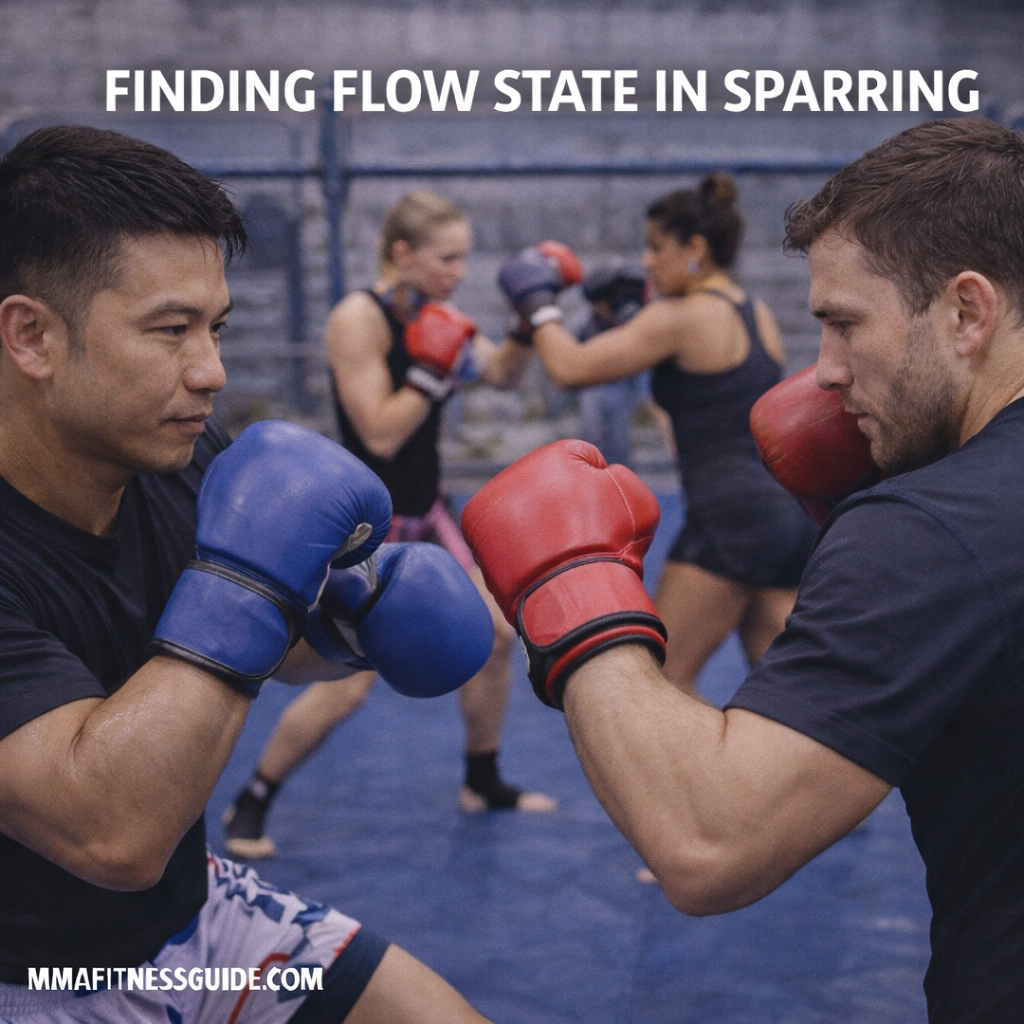
As your skills develop, progress toward more open sparring under qualified supervision.
The objective is to become familiar with competitive pressure while maintaining appropriate safety.
Hard sparring should not be used simply to force an anxious athlete to overcome fear.
Training intensity should match experience, technical ability, and readiness.
8. Learn to Reset After Making a Mistake
Even well-prepared fighters make mistakes.
A boxer gets caught with a clean counter. A wrestler misses a takedown. A grappler loses a dominant position.
What happens next matters.
Some athletes become frustrated and immediately attempt to recover the exchange through reckless aggression.
Others hesitate because they begin worrying about making another mistake.
A simple reset process can help redirect attention.
The Three-Step Reset
Step 1: Recognize what happened.
Acknowledge the mistake without turning it into a judgment about your ability.
“I lost my position.”
Step 2: Identify the immediate priority.
Determine what the situation requires.
“Establish frames and protect my neck.”
Step 3: Return to action.
Apply the appropriate response without spending unnecessary time replaying the previous mistake.
This process takes practice.
During training, ask your coach to help identify recurring situations where frustration or hesitation interferes with your decisions.
The goal isn’t to ignore mistakes. It’s to analyze them at the appropriate time rather than allowing them to dominate your attention during an active exchange.
9. Build Confidence Through Preparation, Not Positive Thinking Alone
Confidence is often discussed as though it can be created simply by repeating motivational statements.
Positive self-talk may help some athletes, but confidence also develops through evidence.
Completing technical drills, improving conditioning, practicing against appropriate resistance, and reviewing progress can provide concrete reasons to trust your preparation.
Consider a beginner who feels nervous about defending takedowns.
Telling themselves that they are unbeatable is unlikely to address the underlying concern.
A more practical approach involves working with a coach to develop defensive skills, practicing those skills repeatedly, and gradually increasing resistance.
As their experience grows, they may become more confident in their ability to respond.
Keep a Simple Training Record
After each session, write down:
- One technique you executed effectively
- One situation that made you uncomfortable
- One specific improvement to work on next time
For example:
“I maintained my stance during the first two rounds, but I rushed when pressured against the cage. Next session, I’ll focus on controlled footwork and defensive positioning.”
This creates a record of progress while keeping your attention on actionable improvements.
10. Know When Nervousness Requires More Support
Feeling nervous before competition is common, but not every experience should be dismissed as ordinary pre-fight anxiety.
Persistent anxiety that disrupts sleep, daily functioning, training participation, or overall well-being deserves attention.
Athletes returning from injury may also experience significant fear related to reinjury.
These concerns should be addressed through appropriate rehabilitation, communication with coaches, and professional support when needed.
A qualified sports psychologist or mental health professional can help athletes develop individualized strategies for managing performance anxiety.
Seeking support is compatible with serious athletic preparation.
Mental skills deserve the same thoughtful attention as physical conditioning and technical development.
Where Fighters Go Wrong With Nerves
Trying to Eliminate Every Nervous Feeling
Attempting to force yourself to feel completely calm may create additional frustration.
Instead, focus on whether you can perform your intended actions despite the sensations.
Comparing Yourself With Other Fighters
Some athletes appear relaxed before competition, while others are visibly energetic.
These outward behaviors don’t necessarily reveal how someone feels internally or predict their performance.
Develop a routine based on your own responses.
Overusing Caffeine
Large amounts of caffeine can increase jitteriness, palpitations, and feelings of anxiety in some individuals.
If you use caffeine, consider your usual tolerance and avoid experimenting with unfamiliar doses before competition.
Changing Your Routine at the Last Minute
Fight week isn’t an ideal time to introduce unfamiliar supplements, extreme workouts, or completely new mental preparation techniques.
Practice your routine during normal training so it becomes familiar.
Ignoring Genuine Safety Concerns
Not all fear is unhelpful.
If you’re nervous because you’re injured, poorly matched with a sparring partner, or being pressured into unsafe training, the appropriate response may be to change the situation.
Mental preparation should never be used to override legitimate safety concerns.
Frequently Asked Questions About Pre-Fight Nerves
Is it normal to feel nervous before every fight?
Yes. Some athletes experience nervousness throughout their competitive careers. The intensity may change with experience, preparation, and the importance of the event.
Can breathing exercises stop an adrenaline rush?
Breathing exercises may help regulate attention and physical tension, but they cannot guarantee that an adrenaline response will stop. The objective is to manage your response rather than eliminate normal physiological activation.
How do I stop overthinking before sparring?
Choose one or two specific performance cues, follow a familiar warm-up routine, and focus on immediate actions rather than predicting the entire session.
Should I listen to music before a fight?
Music may help some athletes regulate mood and prepare for competition. Choose music that supports your preferred level of activation rather than assuming aggressive music is always beneficial.
How long does it take to improve mental composure?
There is no universal timeline. Progress depends on experience, practice, individual responses, and the situations involved. Regularly practicing mental skills during training can make them easier to apply under pressure.
Final Takeaway
Nervousness is a common part of combat sports, from a beginner’s first sparring session to an experienced fighter’s competition preparation.
The objective isn’t to eliminate every uncomfortable sensation or convince yourself that you will perform perfectly.
It’s to develop a reliable response.
Use breathing to manage physical tension, establish a consistent warm-up, rehearse realistic situations, and focus on specific actions within your control.
Build confidence through technical preparation and gradually expose yourself to appropriate competitive pressure.
When mistakes happen, reset your attention and return to the task.
A fighter doesn’t need to feel completely calm to perform effectively. They need the preparation, awareness, and practiced responses to keep making sound decisions even when the pressure increases.