Why Shin Guards Matter
Whether you’re striking pads, sparring, or drilling kicks, shin guards are a fighter’s first line of defense.
They protect you from bruises, bone stress, and painful collisions — helping you train harder, longer, and safer.
But not all shin guards are created equal. The right pair should feel secure, protective, and durable without restricting movement.
1. The Purpose of Shin Guards in MMA
In mixed martial arts and Muay Thai, shin guards:
- Absorb impact from kicks and blocks
- Reduce the risk of shin bruising or fractures
- Protect both you and your training partners
- Help build confidence when learning new techniques
They’re essential for safety — especially during sparring sessions or when practicing high-volume drills.
2. Choosing the Right Fit
A proper fit ensures both protection and mobility.
Here’s what to look for:
- Snug, not tight: The shin guards should stay in place without cutting off circulation.
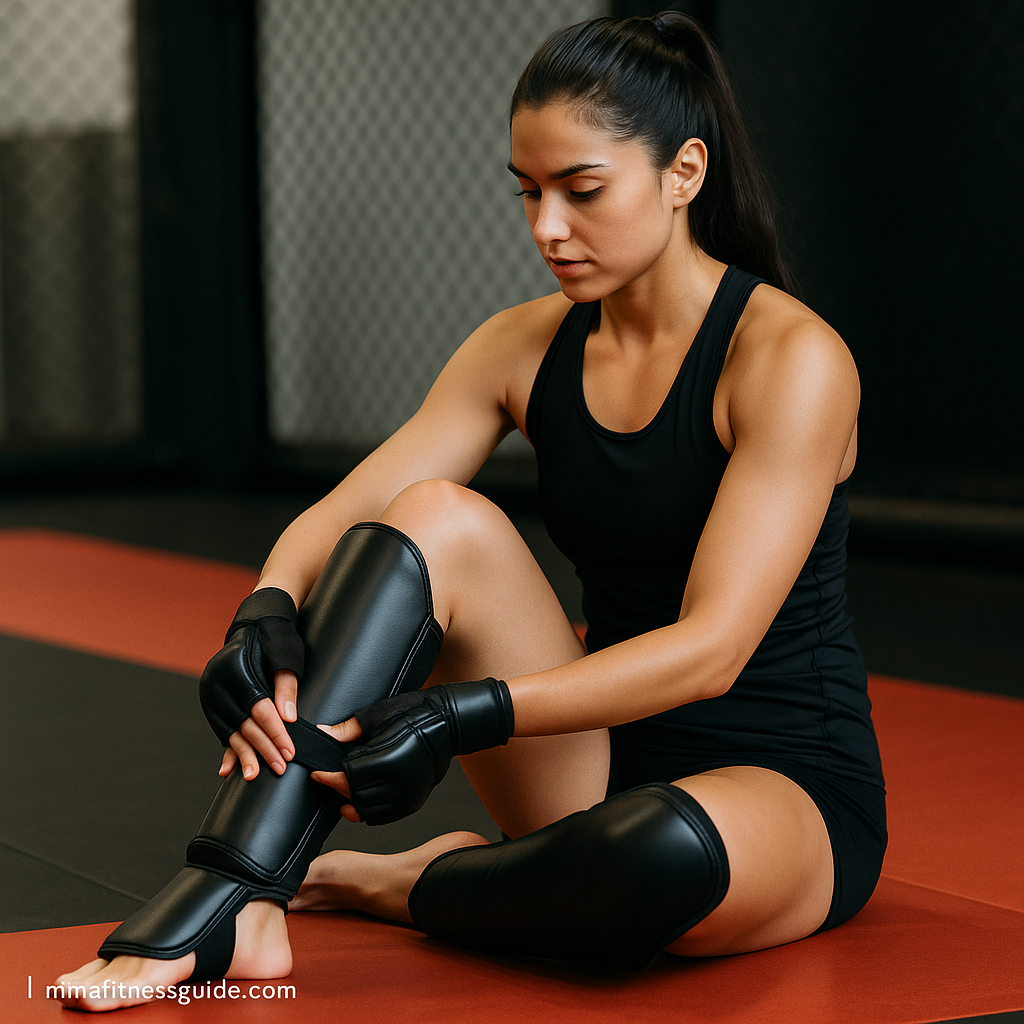
- Secure straps: Two or more Velcro straps around the calf and ankle help prevent slippage.
- Coverage: The guard should extend from just above the ankle to below the knee.
- Lightweight feel: Fighters need freedom to move, pivot, and kick naturally.
If they slide down often or twist around your leg, the fit is too loose.
3. Types of Shin Guards
There are three main styles of shin guards used in MMA and kickboxing:
a. Slip-On (Sleeve Style)
- Made from neoprene or elastic fabric.
- Lightweight, minimal protection.
- Best for speed drills or light sparring.
b. Strap-On (Traditional MMA Style)
- Offer full protection and secure straps.
- Best for sparring and heavy training.
- Commonly used in MMA gyms.
c. Muay Thai Style
- Thick padding and reinforced instep.
- Great for checking kicks and pad work.
- Slightly bulkier but excellent protection.
4. Material and Durability
Quality materials make a huge difference in performance and longevity.
Best options include:
- Synthetic leather (PU or microfiber): Lightweight, durable, and cost-effective.
- Genuine leather: Premium feel and long-lasting with proper care.
- High-density foam padding: Absorbs shock effectively.
Inspect stitching and strap quality — these are the first things to wear out under heavy use.
5. Maintenance Tips
To keep your shin guards in top condition:
- Wipe down after every session with a damp cloth.
- Air dry — never leave in a closed gym bag.
- Use odor-control spray or inserts to prevent bacteria buildup.
- Avoid machine washing; it can damage padding and straps.
With proper care, a high-quality pair can last several years of consistent training.
6. Recommended Features
Look for shin guards that include:
- Reinforced padding on the shin and instep
- Adjustable straps for custom fit
- Anti-slip inner lining
- Curved ergonomic shape for comfort
Top brands like Fairtex, Venum, and Hayabusa often balance durability and mobility best.
Key Takeaways
- Choose shin guards that fit snugly and provide full shin and instep coverage.
- Strap-on models are ideal for MMA sparring and Muay Thai training.
- Invest in quality materials like high-density foam and reinforced leather.
- Maintain your gear properly to ensure safety and longevity.
“Train hard, but protect your tools — your legs are your weapons.”