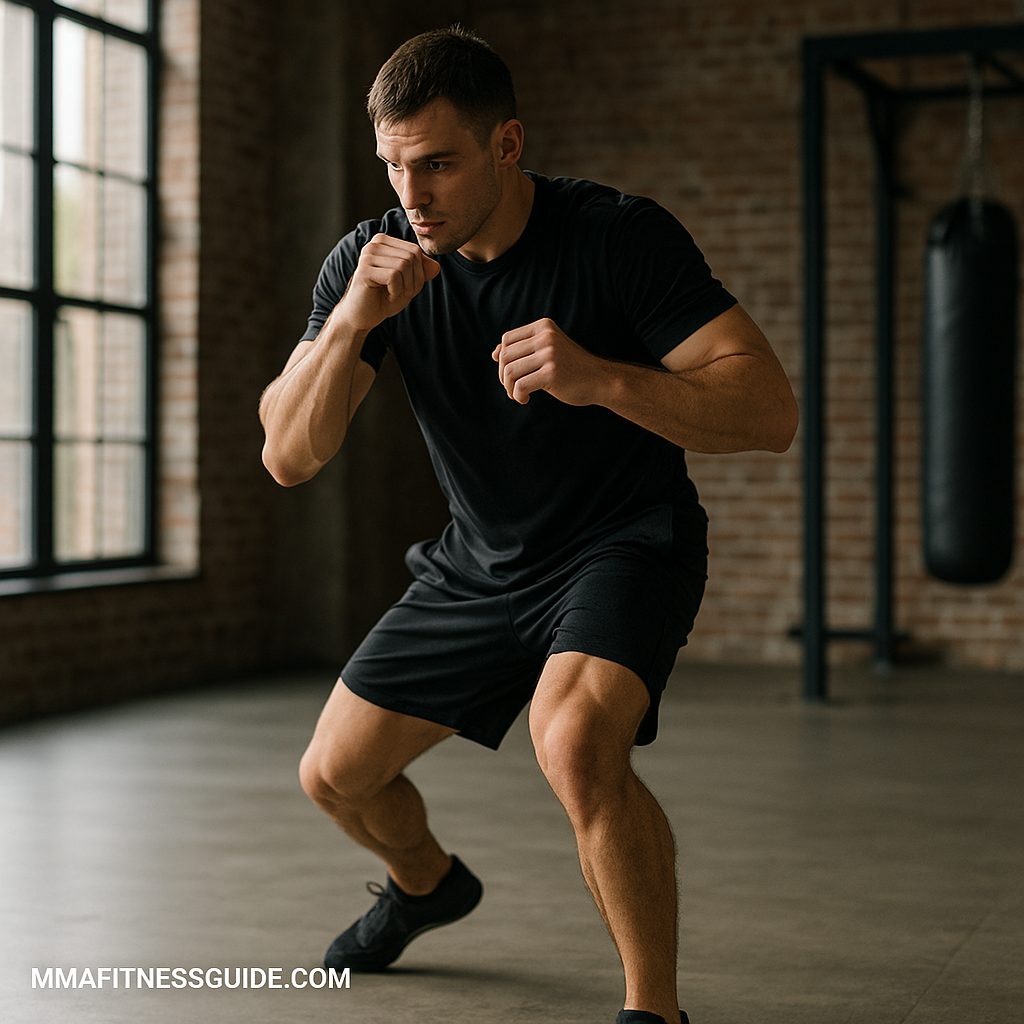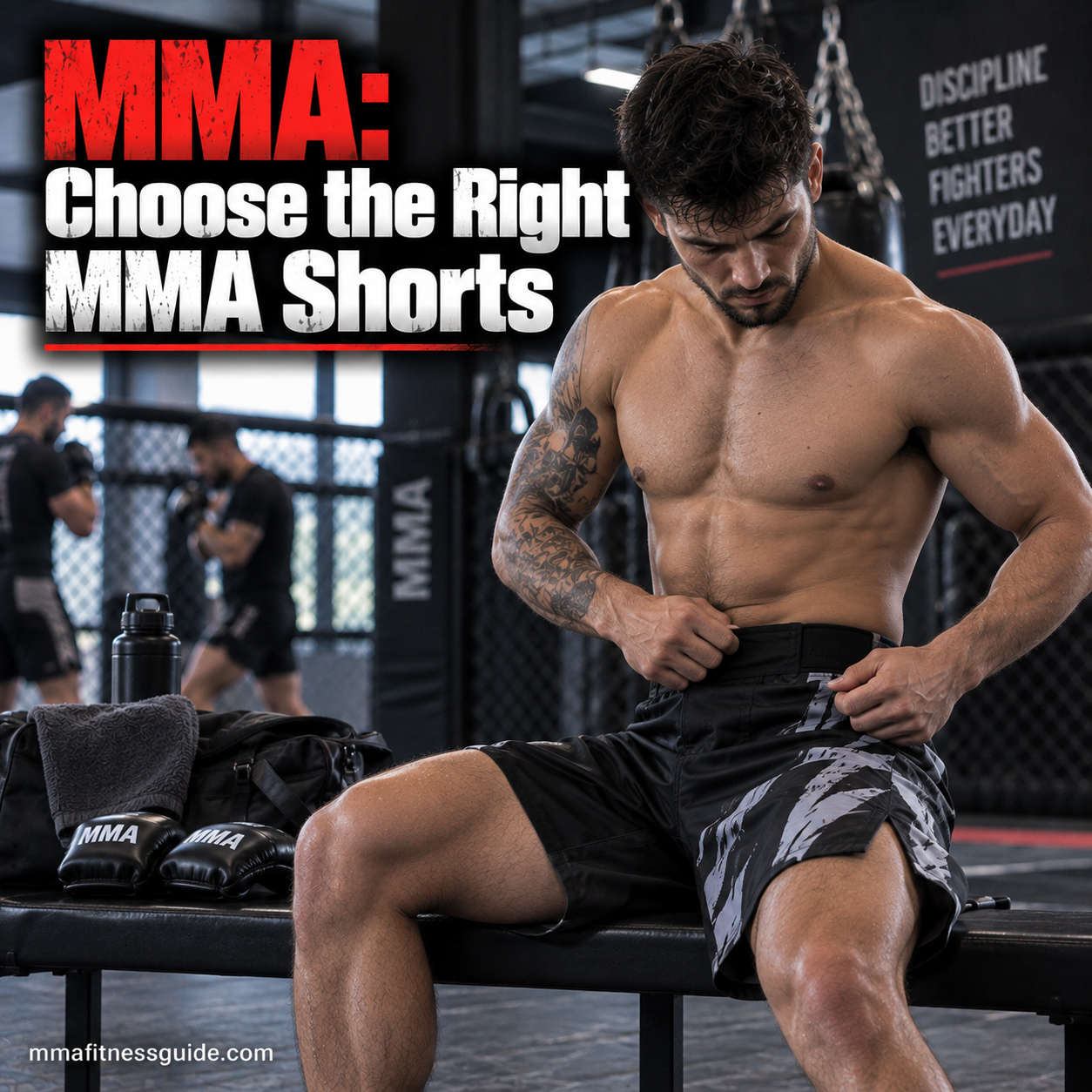
You throw a roundhouse kick during pad work, and your shorts pull tightly across your thigh. Later, during grappling, the waistband shifts as you scramble to escape side control. By the end of class, you’ve spent almost as much time adjusting your clothing as concentrating on your technique.
MMA shorts might seem like a minor equipment choice, but their fit and construction affect how comfortable you feel during training. Striking requires freedom to lift and rotate your legs. Wrestling and grappling involve repeated changes of position, friction against the mat, and contact with training partners.
A suitable pair should stay secure, allow the movements you need, and avoid unnecessary features that could catch on equipment or another athlete.
You don’t necessarily need the most expensive shorts or the ones worn by your favorite fighter. The goal is to find a design that fits your body, suits your training, and holds up to regular use.
Here’s how to compare the main styles, check the features that matter, and avoid buying shorts that look good but become uncomfortable after the first round.
Why Regular Gym Shorts Aren’t Always Suitable for MMA
Ordinary athletic shorts can work for certain fitness activities, but not every design is appropriate for contact training.
Some have pockets, zippers, exposed drawstrings, or bulky decorative features. These can catch on fingers or equipment during grappling.
Others use fabrics that stretch comfortably when walking or running but restrict movement when you lift your knee high or spread your legs during a wrestling exchange.
Loose shorts can also shift when you’re working from your back or moving through scrambles.
This doesn’t mean every pair of conventional gym shorts is unsuitable. A simple, pocket-free design with a secure waistband may work for some classes, depending on your gym’s rules.
However, purpose-built MMA shorts generally prioritize the movements and contact involved in combat sports.
Before buying anything, check your gym’s clothing requirements. Some grappling classes require shorts without pockets, zippers, or exposed hardware, while competition rules may be more specific.
The Three Main Types of MMA Shorts
There isn’t one style that works equally well for every fighter.
The best choice depends on your preferred fit, the movements you perform most often, and whether you’re buying shorts for training or competition.
1. Board-Style MMA Shorts
Board-style fight shorts resemble traditional surf shorts, although MMA versions are designed for combat sports.
They usually have a relatively loose fit, a structured waistband, and a length that falls around the middle of the thigh or closer to the knee, depending on the model.
Some include side slits or stretch panels to improve movement.
Potential advantages:
- More coverage than compression-style shorts.
- A loose fit that some athletes find comfortable.
- A traditional fight-short appearance.
- Options with secure waist closures.
Potential drawbacks:
Longer, less flexible designs may pull across the thighs during high kicks, deep squats, or wide grappling positions.
Excess fabric can also bunch during ground work.
Board-style shorts are worth considering if you prefer a looser fit, but don’t assume that every model offers sufficient mobility simply because it’s marketed for MMA.
Check the cut and fabric before purchasing.
2. Vale Tudo Shorts
Vale Tudo shorts are close-fitting, compression-style shorts that generally end above the knee.
They have much less loose fabric than traditional fight shorts.
Their snug design can make them convenient for wrestling, grappling, and other activities involving frequent contact with the mat.
Potential advantages:
- Minimal loose fabric to bunch or shift.
- A close fit during scrambles.
- Freedom of movement when appropriately sized.
- Easy to wear beneath loose fight shorts if desired.
Potential drawbacks:
Some athletes dislike the tight fit or prefer more coverage.
Sizing is particularly important. Shorts that are too small may dig into the waist or thighs, while an unsuitable cut may ride up during movement.
Compression shorts also aren’t automatically approved for every competition. Check the relevant rules before relying on them as your competition uniform.
3. Hybrid MMA Shorts
Hybrid shorts generally combine a relatively streamlined cut with stretch fabric or flexible panels.
The term isn’t standardized, so one brand’s hybrid design may look quite different from another’s.
Some are short and loose, while others use a more fitted shape.
Potential advantages:
- A balance between coverage and freedom of movement.
- Less excess fabric than some traditional board-style designs.
- Stretch panels that may accommodate kicks and grappling positions.
- Versatility across different MMA classes.
Potential drawbacks:
The label alone doesn’t tell you whether the shorts will fit well.
A hybrid pair with a stiff waistband or poorly positioned seams can still be uncomfortable.
Compare the actual construction rather than buying based on the category name.
Which Type of MMA Shorts Should You Choose?
Use your primary training activity as a starting point, then account for personal preference.
| Training activity | Shorts worth considering | What to prioritize |
|---|---|---|
| Striking and kickboxing | Hybrid or flexible board-style | Comfortable hip movement and secure fit |
| Wrestling and no-gi grappling | Vale Tudo or streamlined hybrid | Minimal loose fabric and no hazardous hardware |
| General MMA classes | Hybrid, board-style, or Vale Tudo | Versatility and comfort across disciplines |
| Conditioning | Lightweight hybrid or compression-style | Comfort during repeated movement |
| Competition | Rules-compliant fight shorts | Approved design, fit, and closures |
These are guidelines, not strict requirements.
A fighter who mainly grapples may prefer loose shorts, while a striker may find Vale Tudo shorts more comfortable.
If you train several disciplines, start by choosing a pair that works for your most demanding movements rather than buying a separate style for every class.
What to Look for When Buying MMA Shorts
Once you’ve chosen a general style, examine the details that determine whether the shorts will actually work during training.
1. Fabric That Moves With You
Many MMA shorts use synthetic fabrics such as polyester, sometimes blended with elastane or spandex for stretch.
The important question isn’t simply whether the label says four-way stretch. It’s whether the fabric allows the movements you regularly perform.
Some shorts stretch throughout the garment. Others have flexible panels positioned around the crotch or sides.
Neither design is automatically better. Construction, fit, and seam placement all influence how the shorts feel.
If you’re shopping in person, try a deep squat and a controlled knee raise. The fabric shouldn’t pull uncomfortably across your hips or thighs.
When buying online, look for detailed fabric information and a return policy that allows you to check the fit.
2. A Secure, Comfortable Waistband
A waistband should keep your shorts in place without digging into your stomach or hips.
Common designs include elastic waistbands, internal drawstrings, and hook-and-loop closures.
An internal drawstring can help fine-tune the fit. Hook-and-loop closures can also be convenient, provided they remain covered and don’t expose rough edges during grappling.
Avoid loose external drawstrings, metal eyelets, and other unnecessary hardware.
A waistband that feels secure while standing may still shift during wrestling. Test it through movement rather than relying on your waist measurement alone.
3. Side Slits and Gusseted Construction
Side slits provide additional room for the legs to move independently of the shorts.
A gusset is an extra fabric panel, often positioned around the crotch, that can reduce tension in certain movements.
These features may be particularly useful for fighters who throw high kicks or regularly work from wide grappling positions.
However, the presence of a side slit doesn’t guarantee a good fit.
Check whether the opening provides enough movement without exposing more than you’re comfortable with.
4. Stitching and Seam Placement
Grappling places repeated stress on clothing.
Look for neatly finished seams, secure stitching, and reinforcement in areas that experience considerable pulling.
Inspect the crotch, side seams, and waistband.
Loose threads or poorly finished seams may indicate construction problems, although you cannot reliably judge durability from appearance alone.
Seam placement also affects comfort. A thick seam that rubs against your inner thigh may become irritating during a long session.
5. Breathability and Sweat Management
Lightweight, moisture-wicking fabrics can help move sweat away from your skin, but they don’t eliminate heat or prevent sweating.
Some shorts include mesh panels for ventilation.
Choose a fabric that feels comfortable against your skin and dries reasonably well after washing.
A very thin fabric isn’t necessarily preferable if it becomes transparent when stretched or wears quickly against the mat.
Balance comfort, coverage, and durability.
6. Minimal Hardware and Decoration
Large rubber patches, raised logos, exposed fasteners, and decorative zippers can be unnecessary during contact training.
A clean design with smooth surfaces is generally easier to evaluate for grappling suitability.
Printed graphics are largely a personal preference. They don’t automatically make shorts more or less durable.
Prioritize construction and comfort over branding.
How Should MMA Shorts Fit?
The ideal fit depends partly on the style.
Vale Tudo shorts should sit close to the body without causing uncomfortable compression or restricting movement.
Board-style and hybrid shorts should provide enough room for your legs without leaving excessive fabric that shifts during grappling.
Regardless of style, check three areas.
Waist: The shorts should stay in position without constant adjustment.
Hips and thighs: You should be able to squat, lift your knees, and rotate comfortably.
Leg openings: They shouldn’t dig into your thighs or catch around your knees during movement.
Don’t automatically size up to gain more mobility. Oversized shorts may become loose around the waist while still having an awkward cut.
Likewise, sizing down for a tighter appearance may create unnecessary restriction.
Follow the manufacturer’s measurements, but remember that sizing can vary between brands.
The Five-Movement Fit Test
If possible, try these movements before deciding whether to keep a new pair of shorts.
You can perform them at home without making contact with anything.
1. Deep Squat
Lower into a comfortable squat.
Notice whether the waistband slides down or the fabric pulls tightly across your thighs.
2. High Knee Raise
Lift one knee toward your chest, then repeat on the other side.
Check for restriction around the hips and crotch.
3. Controlled Kick Motion
Perform a slow, low-to-moderate-height front kick or roundhouse motion.
You don’t need to throw a full-power kick to identify fabric restriction.
4. Wrestling Stance and Level Change
Assume your normal stance and perform a few controlled level changes.
Check whether the waistband stays secure.
5. Ground Movement
Sit on the floor, move onto your back, and practice a gentle hip escape.
Notice whether the shorts bunch, twist, or expose more than you’re comfortable with.
If you need to adjust your shorts repeatedly during this test, consider a different size or design.
Don’t remove tags or train in new shorts until you’ve confirmed the retailer’s return conditions.
What About Wearing Compression Shorts Underneath?
Some fighters prefer a compression layer beneath loose MMA shorts.
It can provide additional coverage and may reduce discomfort caused by fabric shifting.
Choose an underlayer that fits securely without excessive pressure around the waist or thighs.
Make sure the combination doesn’t restrict movement or become uncomfortably warm.
Compression shorts aren’t required for every training session, and wearing two layers isn’t automatically better.
If you prefer Vale Tudo shorts as your outer layer, confirm that they provide the coverage you want.
For competition, check whether the combination of garments is permitted.
MMA Shorts for Training vs. Competition
A pair that’s acceptable at your local gym may not meet tournament requirements.
Competition rules can specify the permitted shorts style, length, colors, and construction.
For example, the International Mixed Martial Arts Federation’s published unified rules prohibit exposed Velcro, pockets, and zippers on fight shorts and require the hem to remain above the knee.
IMMAF
No-gi Brazilian jiu-jitsu competitions can have different uniform requirements, including restrictions on colors, length, and whether compression shorts may be worn as an outer garment.
AAJJB
If you’re preparing for an event, check its current official rules before buying.
Don’t assume that shorts advertised as competition-ready are approved for every organization.
For ordinary training, ask your coach whether the gym has specific clothing requirements.
How Much Should You Spend on MMA Shorts?
You don’t need premium shorts to begin training.
A reasonably priced pair that fits well and meets your gym’s requirements may be entirely sufficient.
Rather than choosing by price alone, compare:
- Fabric and construction
- Waistband security
- Freedom of movement
- Return and exchange policies
- Care instructions
- Whether the shorts suit your primary training activity
If you’re new to MMA, buying one suitable pair and testing it through several sessions is a sensible starting point.
You’ll quickly learn whether you prefer a shorter cut, a compression fit, or a traditional loose design.
If you train frequently, having more than one pair becomes useful because you can wash your clothing between sessions without needing to wear damp shorts.
There’s little benefit in buying several expensive pairs before discovering what fits you.
Common Mistakes When Choosing MMA Shorts
Buying Based on Appearance Alone
A striking design won’t compensate for a waistband that slips or fabric that restricts your kicks.
Evaluate movement and fit first.
Assuming Every MMA Brand Uses the Same Sizing
One brand’s medium may fit differently from another’s.
Compare your measurements with the relevant size chart and check the return policy.
Choosing Shorts With Pockets or Exposed Hardware
Pockets, zippers, and loose drawstrings can create problems during grappling and may violate gym or competition rules.
Choose a clean, contact-appropriate design.
Ignoring the Length
Long shorts may catch around your knees or pull during certain movements.
Very short shorts may provide less coverage than you prefer.
Choose a length that accommodates your training and personal comfort.
Buying an Entire Collection Immediately
Start with one pair.
Test it during striking, wrestling, and ground work before investing in additional shorts of the same design.
How to Wash and Maintain MMA Shorts
MMA shorts are exposed to sweat, repeated friction, and frequent washing.
Good care helps preserve their condition and keeps your training equipment hygienic.
Wash Them After Training
Avoid leaving sweaty shorts inside a closed gym bag overnight.
Wash them after use according to the care label.
If you cannot wash them immediately, remove them from your bag and allow them to dry rather than leaving them bundled with damp equipment.
Follow the Manufacturer’s Temperature Instructions
Cold or cool water is suitable for many synthetic garments, but the care label should take priority.
Different fabrics, prints, and closures may require different treatment.
Close Hook-and-Loop Fasteners
If your shorts have a hook-and-loop waistband, close it before washing.
This helps prevent the rough surface from catching on other garments.
A mesh laundry bag may also be useful.
Avoid Excessive Heat
High dryer temperatures can damage certain elastic fibers, coatings, or printed graphics.
Air-drying is often a practical option when recommended by the manufacturer.
Inspect for Wear
Check the waistband, crotch seams, and side panels regularly.
Replace shorts if the fabric becomes excessively thin, seams begin to separate, or the waistband no longer stays secure.
Don’t wait for a major tear during sparring.
Frequently Asked Questions
Can You Wear Regular Gym Shorts for MMA?
Some may be suitable for limited training, but designs with pockets, zippers, exposed drawstrings, or restrictive fabric can be problematic during grappling.
Check your gym’s rules and choose clothing that allows comfortable movement.
Are Vale Tudo Shorts Better for Grappling?
Their close-fitting design reduces loose fabric and may appeal to grapplers.
However, fit and personal preference matter. Streamlined, grappling-appropriate loose shorts can also work well.
Should MMA Shorts Be Tight or Loose?
Either can work.
Vale Tudo shorts are designed to fit closely, while board-style and hybrid shorts offer varying degrees of looseness.
Choose a fit that stays secure and allows unrestricted movement.
Do MMA Shorts Need Side Slits?
Not necessarily.
Side slits can improve freedom of movement in certain designs, but stretchy fabric and a well-designed cut may provide sufficient mobility without them.
How Many Pairs of MMA Shorts Do You Need?
One pair may be enough when you’re starting out and can wash it between sessions.
If you train several times per week, two or more pairs make it easier to maintain clean clothing.
Can You Wear the Same Shorts for MMA and No-Gi BJJ?
Often, yes, for ordinary classes—provided the shorts meet both gyms’ requirements.
Competition rules may differ, so verify the uniform requirements for each event.
Final Thoughts: Choose Function Before Branding
Good MMA shorts shouldn’t demand your attention once training begins.
They should stay secure during wrestling, allow comfortable movement during striking, and avoid unnecessary features that interfere with grappling.
Start by choosing a style that suits your preferences. Examine the fabric, waistband, seams, and closures, then perform a simple movement test before committing to a purchase.
If you’re buying for competition, verify the event’s uniform rules rather than relying on product descriptions.
The right shorts aren’t necessarily the most expensive or visually impressive pair. They’re the ones that fit properly, suit your training, and let you concentrate on MMA instead of your clothing.